8 Japandi Interiors Living Room Serene Balance
There’s a specific kind of exhaustion that comes from scrolling through Pinterest at midnight, surrounded by a living room that feels… fine. Not terrible. Not inspiring. Just aggressively beige and confused. Maybe there’s a chunky throw blanket doing its best next to a too-shiny coffee table, or a gallery wall that whispers “I had opinions in 2018.” Sound familiar? Here’s the thing — the problem isn’t your taste. It’s that nobody handed you a design philosophy worth committing to.
Enter japandi interiors living room design — the quiet revolution that didn’t ask for your chaos and will not tolerate it. Japandi is the love child of Japanese minimalism (wabi-sabi, negative space, the beauty of imperfection) and Scandinavian hygge (warmth, functionality, natural materials, cozy without trying too hard). The result? A living room so serene it practically lowers your cortisol levels just by existing. No maximalism. No cold, sterile vibes. Just intentional calm that somehow also looks incredibly cool.
Japandi isn’t a trend — it’s a design truth that has been quietly dominating the interiors world because it works for real humans living real lives. Whether you’re starting from scratch or rescuing a living room mid-identity-crisis, these eight ideas will show you exactly how to pull it off. Consider this your cheat sheet to the most grounded, gorgeous aesthetic in modern interior design.
Let’s jump into the eight japandi interiors living room ideas that will completely change how you feel about coming home…
1. The Low-Profile Furniture Foundation
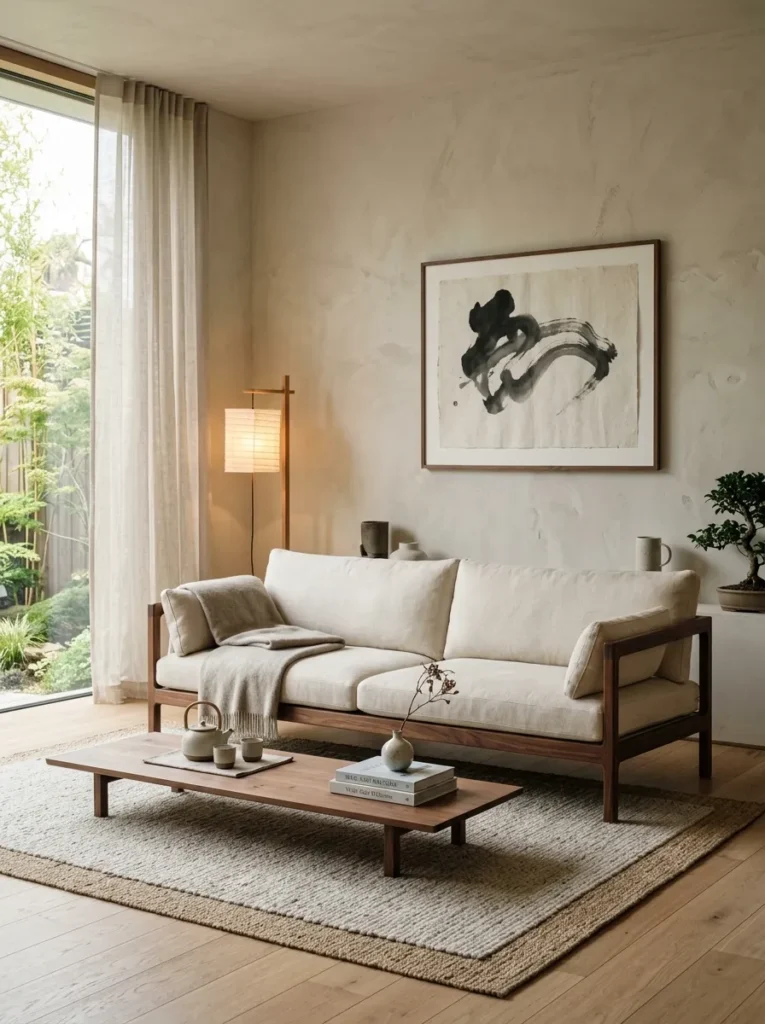
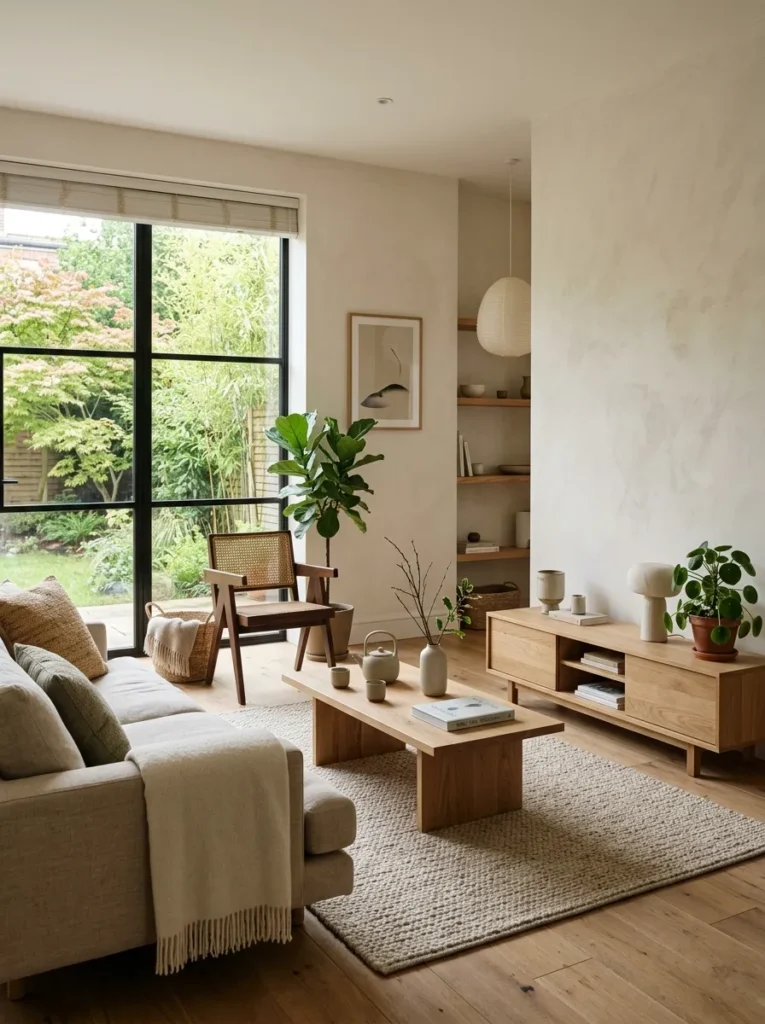
Japandi interiors living room design starts from the ground up — literally. Low-profile furniture is non-negotiable. It creates that grounded, unhurried energy that makes a room feel like it has somewhere to be (nowhere, peacefully). Think platform sofas in natural linen, coffee tables with slim legs sitting just above the floor, and nothing — absolutely nothing — with ornate carved legs.
- Choose sofas in cream, warm grey, or sand tones
- Opt for solid wood (walnut, oak, or ash) with a matte finish
- Keep seat heights below 17 inches for that true Japandi silhouette
- Avoid glass surfaces — they break the warmth instantly
The lower the furniture, the taller the room feels. That’s not a trick — that’s physics working in your favor.
- Amazon find: ZINUS Jen Upholstered Platform Sofa – low profile, clean lines, perfect neutral colorways for a Japandi base
2. Wabi-Sabi Walls — Imperfect, On Purpose
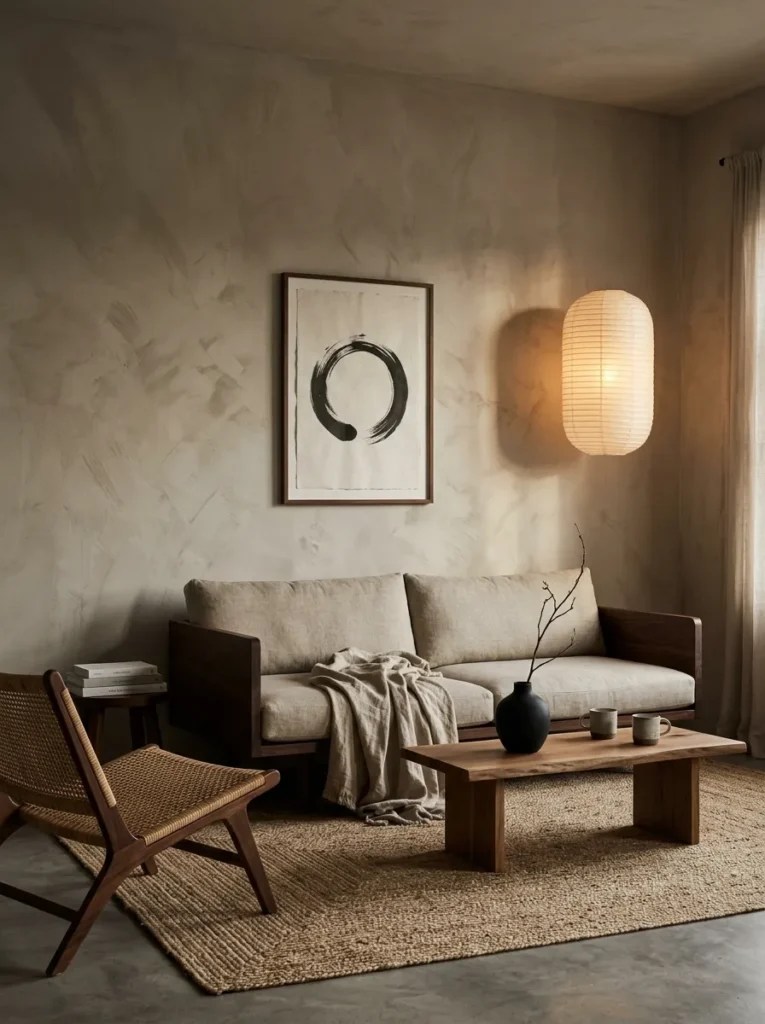
Wabi-sabi — the Japanese philosophy of finding beauty in imperfection — is the soul of every great japandi interiors living room. And it starts with the walls. Smooth, flat white paint is perfectly fine if you’re also fine with “fine.” But limewash plaster? Microcement? Clay paint with natural texture? That’s where the magic lives.
These finishes catch light differently throughout the day, making the room feel alive without a single piece of furniture moving. Pair with a single, carefully chosen piece of wall art — a Japanese ink wash print, a simple botanical sketch, or even a framed sumi-e brushstroke. Resist the gallery wall. Seriously. Resist it.
- Limewash paint brands to explore: Portola Paints, Bauwerk Colour
3. The Sacred Neutral Palette
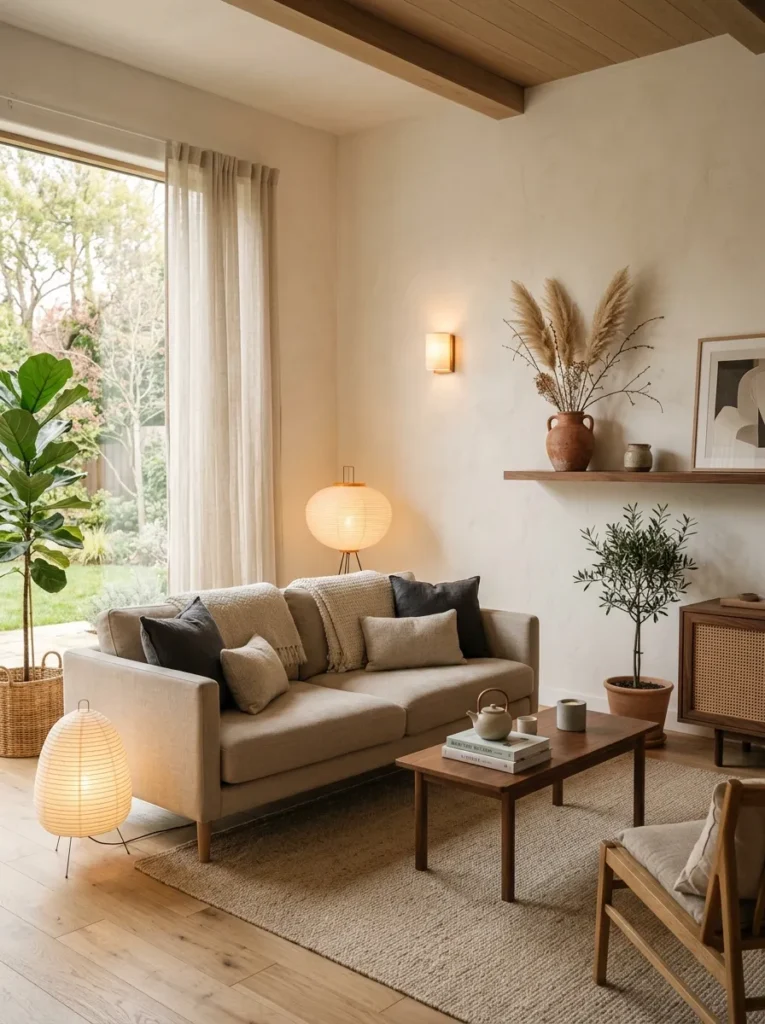
Color in a japandi interiors living room is not about picking what you like — it’s about restraint as a form of luxury. The Japandi palette is built on a foundation of warm neutrals (not cold greys, not stark whites) layered with carefully chosen deeper accents.
Here’s the palette formula that never fails:
- Base: Warm white or soft greige on walls
- Main furniture: Sand, oat, or warm linen tones
- Accents: Charcoal, deep forest green, or terracotta — pick ONE, use sparingly
- Natural materials as color: Raw wood, black iron, woven rattan bring visual depth without paint
The genius move? Terracotta as an accent. It bridges the Japanese earthiness with Scandinavian warmth in a single ceramic vase. You’re welcome.
- Amazon find: Mkono Ceramic Vase Set in Matte Terracotta – earthy tones, clean shapes, instant Japandi credibility
4. Bring the Forest Indoors — Thoughtfully
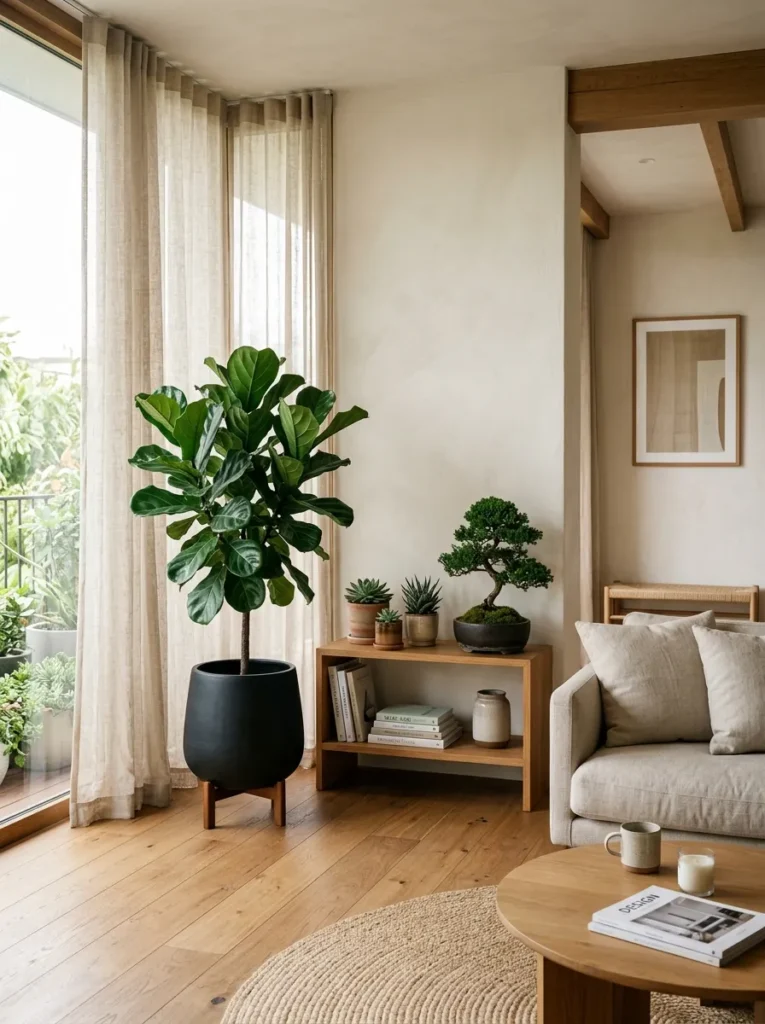
Nature is not a decorative afterthought in japandi interiors living room design — it’s structural. The Japanese concept of Satoyama (harmony between humans and nature) and Scandinavian love of the outdoors both demand you bring the outside in. But the keyword here is thoughtfully. This isn’t a greenhouse. This is a curated relationship with the natural world.
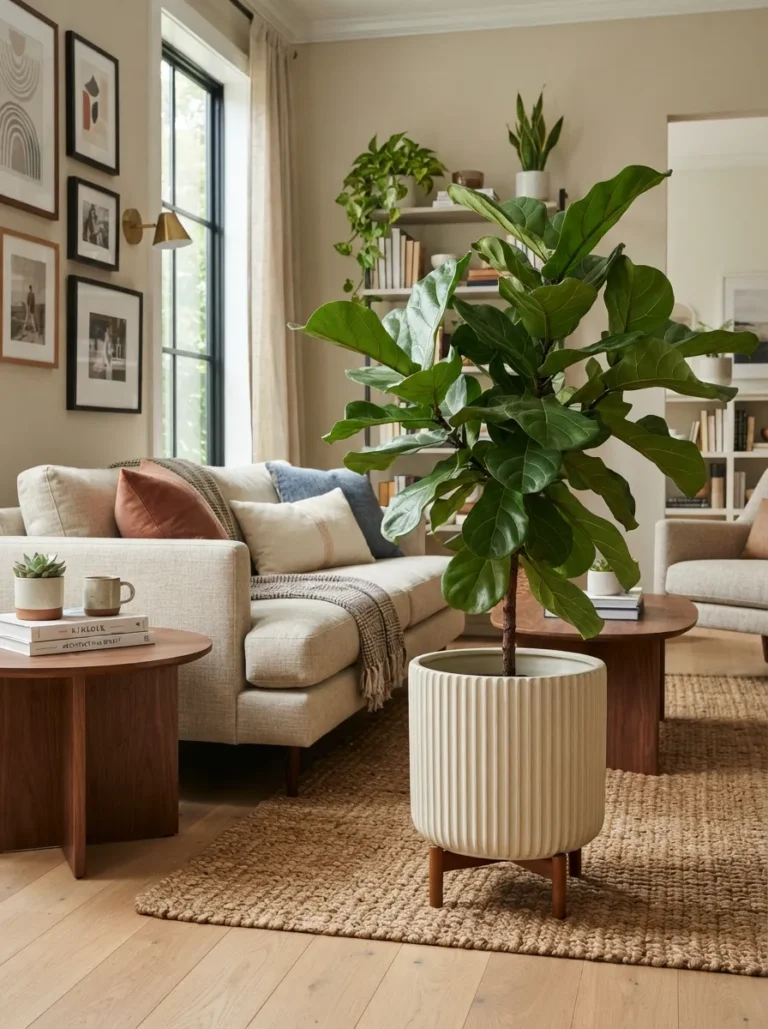
- One large statement plant: fiddle-leaf fig, monstera, or snake plant in a matte ceramic pot
- Small-scale accents: bonsai, moss balls (kokedama), or a single branch in a tall vase
- No plastic pots. Ever. That’s the rule.
- Natural materials on surfaces: linen, jute, stone, unfinished wood
Low-profile furniture and organic oak elements keep your layout grounded, but you can add a sleek, contemporary twist by moving toward a modern japandi living room aesthetic.
The goal is to make it look like plants belong there — because they do.
5. Lighting as a Mood Architect
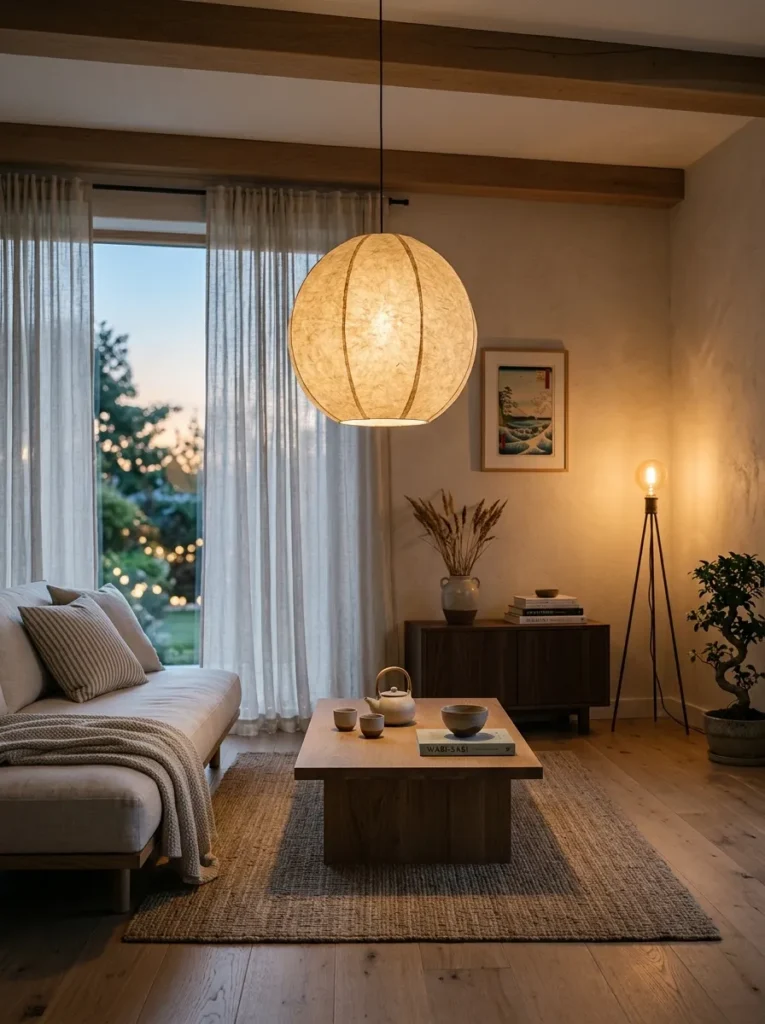
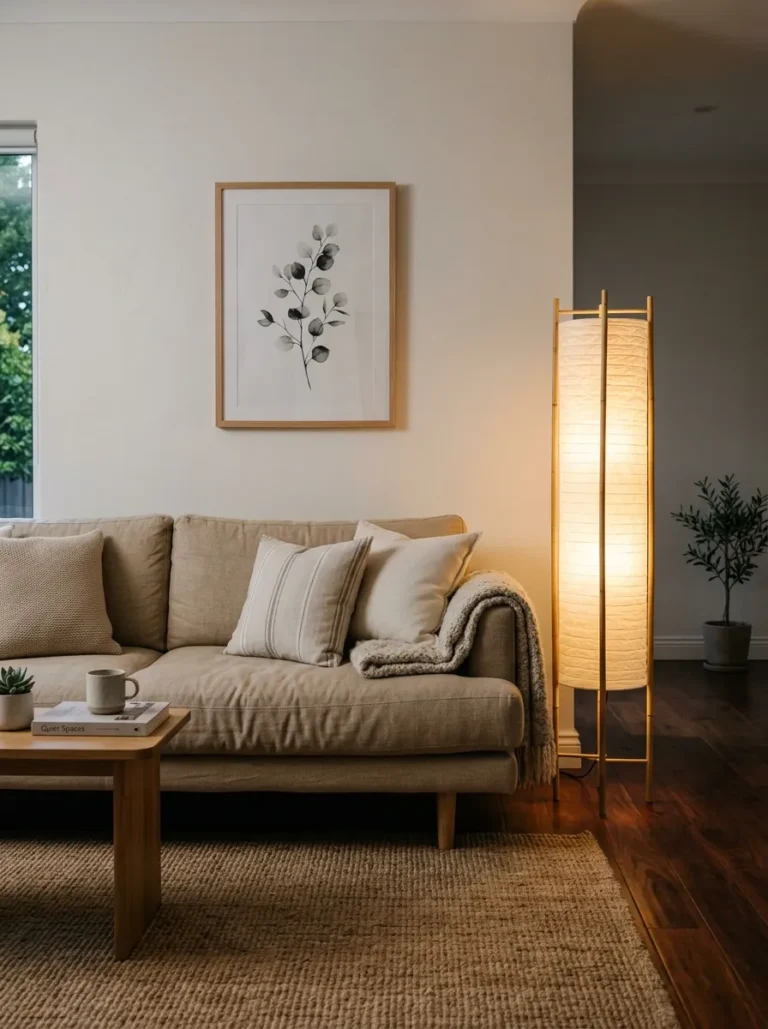
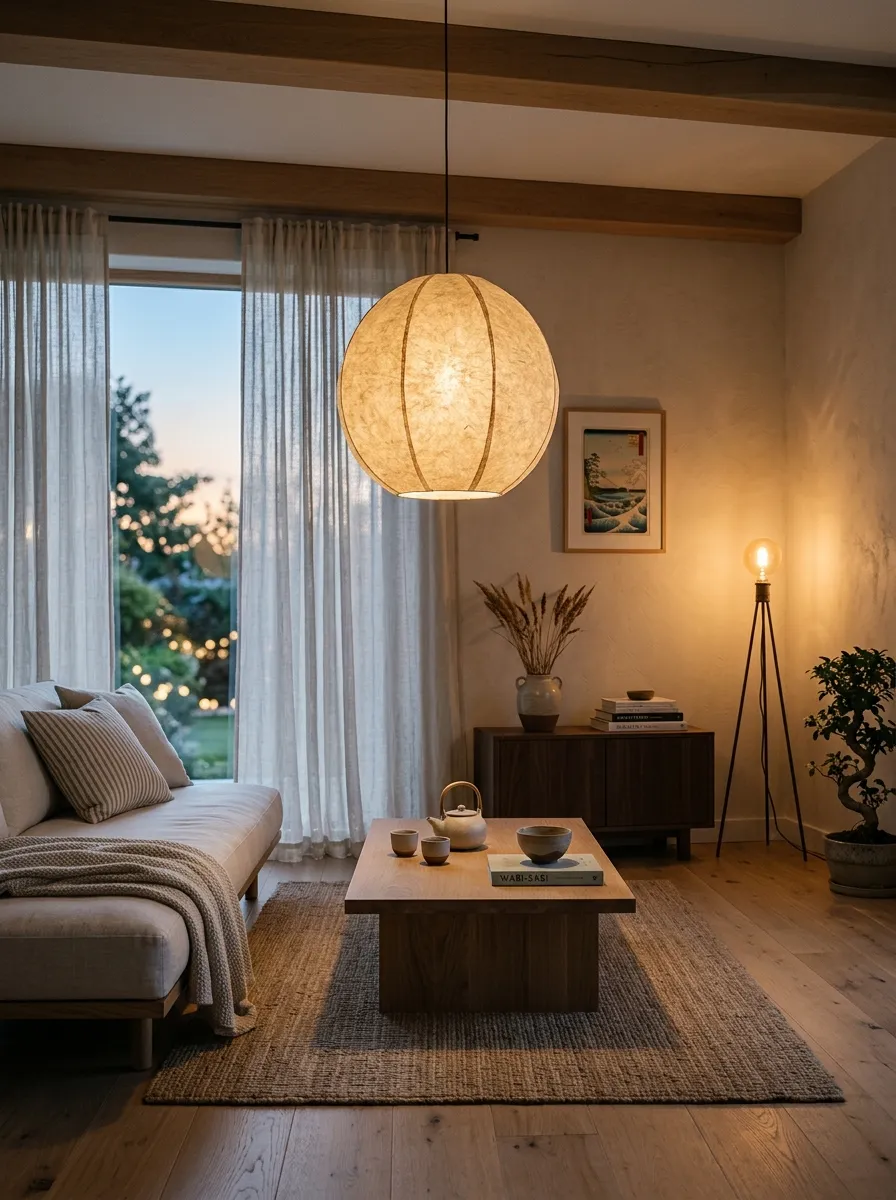
If the furniture is the body of a japandi interiors living room, lighting is its soul. And here’s where most people completely blow it — overhead lighting. Harsh, flat, ceiling-mounted overhead lighting is the enemy of every Japandi room. It creates the ambiance of a dentist’s waiting room. Hard pass.
Japandi lighting is layered, warm, and often inspired by traditional Japanese paper lanterns:
- Pendant lights: Washi paper or rattan shades that diffuse light beautifully
- Floor lamps: Slim, arched designs in matte black or natural wood
- Table lamps: Low-set with warm-toned bulbs (2700K is your number)
- Candles: Because nothing is more universally calming than fire controlled at a safe distance
Swap to warm bulbs immediately. That single change will make your existing room feel 40% more Japandi. That’s not a real statistic — but it might as well be.
- Amazon find: MOTINI Washi Paper Pendant Light – handcrafted look, warm diffused glow, effortlessly Japandi
This post contains affiliate links. If you buy something through them, I may earn a small commission at no extra cost to you.
6. Functional Storage — The Japandi Superpower
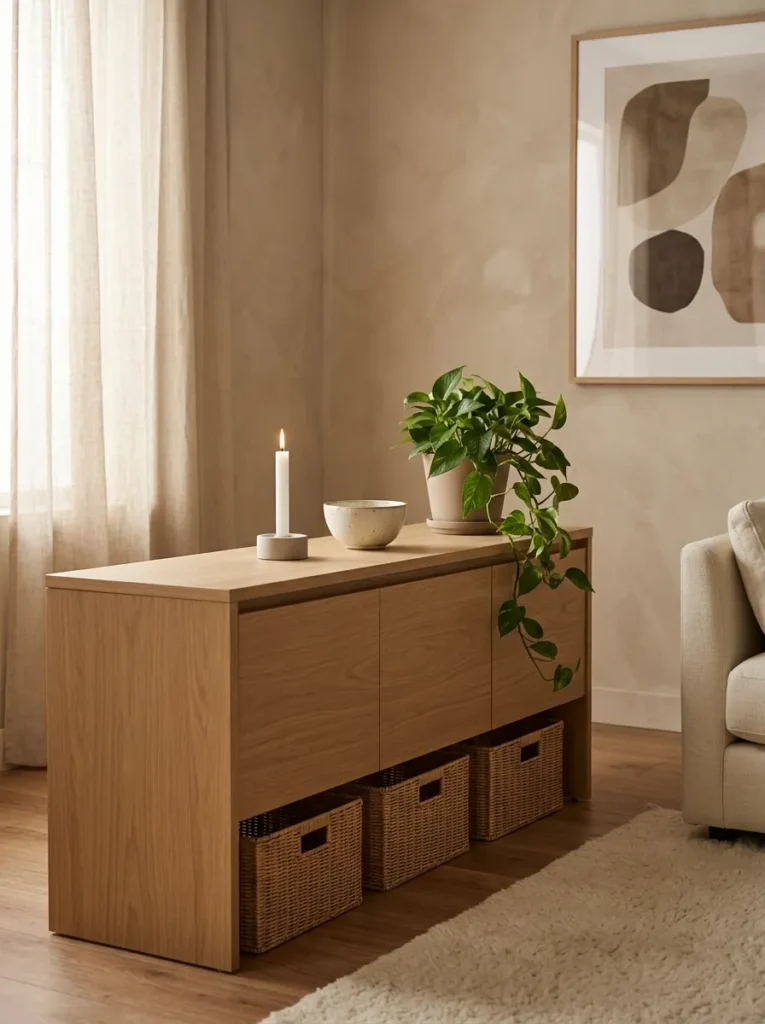
Here’s a dirty little secret about minimalism: it doesn’t mean owning nothing. It means storing everything you do own so strategically that the room looks like you own nothing. Japandi takes the Scandinavian obsession with functional storage and the Japanese love of concealment and creates something genuinely brilliant.
Every japandi interiors living room needs:
- A low sideboard or credenza with closed storage (no open shelving free-for-alls)
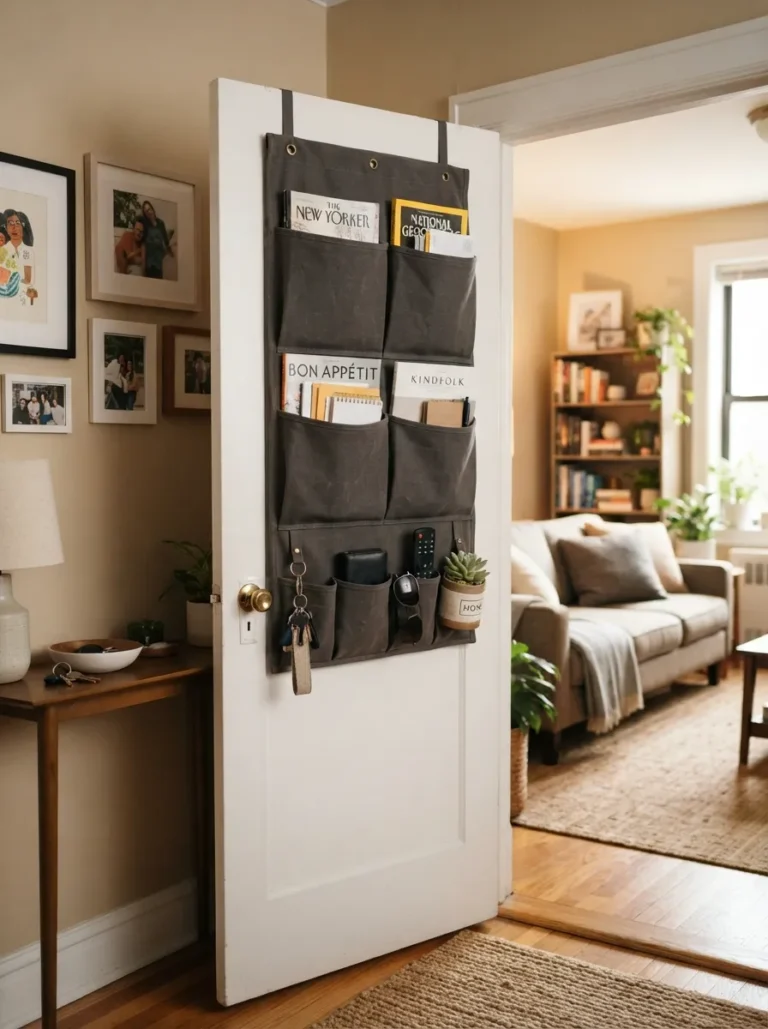
- Woven baskets in natural materials for soft storage — throws, remotes, whatever chaos you’re hiding
- Built-in or furniture-integrated storage where possible
- The “one beautiful object on display” rule — everything else goes away
This is also where you channel Marie Kondo without having to watch the show. Does it spark joy? Does it have a designated hidden home? Then it may stay. Otherwise — goodbye.
7. Texture Over Pattern — The Unspoken Rule
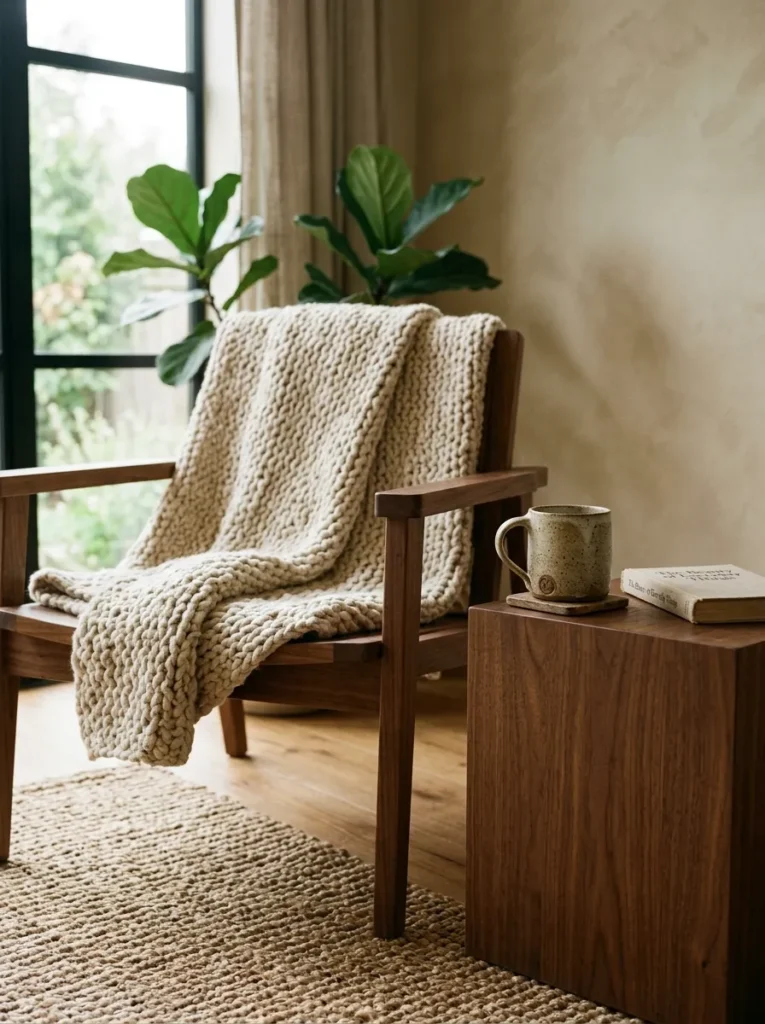
In japandi interiors living room design, pattern is suspicious. Bold prints, graphic wallpapers, busy textiles — they all introduce visual noise, and visual noise is the opposite of serenity. But texture? Texture is everything. It’s how a room that’s technically “just neutral tones” manages to feel rich, layered, and deeply human.
The Japandi texture stack:
- Chunky linen or cotton throws — draped casually, not folded with origami precision
- Jute or sisal rugs — organic, earthy, and they literally bring the ground to your floor
- Handmade ceramic objects — no two are exactly alike, which is the whole point
- Unfinished or lightly oiled wood surfaces — the grain is the detail
If your hand wants to reach out and touch everything in the room, you’ve nailed it. That tactile pull is what makes Japandi feel warm rather than cold — and it’s what separates it from stark, soulless minimalism.
- Amazon find: Creative Co-Op Handwoven Jute Area Rug – natural texture, minimalist weave, grounds any Japandi living room instantly
8. The Art of Negative Space
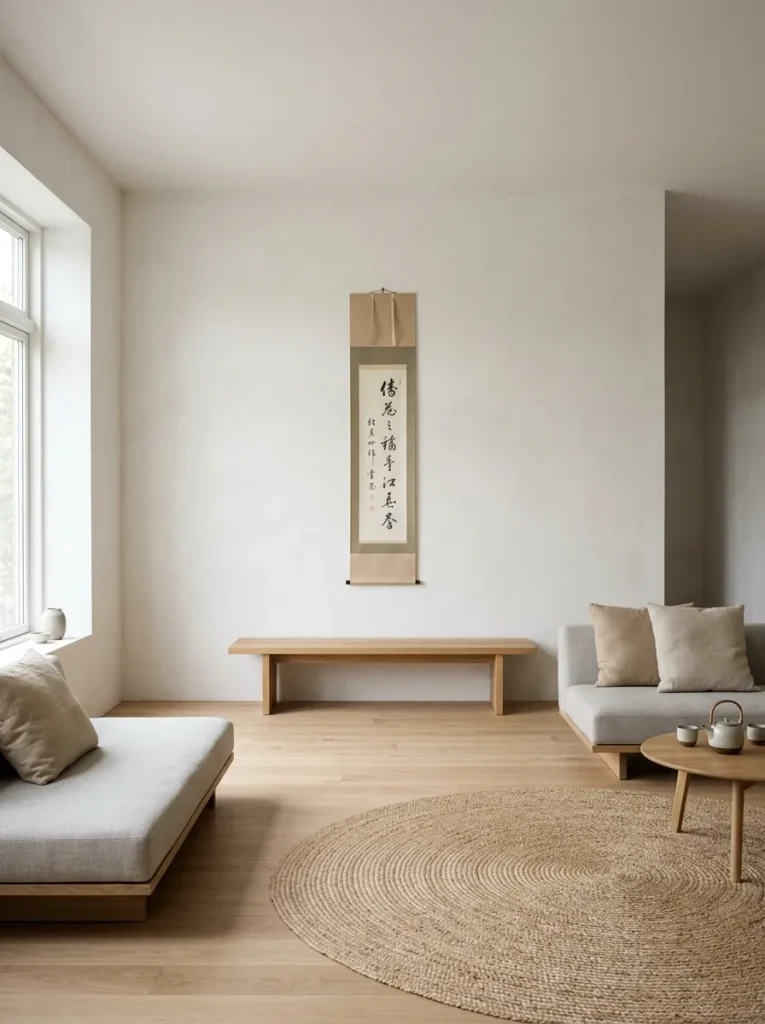
Save the best — and most counterintuitive — for last. In a world of “more is more,” japandi interiors living room design is built on a radical idea: empty space is not wasted space. It is, in fact, the most intentional design choice you can make. The Japanese call it ma — the meaningful pause, the deliberate void that makes everything around it more powerful.
Negative space in practice means:
- Leaving a full wall bare — not because you forgot, but because you chose to
- Resisting the urge to fill every surface with objects
- Allowing breathing room between furniture pieces
- Editing ruthlessly: if you’re unsure whether something belongs, it doesn’t
The discipline of restraint is what makes a japandi interiors living room feel like a sanctuary rather than a showroom. Every object that earns its place in the room becomes more meaningful. Every empty corner becomes a small gift of calm in a world that will not stop adding noise.
The japandi interiors living room aesthetic isn’t about decorating — it’s about editing, intentionality, and trusting that less, done beautifully, will always feel like more. Start with one idea from this list today, and watch how quickly the rest falls into place.