8 Living Room Wall Decor Ideas with TV That Work
The television. It is a large, black rectangle that refuses to apologize for its existence, dominating every wall it touches like it pays rent. Sound familiar? A mounted screen on a bare wall looks like an electronics store display, but finding the right living room wall decor ideas with tv can change the entire game.
The secret isn’t hiding the screen — it is framing it with intentional decor so it finally feels like a confident design decision. Let’s jump into eight living room wall decor ideas with tv that actually pull this off.
1. The Built-In Shelving Frame
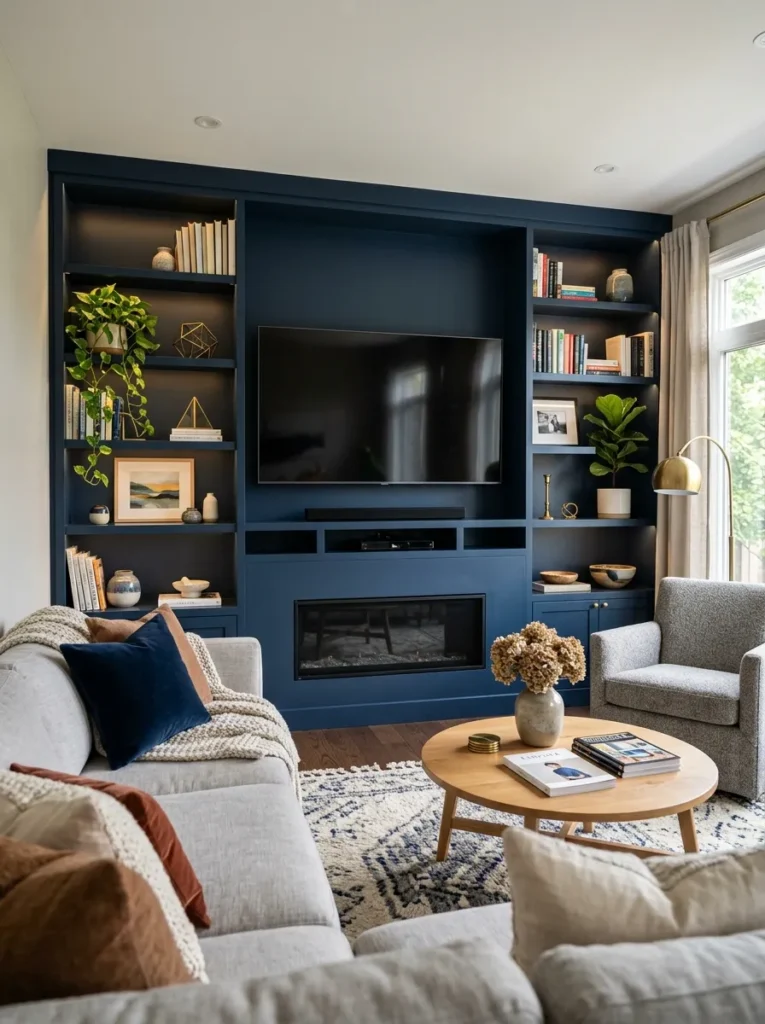
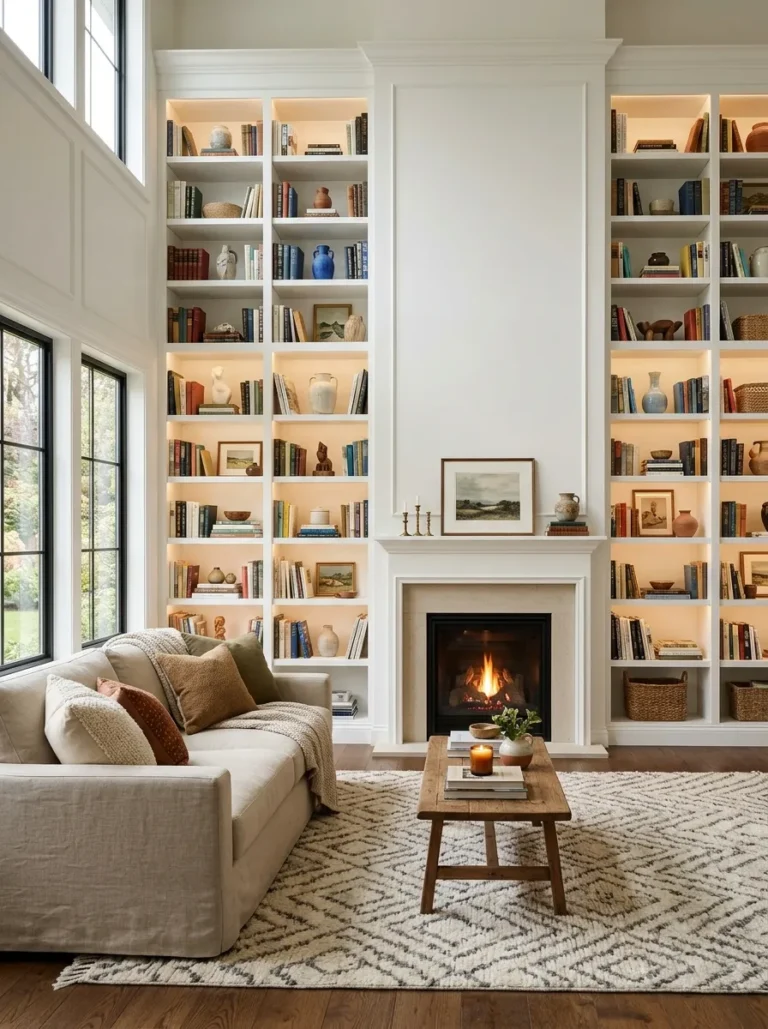
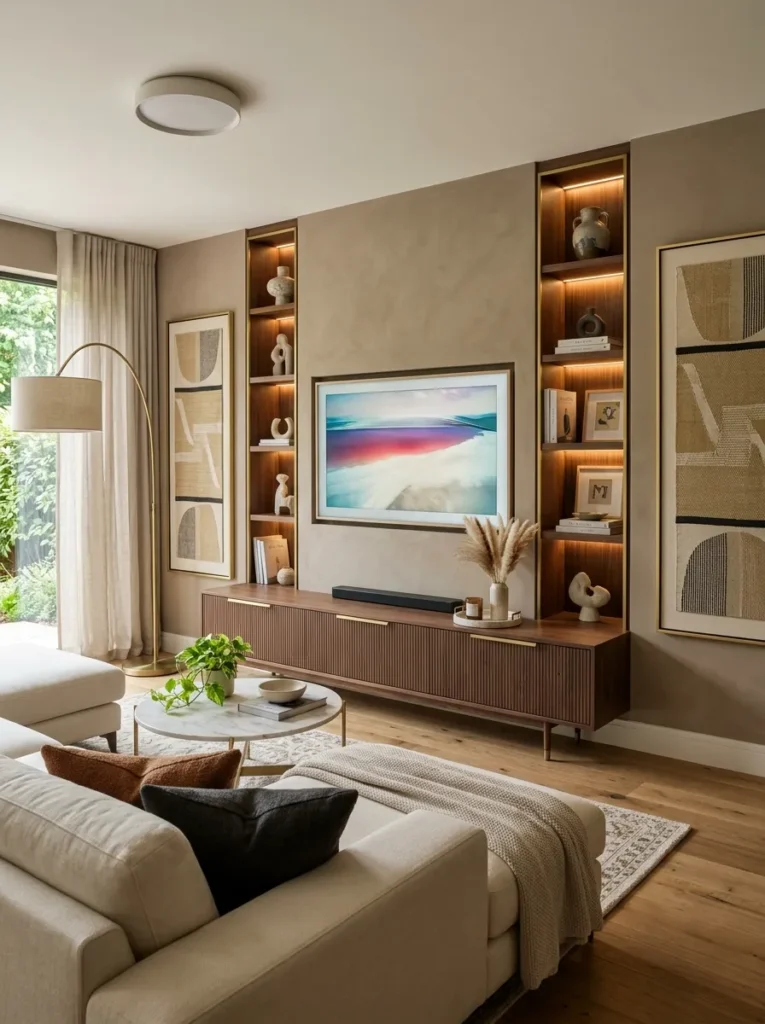
Built-in shelving flanking and surrounding the TV is the gold standard of television wall design — and for good reason. It transforms the screen from an awkward focal point into the intentional centerpiece of a fully realized wall composition. The television stops being “the TV wall” and becomes simply… the wall. A beautiful, purposeful one.
The shelving does the heavy lifting aesthetically:
- Flank both sides of the screen with floor-to-ceiling or half-height shelving units
- Paint the entire wall and shelving unit in a single deep tone (navy, forest green, charcoal) to unify everything
- Style shelves with a curated mix of books, ceramics, trailing plants, and small framed prints
- Route all cables through the wall for a clean finish — this step is non-negotiable
No built-ins budget? IKEA’s BILLY bookcases flanking a TV mount achieve the same visual effect for a fraction of the cost. Nobody needs to know.
Bestier TV Stand with Shelves Entertainment Center
wall-adjacent floor unit that mimics built-in styling without the contractor bill .
Check Price & Options on Amazon →2. Gallery Wall Around the TV
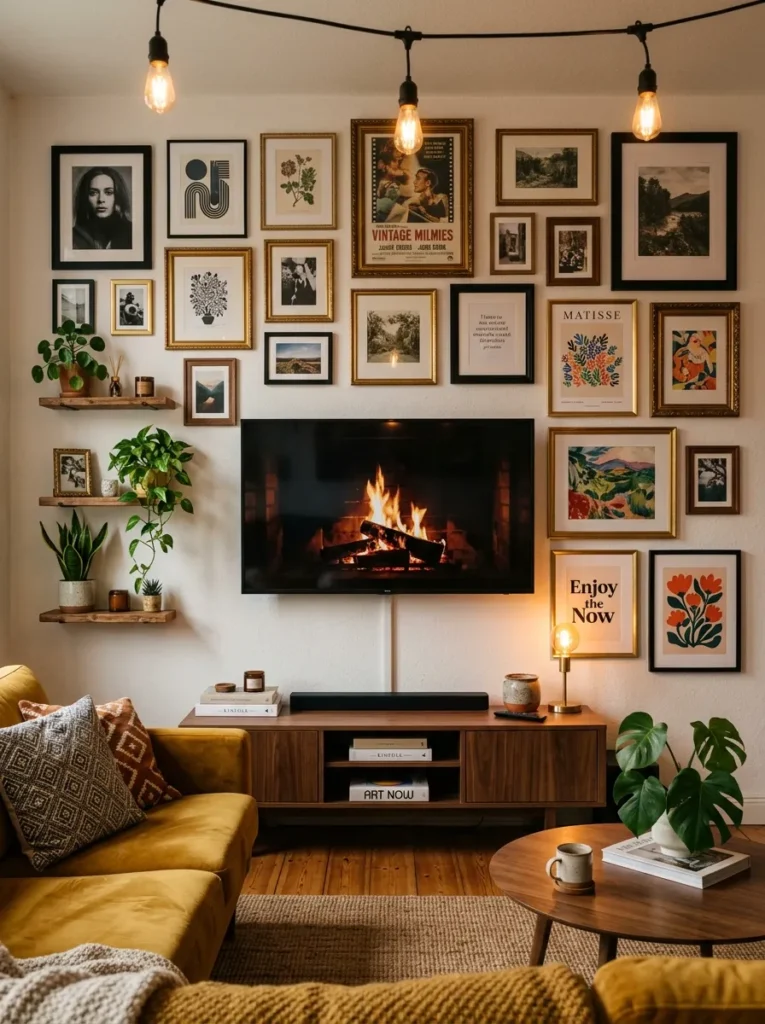
The gallery wall around a TV is one of those ideas that sounds chaotic in theory and looks completely brilliant in execution. The principle is simple: instead of leaving the space around the screen bare and uncomfortable, you fill it with a constellation of framed art that makes the TV just one element in a larger visual composition — rather than the only thing the eye can find.
Execution requires a few ground rules to keep things from looking accidental:
- Keep frames at least three to four inches away from the TV edges on all sides — breathing room is respect
- Vary sizes dramatically; the contrast between large and small frames creates rhythm
- Stick to a consistent frame finish (all black, all natural wood, all brass) to unify the mix
- Center the arrangement on the TV itself, treating the screen as an anchor piece rather than an intruder
The result makes the TV feel invited rather than tolerated.
3. Full-Wall Wood Paneling or Shiplap Backdrop
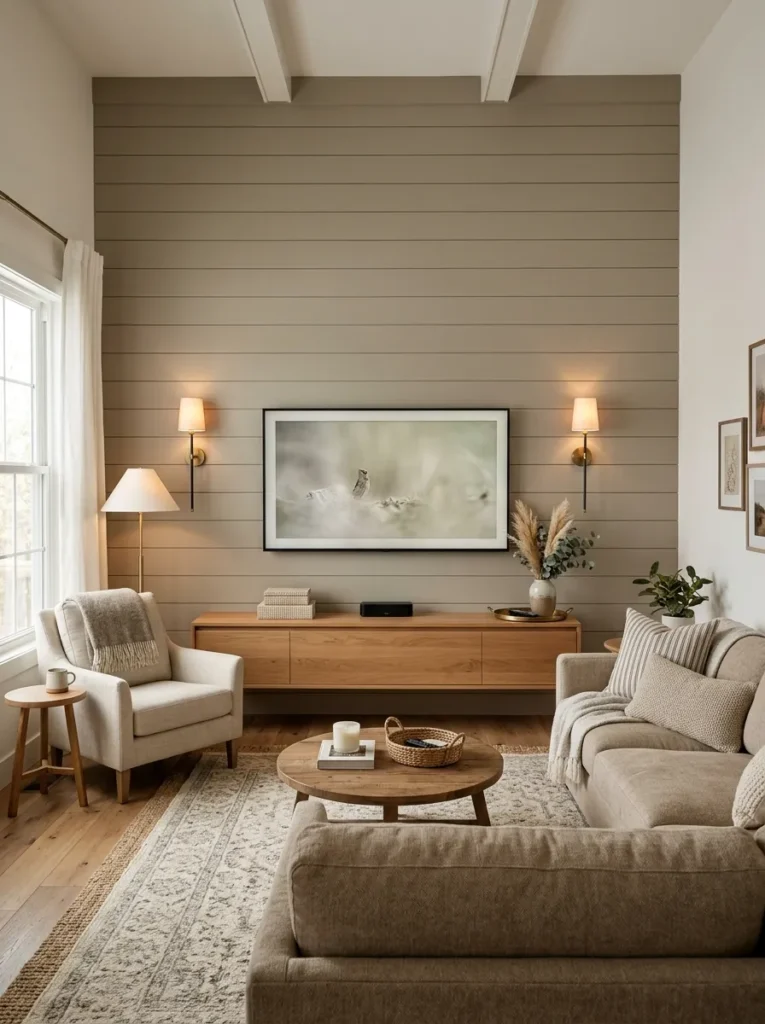
When the wall itself is beautiful, the television mounted on it becomes a feature rather than a flaw. Full-wall wood paneling — whether that’s shiplap, vertical slat panels, or engineered wood veneer — creates a rich textural backdrop that visually absorbs the TV rather than surrendering to it.
The key is treating the entire wall as one unified surface:
- Mount the TV flush with no visible gaps or tilted arm mounts — flat and centered is the goal
- Choose a panel tone that complements the screen’s bezel: dark wood with a dark TV frame is effortlessly sophisticated
- Add slim sconces on either side at screen height to frame the composition symmetrically
- Keep the media console below slim and floating — bulk below competes with the wall’s elegance above
Nisorpa 3D Wood Wall Panels Peel and Stick
natural wood veneer, no tools required, creates genuine warmth without a renovation .
Check Price & Options on Amazon →4. LED Backlight and Ambient Bias Lighting
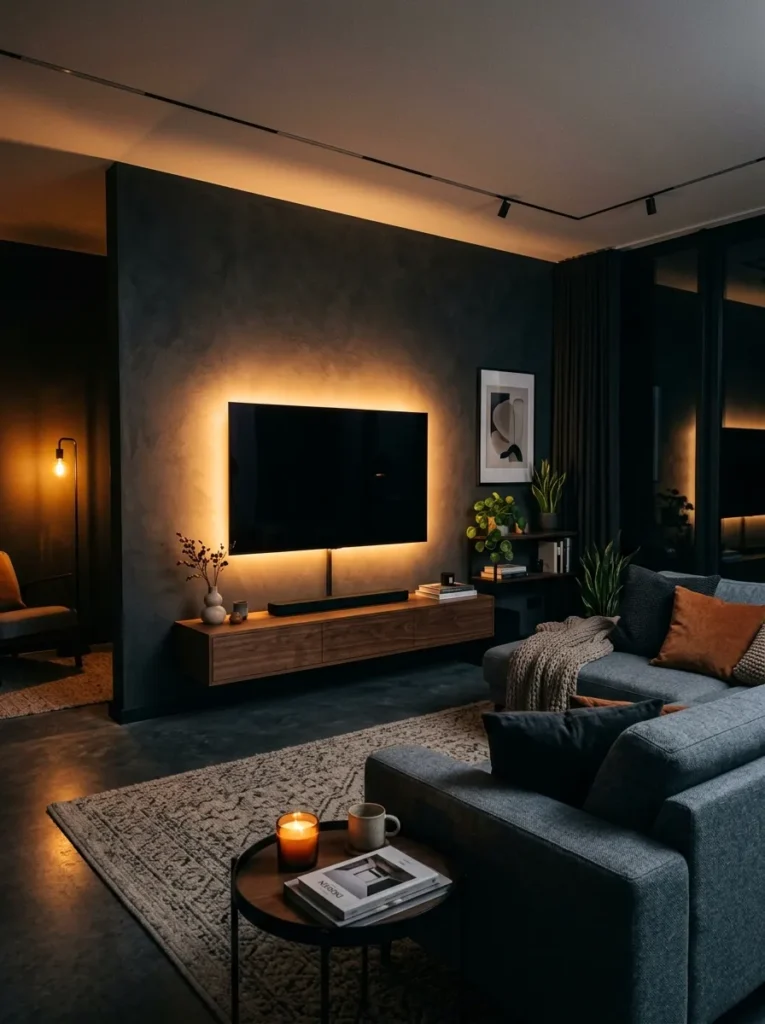
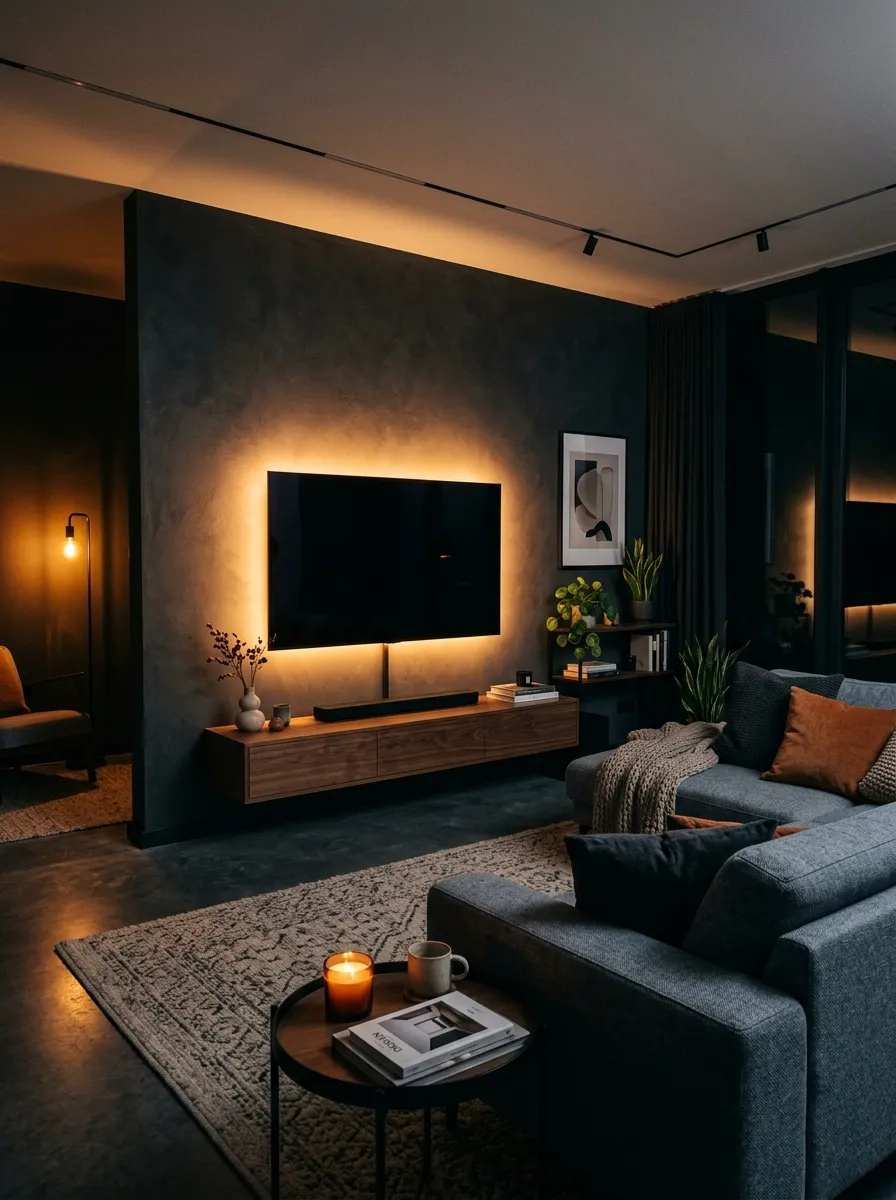
This one is criminally underused in home design conversations, and it deserves a moment in the spotlight — literally. LED bias lighting installed behind the television creates a glowing halo effect that does something remarkable: it makes the screen feel like it’s embedded in the wall rather than attached to it. The TV becomes atmospheric rather than clinical.
Beyond the obvious aesthetic upgrade, bias lighting is also genuinely good for your eyes during extended viewing sessions — reduced contrast between the bright screen and dark wall means less eye strain. Form and function… in this economy? Absolutely.
Style considerations:
- Warm amber or soft white LEDs feel sophisticated and interior-forward
- RGB color-changing strips (synced to screen content) lean more gaming setup than design moment — choose accordingly
- Pair with a dark or moody accent wall color for maximum drama; the halo effect disappears against white
Blending your television into a gallery wall hides the stark black screen perfectly, a concept that aligns with the discreet tech solutions in a minimal japandi living room tv setup.
5. The Floating Media Console Moment
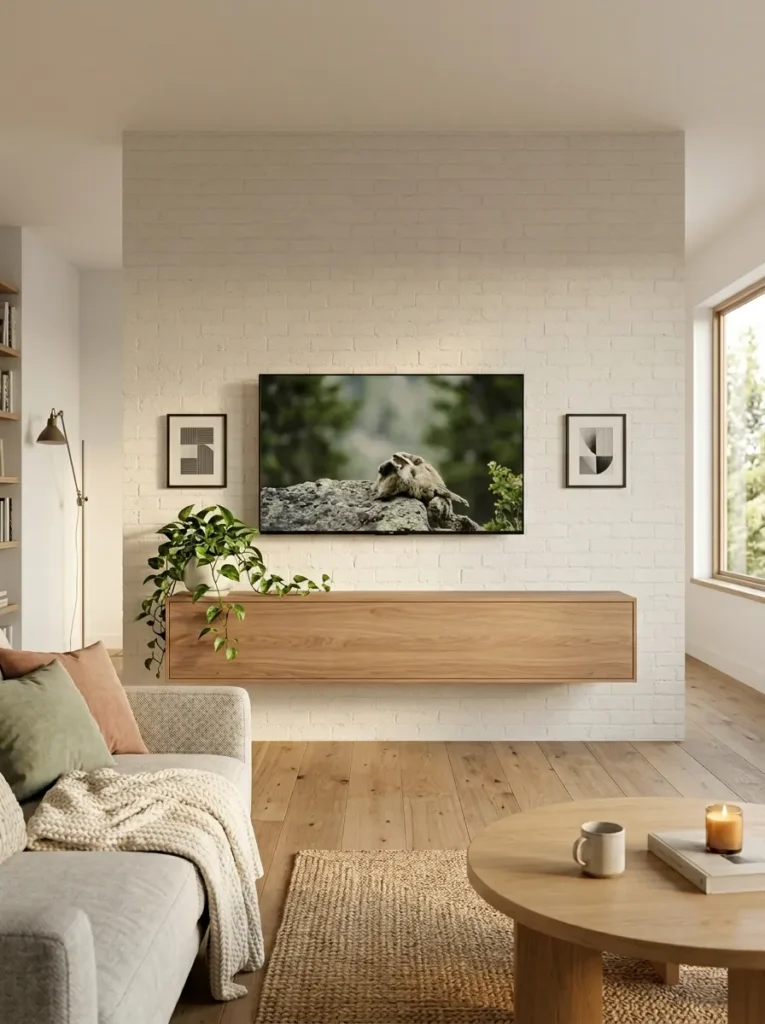
Sometimes the most powerful decor move isn’t what goes beside the TV — it’s what goes below it. A beautifully styled floating media console anchors the television visually, bridges the gap between screen and floor, and creates a natural surface for curated decor that draws the eye downward and creates a complete, top-to-bottom wall composition.
The floating console (wall-mounted, with visible clearance above the floor) is superior to the floor-standing variety in almost every styling scenario — it feels lighter, more modern, and easier to keep clean beneath:
- Keep console styling minimal: one or two objects maximum, a trailing plant, perhaps a small stack of books
- Match the console material to other wood tones in the room for cohesion
- Leave deliberate negative space; the console shouldn’t compete with the TV, it should complete it
Nathan James Ellipse Floating Media Console
wall-mounted walnut finish, clean Scandi lines, fits screens up to 65 inches .
Check Price & Options on Amazon →This post contains affiliate links. If you buy something through them, I may earn a small commission at no extra cost to you.
6. Flanking Art Panels or Large-Format Prints
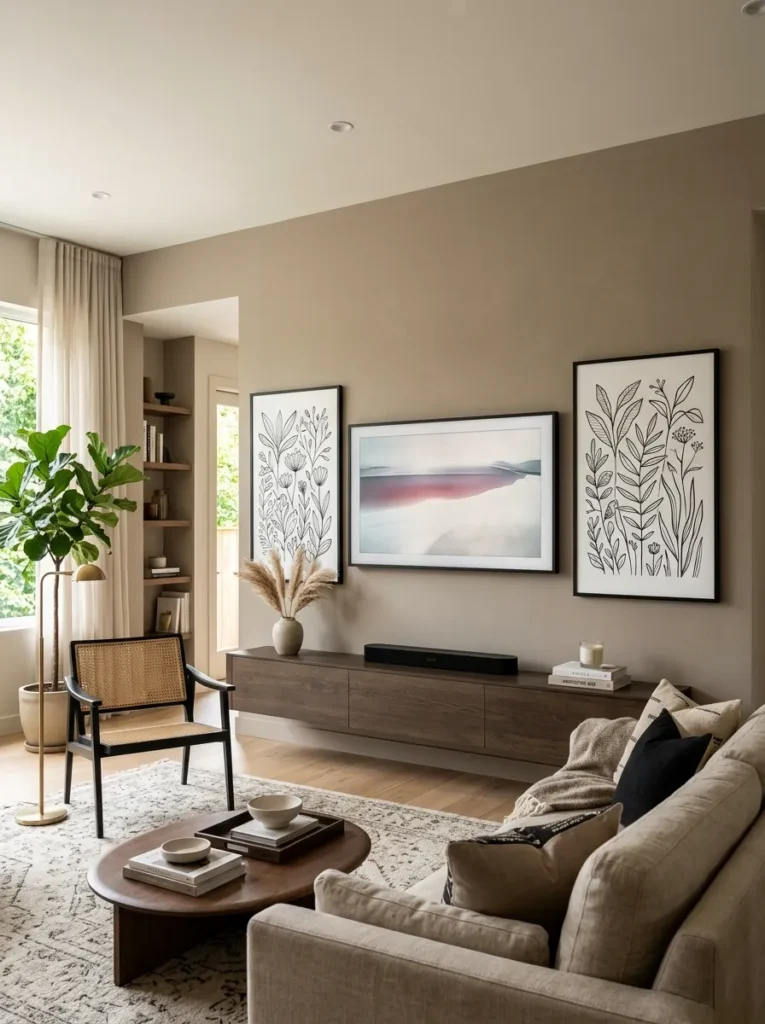
Symmetry is one of the most reliable tools in interior design, and nowhere does it work harder than on the TV wall. Flanking the screen with two matching large-format art panels or framed prints creates instant visual balance — the eye moves left, to the screen, and right in a smooth, satisfying sweep rather than landing on the TV and stopping dead.
The art doesn’t compete with the television; it contextualizes it. Suddenly the screen is part of a triptych arrangement rather than a lone black rectangle demanding all the attention in the room. Winning.
Guidelines for pulling this off:
- Vertical prints work best — they echo the height of the mounted TV rather than fighting its horizontal scale
- Size matters: prints should be at minimum two-thirds the height of the TV for visual proportion
- Keep subject matter calm and graphic — detailed busy prints create visual noise alongside the screen
- Center the art panels vertically on the screen’s midpoint for true symmetry
7. Integrated Fireplace and TV Feature Wall
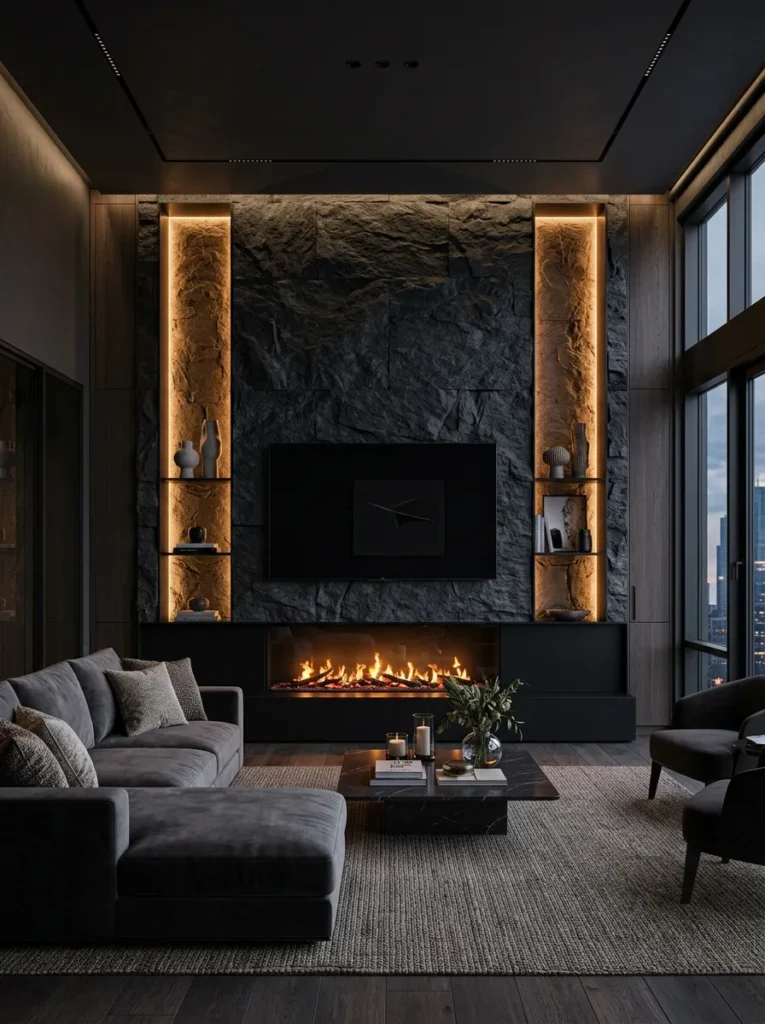
The double feature: TV above, fireplace below. Few wall configurations communicate “this room was designed” more powerfully than a television integrated into a feature wall that also houses a fireplace — electric or gas. The two focal points share a wall and, rather than competing, they reinforce each other’s impact through sheer combined presence.
Electric fireplace inserts have made this arrangement accessible at almost any budget, and the design flexibility they offer is significant:
- Linear electric fireplace inserts sit flush within a custom-built surround or floating console
- Stone cladding, plaster, or painted drywall surrounds all work; choose based on room aesthetic
- Keep the space between the fireplace and TV screen proportional — too tight looks crammed, too much gap breaks the visual connection
- Recessed LED niches or built-in shelving on either side complete the composition
Dimplex Ignite XL Bold Linear Electric Fireplace
stunning flame realism, zero installation complexity, wall-mount ready .
Check Price & Options on Amazon →8. Cord Management as a Design Feature
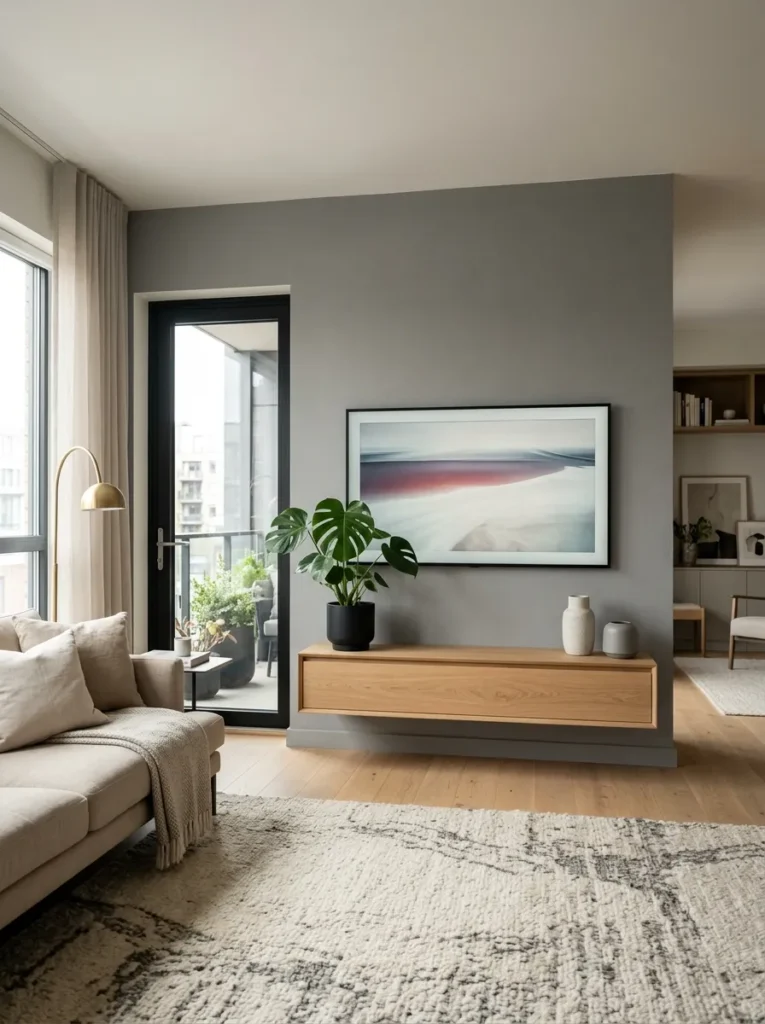
Here’s the idea that isn’t glamorous to discuss but is absolutely transformative in practice: hiding — or deliberately managing — every single cable connected to that television. Nothing unravels a beautifully styled TV wall faster than a waterfall of HDMI cables cascading down the wall like a very depressing tech spaghetti situation.
Cord management is where decor meets discipline, and the options have never been better:
- In-wall cable concealment kits route everything invisibly behind drywall — no electrician required for most setups
- Cord covers in the same color as your wall paint are the low-effort, high-impact alternative
- Cable raceways in white, black, or wood grain sit flush against the wall and disappear when painted
- A slim floating console positioned directly below the TV conceals a power strip and all device connections behind closed doors
Wiremold Flat Screen TV Cord Hider Kit
complete in-wall solution, paintable, works with standard drywall, includes all hardware .
Check Price & Options on Amazon →The clean wall behind the television isn’t a luxury detail — it’s the foundation every other idea on this list depends on to actually work.
The television wall is the most viewed surface in your entire living room, which means getting it right isn’t optional — it’s urgent. Pick one of these approaches, commit fully, and turn the wall you’ve been avoiding into the room’s most confident design statement.