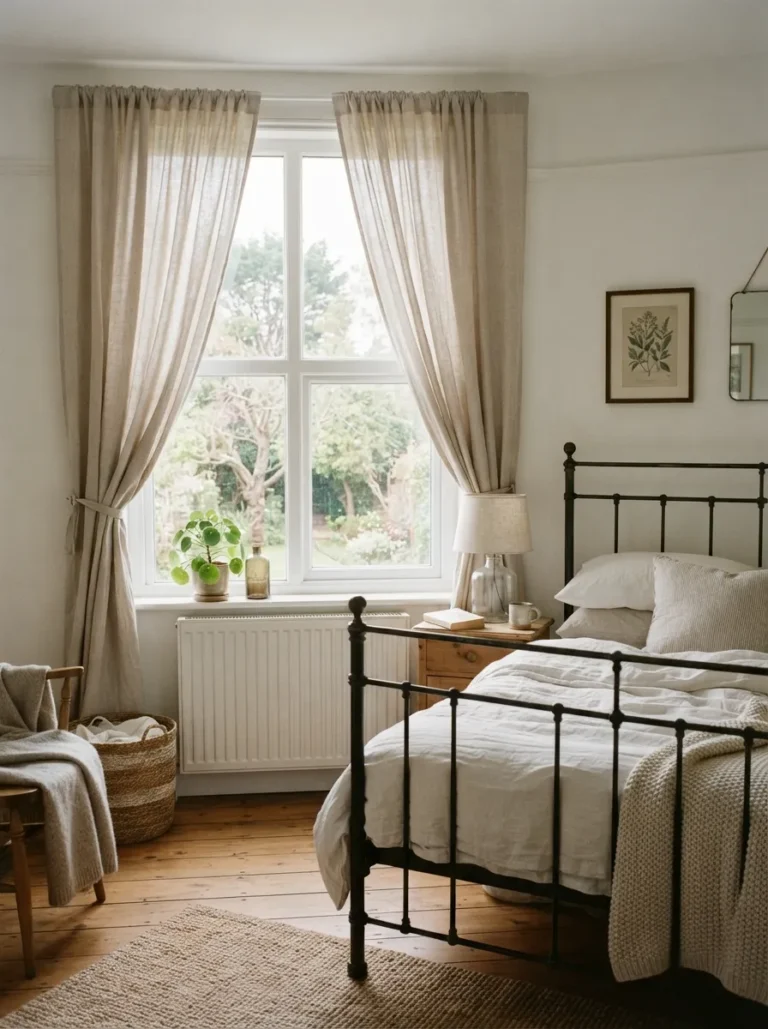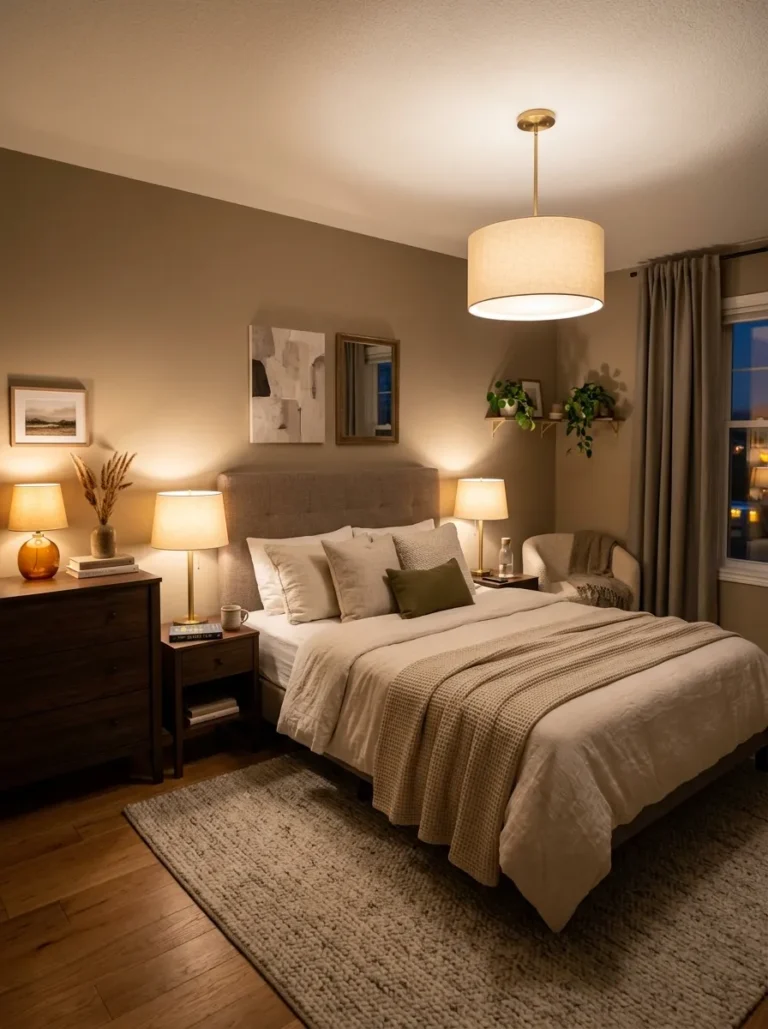
8 Bedroom Ideas for Small Rooms Green & Serene
Small bedrooms have a color problem — and it’s not the one most people think. The conventional wisdom says “paint small rooms white to make them feel bigger,” and while that advice isn’t wrong exactly, it produces a predictable result: a bedroom that feels clean and bright but somehow impersonal, like a hotel room that nobody has stayed in yet. Functional. Forgettable. Completely lacking the quality that every bedroom actually needs above everything else — the quality of feeling like a place you genuinely want to be.
Green changes that equation entirely. Not because green is trendy (though it absolutely is), but because green is neurologically significant in a way that no other color is. Humans are biologically calibrated to find green restorative — it’s the color of foliage, of safety, of the natural environments where the nervous system learned to relax over millions of years of evolution. A small bedroom painted in sage, or dressed in olive textiles, or anchored by a deep emerald accent wall, doesn’t just look beautiful. It feels different. Calmer. More intentional. More like a retreat.
The secret behind the best bedroom ideas for small rooms green isn’t about choosing the right paint chip alone. It’s about understanding how different green tones work with light, scale, and texture in a compact space — and how to layer the color through multiple elements (walls, bedding, plants, accents) to create depth and richness without visual weight. Done well, green in a small bedroom doesn’t shrink the space. It envelops it.
Whether the starting point is a bare white box rental or an existing room in need of a character overhaul, these 8 bedroom ideas for small rooms green enough to feel like a forest clearing will transform the most overlooked room in the home into the most restorative one.
Let’s jump into the green bedroom ideas that make a small space feel like a sanctuary borrowed from the woods.
1. Sage Green Walls — The Small Room’s Best Friend
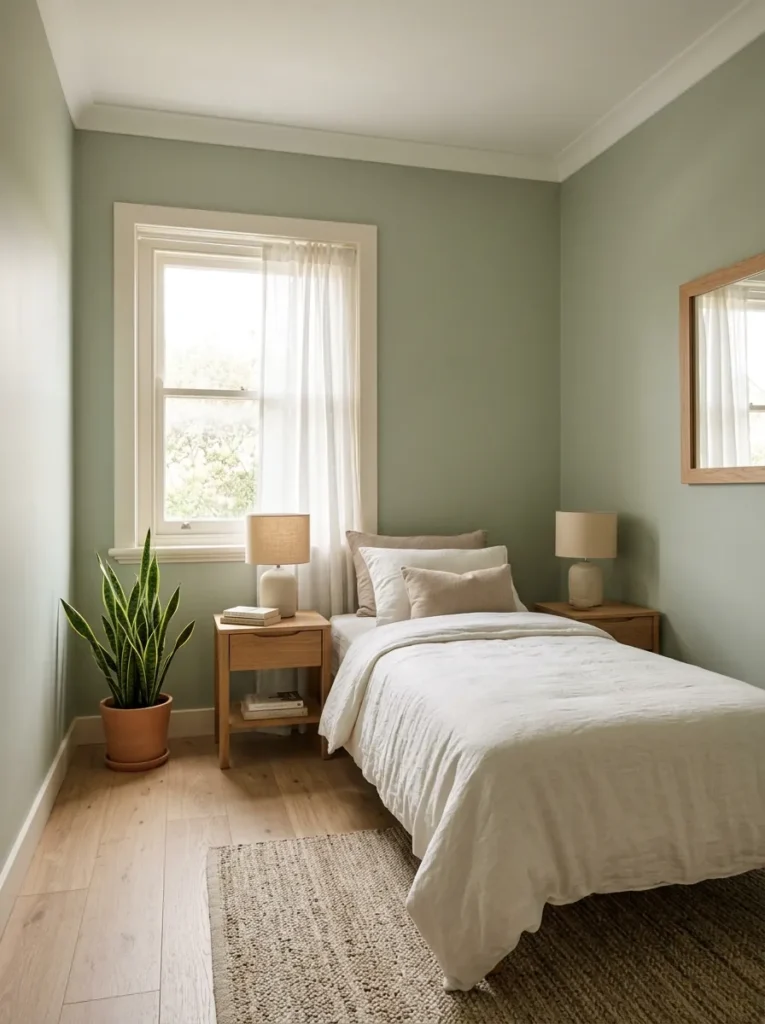
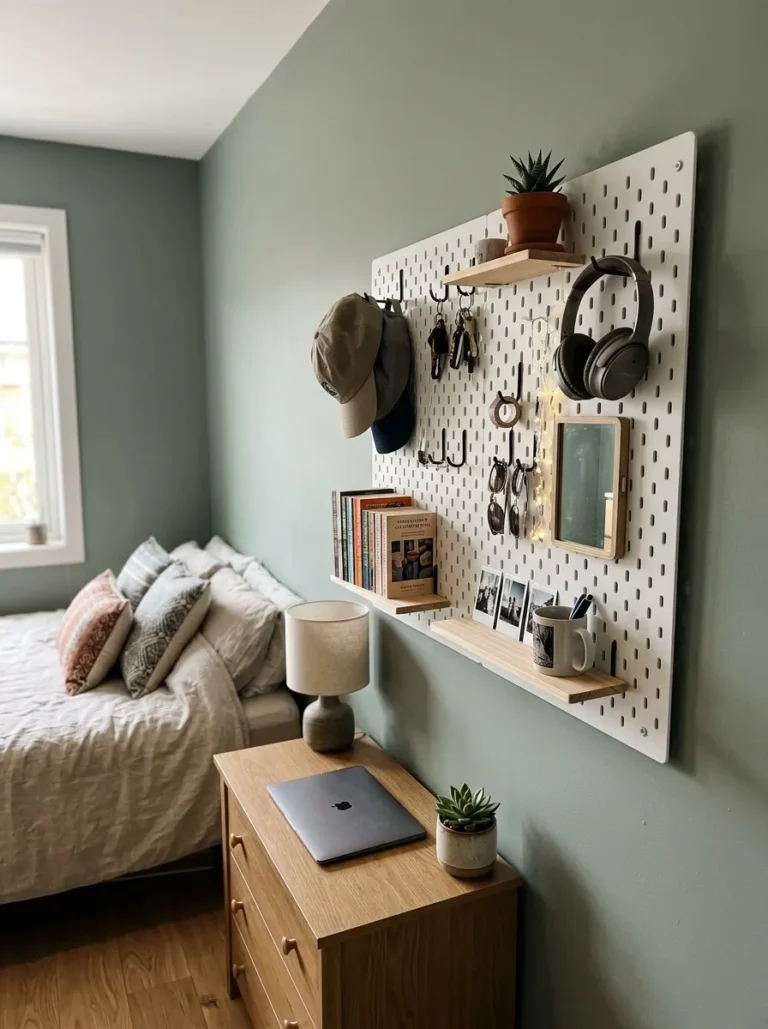
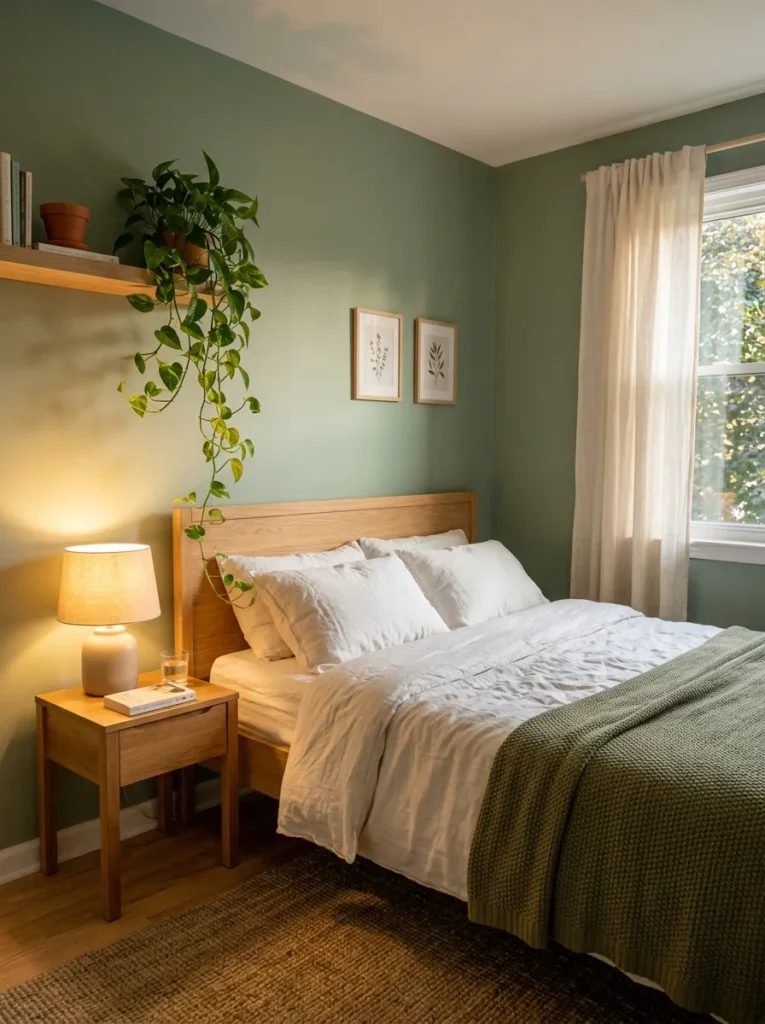
Sage green is the specific shade of green that small bedrooms were made for — muted enough not to dominate, warm enough not to recede into gray, and just green enough to register as the most calming color in any room it inhabits. Unlike saturated dark greens that create drama, or bright greens that create energy, sage creates serenity — which is precisely the emotional register a bedroom needs to perform at its best.
- Sage green with warm undertones (leaning yellow-green rather than blue-green) reads as most universally flattering in bedrooms with warm, wood-toned furniture
- Apply to all four walls including the ceiling for a fully enveloping, cocoon-like effect that reads as intentional rather than claustrophobic
- Pair with warm white trim for the classic contrast that makes the green sing without being overpowering
- Top paint picks: Sherwin-Williams Privilege Green, Benjamin Moore Aganthus Green, Farrow & Ball Mizzle
Bold claim: a bedroom painted in sage green consistently photographs more beautifully than the same room in white. The color gives every image depth, warmth, and a reason to exist.
2. Deep Olive Green Accent Wall Behind the Bed
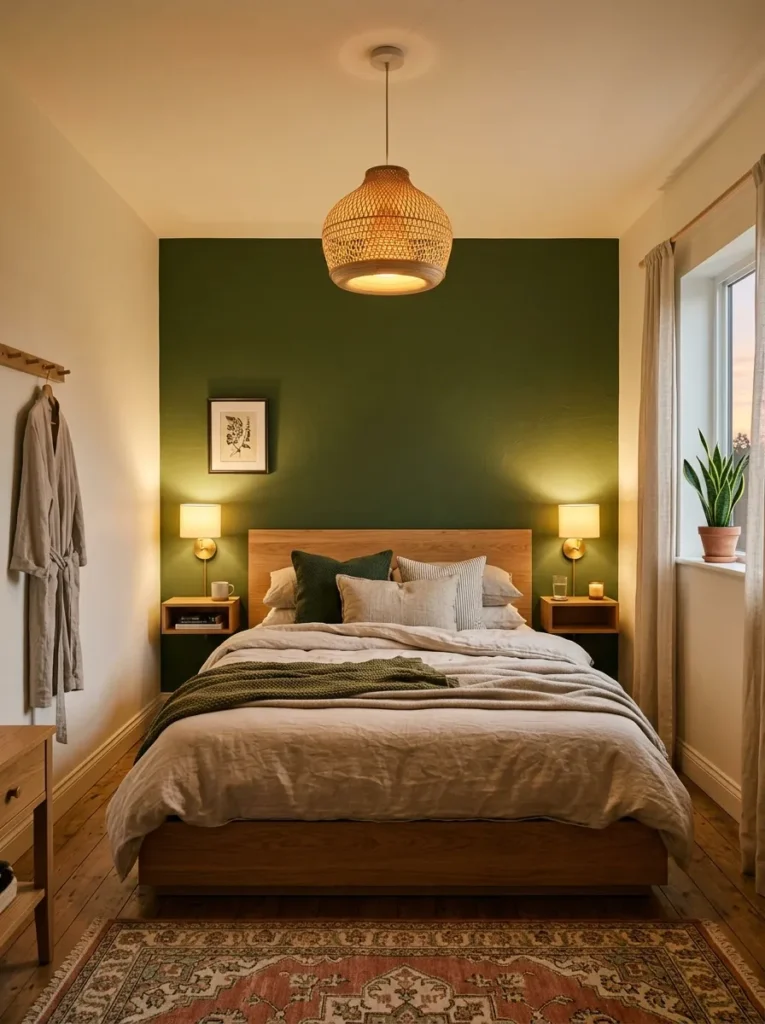
For small bedrooms where painting all four walls green feels like too large a commitment, the single olive green accent wall behind the bed delivers maximum impact with minimum coverage — and olive, specifically, brings a depth and earthiness that sage can’t quite match. It’s the green that feels like ancient forest, like aged patina, like a color that has been somewhere and done something. Against warm white walls and warm wood furniture, olive green is extraordinary.
- Olive green’s yellow undertones warm the bedroom palette in a way that blue-based dark greens don’t
- A single accent wall behind the bed requires no furniture rearrangement and no full room commitment
- The contrast between the olive accent wall and warm white remaining walls frames the bed as the room’s focal point — a visual benefit that accompanies the color benefit
- Peel-and-stick paint panels or wallpaper in olive tones are renter-friendly alternatives to permanent paint
An olive green accent wall is the bedroom upgrade that gets the most comments and requires the least work. That calculation is nearly always worth pursuing.
3. Emerald Green Velvet Headboard as a Statement Piece
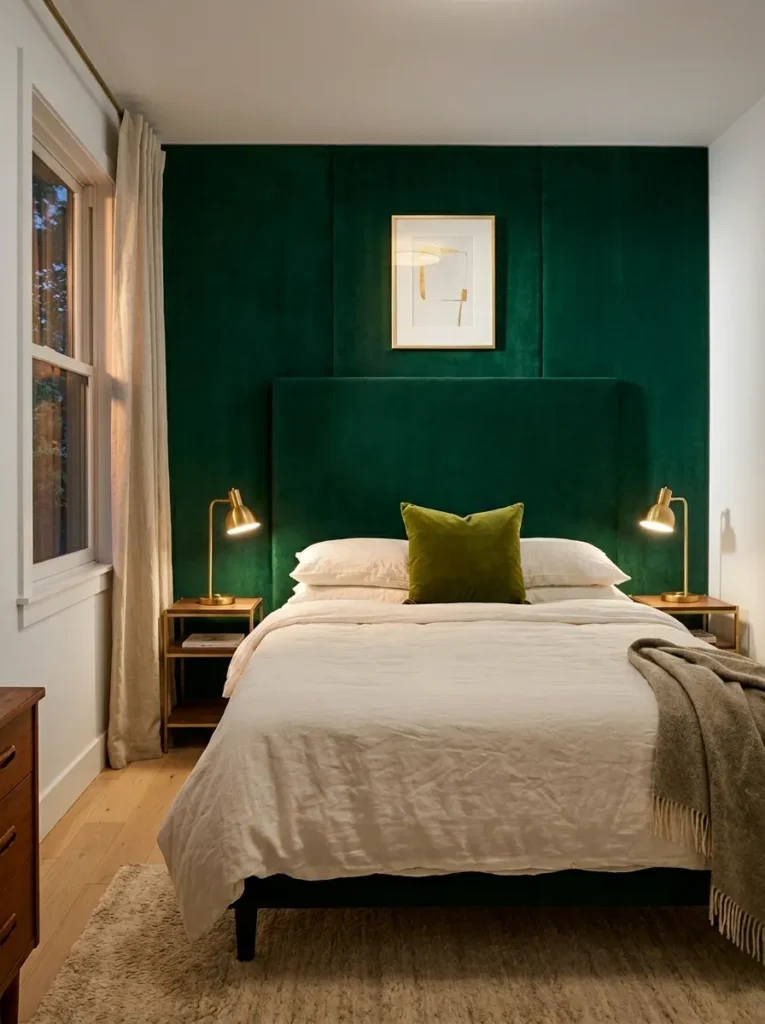
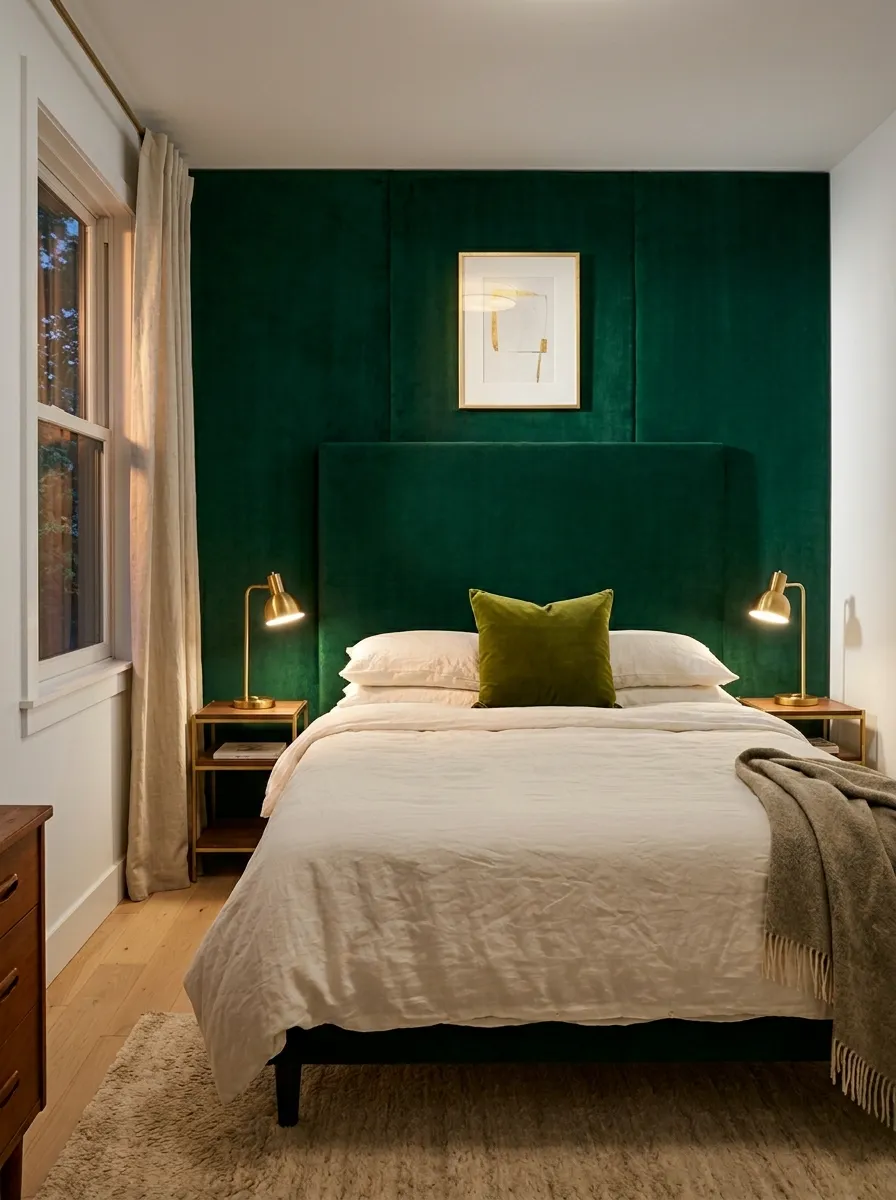
The emerald green velvet headboard is one of those bedroom ideas for small rooms green lovers universally adore — because it solves the small bedroom’s biggest decorating challenge (how to create a bold focal point without consuming floor space) in the most elegant possible way. An upholstered headboard takes up zero additional floor area, transforms the bed into the room’s unequivocal design moment, and introduces a jewel-toned depth that makes a white-walled small bedroom feel genuinely luxurious.
- Emerald green velvet reads as both rich and grounded simultaneously — the green keeps it earthy while the velvet adds the luxury register
- A simple rectangular form in a tall format (full-height headboard reaching toward the ceiling) amplifies the small room’s vertical dimension
- White walls behind an emerald headboard are all the backdrop needed — the contrast is the design
- Pair with warm brass or gold hardware and lighting for the color combination that has been making design editors swoon for three consecutive years
The emerald velvet headboard is the single piece of bedroom furniture that makes visitors look at a small room and think “this is actually amazing.” Not bad for a rectangle of fabric.
4. Green Linen Bedding in a Tonal Layering Approach
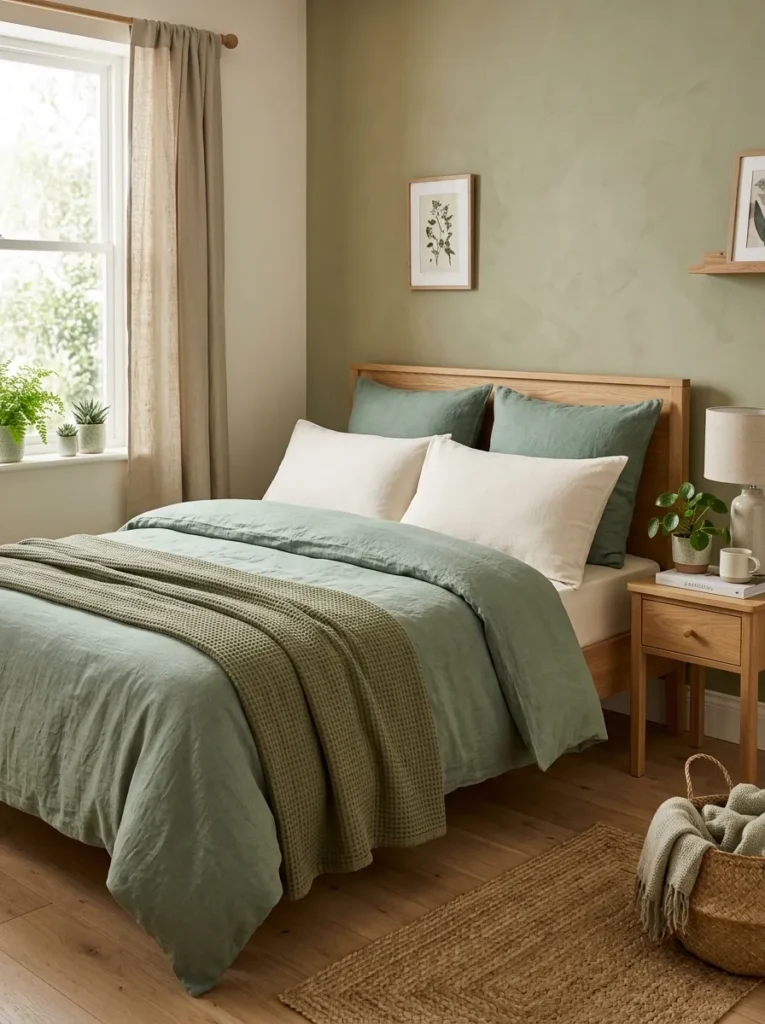
One of the most sophisticated bedroom ideas for small rooms green aesthetics is the tonal bedding approach — building the bed in multiple shades of the same green family rather than a single flat color. A sage green duvet layered with an olive throw, eucalyptus pillow shams, and warm cream accents creates a bed that looks like it belongs in a carefully art-directed editorial rather than a compact bedroom. The layering adds depth without adding visual noise.
- Stick to the same color family with tonal variation: sage + olive + eucalyptus reads as sophisticated; sage + teal + lime reads as a color wheel experiment
- Washed linen in green tones looks better the more it’s washed — the natural fading and wrinkling enhances the earthy quality
- Introduce a warm neutral (cream, oat, warm white) as a fourth tone to prevent the all-green bed from reading as camouflage
- European linen pillowcases in different green shades behind white standard pillows creates depth and layering in the simplest possible way
The tonal green bed is the bedroom upgrade that costs the same as a standard bedding set and looks twice as considered. The tonality is the whole secret.
5. Indoor Plants as Living Green Architecture
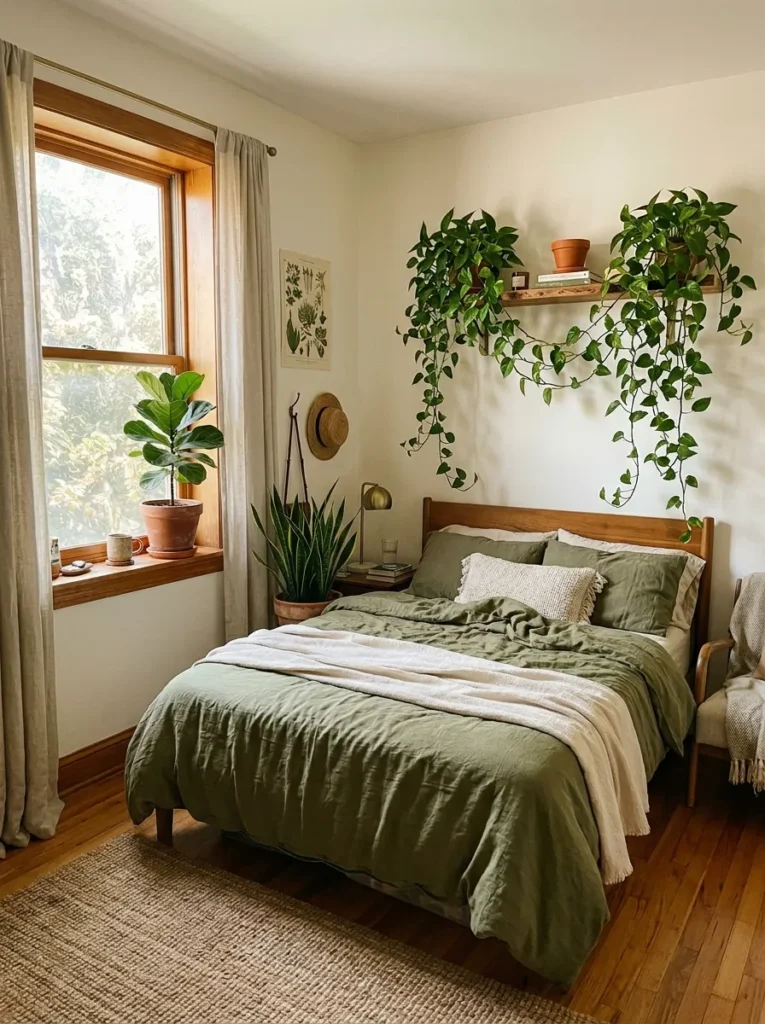
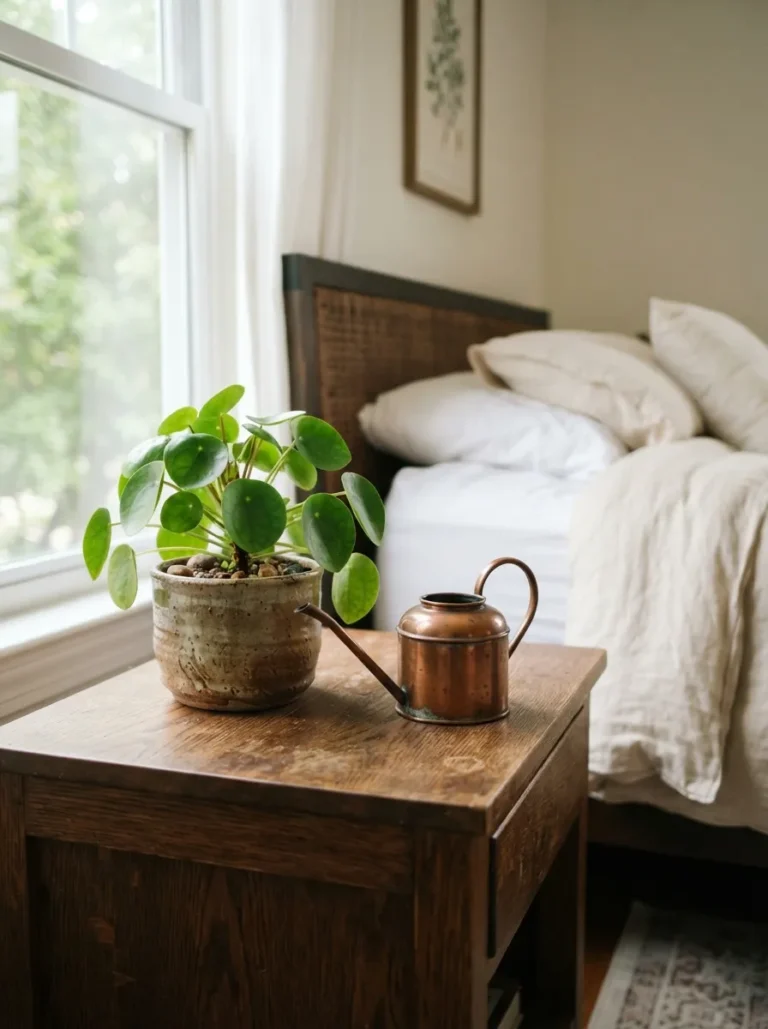
In bedroom ideas for small rooms green lovers sometimes overlook the most obvious element: plants. Not as accessories, but as architectural contributors to the room’s color palette. A large snake plant in the corner, a trailing pothos above the bed, a small olive tree beside the window — these bring a living, breathing layer of green into the bedroom that no paint color or textile can replicate, because each plant grows, changes with the seasons, and introduces exactly the organic quality that makes the green palette feel rooted in nature rather than applied over it.
- Snake plants are the bedroom plant standard for good reason: low light tolerant, low maintenance, architecturally impressive, and genuinely air-purifying
- A trailing pothos on a floating shelf above the bed adds a romantic, almost canopy-like cascade of green at sleeping level
- Size the plants to the room: one large statement plant beats five small ones for visual impact and spatial clarity
- Match the pot material to the room’s palette: terracotta for warm olive/sage rooms, white ceramic for lighter sage, concrete for deeper emerald schemes
The plant-as-palette element is the bedroom idea that makes the green aesthetic feel like it was grown into the room rather than painted on. The distinction is felt immediately.
This post contains affiliate links. If you buy something through them, I may earn a small commission at no extra cost to you.
Using olive or sage green on an accent wall brings a beautiful, grounding connection to nature, serving as the perfect introduction to comprehensive Earthy Bedroom Ideas.
6. Forest Green Curtains for a Dramatic Grounding Effect
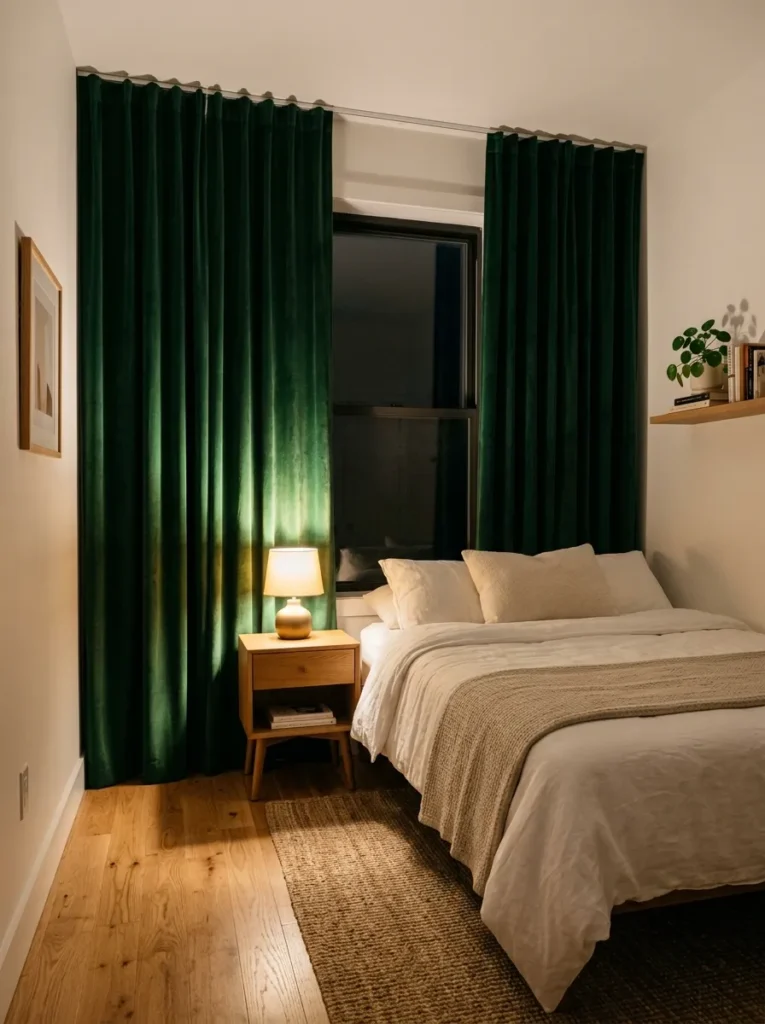
Floor-to-ceiling curtains in a deep forest or hunter green are one of the most underrated bedroom ideas for small rooms green aesthetics — because curtains at full ceiling height do two spatial things simultaneously: they make the ceiling feel higher (the eye follows the fabric upward) and they frame the room’s view outward as if the window is surrounded by living forest. Dark green curtains against a lighter wall create the most dramatic contrast, transforming a functional window treatment into the room’s most striking design moment.
- Mount curtain rods at ceiling height (or as close as possible) regardless of window size — the height creates the visual extension that changes the room’s proportions
- Forest green velvet absorbs light beautifully and adds a rich, sensory softness to the small bedroom’s walls
- A lighter green lining inside the curtain softens the light that filters through during the day
- For rented spaces: ceiling-mounted curtain tracks require minimal installation and leave only small holes
Forest green curtains in a small bedroom make the room feel like it’s wrapped in a forest canopy. That’s not hyperbole. That’s the spatial effect.
7. Natural Wood Furniture to Balance and Warm the Green
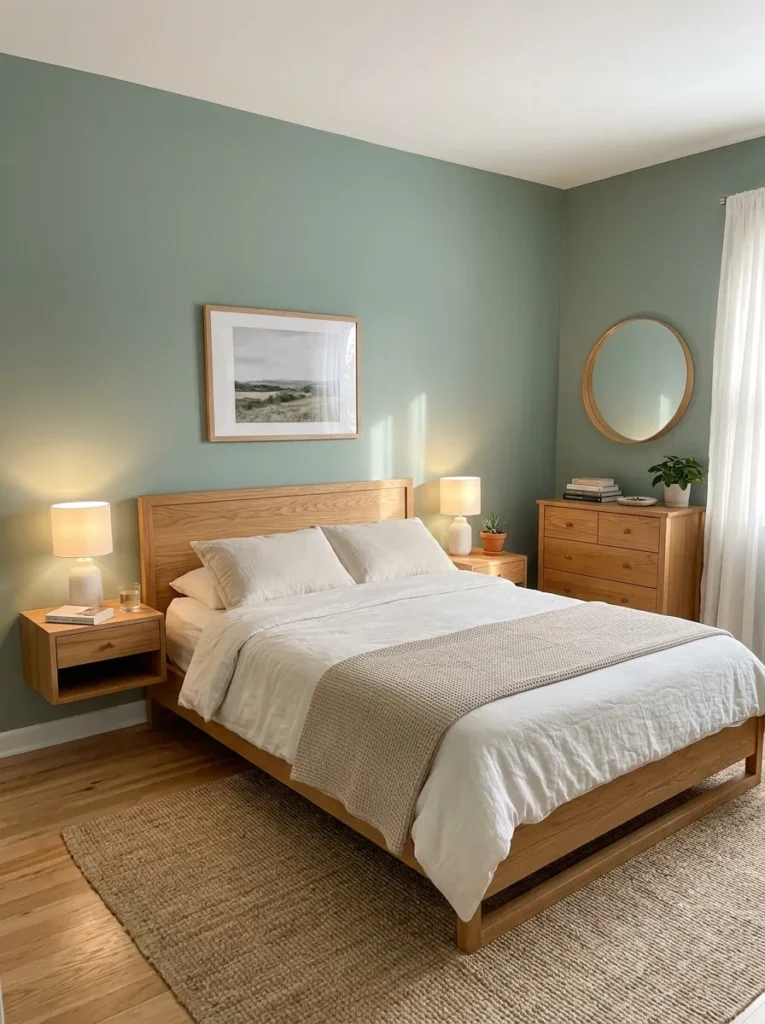
Green on its own can trend cool — especially the blue-based sage and forest varieties. The design element that anchors every great bedroom ideas for small rooms green execution and prevents it from reading as cold is warm natural wood. Oak, walnut, teak, and rattan in their natural or lightly-stained tones bring the honey warmth that green palettes need to feel fully alive rather than merely correct. Wood and green are nature’s original combination — the relationship between them in a bedroom feels pre-approved by the environment itself.
- Warm honey oak is the most universally successful wood pairing for sage and olive green — the golden undertones counterbalance the green’s cooler qualities
- Walnut’s darker, richer tone works best with deeper olive and emerald greens — the warmth registers more dramatically against saturated color
- Rattan furniture (chair, headboard, pendant light) adds organic texture that relates to green without adding weight
- Keep wood tones consistent throughout the bedroom — mixing species creates visual noise in a small space that needs cohesion
Wood and green in a bedroom is the design partnership that looks like it always existed. Because in nature, it always did.
8. Green Botanical Wallpaper for a Maximalist Forest Feel
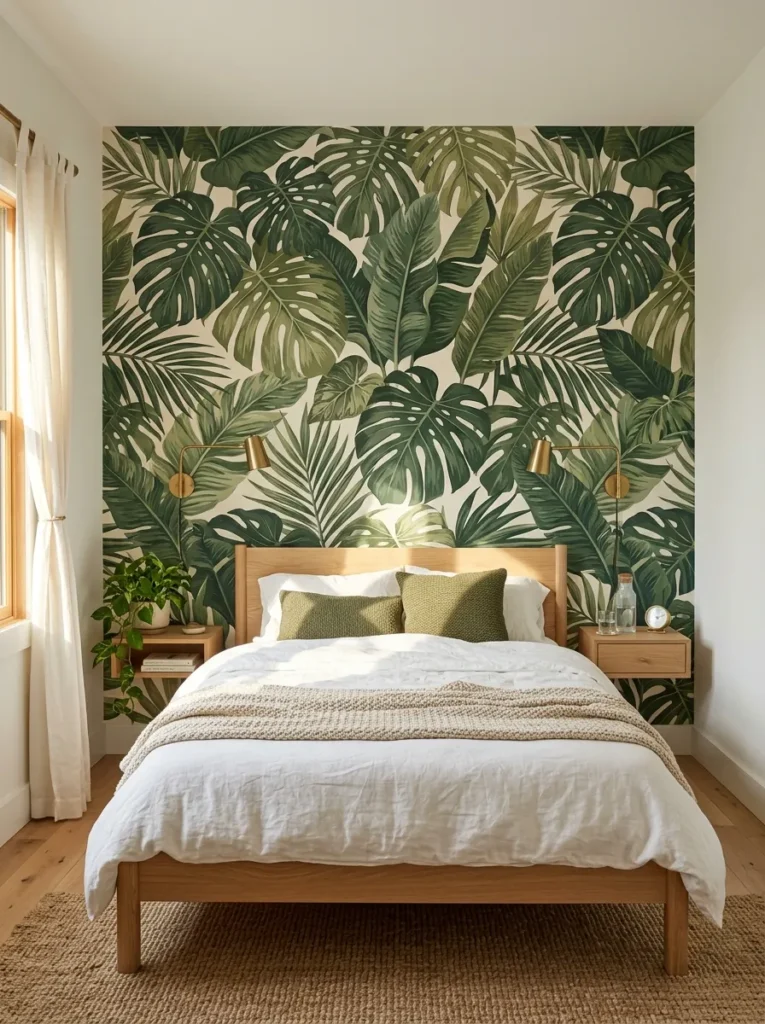
For the bedroom ideas for small rooms green enthusiast who wants the full botanical immersion — the visual experience of sleeping inside a forest rather than beside it — a botanical wallpaper accent wall is the one idea that delivers it completely. Large-leaf tropical or botanical prints in a rich green palette transform a single wall behind the bed into a living illustration, creating a backdrop so atmospheric that the bed itself feels like a clearing in the middle of it.
- Choose a botanical print with a cream or warm white background — it keeps the pattern from feeling heavy in a small room while preserving the lush green color story
- Large-scale leaf patterns (monsteras, banana leaves, palm fronds) read as more contemporary and impactful than small repeating botanical prints
- Apply to the wall behind the bed only — this anchors the botanical element without overwhelming the room’s other surfaces
- Peel-and-stick botanical wallpapers are now widely available and genuinely beautiful — ideal for renters and commitment-shy decorators alike
The botanical wallpaper bedroom is the one where guests stand in the doorway for a moment longer than necessary before saying anything. That pause is the whole point.
Green in a small bedroom isn’t a compromise — it’s a choice that the nervous system quietly thanks you for every single night. Pick the shade that speaks to the space, layer it through walls, textiles, plants, and natural wood, and let the most restorative color in nature do exactly what it has always done best.