
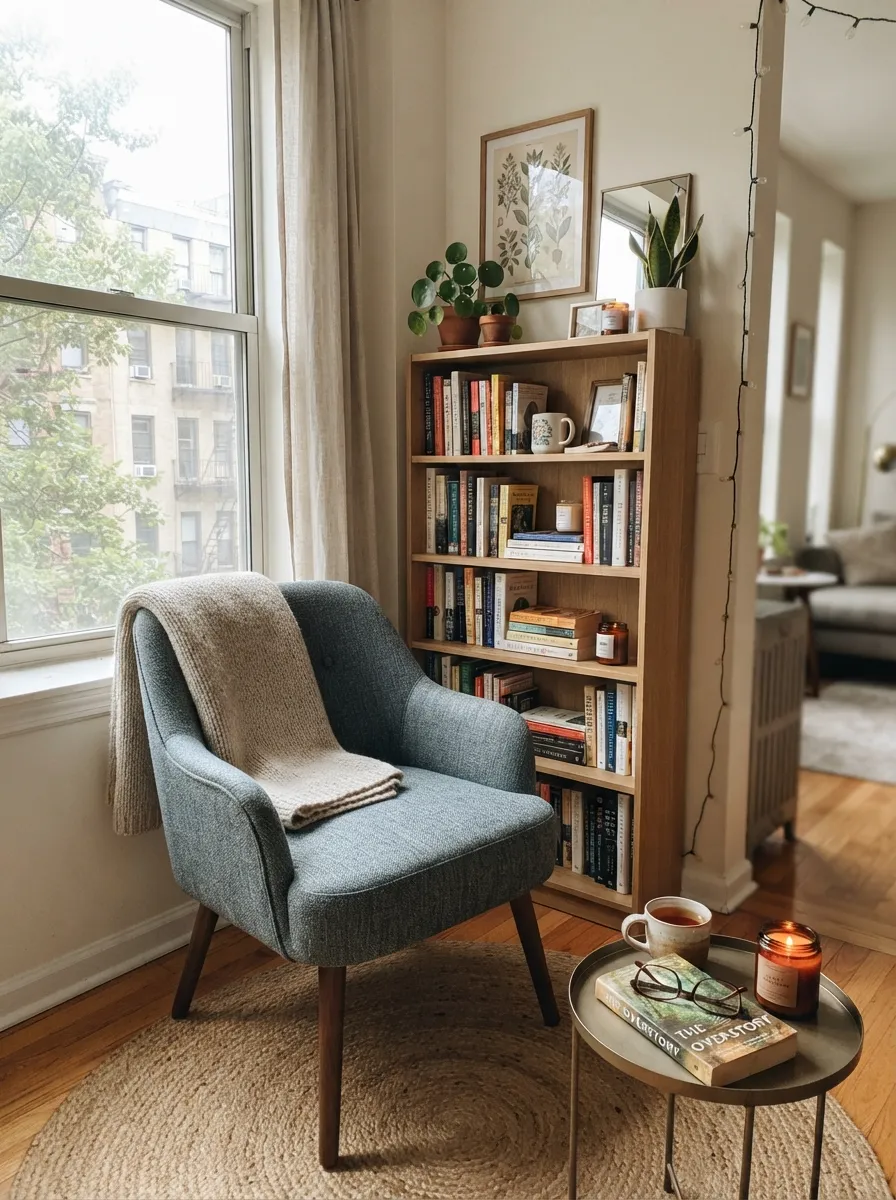
12 Cozy Reading Nook Ideas with Bookshelves
This post contains affiliate links. If you buy something through them, I may earn a small commission at no extra cost to you.
A pile of paperbacks stacked on the floor next to a wobbly side table isn’t a reading nook — it’s a tripping hazard with good intentions. There’s a real difference between a corner that looks thrown together and one built with actual architectural intent.
The fix isn’t complicated: smart shelving, thoughtful seating, and a layout that actually makes sense for the space available. Here are 12 ways to turn any forgotten alcove into a proper reading nook with bookshelves that pulls its weight.
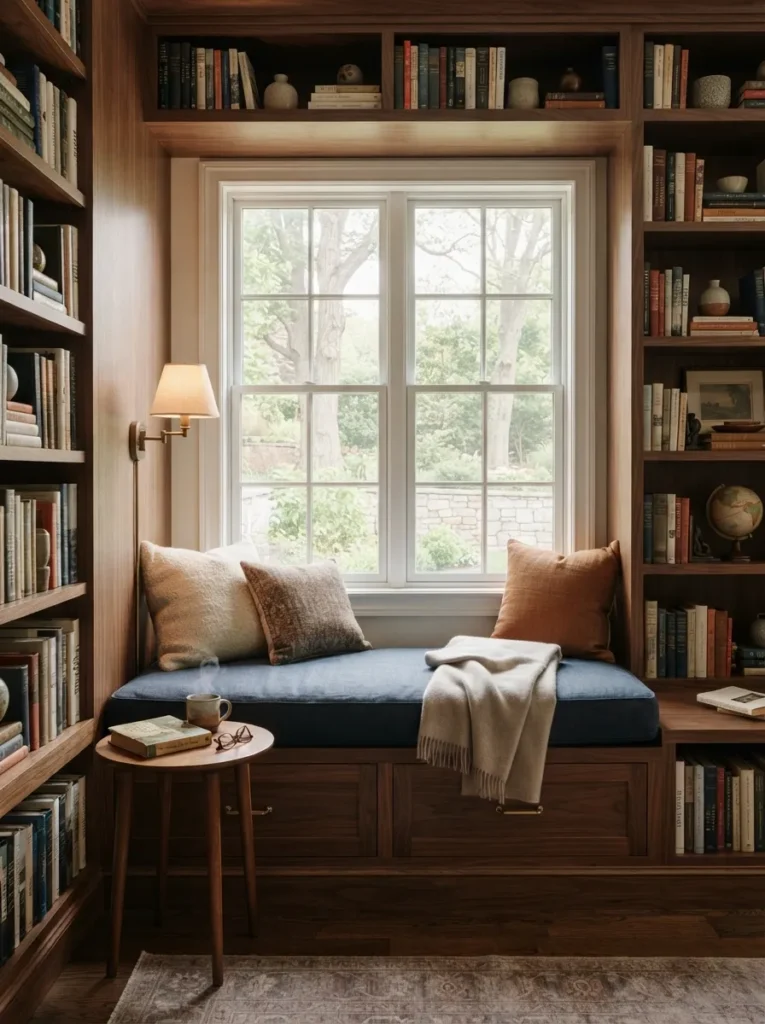
1. Built-In Corner Bookcases Framing a Single Chair
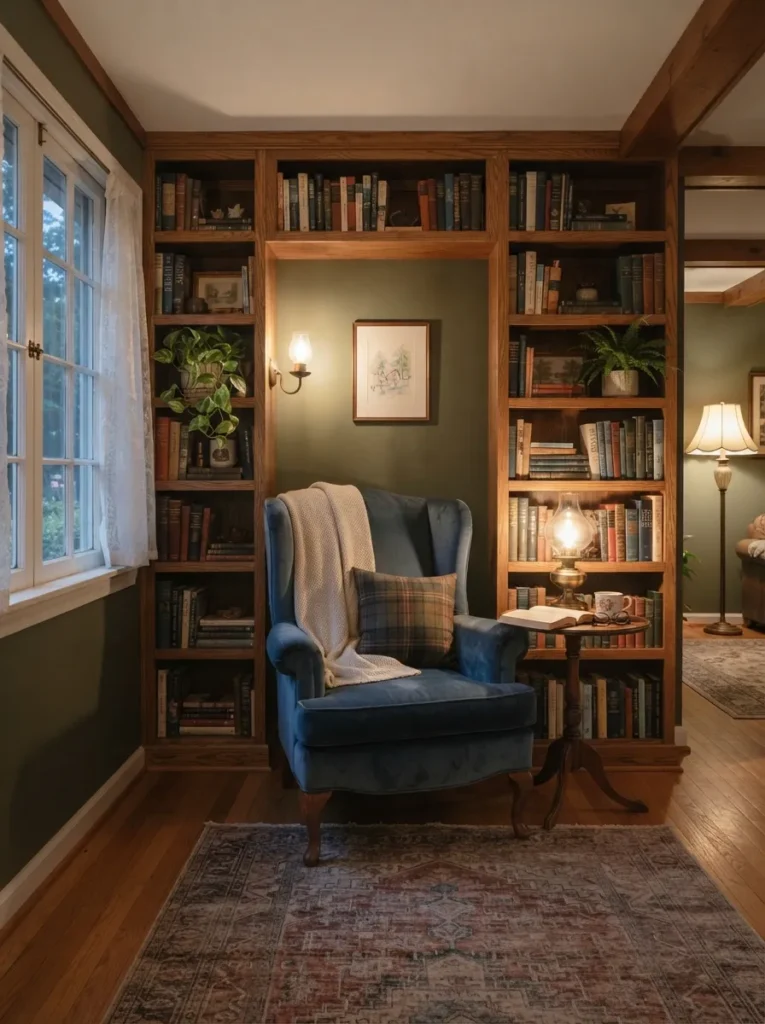
Symmetry does a lot of quiet work here. Two matching bookcases flanking a single chair instantly reads as intentional rather than improvised.
Design tip: Keep the shelving depth shallow — around 10 to 12 inches — so the corner doesn’t feel like it’s swallowing the chair.
- Avoid overstuffing every shelf. Leave a few gaps for small decor objects or the shelves will start to feel like storage rather than display.
- Choose a chair with a slightly smaller footprint than expected. Corners shrink fast once shelving eats into the wall space.
2. The Window Seat Flanked by Floor-to-Ceiling Shelves
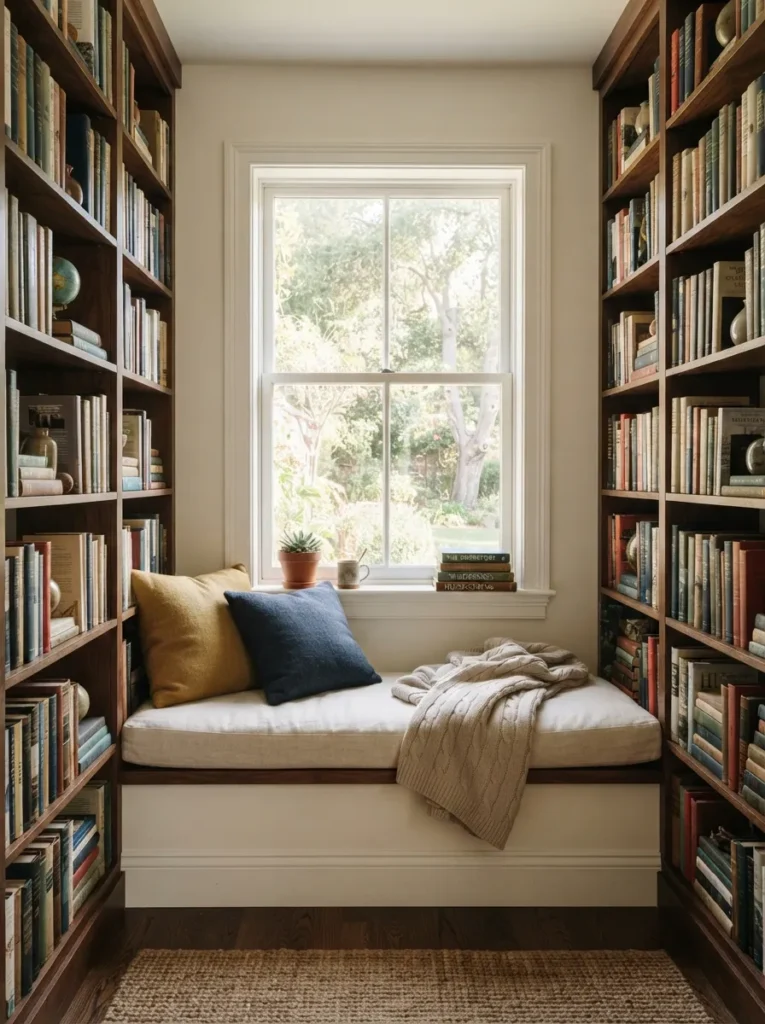
This is the layout most people picture when they hear “home library corner,” and for good reason — it maximizes both storage and seating in one footprint.
Spatial advice: The bench cushion needs to be at least 4 inches thick. Anything thinner and the seat reads as an afterthought rather than a destination.
- Built-in seating with a hinged lid adds hidden storage underneath for blankets or overflow books.
- Skip glossy paint finishes on the surrounding trim. Matte or satin keeps the glare down when natural light hits the window directly.
3. A Ladder Bookcase Wall With a Reading Chair Below
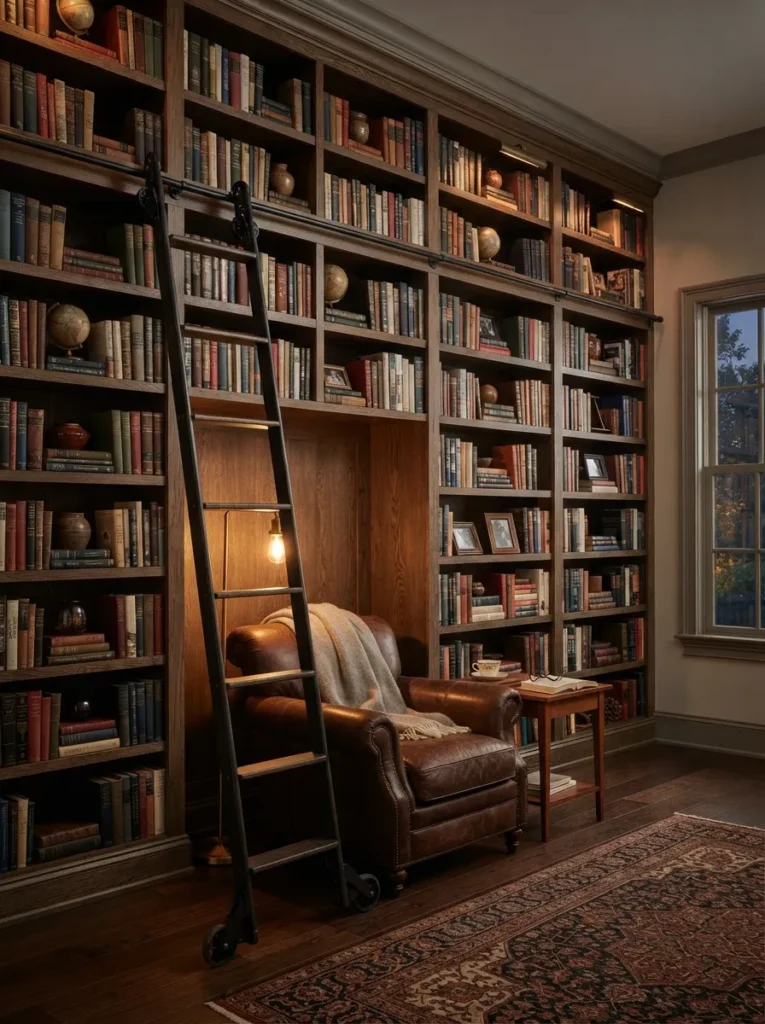
A rolling ladder isn’t just a design flex — it’s a legitimate solution for rooms with high ceilings and limited floor space.
Material to avoid: Skip lightweight particleboard ladders. The hardware needs real weight-bearing capacity, or the whole feature turns into a wobble machine.
- Anchor the top rail securely; this is one area where cutting corners becomes an actual safety issue.
- Position the chair slightly off-center from the ladder’s path so nobody gets clipped mid-slide.
4. Low Bookshelf Divider Creating a Defined Nook
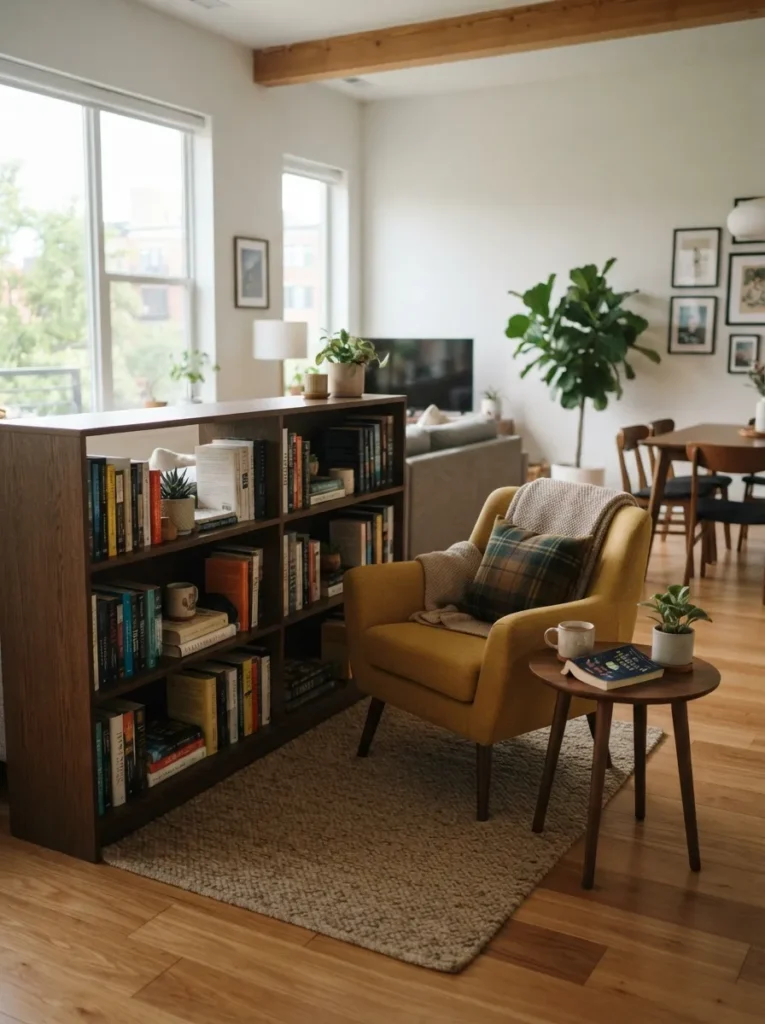
Open floor plans are great for entertaining and terrible for quiet reading time. A low bookshelf solves both problems without adding an actual wall.
Why this works for open layouts: A divider under 4 feet tall keeps sightlines open while still signaling “this is a separate zone” to anyone wandering through.
- Style the divider with books facing both directions so it looks finished from either side of the room.
- Add a small table lamp on the nook side to reinforce the sense of separation with light, not just furniture.
5. Floating Shelves Around a Reading Chair with Warm Task Lighting
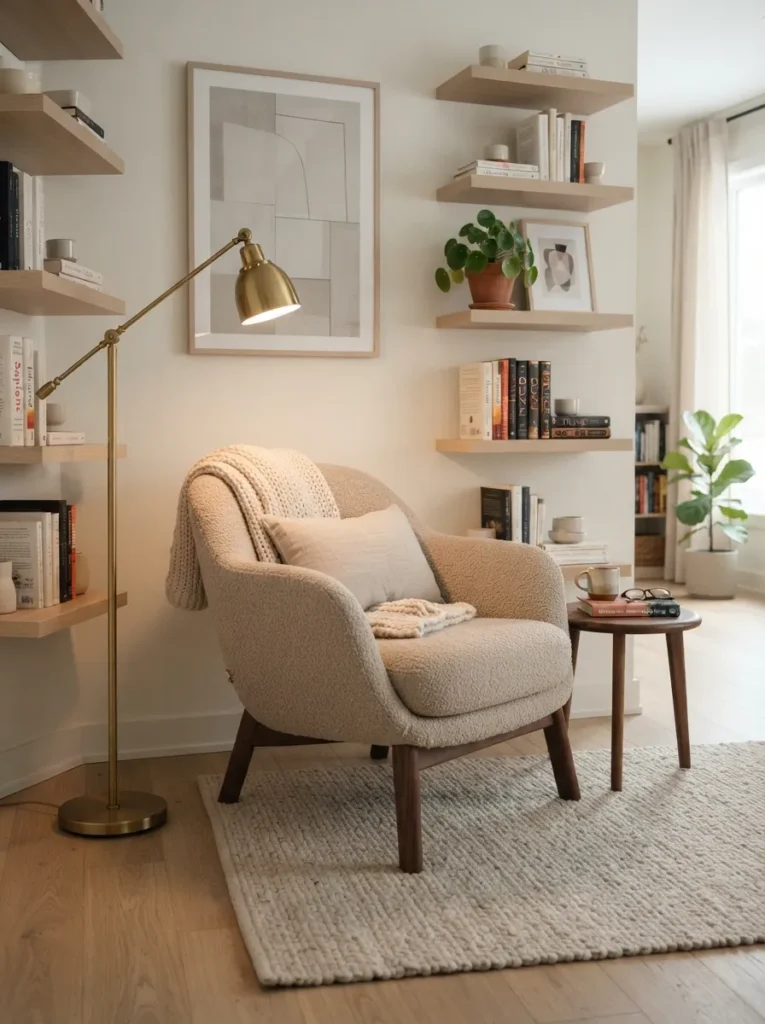
Floating shelves keep the visual weight light, which matters a lot in smaller rooms where a bulky bookcase would eat up floor space fast.
Lighting tip: Position a warm-toned reading lamp at shoulder height when seated, not overhead. Overhead light causes glare on the page and shadows on the shelves.
warm dimmable light that flatters both the pages and the shelf styling.
🛒 Check Price on AmazonStagger the shelf heights slightly rather than spacing them evenly. Perfectly even spacing tends to look more like a store display than a lived-in reading nook with bookshelves.
6. The Attic Nook with Slanted Shelving
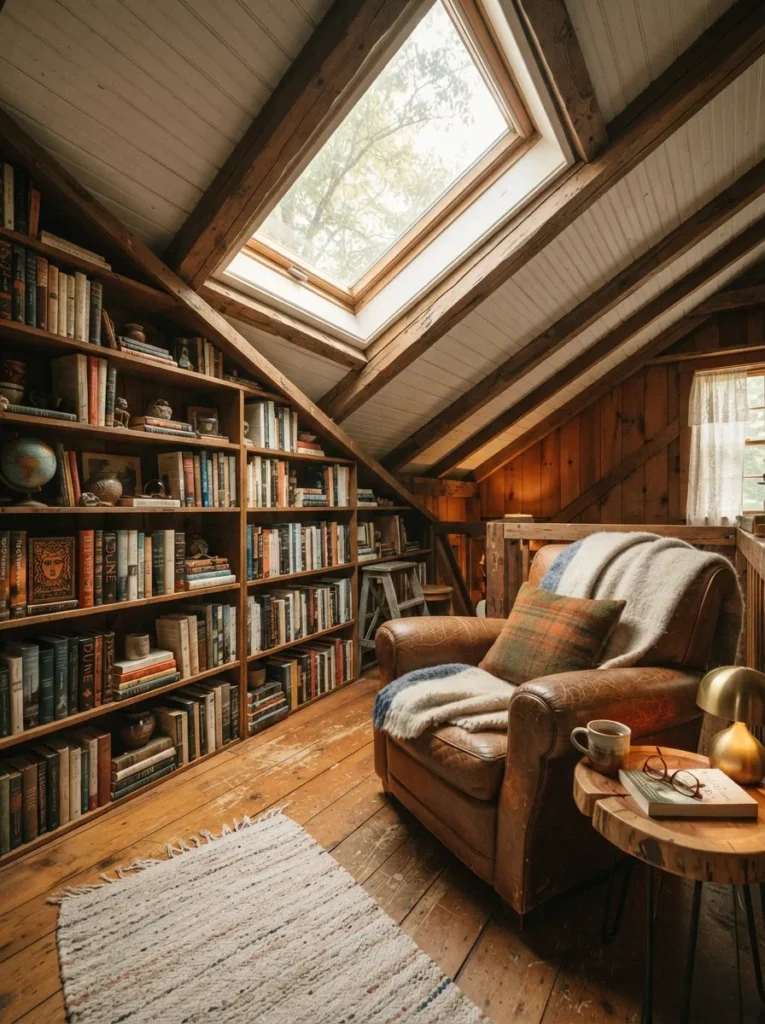
Sloped ceilings scare off a lot of homeowners, but they’re actually a gift for built-in shelving — the angle creates natural visual interest a flat wall never could.
Spatial advice: Keep seating low-profile. Anything taller than the lowest point of the slope will force an awkward hunch every time someone sits down.
- Custom shelving that follows the roofline uses every inch instead of leaving dead space at the edges.
- A skylight above the seating area adds daylight without competing for wall space that shelving already claimed.
7. Compact Corner Shelf Unit for Small Apartments
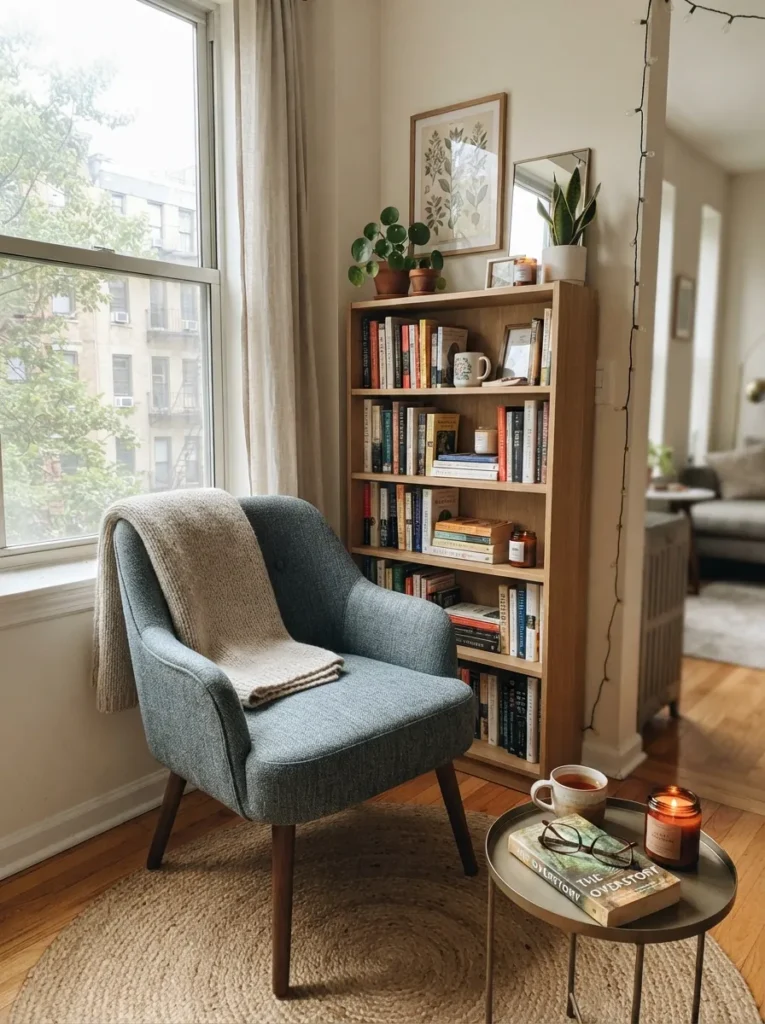
Small spaces don’t need to skip the built-in look entirely. A corner-specific shelf unit handles the same job as a full wall of shelving at a fraction of the footprint.
Why this works for small spaces: Corner units use wall space that’s typically wasted anyway, since most furniture doesn’t fit flush into a 90-degree angle.
- Choose a slim chair without arms to keep the sightline open in a tight room.
- Vertical shelving draws the eye upward, which makes low-ceiling apartments feel taller than they actually are.
8. The Under-Stairs Reading Nook with Custom Shelving
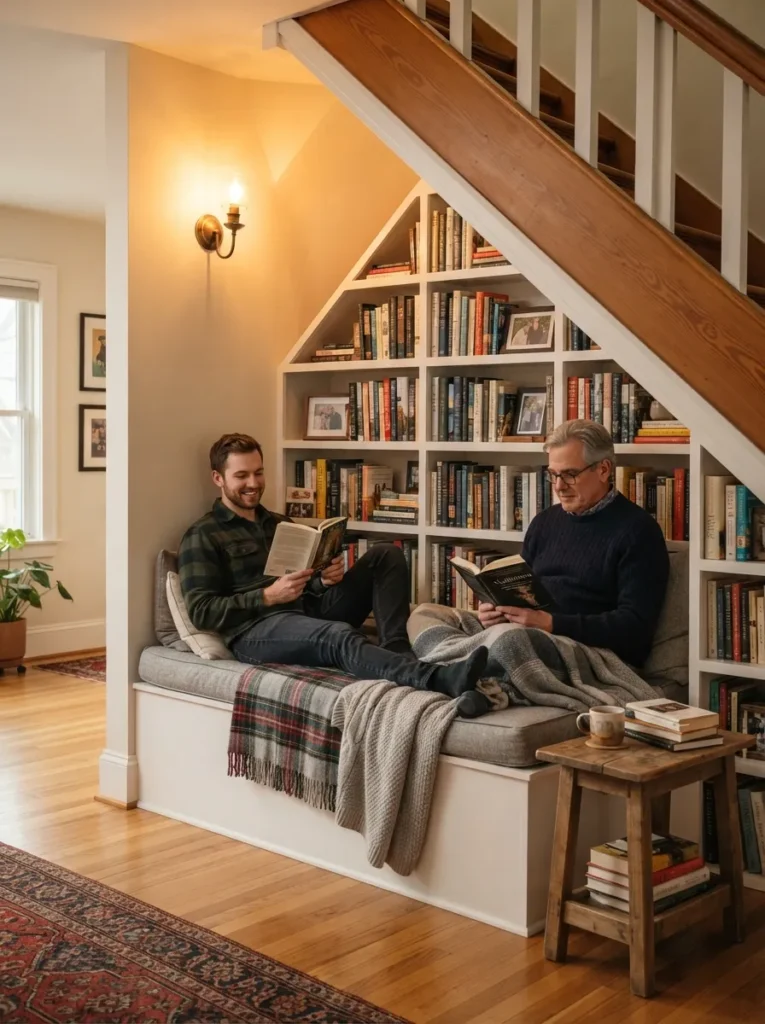
That triangular dead zone under the stairs is one of the most consistently wasted spaces in most homes — and one of the most rewarding to convert.
Design tip: Have shelving custom-built to follow the exact staircase angle. Off-the-shelf units leave awkward gaps that make the whole nook look unfinished.
stackable units that can be configured to match an angled ceiling without custom carpentry.
🛒 Check Price on AmazonA bench with a cushioned top and hidden storage underneath makes the most of a space that would otherwise just collect clutter.
9. Statement Bookcase Wall with a Reading Chair and Ottoman

Go big or don’t bother — a full statement wall of shelving turns reading time into an actual event rather than something squeezed in between chores.
Pros: Maximum storage, serious visual impact, and a built-in “library” feel that photographs beautifully. Cons: Requires real commitment to styling upkeep, since a half-empty statement wall reads as neglected rather than curated.
built for long reading sessions with proper back and leg support.
🛒 Check Price on AmazonMix book spines with a few sculptural objects on the shelves to prevent the wall from reading as one flat block of color.
10. The Reading Nook with Bookshelves Built Into a Bay Window
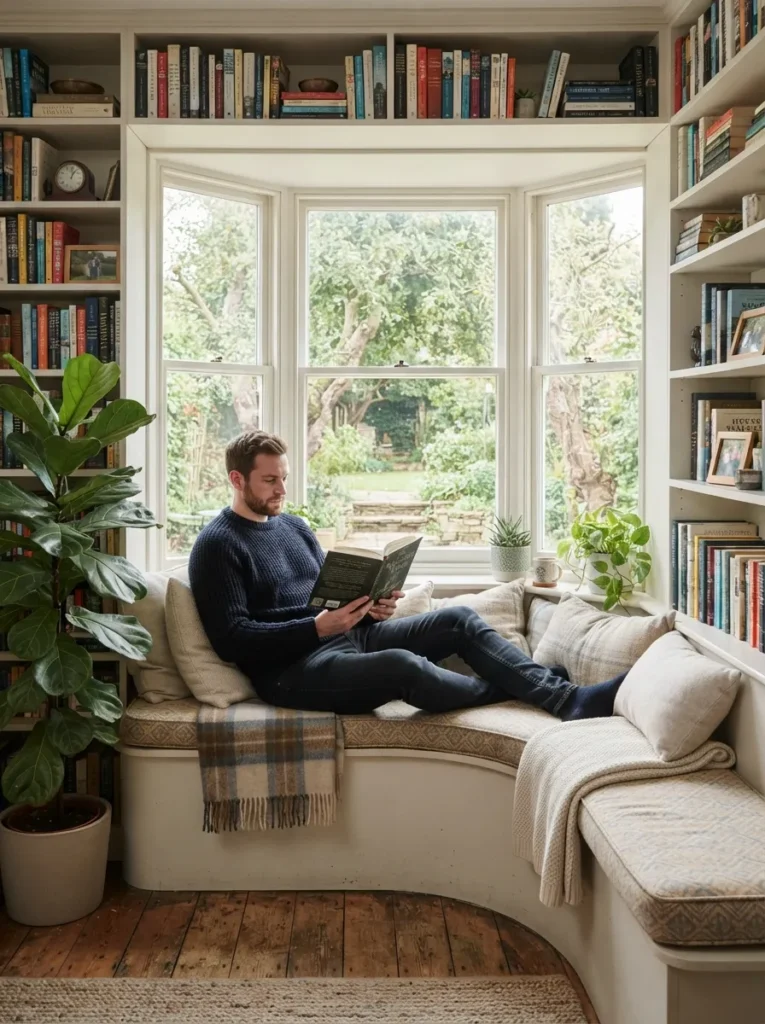
Bay windows already have the architectural bones for a reading nook — adding shelving on the flanking walls just finishes the job.
Spatial advice: Keep the bench cushion color lighter than the surrounding shelving. A dark bench against dark shelves tends to visually flatten the whole nook.
- The curved layout naturally creates a sense of enclosure, which makes the space feel private even in an otherwise open room.
- Adding a plant on each side softens the hard lines where the shelving meets the window trim.
11. Minimalist Nook with a Single Slim Bookcase
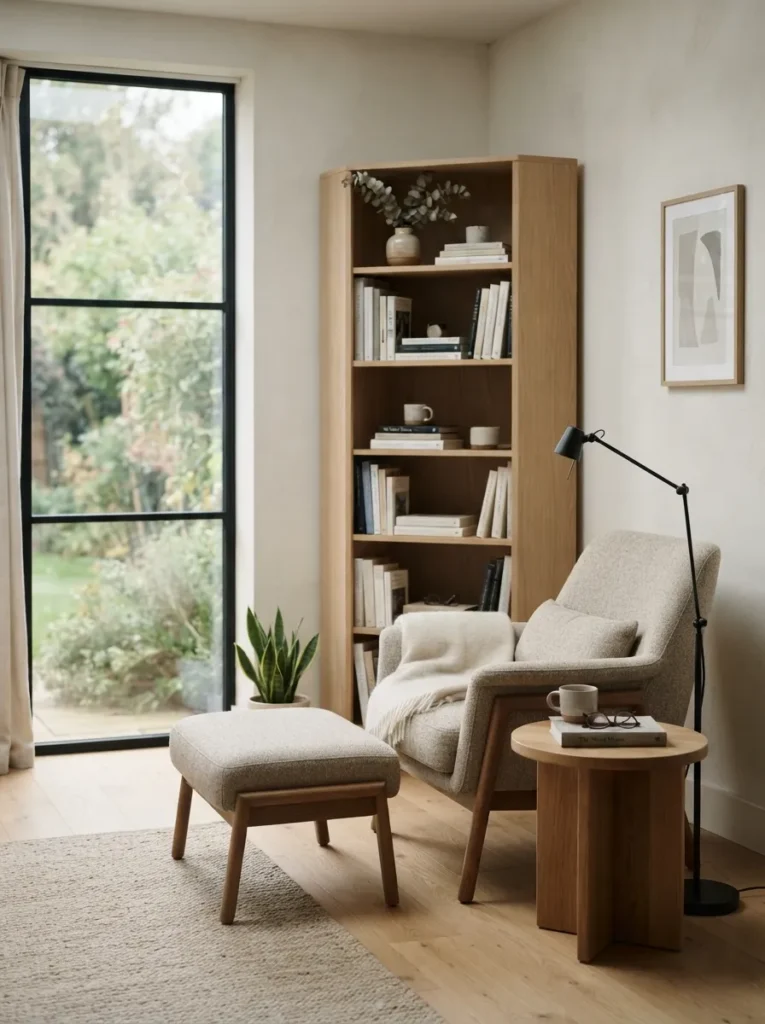
Not every reading corner needs to be a full-blown library. Sometimes one well-placed bookcase says just as much with far less visual noise.
Why this works for modern spaces: A single slim unit keeps the aesthetic clean, which suits homes leaning toward a more minimalist or Scandinavian look.
- Stick to a limited color palette across the books and decor — too many bright spines will undercut the minimalist intent fast.
- A small side table with a single lamp keeps the corner functional without adding visual clutter.
12. Reading Nook with Bookshelves and a Daybed for Dual Function
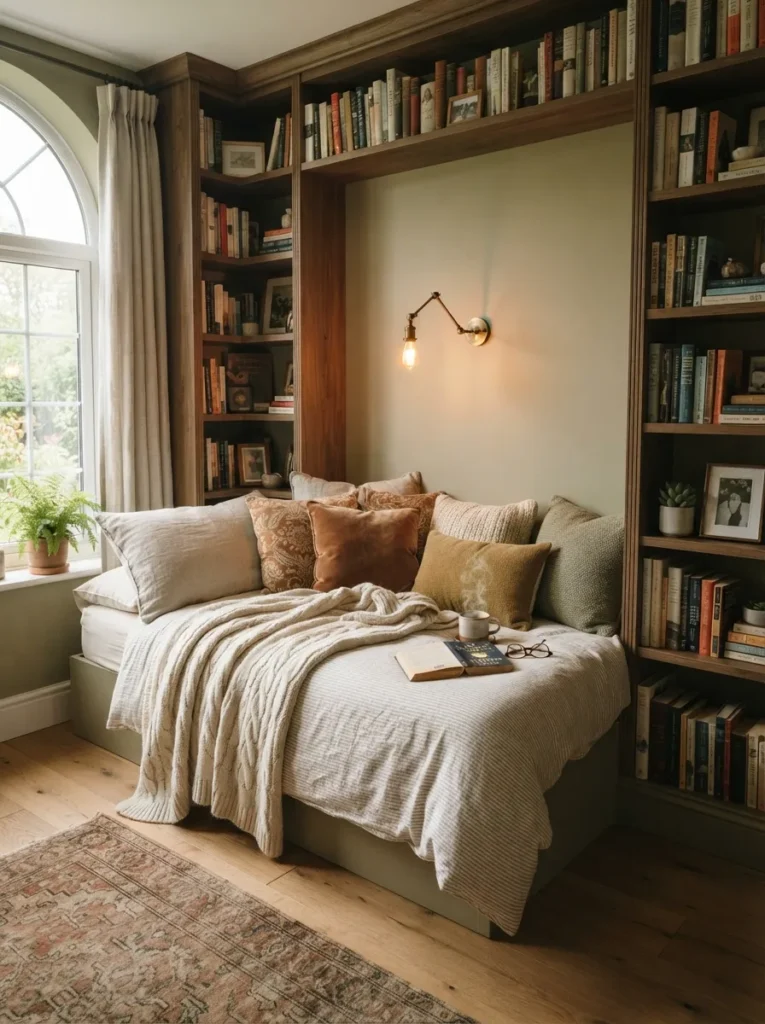
A daybed solves the eternal problem of guest overflow while still delivering full reading-nook comfort on an average Tuesday.
Pros: Doubles as guest seating, naps beautifully, and looks intentional rather than like a compromise. Cons: Takes up more floor space than a standard chair, so it works best in slightly larger rooms or alcoves.
- Flanking bookshelves on either side visually anchor the daybed so it doesn’t float awkwardly in the room.
- Layer cushions and a textured throw to soften what can otherwise feel like a stiff, formal piece of furniture.
The bottom line: shelving and seating aren’t separate decisions — they’re one system, and getting that system right turns any overlooked corner into the room everyone actually wants to sit in.


