
Using Bathroom Social Stories to Build Restroom Confidence in Toddlers
The milestone of toilet training is often measured in physical metrics: dry pants, successful trips to the potty, and the eventual graduation from diapers to big-kid underwear. However, experienced parents and early childhood educators know that physical readiness represents only half of the equation. The true turning point in any successful toilet training journey is emotional confidence. When toddlers feel secure, understood, and emotionally prepared for the bathroom environment, the entire process shifts from a stressful battle of wills into a smooth transition.
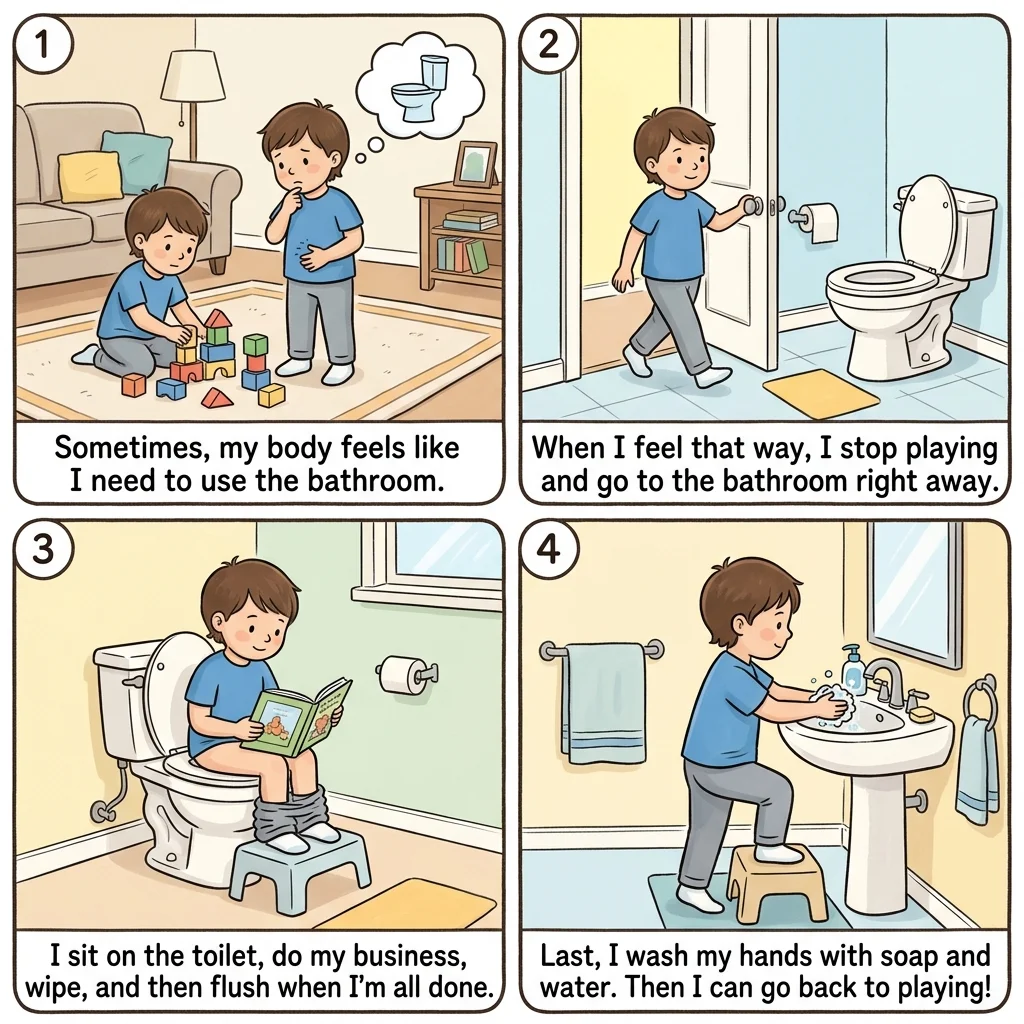
Conversely, when children harbor hidden anxieties about the restroom—whether due to unfamiliar sensory inputs, fears of the unknown, or feeling rushed—they naturally resist. Traditional parental nagging or hasty verbal reminders only amplify this stress. To foster genuine self-assurance, parents need tools that speak directly to a young child’s emotional world. Utilizing a dedicated bathroom social story provides toddlers with the gentle narrative framework and emotional reassurance they need to approach the restroom with unwavering, calm confidence.
Part 1: The Psychology of Confidence in Early Childhood
1.1 Why Emotional Safety Precedes Physical Success
A child’s nervous system must feel safe before it can cooperate with new physical tasks. When a toddler stands outside a bathroom door feeling uncertain about automatic flushers, cold seats, or echoing sounds, their body enters a mild state of defense.
- The Paralysis of Fear: In this heightened emotional state, a toddler’s brain cannot process complex verbal instructions from a parent. They only feel pressured and retreat into stubborn resistance.
- The Power of Emotional Grounding: Confidence is built when a child understands what to expect before it happens. By familiarizing themselves with the restroom experience in a safe, comforting context, their brain replaces fear with anticipation and mastery.
1.2 Replacing Anxiety With Predictable Familiarity
Children gain confidence through repetition and predictable structure. When the unfamiliar environment of the bathroom is demystified through gentle storytelling, the mystery evaporates. They no longer view the restroom as an unpredictable space filled with surprises, but as a familiar room where they know exactly what role they play.
Part 2: The Architecture of Empowering Narratives
2.1 Crafting Stories That Validate and Guide
An effective social narrative does more than simply list rules; it serves as an emotional anchor. Rooted in proven developmental frameworks, a well-balanced narrative combines factual clarity with empathetic validation:
- Validating Feelings: Acknowledging that trying new things can feel big and important helps children feel seen and understood rather than rushed or dismissed.
- Empowering Actions: Framing steps in positive, capable language encourages the child to view themselves as successful participants in their own daily routines.
2.2 Visualizing Success Before Step One
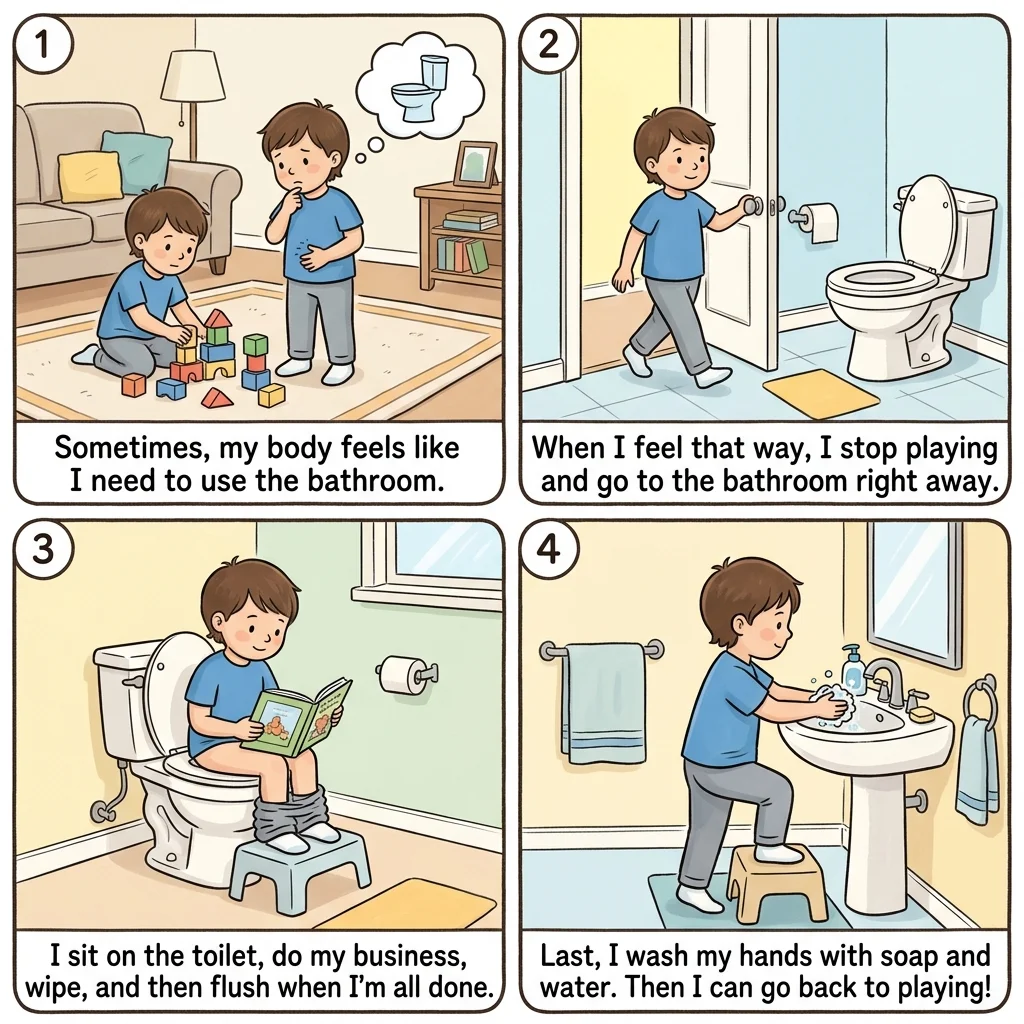
Before a toddler ever sits down on the potty, a narrative allows them to rehearse the experience mentally. This cognitive rehearsal builds neural pathways of confidence. When the time comes to visit the bathroom in real life, their mind recognizes the sequence instantly, significantly lowering stress and boosting willingness to try.
Part 3: Step-by-Step Implementation for Lasting Self-Assurance
3.1 Establishing a Relaxed Reading Ritual
The environment in which you introduce a social narrative matters immensely. Never read a bathroom story for the first time during a stressful moment or a toilet accident cleanup.
- Create a Cozy Routine: Incorporate the story into calm, happy moments of the day—such as during a quiet afternoon cuddle or as part of your regular bedtime story selection.
- Keep It Light and Low-Pressure: Allow your child to ask questions, point at the illustrations, and talk about the story at their own pace. For parents looking for beautifully designed, ready-to-print resources that make this implementation completely seamless, exploring structured developmental narrative templates offers an effortless way to introduce these concepts visually and effectively.
3.2 Connecting Page-to-Practice Naturally
Once your child is familiar with the story’s rhythm, use gentle, comforting callbacks during real-time bathroom trips. A soft reminder like, “Just like our story character, you are taking brave, calm steps to the potty!” reinforces their self-image as a capable, confident child.
Part 4: Fostering Lifelong Resilience
4.1 Fading the Scaffolding as Independence Takes Root
Just like training wheels on a bicycle, narrative tools are designed to support early confidence rather than remain permanent fixtures. As weeks pass and visiting the bathroom becomes an automatic, comfortable habit, your child will naturally outgrow the need for the storybook review. Their newfound independence will stand firmly on its own.
4.2 Celebrating Emotional Milestones
True confidence comes from recognizing one’s own growth. When children overcome their initial hesitations and master the restroom routine, take time to celebrate their emotional bravery. Praising their willingness to face something new and conquer it builds a resilient psychological foundation that will support them through every future developmental leap.
Conclusion
Navigating toilet training successfully requires looking far beyond physical readiness and tuning into the emotional heart of childhood development. By replacing anxiety with gentle narrative guidance, you empower your toddler to step into the restroom with calm, self-assured confidence.
Ready to introduce gentle, effective narrative support to your toddler’s daily routine? Explore professionally formatted resources by visiting available structured developmental narrative templates to get started today.