12 Dining Room Lighting Ideas to Brighten Your Space
One overhead bulb doing all the work isn’t “lighting design” — it’s just a room stuck in interrogation mode. Clean, architectural lighting layers flip that switch entirely, turning flat and clinical into warm and intentional.
Good lighting isn’t about more fixtures. It’s about the right ones, in the right places, doing different jobs. Here’s how to layer it properly.
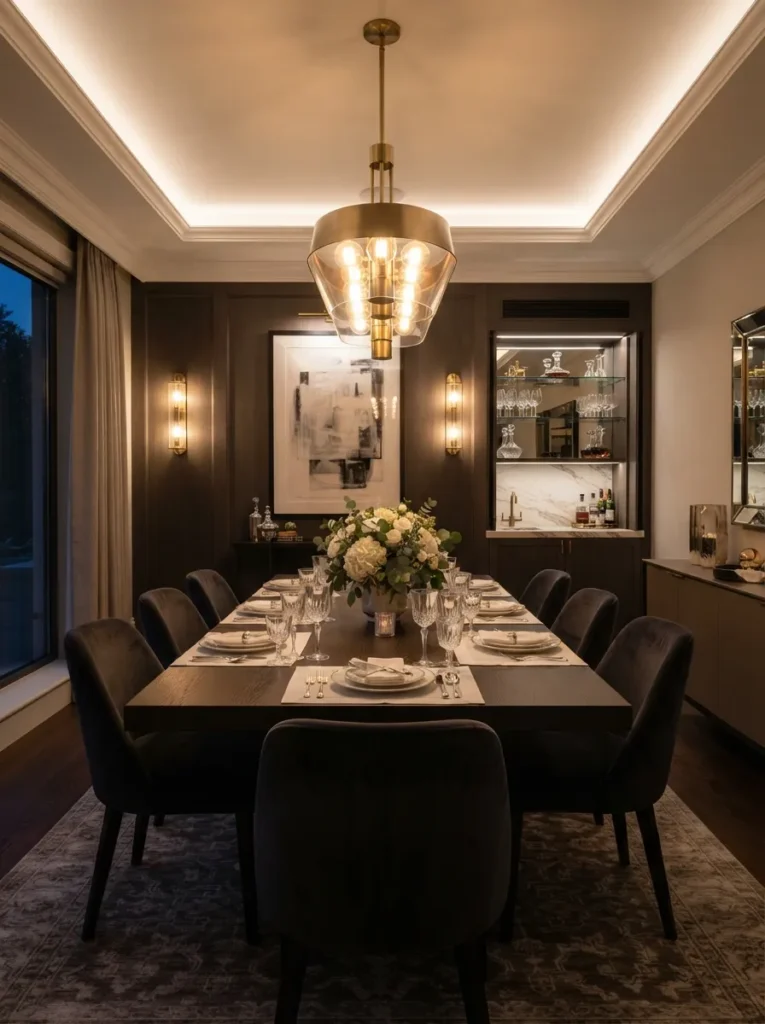
1. Start With a Statement Pendant Cluster
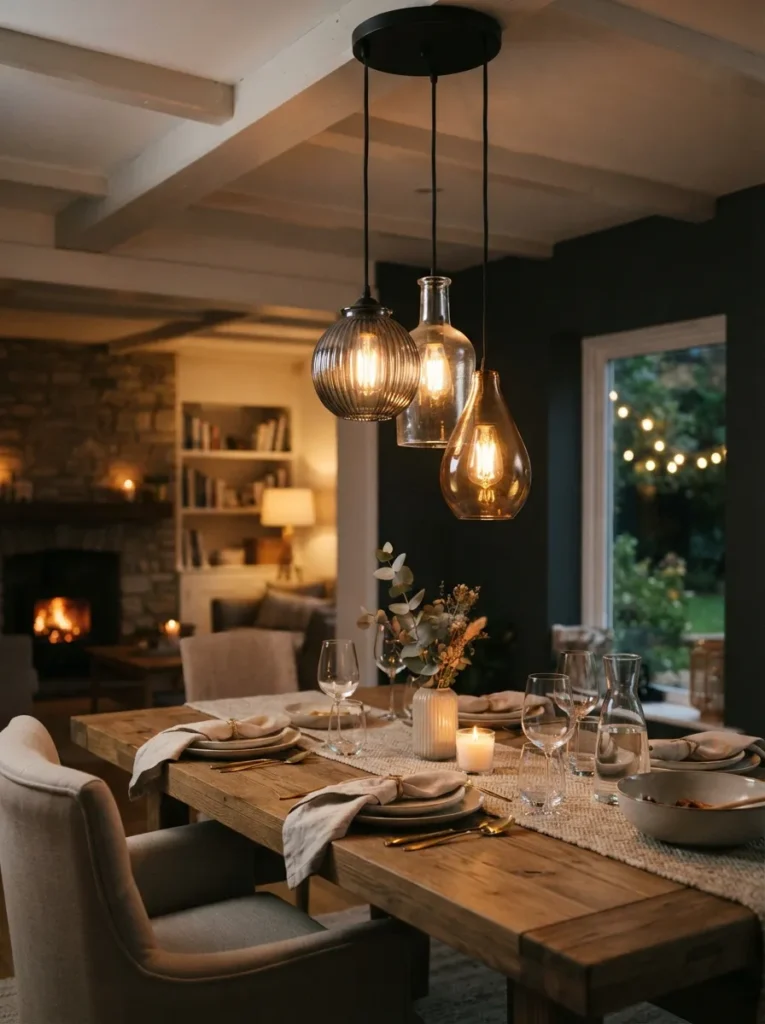
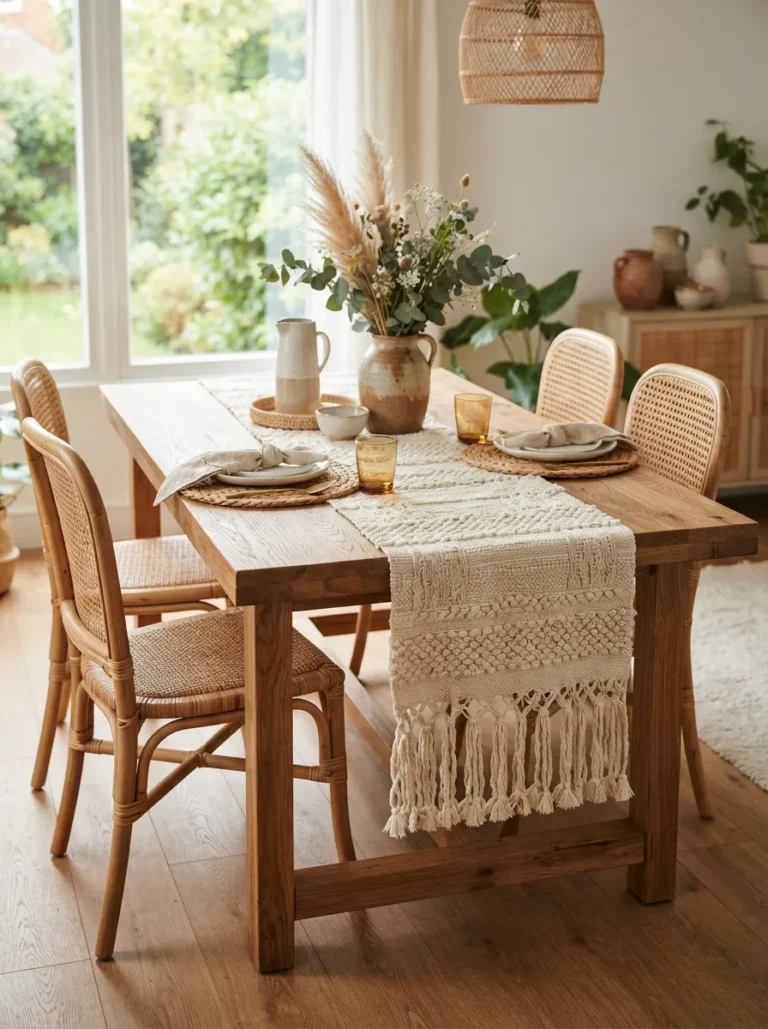
A single pendant does one job. A cluster of three does the job better and looks considerably more expensive doing it.
Stagger the heights slightly rather than hanging them level — it reads as designed, not accidental.
Design tip: Keep the lowest pendant roughly 30-34 inches above the table so sightlines stay clear across the room.
Adjustable pendant light cluster kit
lets each fixture hang at a different height for that staggered, custom look.
Check Price & Options on Amazon →2. Anchor the Room With a Globe Chandelier
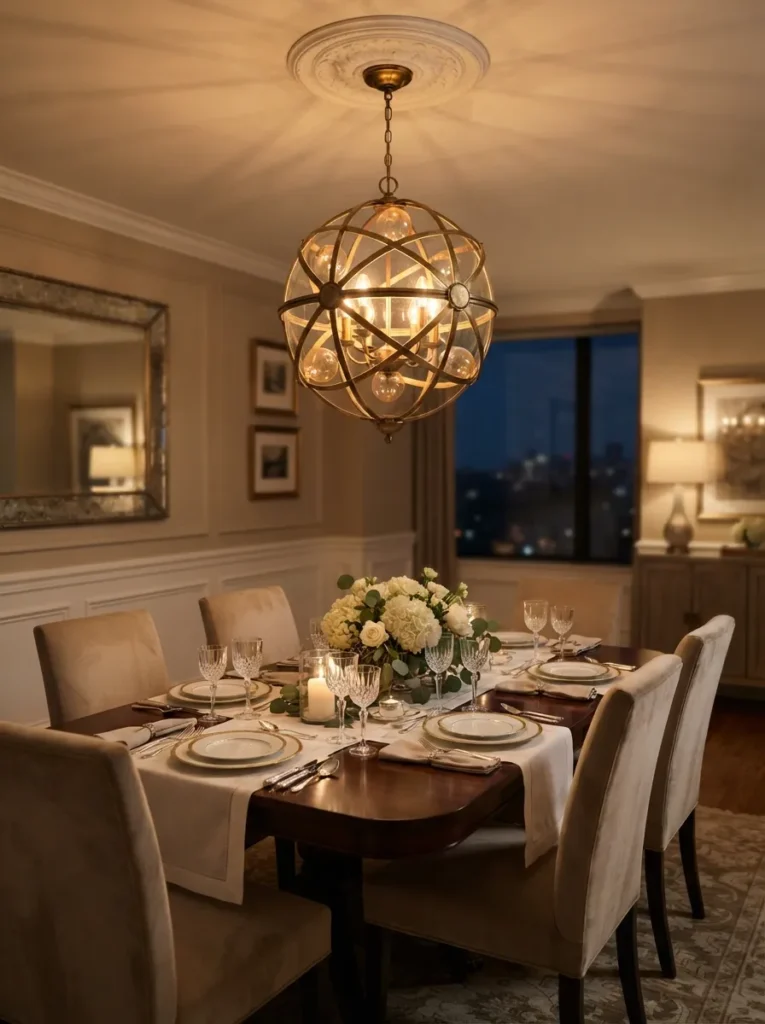
Globe chandeliers solve a problem linear fixtures can’t — even light distribution in every direction, not just down the length of a table.
This matters most for round or square tables, where a linear fixture would leave awkward dark corners.
Why this works: The circular silhouette echoes the table shape below it, which is a small detail that makes a big visual difference.
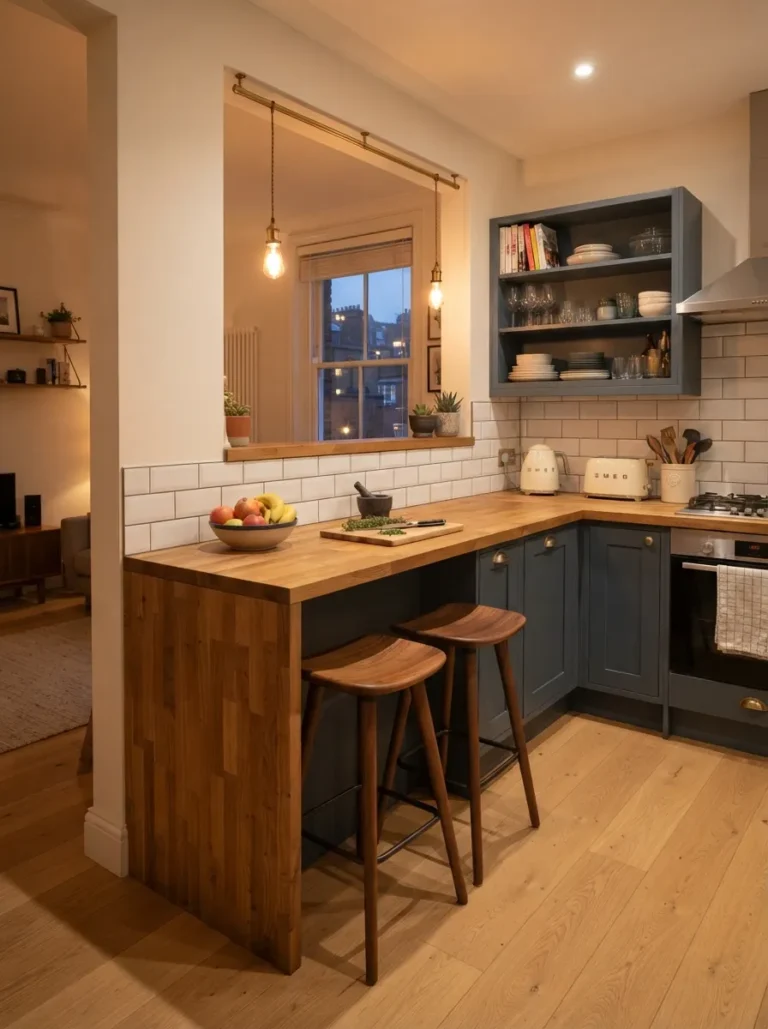
3. Layer in Recessed Warm LEDs
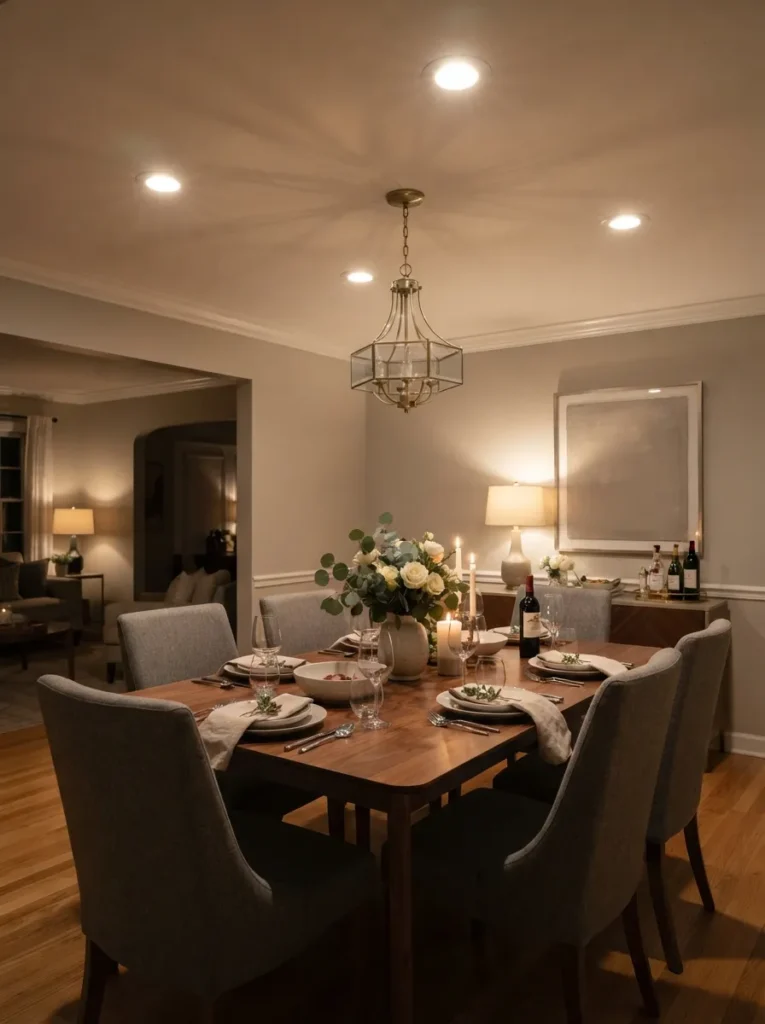
Recessed lighting isn’t glamorous, but it’s the unsung workhorse of a well-lit room.
Skip cool white bulbs entirely here — anything above 3000K reads clinical, not cozy.
Use recessed lights as fill lighting only, never as the main event. A room lit solely by recessed cans, no matter how warm the bulb, still feels flat and shadowless in a way overhead pendants avoid.
4. Add Wall Sconces for Vertical Light
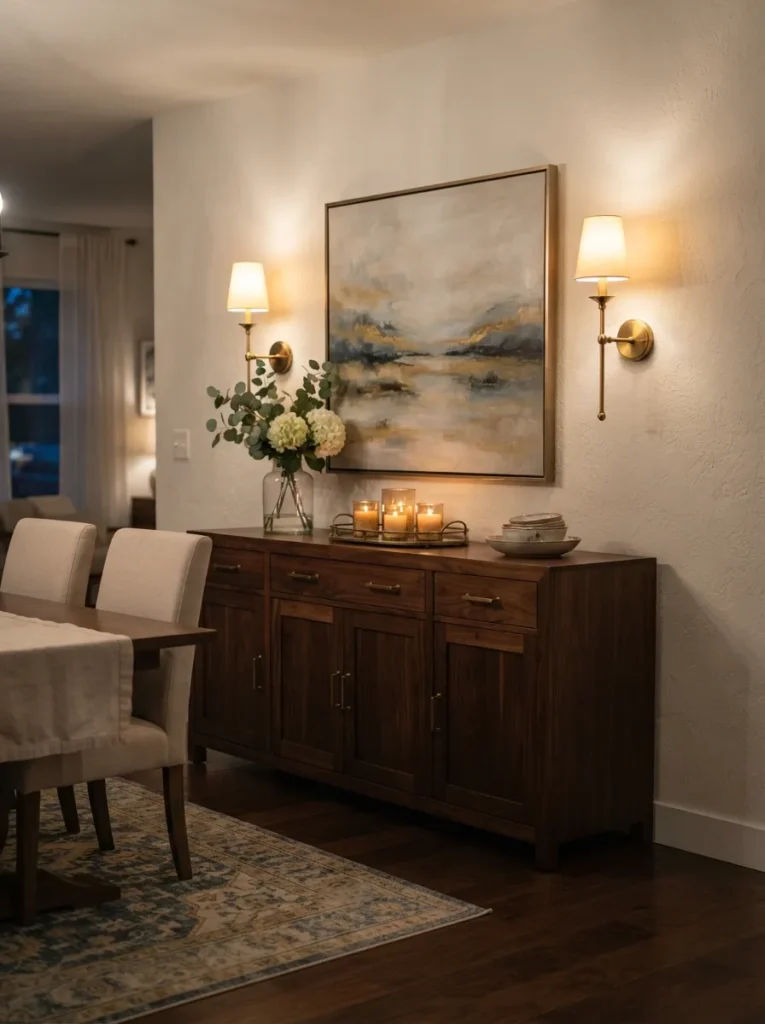
Every light source pointed downward creates the same flat shadow pattern. Sconces break that pattern by throwing light sideways and upward instead.
Plug-in wall sconce set with dimmer switch
adds vertical light without any hardwiring required.
Check Price & Options on Amazon →Placement tip: Flank a buffet, mirror, or piece of art rather than centering sconces on a blank wall — they need something to illuminate, not just exist near.
5. Install a Dimmer on Every Fixture
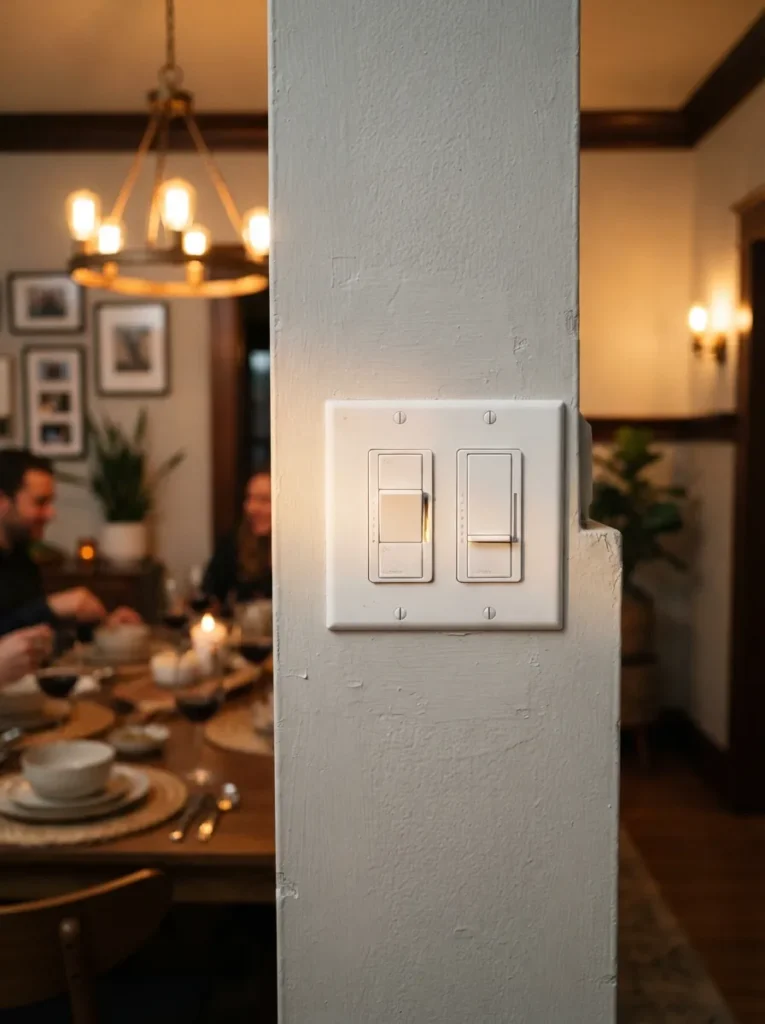
This is the cheapest, highest-impact lighting upgrade on this entire list, full stop.
A single fixture without a dimmer only has one mood: on. With a dimmer, that same fixture can handle a bright Tuesday lunch and a moody Saturday dinner party.
Smart dimmer switch with app control
adjusts brightness and warmth from a phone without touching the wall.
Check Price & Options on Amazon →Common mistake: Skipping dimmers on accent lighting like sconces — the main fixture isn’t the only thing that needs mood control.
This post contains affiliate links. If you buy something through them, I may earn a small commission at no extra cost to you.
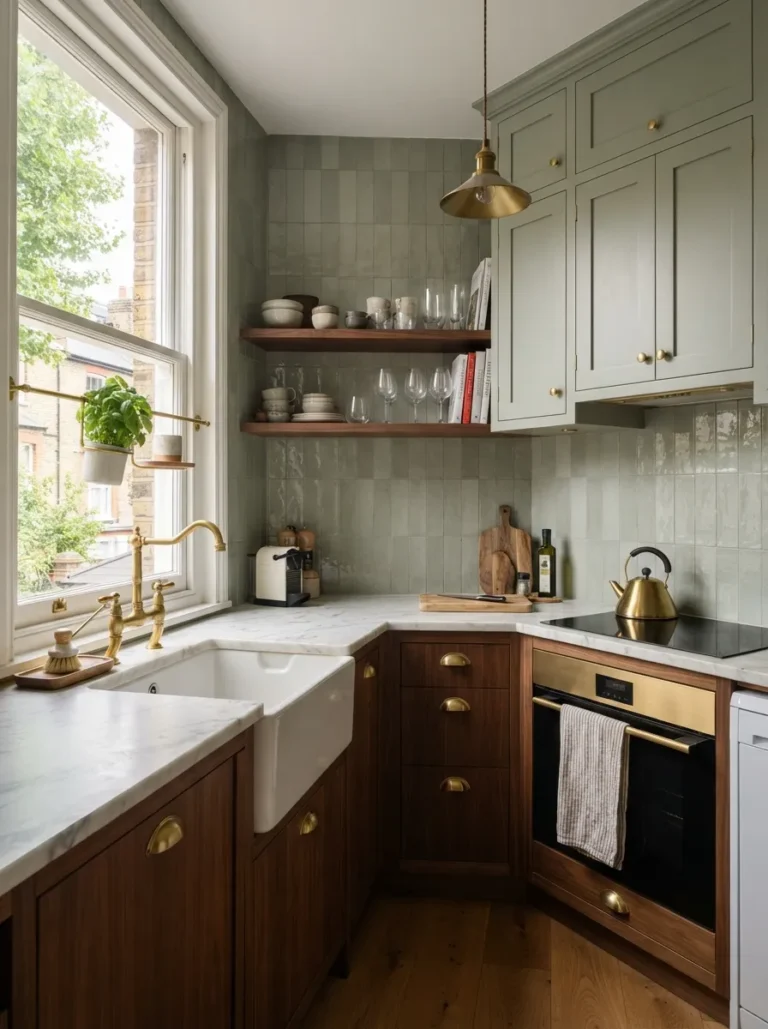
6. Mix Warm Metals for Cohesion
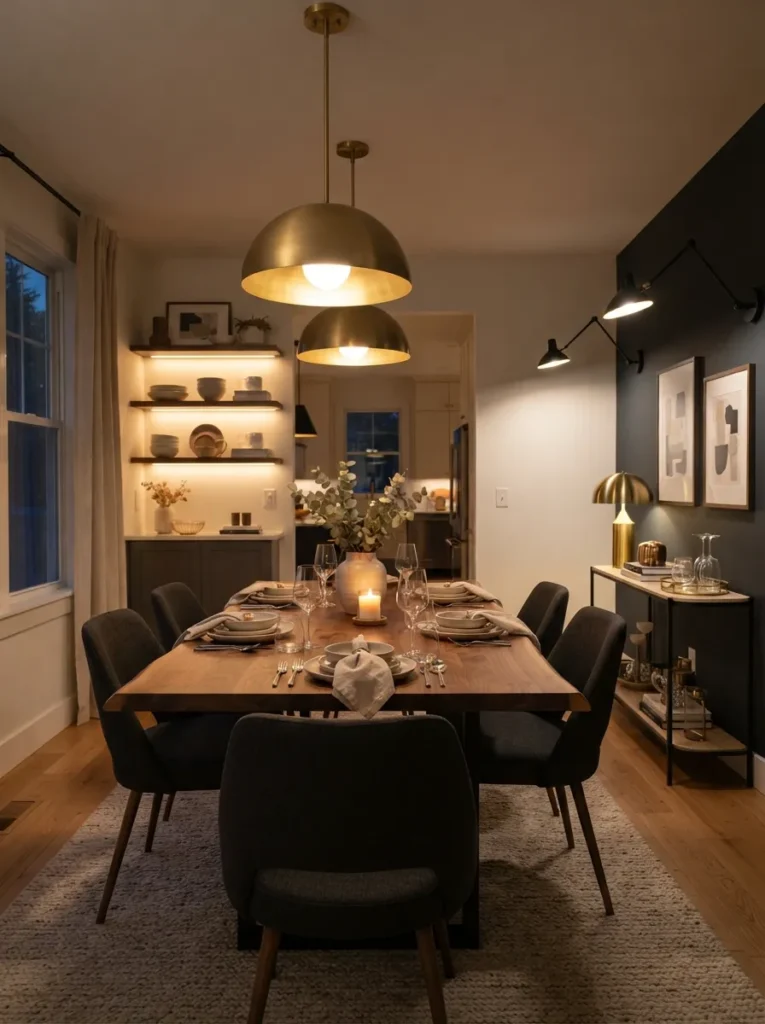
Fixtures don’t need to match exactly, but they do need to relate to each other.
Pick one dominant metal finish — brass, black, nickel — and let it repeat across the chandelier, sconces, and any lamps in the room.
Where it goes wrong: Three completely different finishes with zero relationship reads as unplanned, not eclectic. A little repetition goes a long way toward looking curated.
7. Use a Linear Fixture Over Long Tables
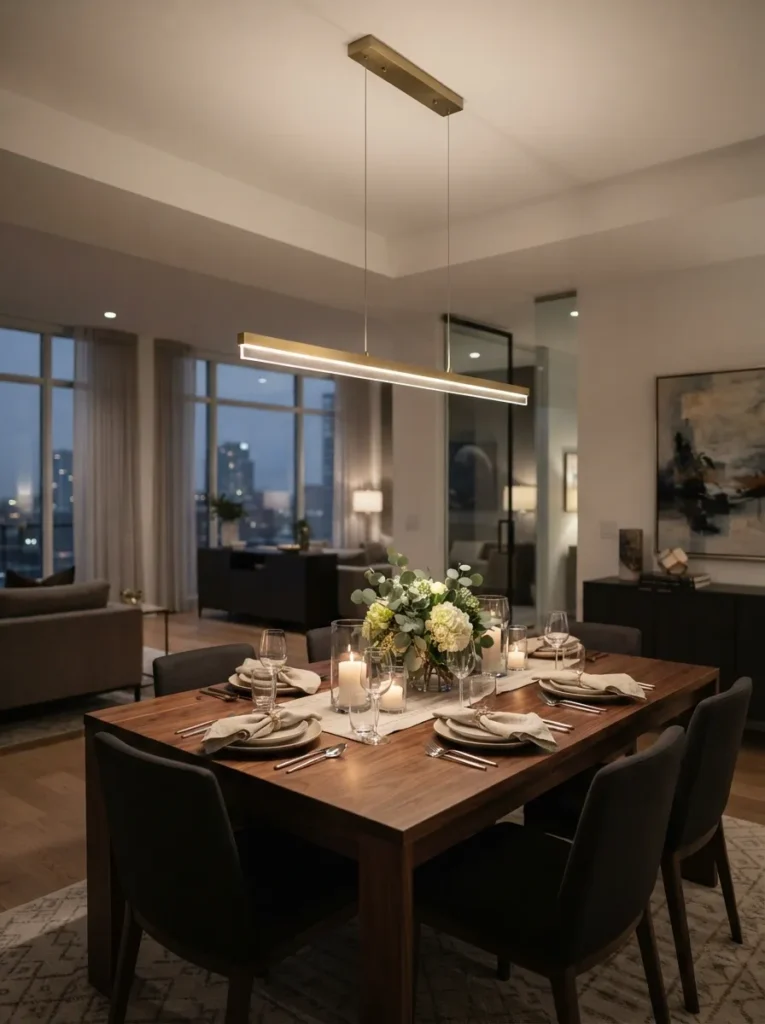
Round chandeliers over rectangular tables leave the ends of the table underlit — a genuinely common dining room lighting mistake.
A linear fixture solves this by distributing light evenly across the table’s full length instead of pooling it in the center.
Sizing rule: The fixture should span roughly two-thirds of the table’s length for proper visual balance — too short looks stingy, too long overwhelms.
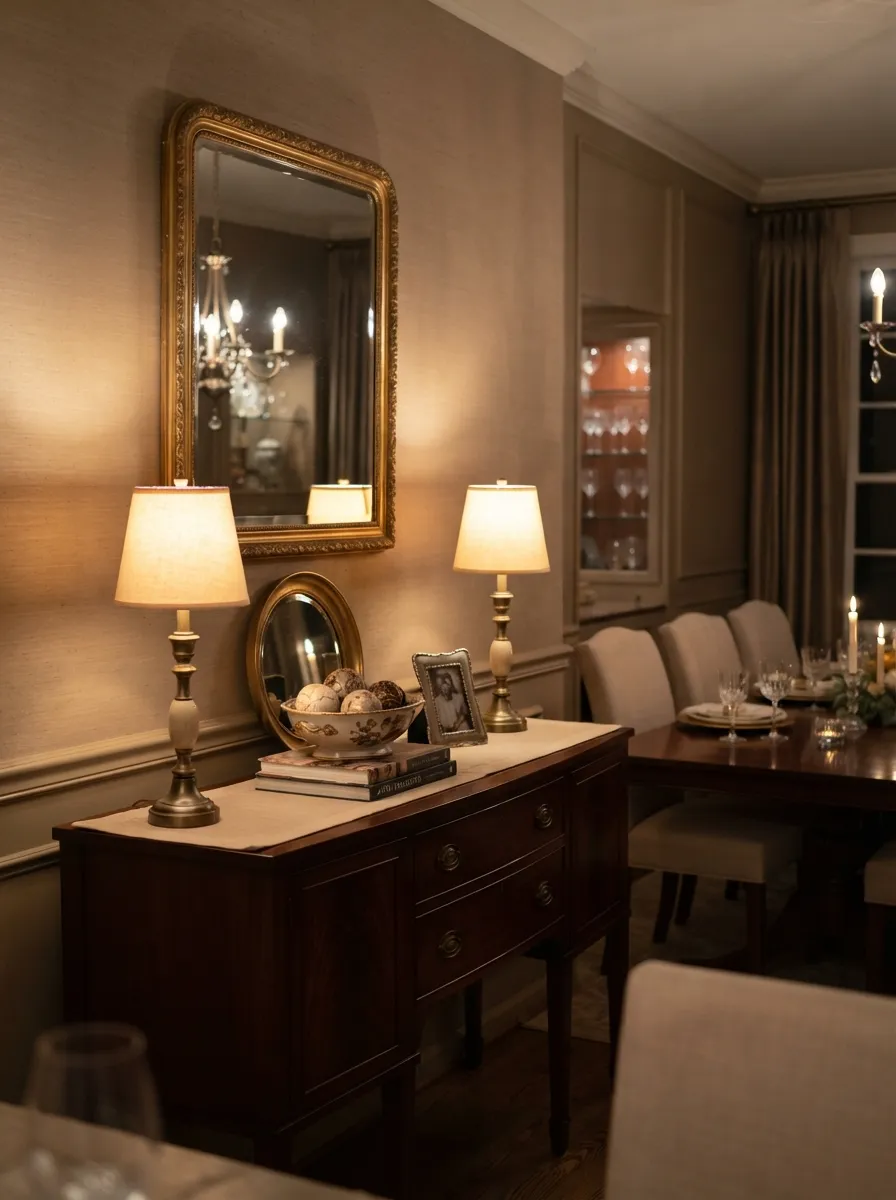
8. Add Buffet or Sideboard Lamps
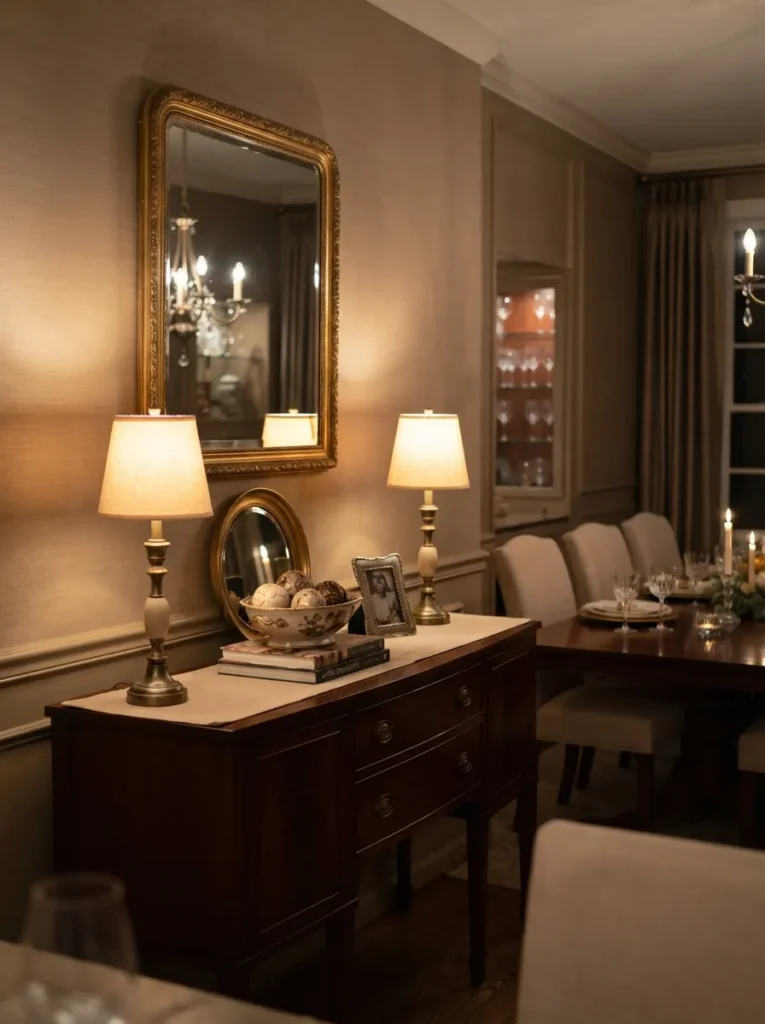
A single overhead source, however well chosen, still leaves the rest of the room in relative shadow once dinner wraps into evening conversation.
A pair of small lamps on a buffet fills that gap without adding another hardwired fixture to the ceiling.
Bonus: Lamps are the easiest lighting element to swap seasonally, letting the room’s mood shift without any electrical work involved.
9. Highlight Art or Architecture With Accent Lighting
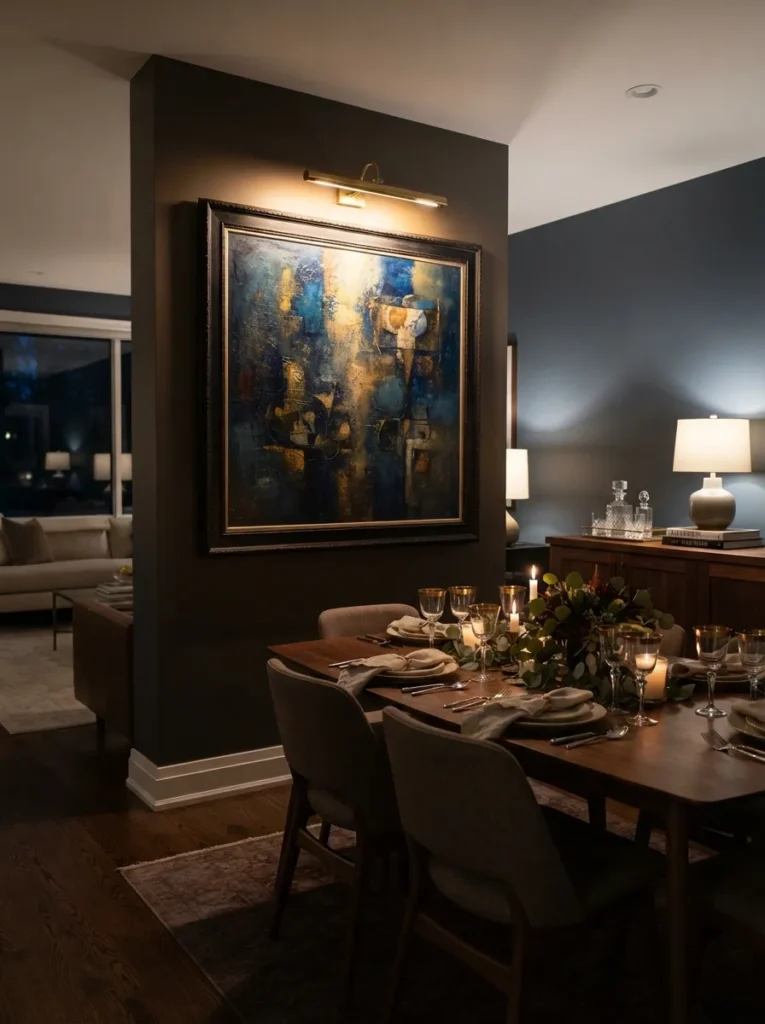
Ambient light fills a room. Accent light gives the eye somewhere specific to land.
A small picture light or directional spot aimed at artwork, a mirror, or an architectural detail adds depth that flat overhead lighting can’t achieve alone.
Why it matters: Rooms lit only by ambient sources tend to feel evenly bright but strangely flat — accent lighting is what actually creates dimension after dark.
10. Choose the Right Bulb Temperature Throughout
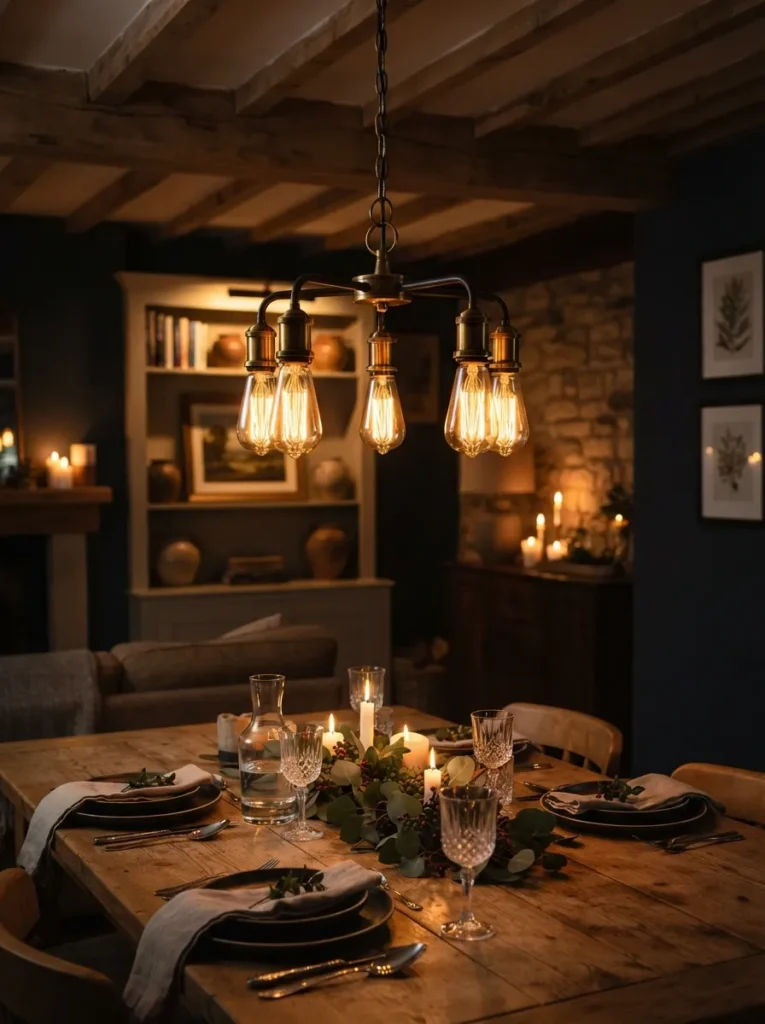
This detail gets overlooked constantly, and it quietly undermines every other design choice in the room.
Stick to bulbs in the 2700K-3000K range across every fixture — pendant, sconces, lamps, recessed cans included.
The fix that changes everything: Mismatched bulb temperatures — one fixture warm, another cool — read as an unfinished room even when the fixtures themselves are gorgeous. Consistency here matters more than any single fixture choice.
11. Consider a Statement Fixture as the Room’s Art
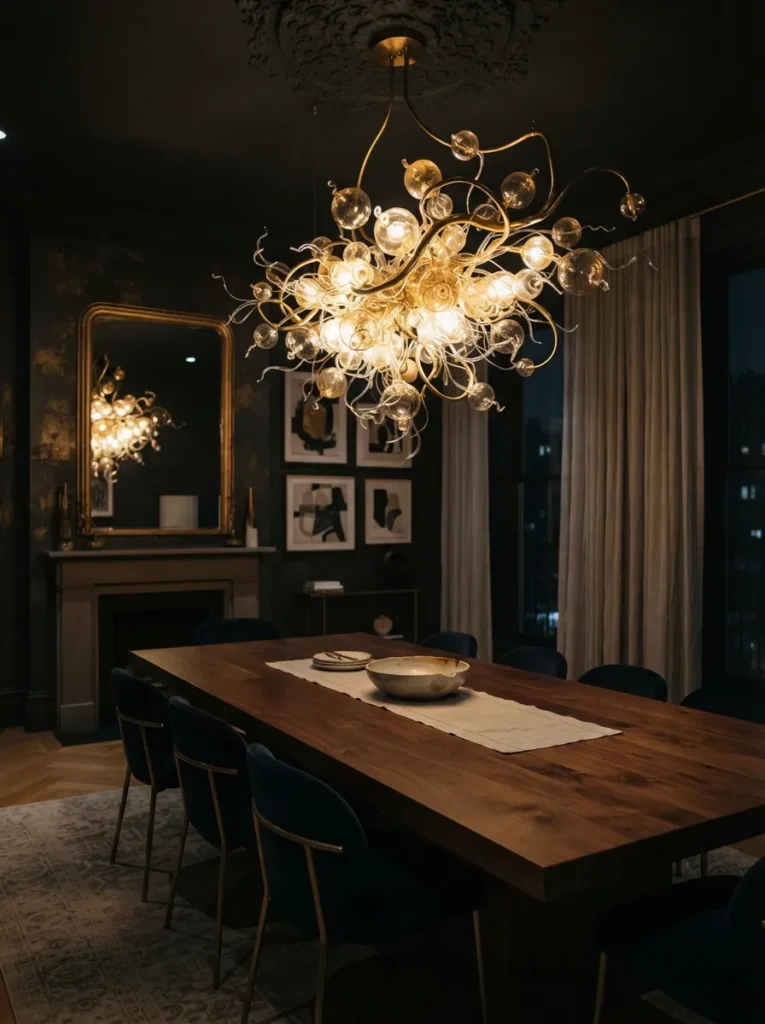
Sometimes the lighting fixture doesn’t just illuminate the room — it is the room’s centerpiece, full stop.
A sculptural, artistic fixture can replace the need for additional wall art entirely, simplifying the whole design plan.
Where this shines: Rooms with otherwise minimal decor benefit most, letting one dramatic fixture carry the entire visual weight of the space.
12. Balance Ambient, Task, and Accent Light Together
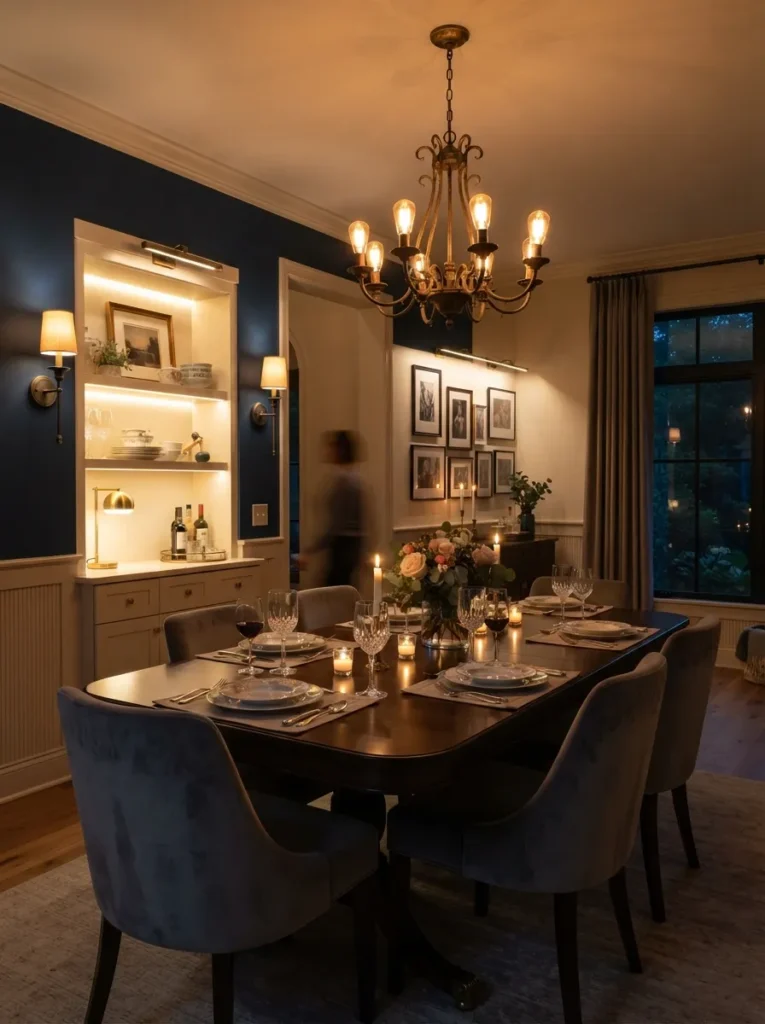
The real secret to great dining room lighting ideas isn’t any single fixture — it’s the layering of all three light types working in concert.
Ambient light fills the room. Task light focuses over the table. Accent light adds depth to walls and objects.
The formula: A room using only one of these three types, no matter how beautiful that fixture is, will always feel slightly unfinished compared to a room using all three together.
Twelve fixtures, one goal: a dining room that finally feels layered instead of flatly lit. Flip on a dimmer, mix a few sources, and watch the whole space transform after dark.