9 Creative Dining Table Runner Ideas to Instantly Refresh Your Dining Room
This post contains affiliate links. If you buy something through them, I may earn a small commission at no extra cost to you.
A bare tabletop reads unfinished. A tablecloth draped over everything reads like it’s hiding from a stain. A runner solves both problems in one narrow strip of fabric — texture and color, zero commitment.
It’s the fastest refresh a dining table can get without buying new furniture. Let’s jump into the dining table runner ideas that actually earn a permanent spot on the table.
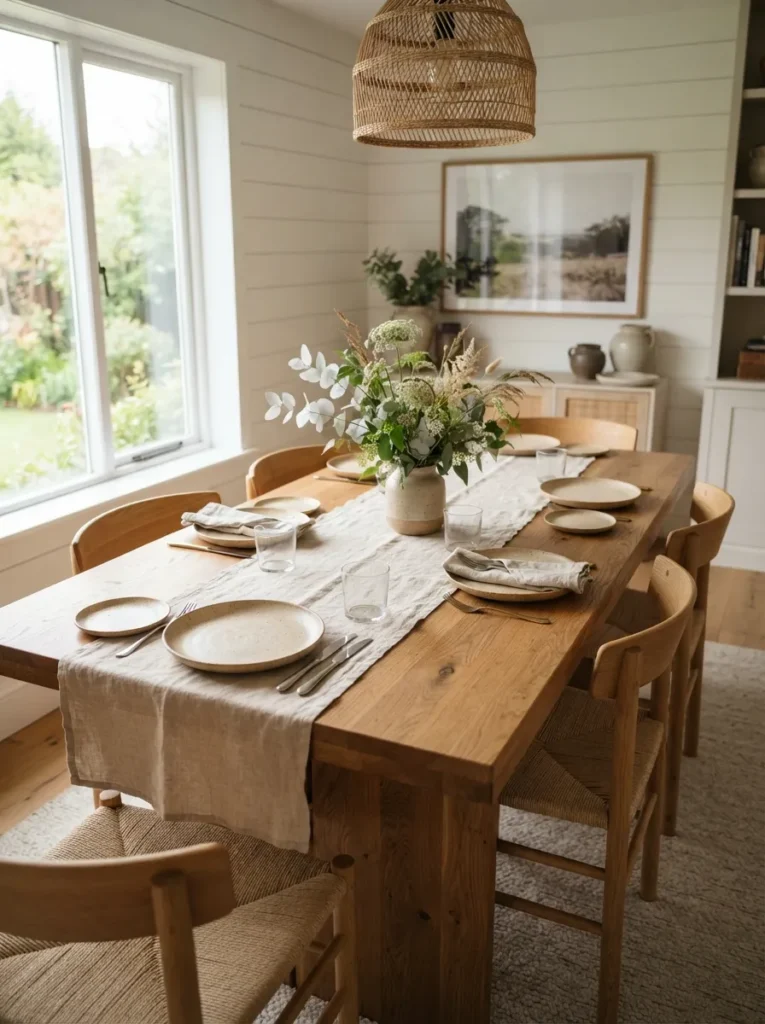
1. Organic Linen Drops for Effortless Texture
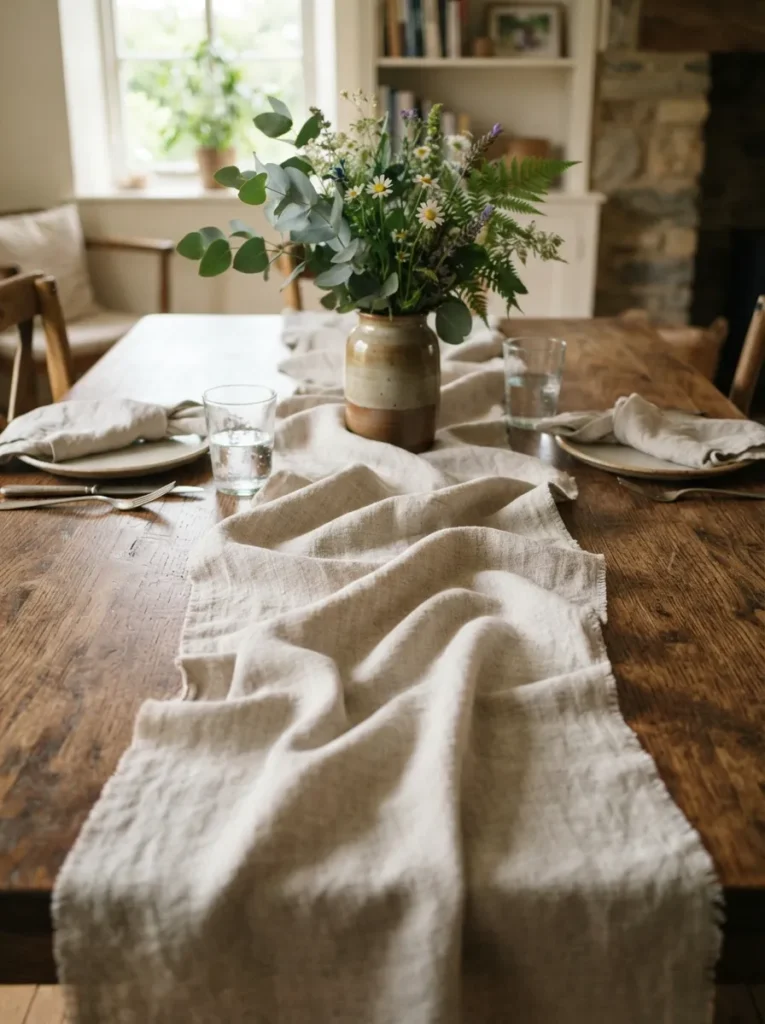
Linen runners aren’t meant to lie perfectly flat — the slightly wrinkled, organic drape is the entire appeal.
- Let the ends hang naturally off the table edge instead of tucking them in.
- Neutral linen works with virtually any dinnerware, from stoneware to fine china.
Design insight: the imperfect texture of linen photographs and styles far better than a stiff, pressed fabric. Skip the iron entirely — a little wrinkle reads intentional here.
2. Cross-Table Runners for a Modern Twist
Running a strip of fabric across the table’s width, rather than down its length, breaks up the expected layout in a genuinely modern way.
- This works especially well for smaller tables, where a lengthwise runner can feel visually stretched.
- Cross-table runners double nicely as individual placemat zones when cut to size.
Spatial tip: this layout suits round or square tables particularly well, where a traditional lengthwise runner doesn’t have an obvious “length” to follow.
3. Rustic Burlap for Warm, Textured Contrast
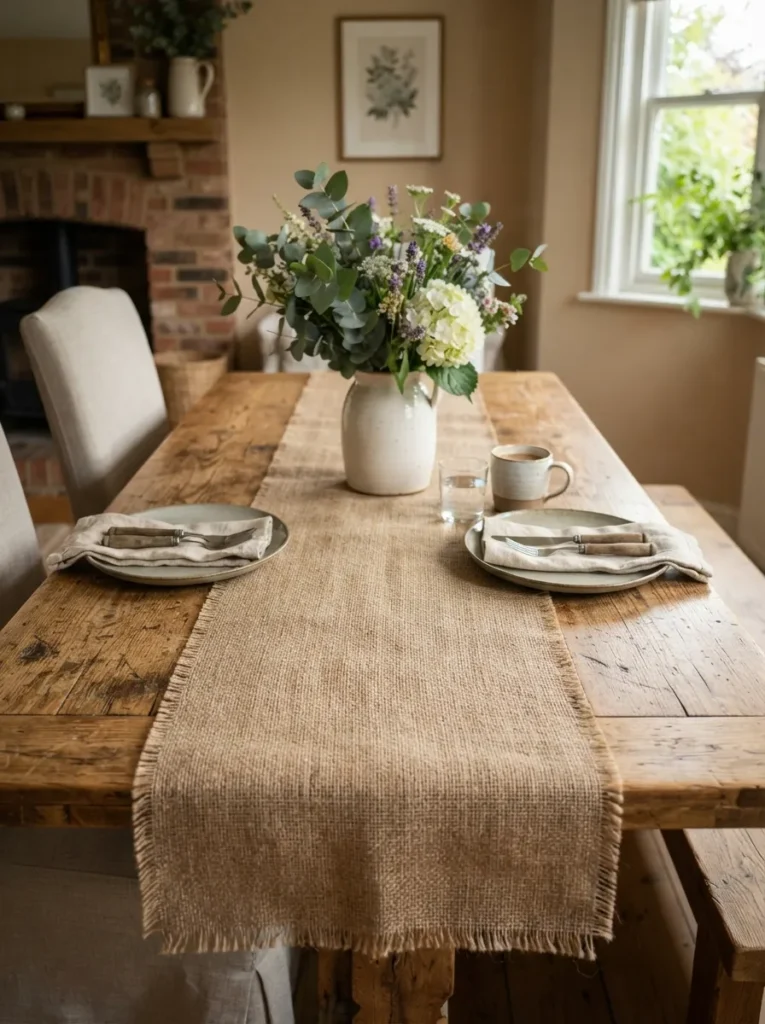
Burlap brings a raw, woven texture that pairs beautifully with distressed wood and iron accents — instantly grounding a rustic table setting.
- The loose weave adds visual interest without introducing color or pattern.
- Burlap holds up well for casual, high-traffic dining use.
Material to avoid: burlap isn’t the best pick for formal dinner settings — its rough texture reads casual no matter how it’s styled, so save it for everyday or farmhouse-leaning tables.
4. Layered Holiday Textiles for Seasonal Depth
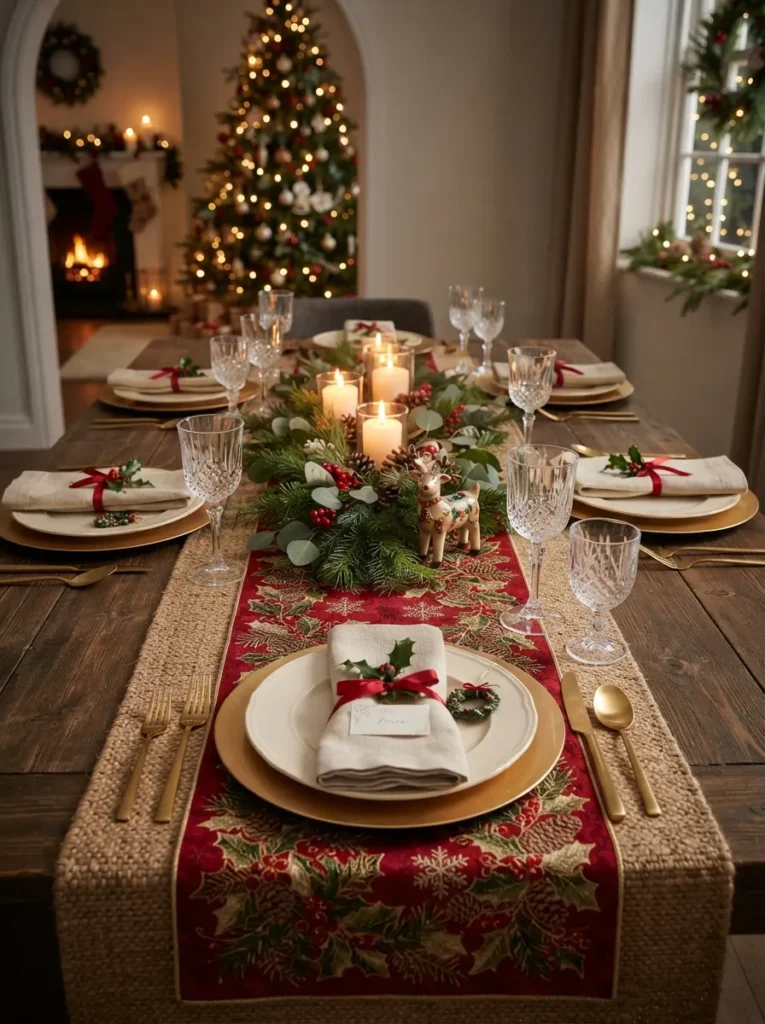
Layering a seasonal runner over a neutral base extends the life of both pieces — the neutral stays year-round, and the top layer rotates with the calendar.
- Keep the base runner solid and simple so the seasonal layer has room to stand out.
- This approach works for any holiday, not just winter — think florals for spring, warm plaids for fall.
Why it works: layering also adds visual depth to the table without requiring a full restyle every few months.
5. Velvet Runners for Instant Formal Polish
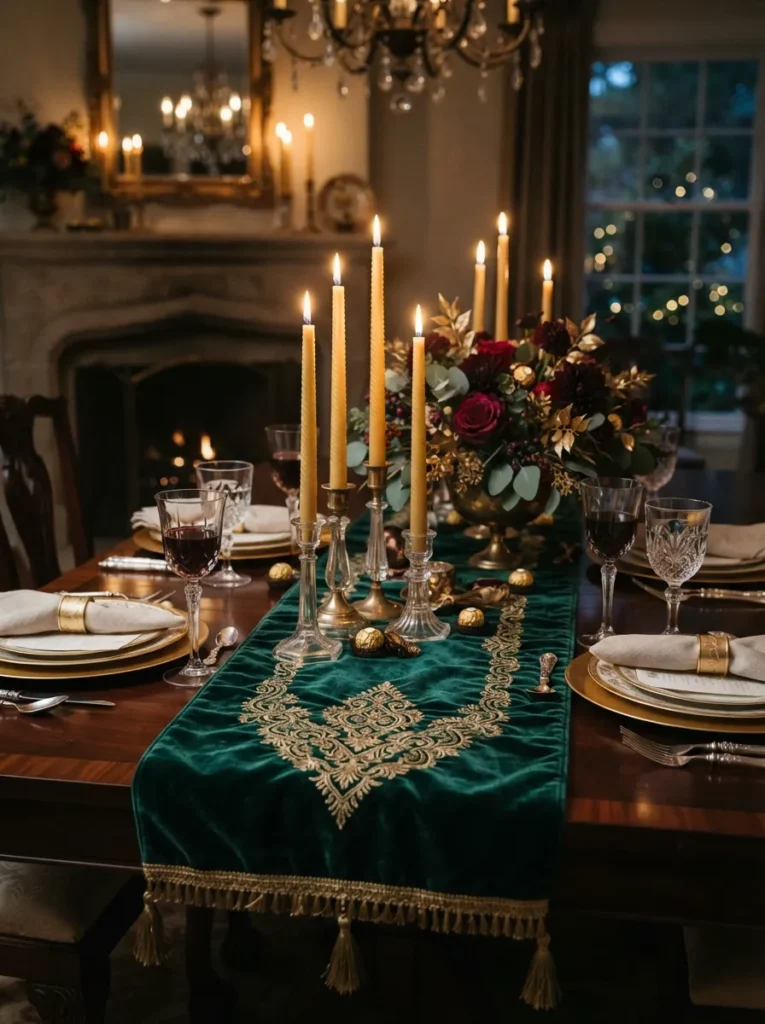
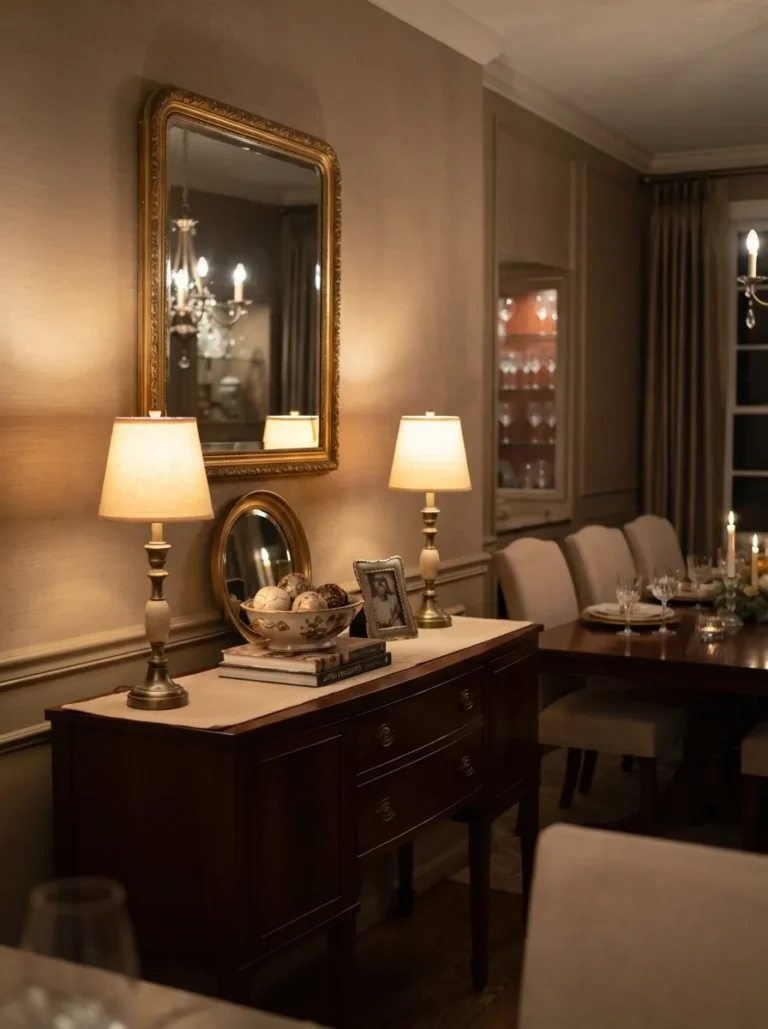
Velvet elevates a table the moment it touches down — the fabric’s sheen catches candlelight in a way flat cotton simply can’t match.
- Jewel tones (emerald, burgundy, navy) suit velvet especially well for formal settings.
- Pair velvet with metallic flatware or candlesticks to lean into the richer texture.
Lighting tip: velvet’s texture shifts noticeably under candlelight versus overhead lighting — for evening dinners, dim the overheads and let candles do the work.
6. Two Runners Crossed for a Layered Look
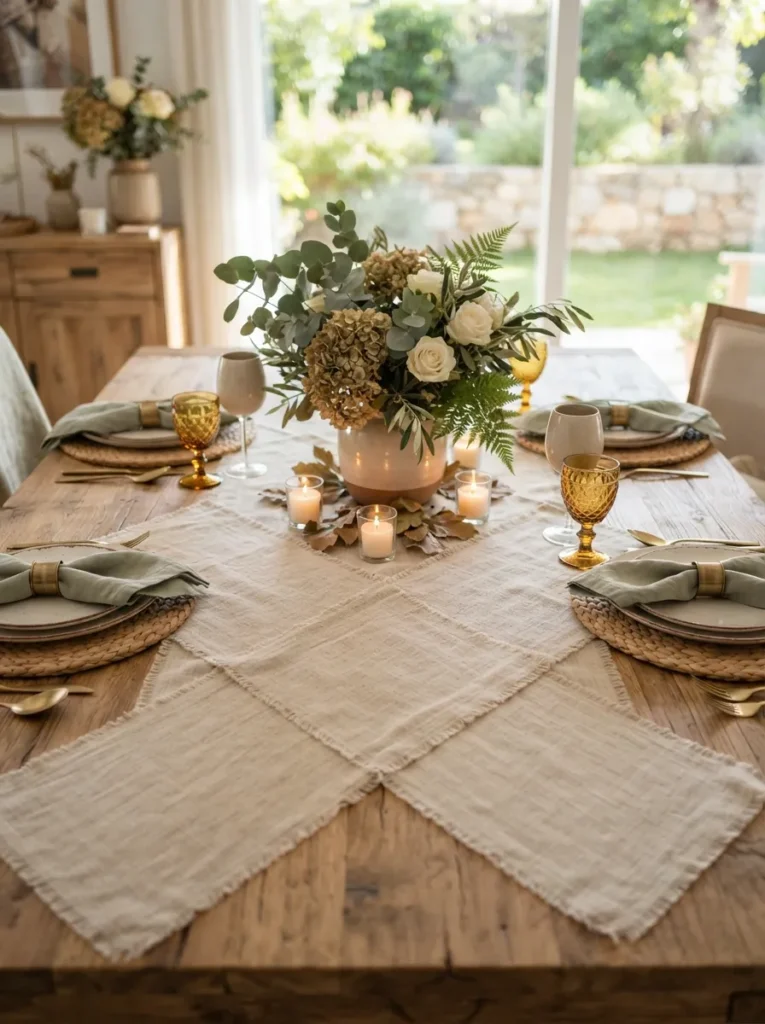
Crossing two runners — one lengthwise, one widthwise — creates an unexpected layered moment that a single runner can’t achieve alone.
ideal for layering in a crossed or overlapping pattern.
🛒 Check Price on AmazonChoose two runners in complementary, not matching, patterns or textures for the most visually interesting result.
Con to watch: this layout works best on larger tables. Smaller tables can start to feel visually busy with two runners crossing at the center.
7. Woven Textural Runners for Understated Interest
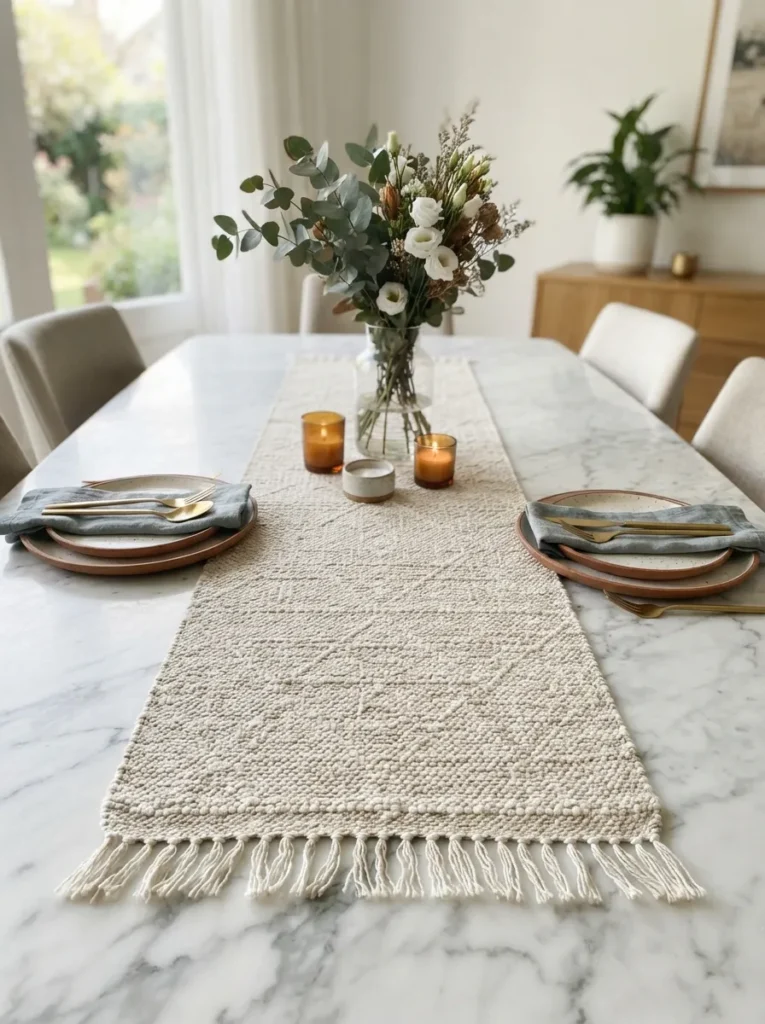
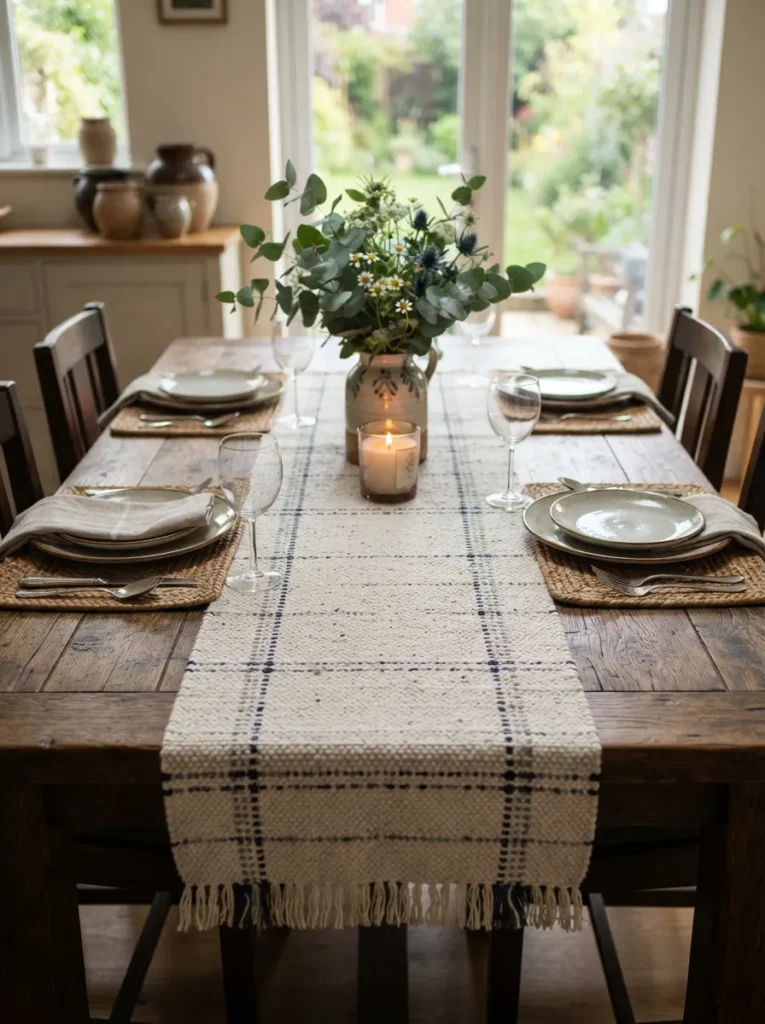
A woven runner adds pattern through texture rather than color — subtle enough for daily use, interesting enough to notice.
adds quiet texture without overwhelming a marble or wood tabletop.
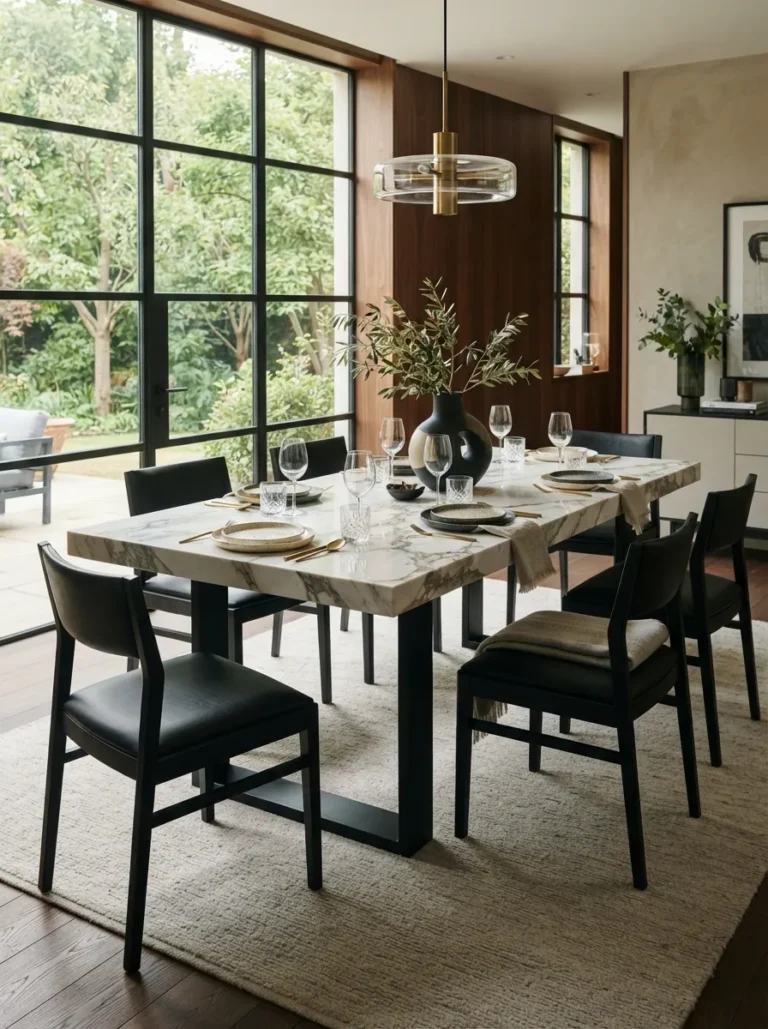
🛒 Check Price on AmazonThis style works exceptionally well on marble tables, where the runner’s texture contrasts nicely against the cool, smooth stone surface.
Design insight: woven runners also tend to hide crumbs and light spills better than a flat, smooth fabric.
8. Fringed Edges for Boho, Collected Charm
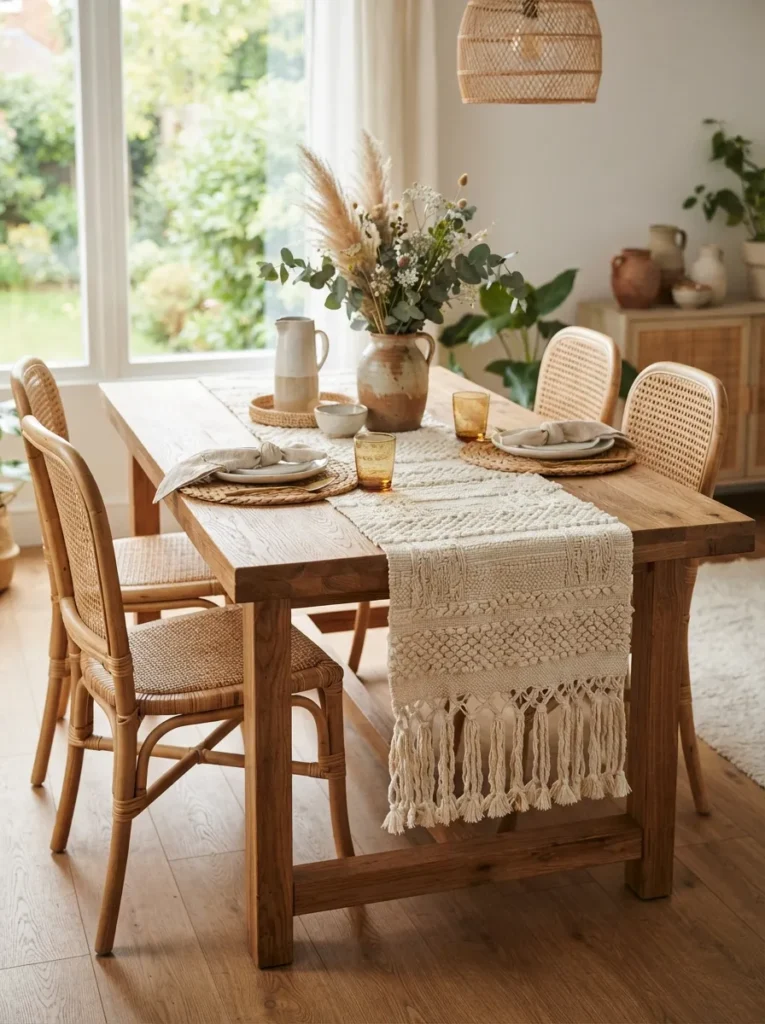
Fringe adds movement and a slightly bohemian, well-traveled feel to an otherwise simple runner — small detail, disproportionate impact.
brings boho texture without needing a full style overhaul.
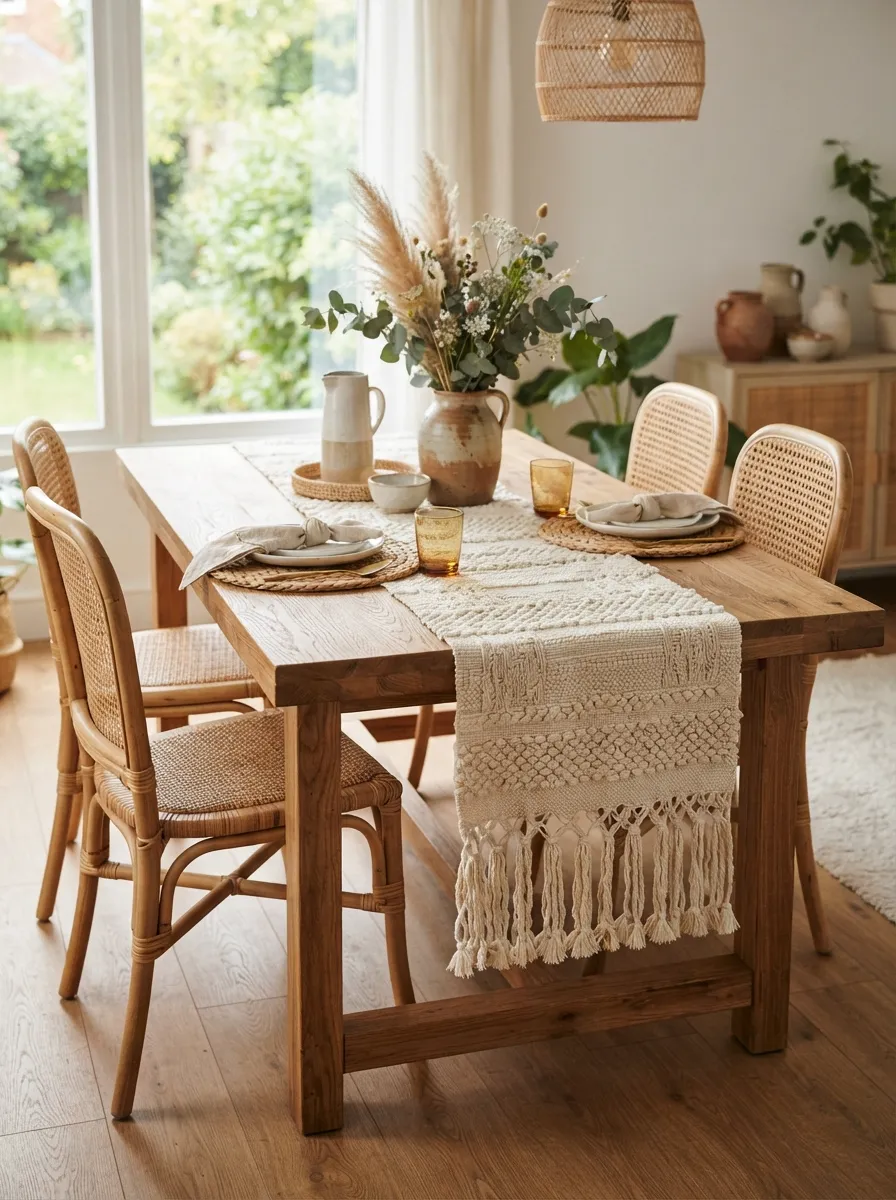
🛒 Check Price on AmazonPair a fringed runner with rattan chairs or woven pendant lighting for a cohesive, textural dining room moment.
Pros: fringe adds visual softness cheaply. Cons to watch: trim any fraying ends periodically, especially near high-traffic chair areas.
9. Off-Center Runners for an Editorial Look
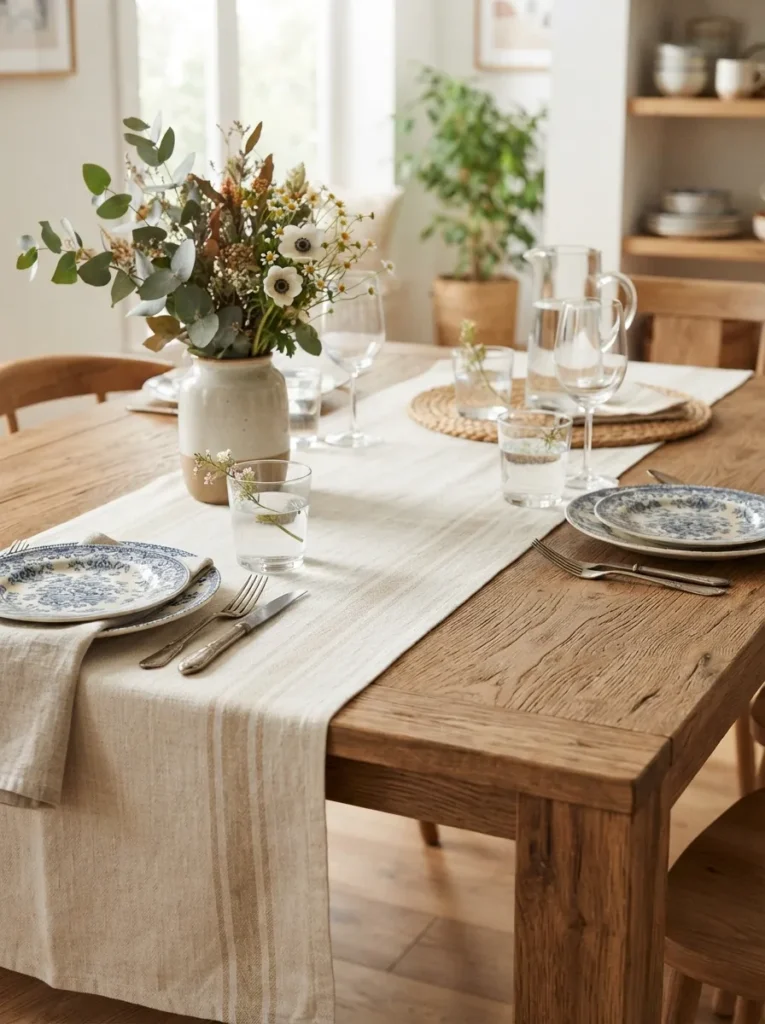
Centering everything is safe. Placing the runner slightly off-center — closer to one edge than the other — creates a more editorial, styled-for-a-photoshoot feel.
- This works best paired with an asymmetrical centerpiece grouping, rather than one dead-center object.
- Off-center layouts suit long tables especially well, where symmetry can start to feel a little rigid.
Design insight: this is a small styling shift that photographs beautifully but rarely gets tried at home — worth testing before the next dinner party.
A runner is the fastest, cheapest way to change the entire mood of a dining table without touching a single piece of furniture. Pick a texture that fits the moment, layer it with confidence, and that tabletop finally looks finished instead of forgotten.