10 Practical Dining Table Tray Styling Ideas to Keep Your Table Chic and Organized
This post contains affiliate links. If you buy something through them, I may earn a small commission at no extra cost to you.
Loose candles, a wandering salt cellar, one sad little vase drifting toward the edge — a dining table without a tray is basically clutter waiting to happen. The second real plates and serving dishes need that space, everything’s getting shoved aside in a panic.
A tray fixes that instantly. Let’s jump into the dining table tray styling ideas that keep things chic and make clearing the table a one-motion job.
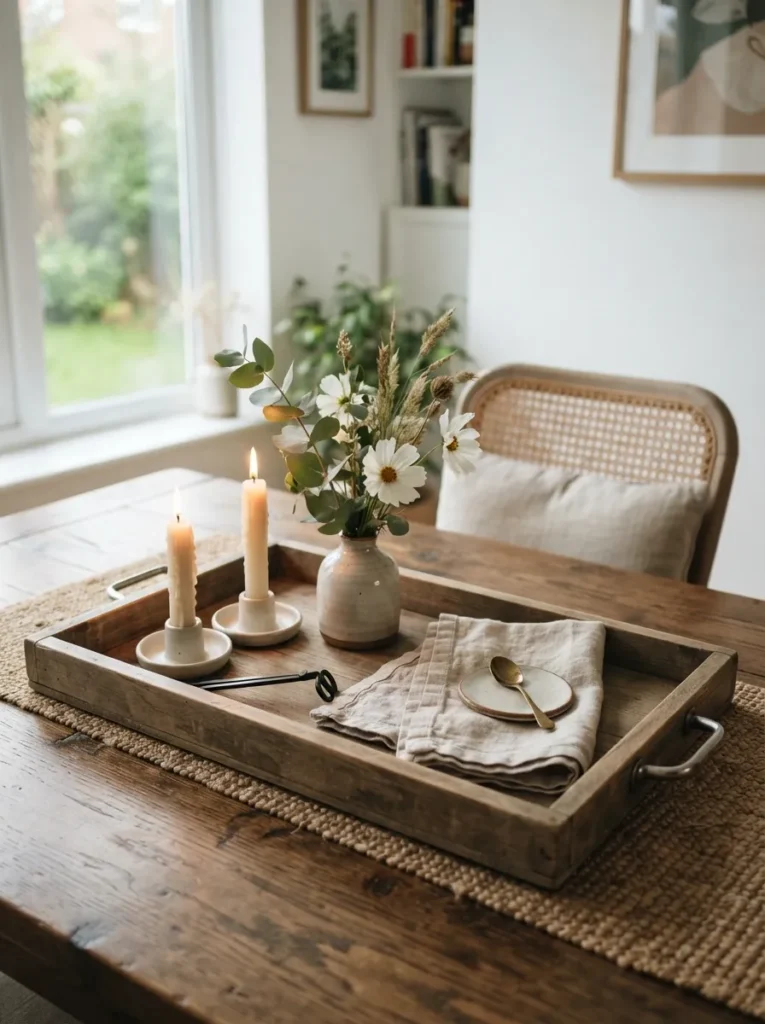
1. Round Trays for Softening Sharp Table Lines
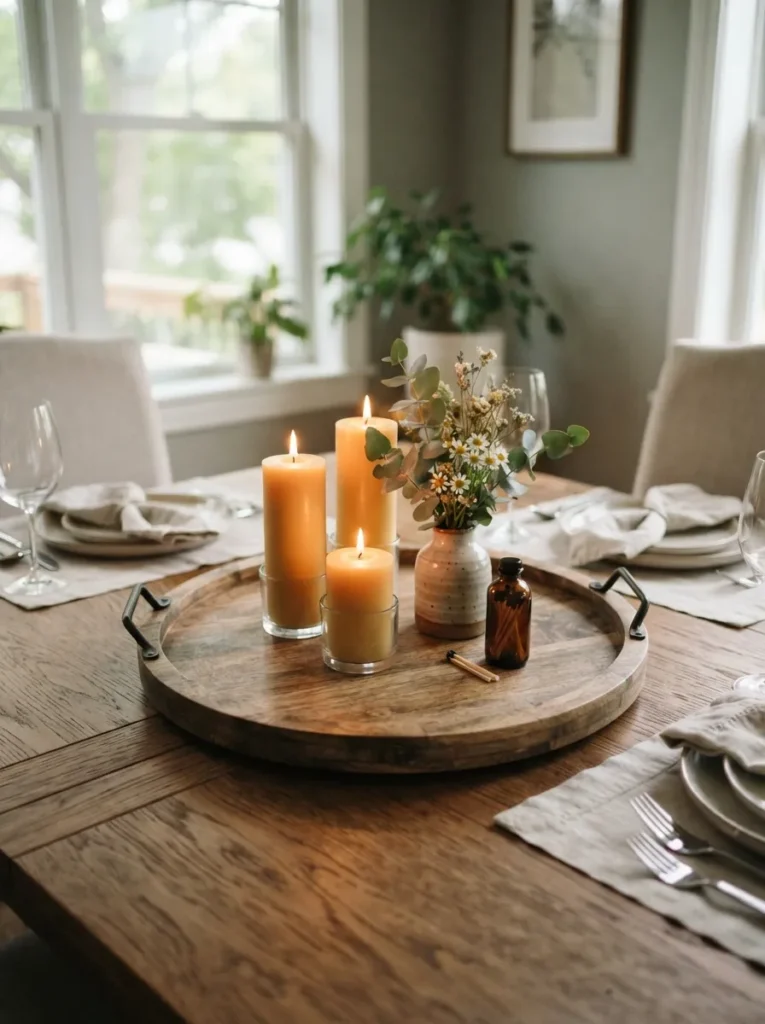
Round trays break up the visual monotony of a rectangular table, adding a soft shape against all those straight edges.
- A round tray works especially well as a centerpiece anchor, since it draws the eye naturally to the middle of the table.
- The circular shape pairs beautifully with round or pillar candles for a cohesive look.
Design insight: keep the round tray no wider than a third of the table’s width — oversized round trays start crowding out place settings fast.
2. Rectangular Trays for Long or Narrow Tables
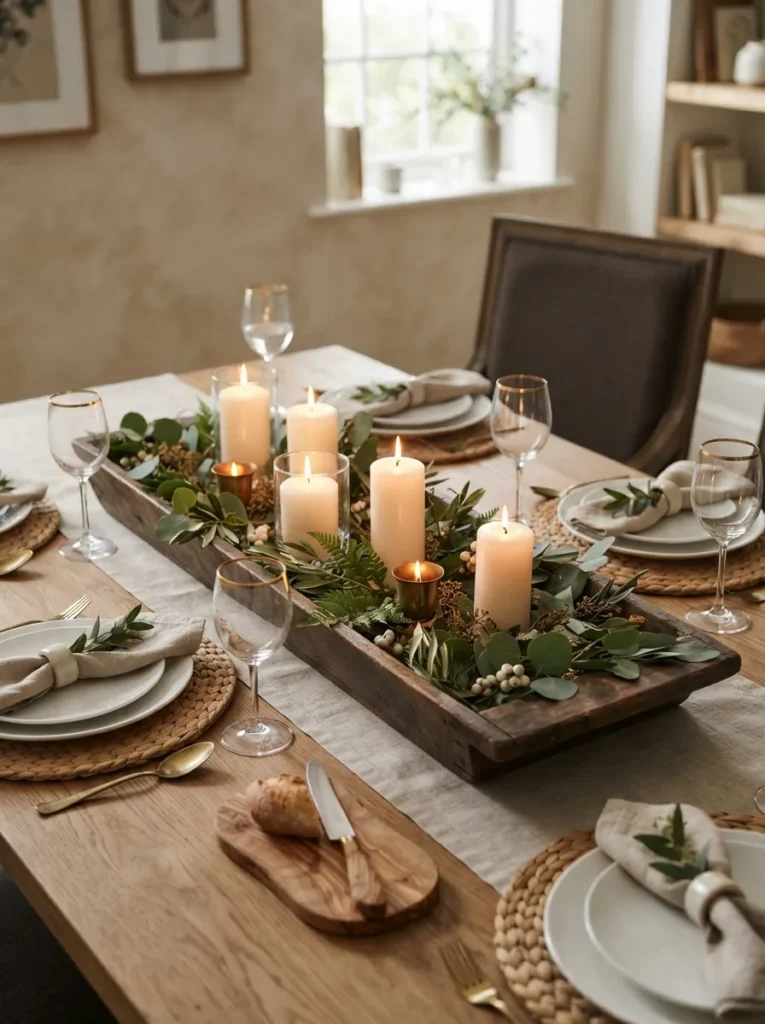
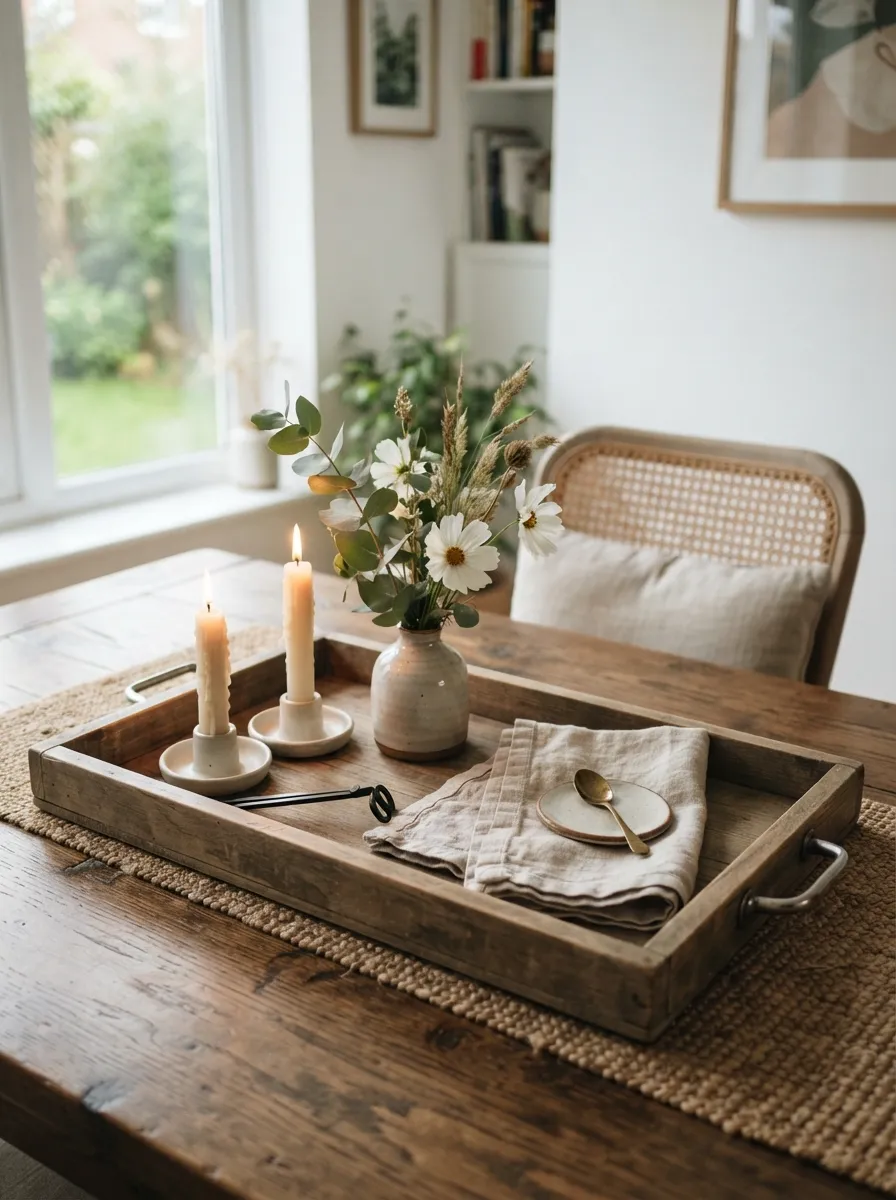
Long, narrow tables practically demand a rectangular tray — it echoes the table’s shape and keeps the vignette from looking randomly placed.
- Rectangular trays accommodate more items in a single line without feeling crowded.
- This shape works particularly well running lengthwise as a centerpiece base for a runner-style look.
Why it works: the elongated shape means guests seated anywhere along the table get a similar view of the styled items, rather than everything clustering at one end.
3. Footed Trays for Effortless Height Variation
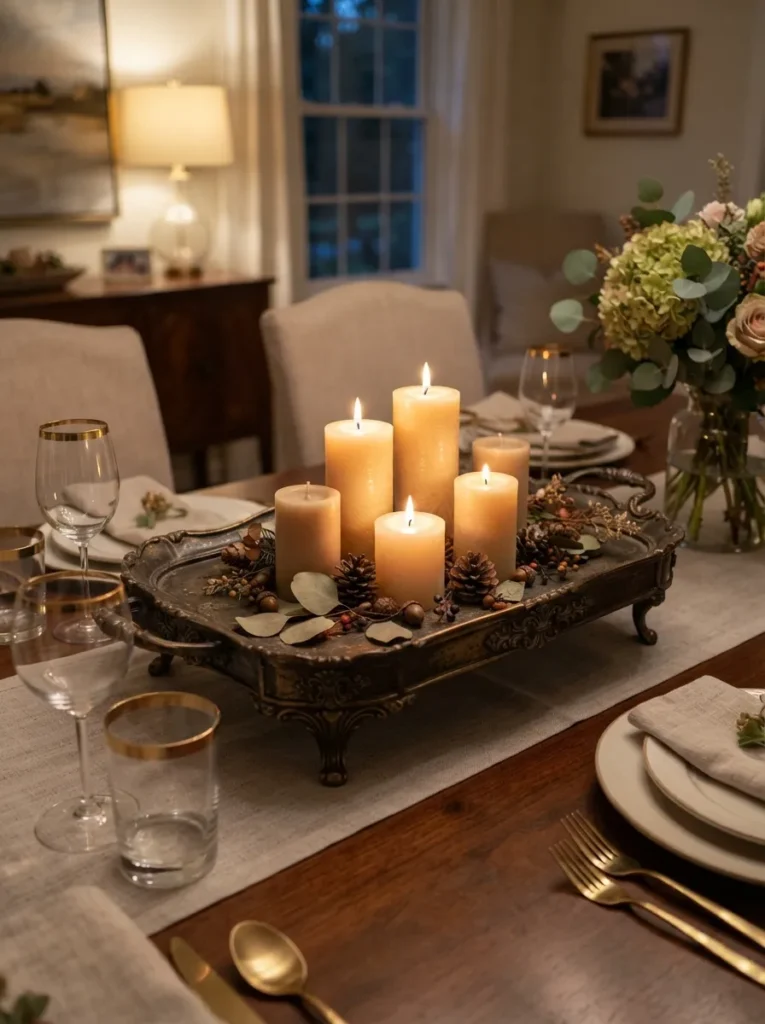
A footed tray lifts the whole vignette slightly off the table’s surface, adding a layer of dimension that a flat tray can’t achieve on its own.
- The raised edge also corrals items more securely — less sliding around when the table gets bumped.
- Footed trays photograph beautifully thanks to the subtle shadow they cast underneath.
Material to avoid: heavy footed trays in metal or stone on tables that get moved often — lighter wood or acrylic footed options are easier to relocate quickly.
4. Grouping Candles by Height on One Tray
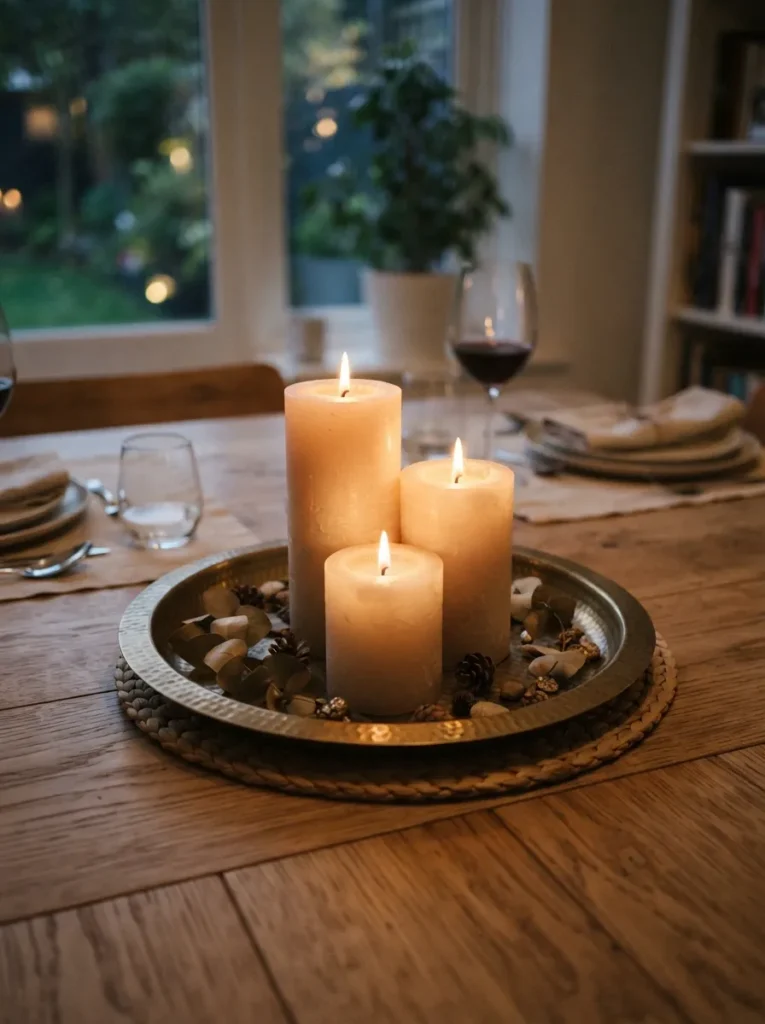
Loose candles scattered across a table look accidental. Clustered together on a tray at varying heights, they suddenly read as a designed vignette.
- Odd numbers — three or five candles — create better visual rhythm than even groupings.
- Keeping candles on a tray also catches wax drips, saving the table finish from damage.
Spatial tip: vary candle heights by at least an inch or two between each one so the grouping doesn’t read as flat or uniform.
5. Pairing a Small Vase with Salt Cellars
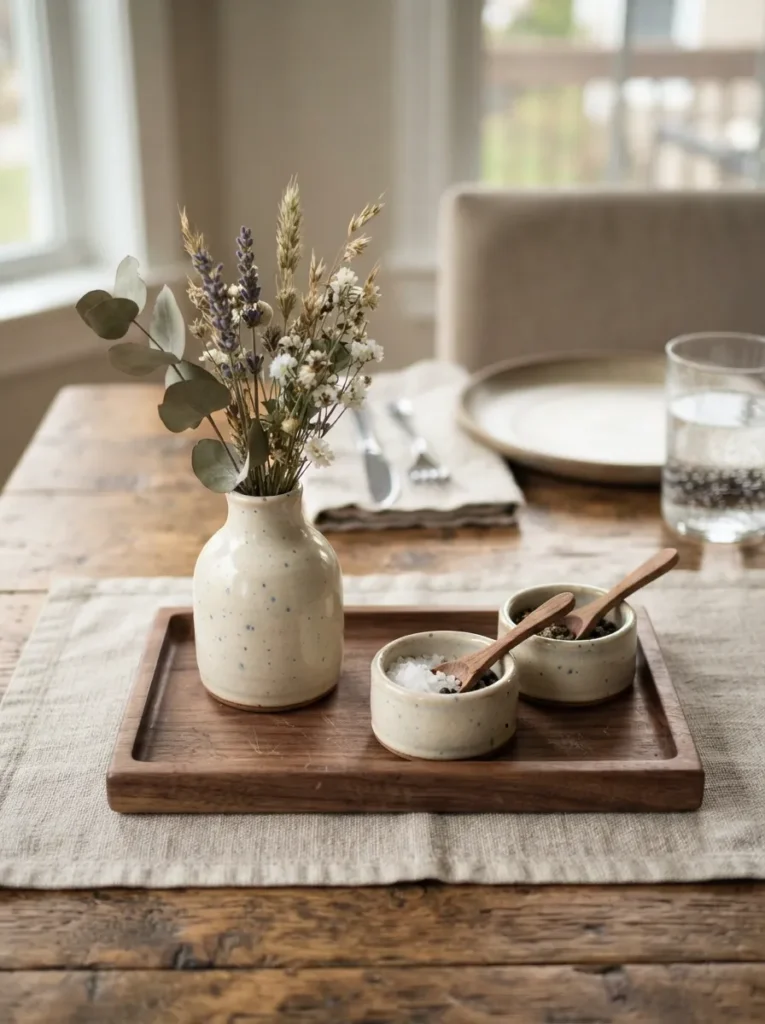
Function and style don’t have to live on separate trays. Pairing a small vase with salt and pepper cellars keeps everyday essentials looking intentional rather than utilitarian.
- Choose cellars in a material that echoes the vase — matching ceramic glazes tie the whole grouping together.
- This combo works especially well for daily dining, where the tray needs to earn its keep beyond just special occasions.
Design insight: keep the vase off-center on the tray rather than dead middle — it creates a more natural, collected-over-time feel.
6. Linen Napkins Folded Directly on the Tray
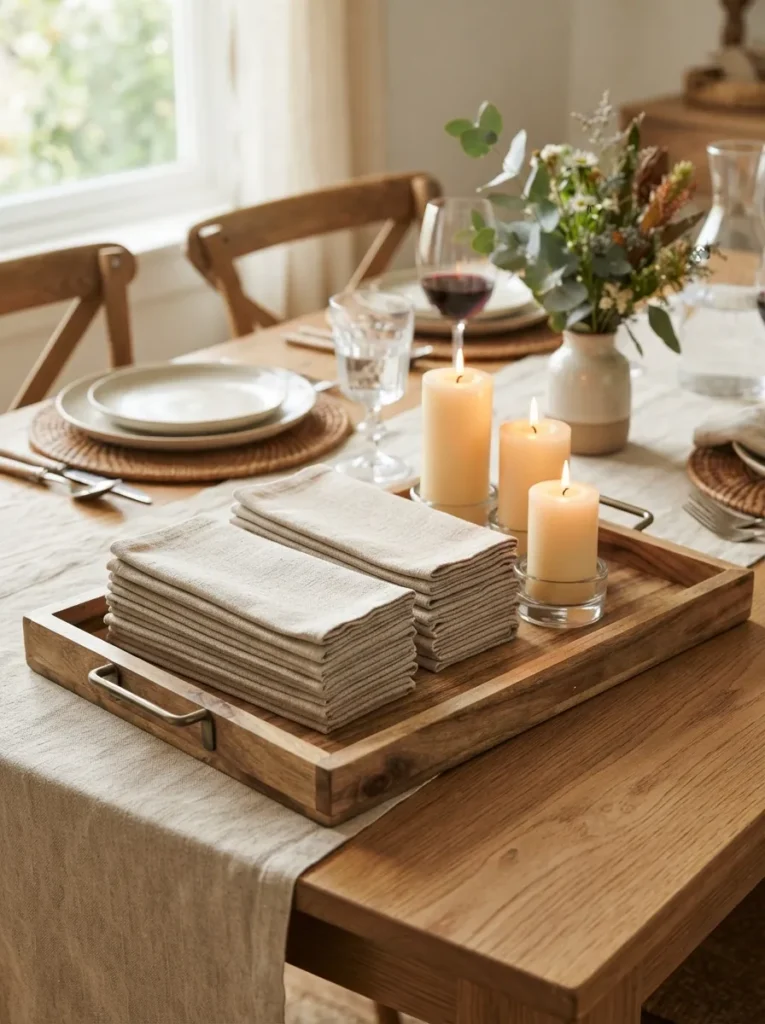
Storing folded linen napkins right on the tray means table setup becomes genuinely fast — no separate trip to a drawer required.
- Roll napkins with a simple twine tie for a more relaxed, textural look.
- Neutral linen tones work with almost any tray material, wood or metal alike.
Why it works: this setup turns the tray into a functional staging area, not just a decorative object — exactly what busy households actually need.
7. Wooden Trays for Warmth and Versatility
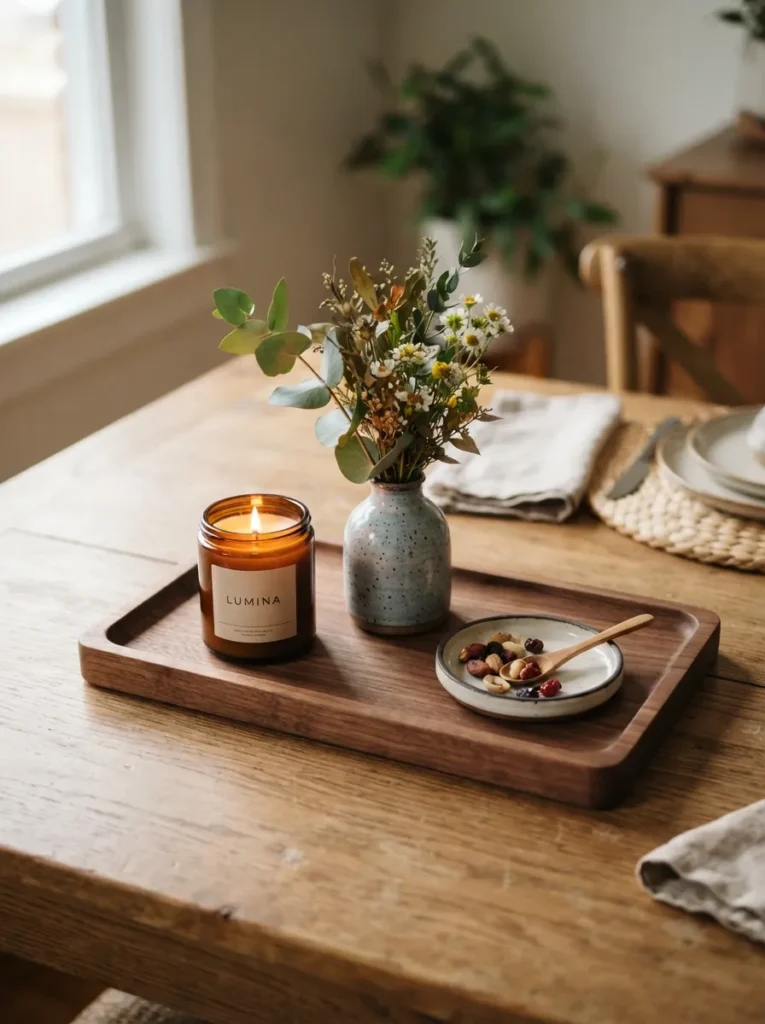
Wood is the most forgiving tray material out there — it works with farmhouse, modern, boho, basically any style already happening on the table.
brings warm, versatile styling that suits nearly any dining aesthetic.
🛒 Check Price on AmazonWood trays also hide daily scuffs and water rings far better than glossy finishes, which matters for something touched constantly.
Con to watch: unsealed wood can warp near consistent moisture, so a sealed or finished tray holds up longer near candles and vases.
8. Mirrored Trays for Reflective Glamour
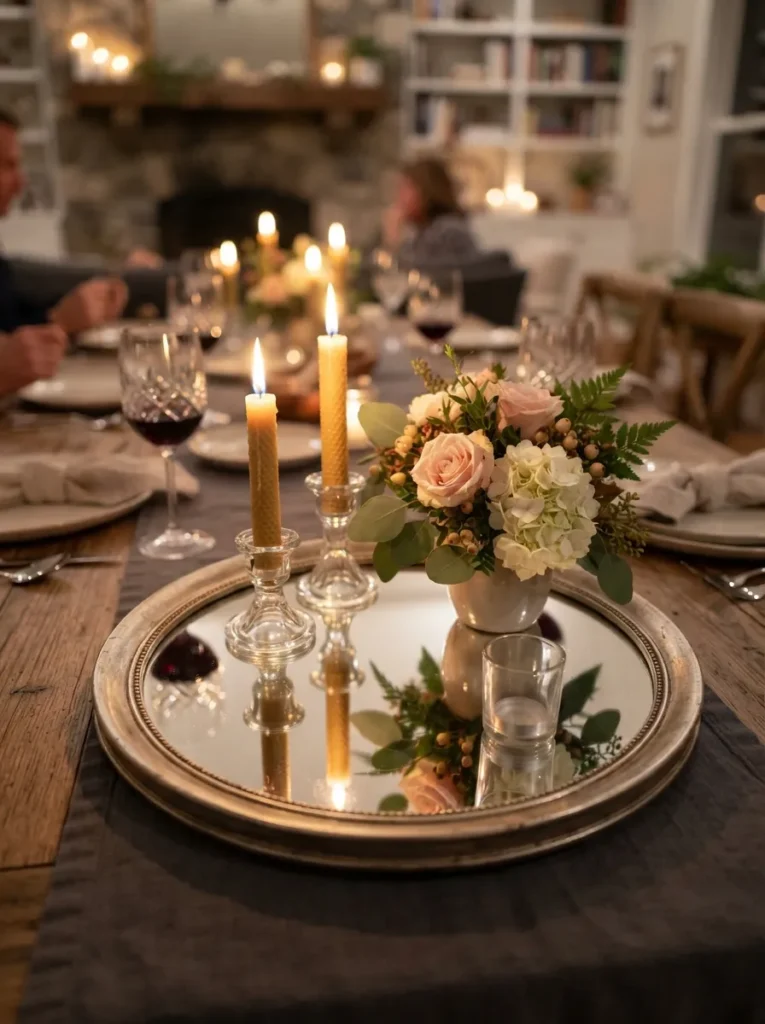
Mirrored trays add a touch of glamour, doubling the visual impact of whatever sits on top through pure reflection.
amplifies candlelight and adds a polished, formal touch to table styling.
🛒 Check Price on AmazonThis works especially well for evening dinners, where candlelight bounces off the mirrored surface and adds extra warmth to the room.
Lighting tip: pair a mirrored tray with real candles rather than LED versions — the flicker reflects far more convincingly than a static light.
9. Marble Trays for Elevated, Formal Styling
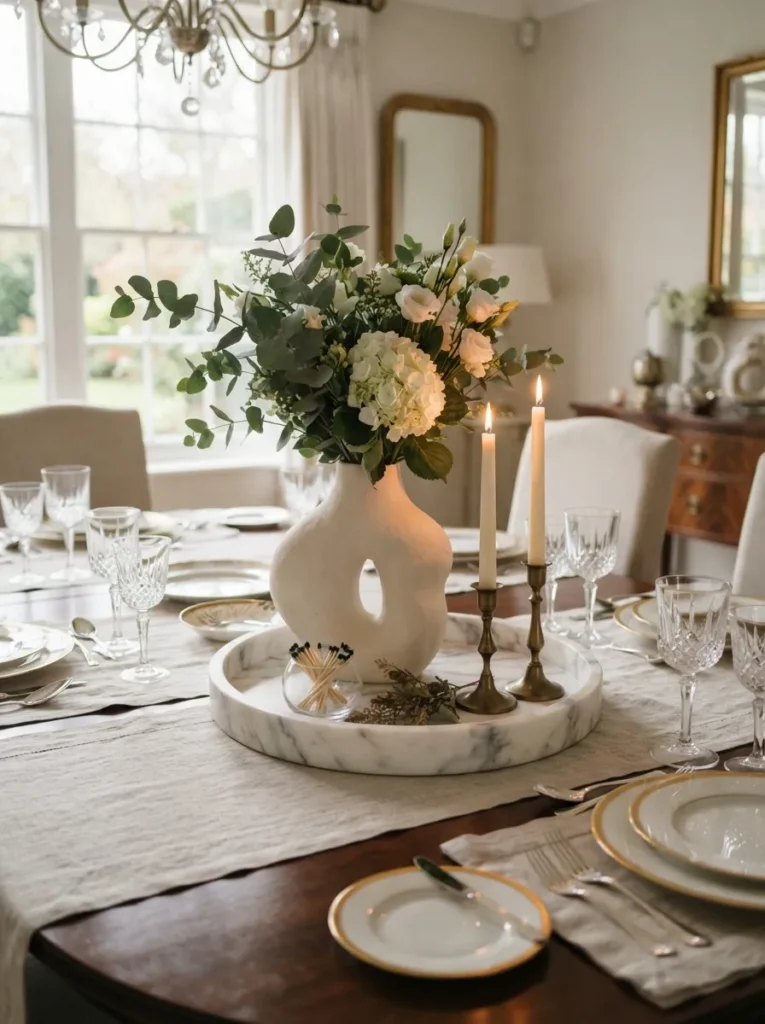
Marble brings a cool, elevated finish that suits more formal dining settings — think dinner parties, not everyday Tuesday takeout.
adds a formal, elevated finish ideal for special occasion table styling.
🛒 Check Price on AmazonThe natural veining in marble means no two trays look exactly alike, adding a subtle uniqueness to the vignette.
Pros: marble is heavy enough to stay put, even with an active dinner table. Cons to watch: it’s not the lightest option for quick daily rearranging.
10. The One-Motion Lift for Fast Table Resets
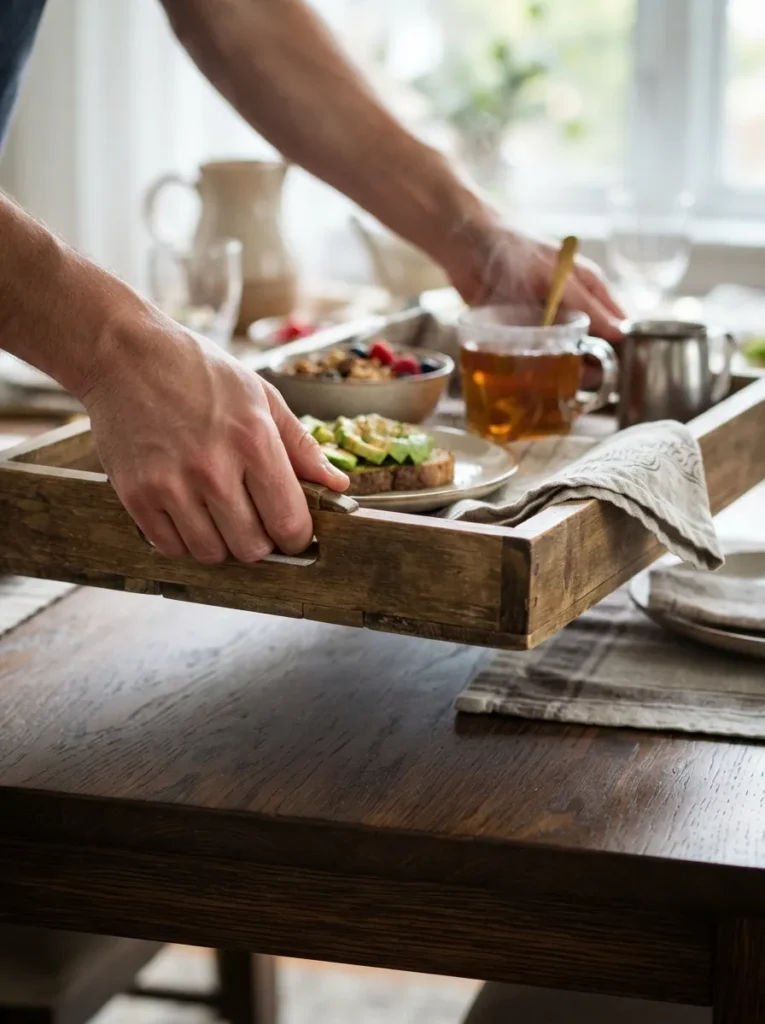
The entire point of tray styling comes down to this: when real plates and serving dishes need the table, the whole vignette lifts away in a single motion.
- Keep the tray’s total weight manageable — an overloaded tray isn’t actually liftable in one clean motion.
- Store the tray on a nearby console or sideboard between meals, fully styled and ready to go back.
Design insight: this is the entire problem this styling method solves. A tray isn’t just decor — it’s a system for keeping a small dining table functional and chic at the same time.
A tray does more than corral candles — it turns everyday clutter into an intentional vignette that clears the table in seconds. Pick a shape that suits the table, load it with the essentials, and mealtime prep finally stops feeling like a small-scale demolition project.