11 Inspiring Dining Table Centerpiece Vase Ideas to Accentuate Your Dining Room
This post contains affiliate links. If you buy something through them, I may earn a small commission at no extra cost to you.
A single mismatched vase plunked in the middle of the table doesn’t scream “styled” — it screams “grabbed whatever was under the sink.” Meanwhile, a thoughtfully chosen vase can turn an ordinary Tuesday dinner into something that looks curated.
Vases are quietly doing more design work than almost anything else on the table. Let’s jump into dining table centerpiece vase ideas that actually earn their spot at the center.
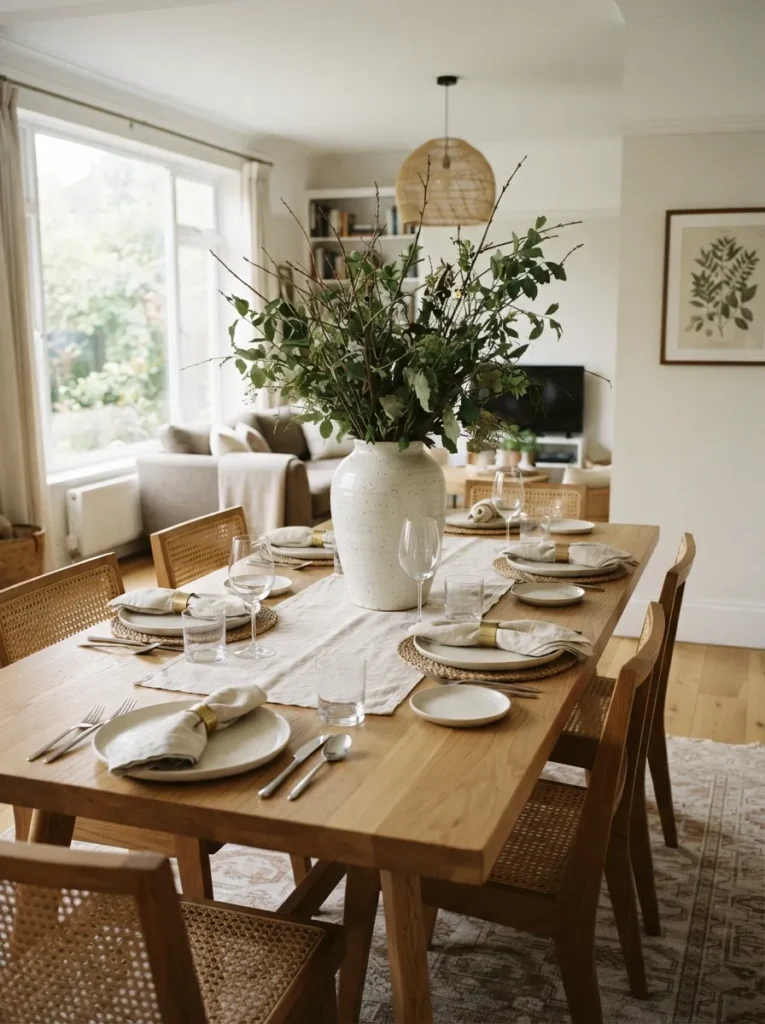
1. Tall Statement Branches for Height Without Bulk
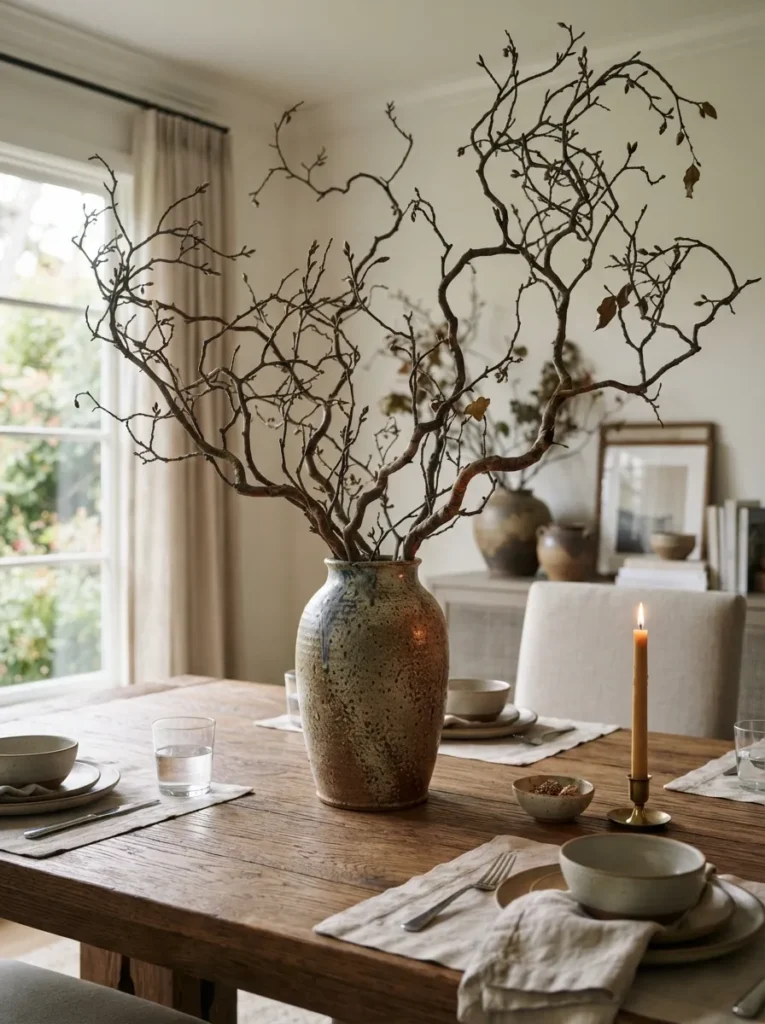
Height on a dining table can go wrong fast, but tall branches in a narrow vase manage to add drama while keeping sightlines completely clear underneath.
- Choose branches thin enough to see through — magnolia, curly willow, or dried eucalyptus stems.
- A narrow-necked vase keeps the base from eating up table space.
Design insight: the negative space between branches matters as much as the branches themselves. Overfilling the vase kills the airy effect that makes this look work.
2. Clustered Bud Vases for Effortless Charm
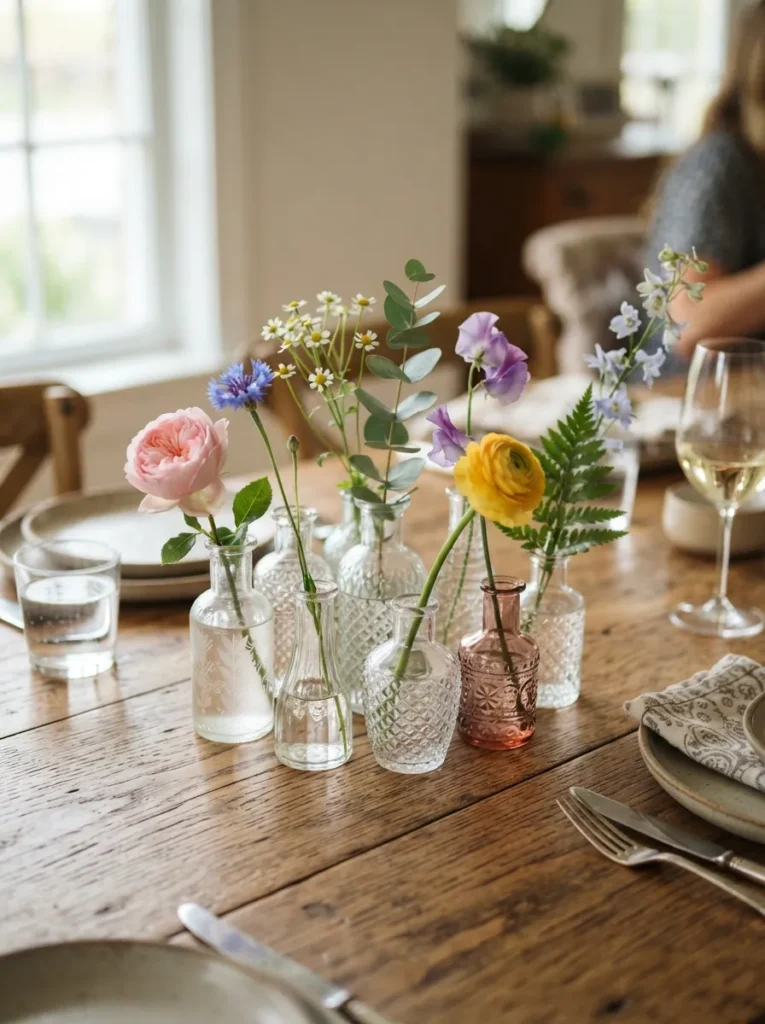
Clustering several small bud vases together creates more visual interest than one large vase, while staying low enough for easy conversation across the table.
- Mix glass textures — ribbed, smooth, colored — for a collected-over-time look.
- Odd numbers of vases (three or five) read more intentional than even groupings.
Why it works: this setup is endlessly flexible. Swap individual stems as they wilt instead of redoing the whole arrangement at once.
3. Sculptural Ceramic Trios as a Focal Point
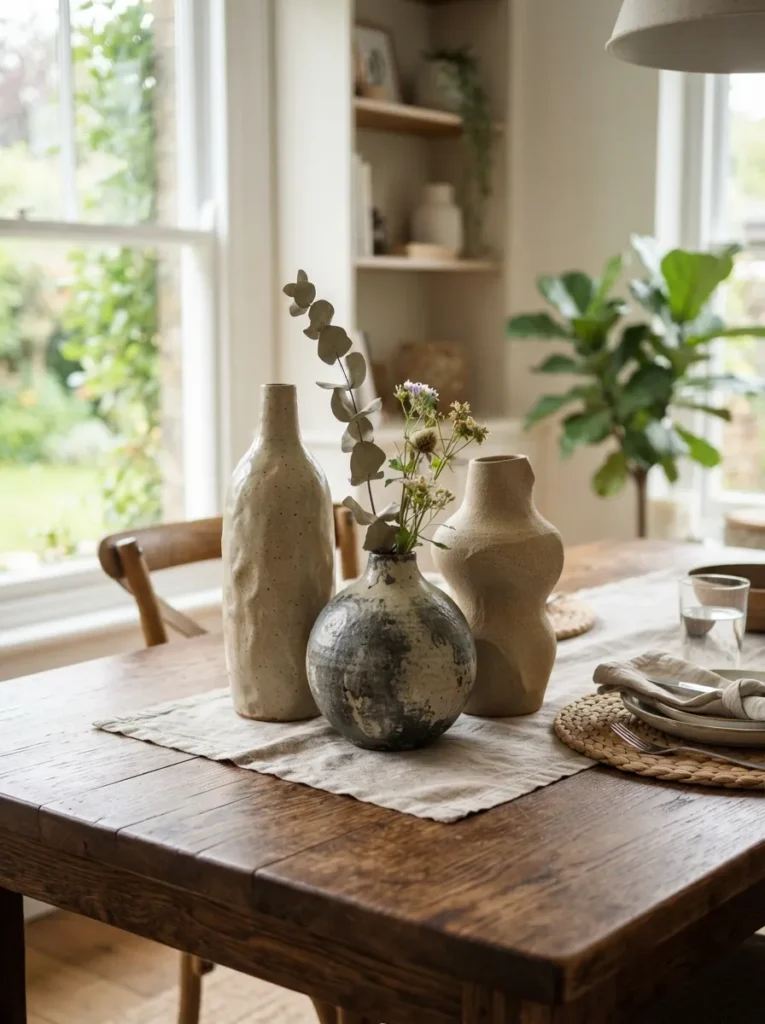
Not every vase needs flowers. A trio of sculptural ceramic vases — varying heights, organic shapes, matte finishes — functions as art on its own.
- Vary the heights slightly, but keep the tallest under 10 inches for dining use.
- Stick to one or two glaze colors so the grouping feels curated, not random.
Material to avoid: high-gloss finishes in a group setting. Matte ceramics photograph and style far more cohesively together.
4. Seasonal Floral Displays That Rotate Year-Round
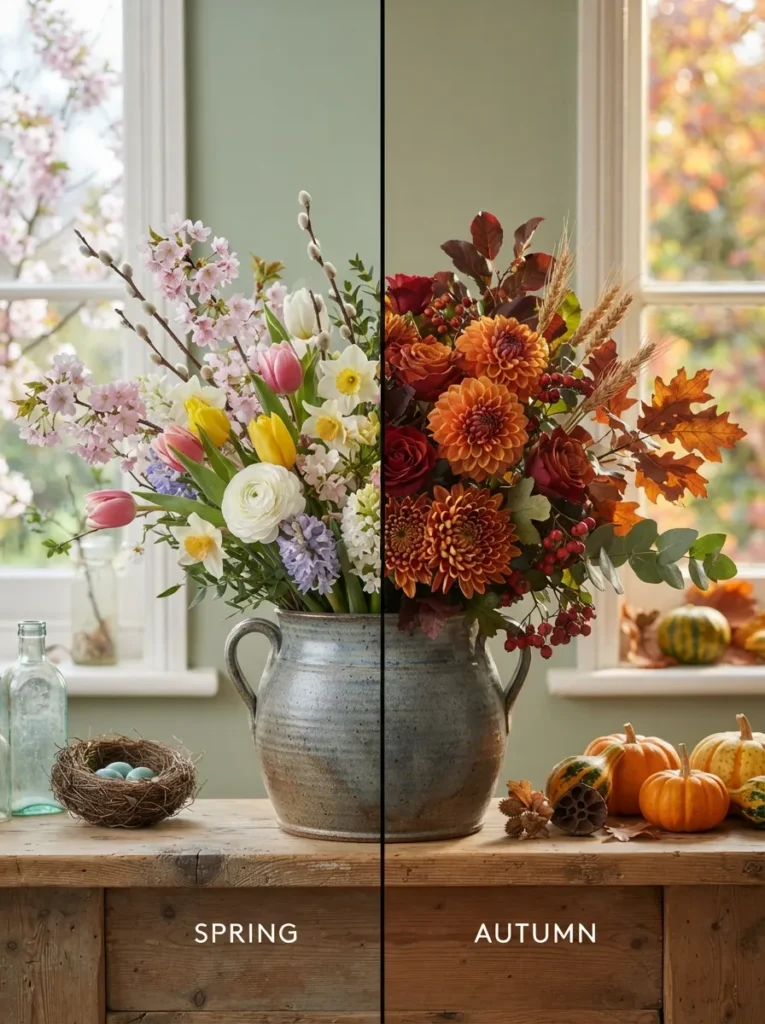
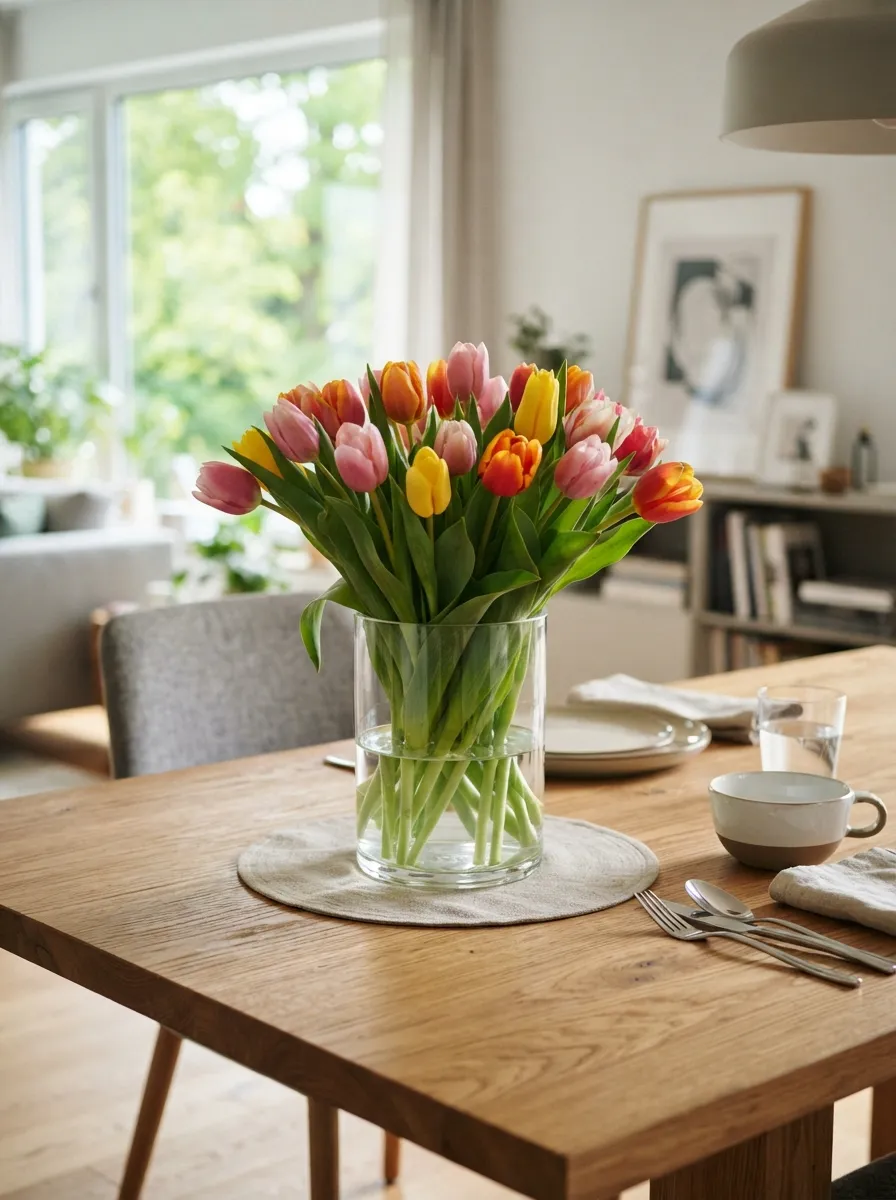
One reliable vase, restyled seasonally, solves the “what do I put in this” problem permanently. Tulips in spring, dahlias in summer, dried stems in winter — the vase stays constant while the mood shifts.
- Choose a neutral vase shape that won’t clash with any seasonal palette.
- Dried arrangements in fall and winter mean zero water changes for months.
Spatial tip: keep seasonal arrangements under 12 inches tall total, so the display never competes with pendant lighting hung above the table.
5. Colored Glass Vases for Unexpected Personality
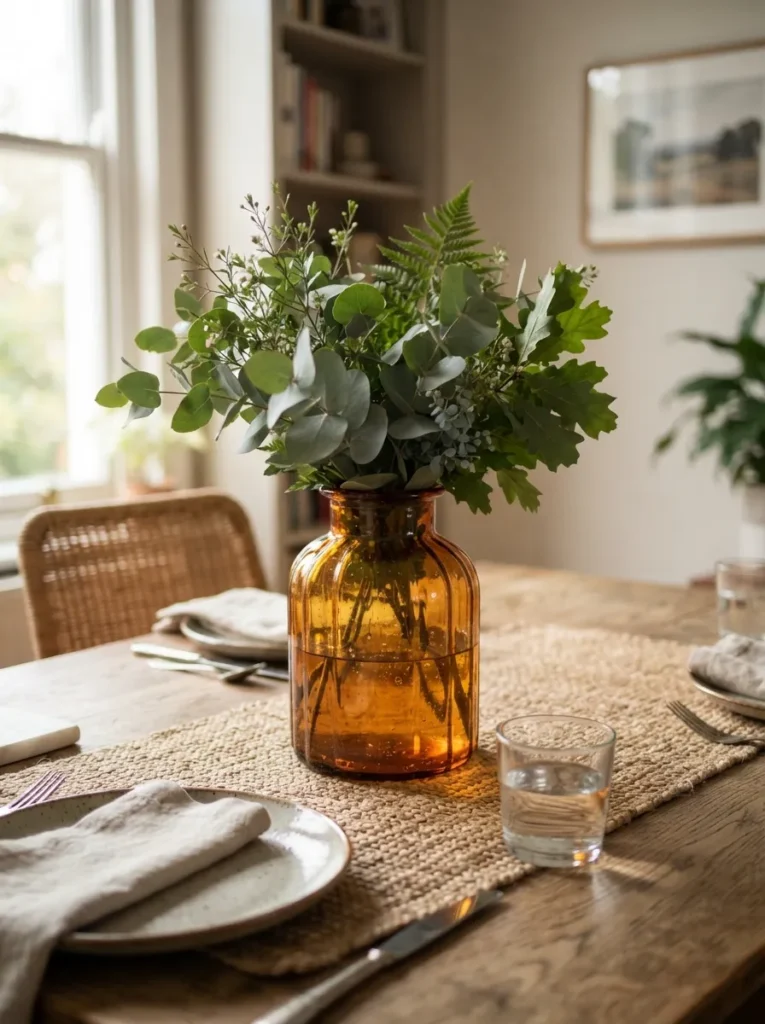
Clear and white vases are safe, but colored glass — amber, sage, smoky blue — brings personality without requiring a full room redesign.
- Amber glass pairs beautifully with warm wood tables and brass fixtures.
- Colored glass catches candlelight in a way clear glass simply can’t replicate.
Design insight: stick to one accent color per table setting. Multiple colored vases start competing rather than complementing each other.
6. Vintage and Thrifted Vases for Character
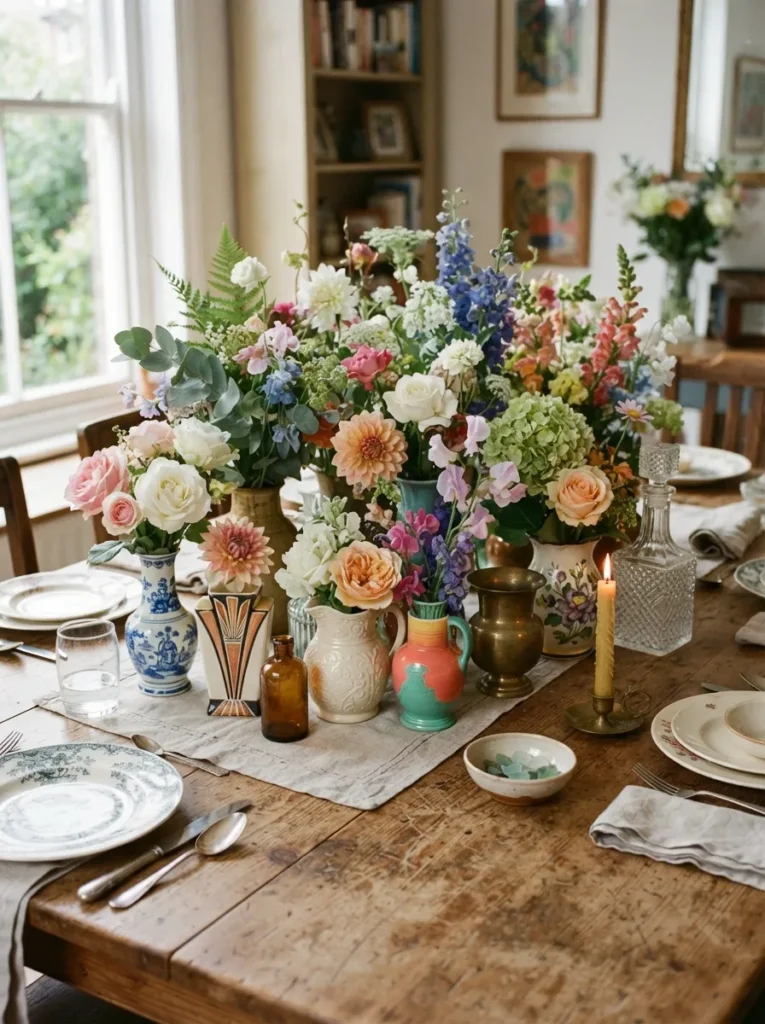
The most interesting vase on a table is rarely the newest one. Vintage and thrifted vases bring texture, imperfection, and a story that mass-produced pieces can’t fake.
- Look for varied shapes in a similar color family to keep the mix cohesive.
- Small chips or imperfections add character rather than detracting from the look.
Pros: vintage pieces are often more affordable than new designer vases. Cons to watch: hand-wash only, since older glazes and glass aren’t always dishwasher-safe.
7. Matte Ceramic for a Warm, Grounded Look
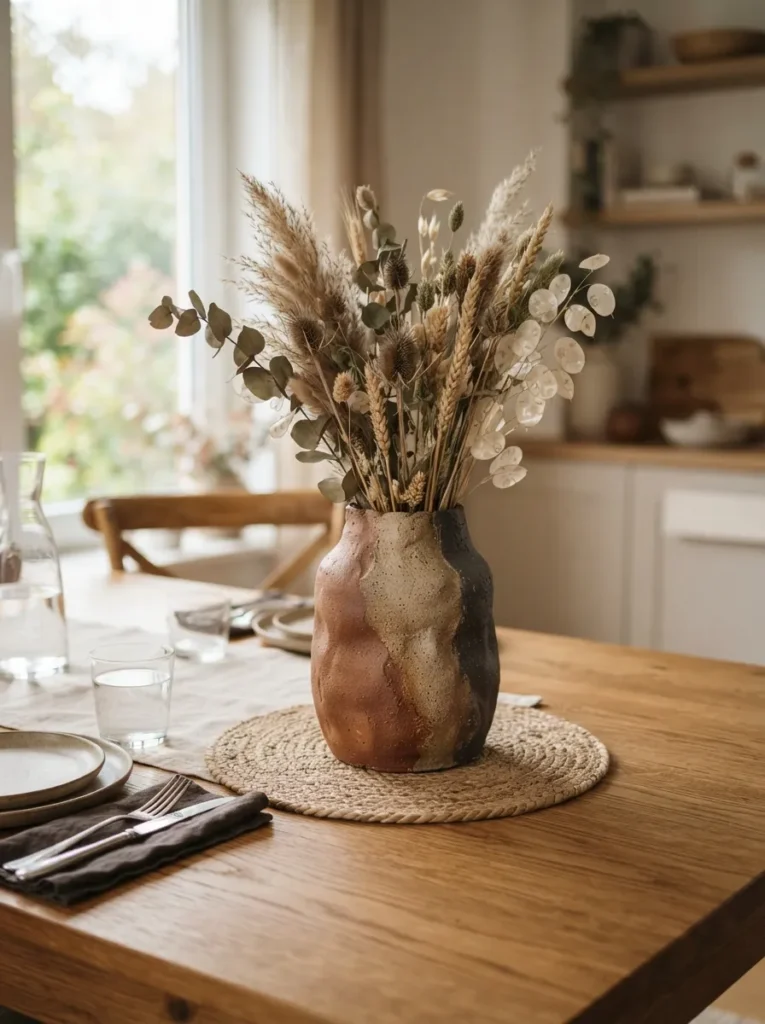
Matte ceramic vases bring warmth that glossy or glass options can’t match — they absorb light instead of reflecting it, which suits a cozier dining aesthetic.
grounds the table with warmth that pairs with nearly any dinnerware.
🛒 Check Price on AmazonEarth tones — terracotta, sand, sage — pair especially well with wood tables and warm-toned lighting.
Why it works: matte finishes also hide fingerprints and water spots far better than glossy ceramic, which matters for a piece touched daily.
8. Glass Cylinder Vases for Modern Simplicity
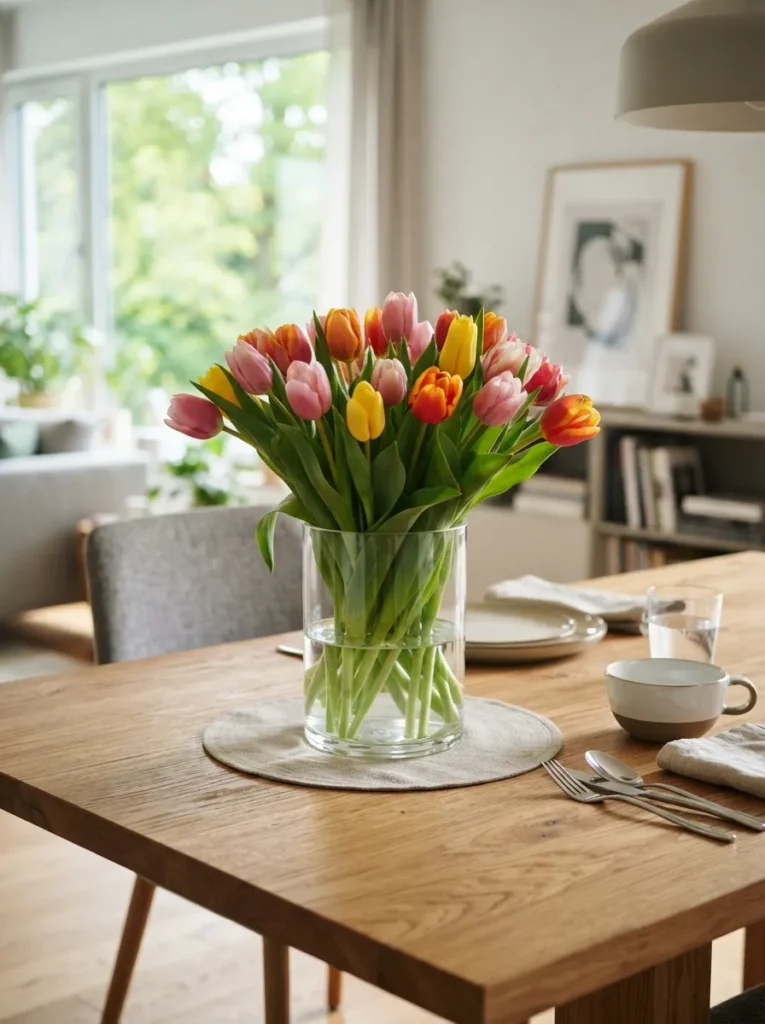
Glass cylinders are the quiet workhorse of vase styling — clean lines, no distraction, and a shape that suits nearly every flower type imaginable.
offers a versatile, modern base for single stems or fuller arrangements.
🛒 Check Price on AmazonThe transparency lets the stems themselves become part of the visual interest, especially with branch or greenery arrangements.
Lighting tip: clear glass catches and refracts candlelight beautifully, making it an especially strong choice for evening dinner settings.
9. Textured Stoneware for Everyday Durability
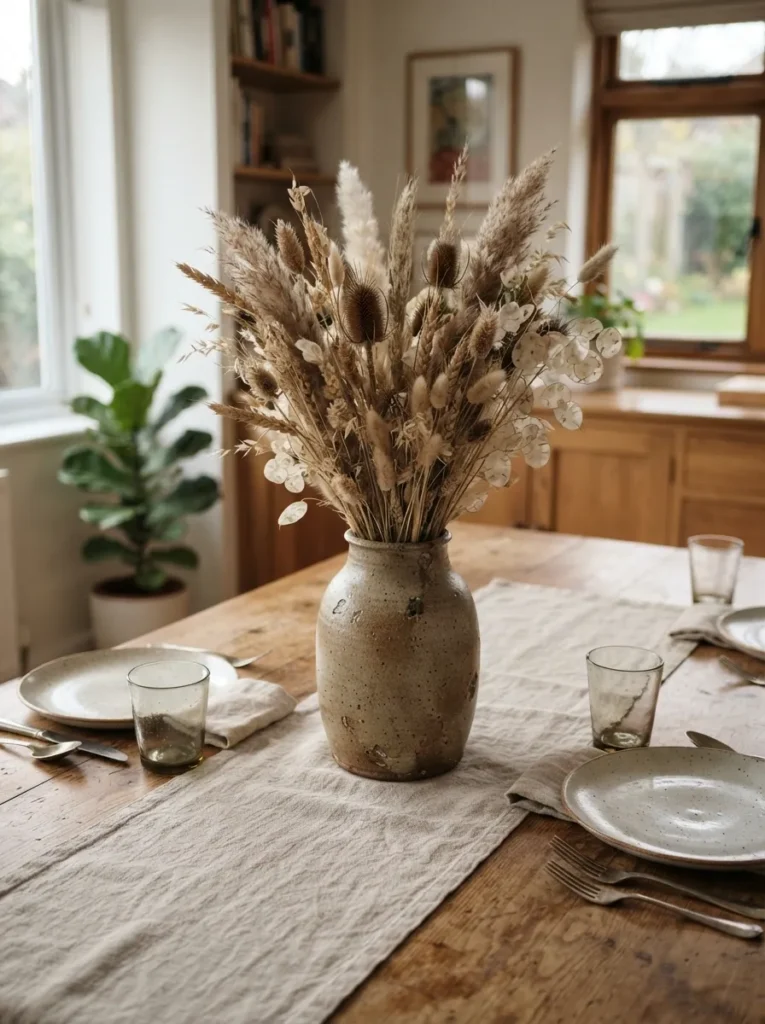
Stoneware vases split the difference between rustic and refined — textured enough to feel handmade, sturdy enough for actual daily use.
adds tactile interest and holds up well to everyday dining wear.
🛒 Check Price on AmazonDried grasses and pampas stems pair beautifully with stoneware’s earthy texture, and neither requires water changes.
Con to watch: heavier stoneware vases can be harder to reposition quickly before guests arrive — worth factoring in for anyone who reshuffles table settings often.
10. Low, Wide Vases for Unobstructed Sightlines
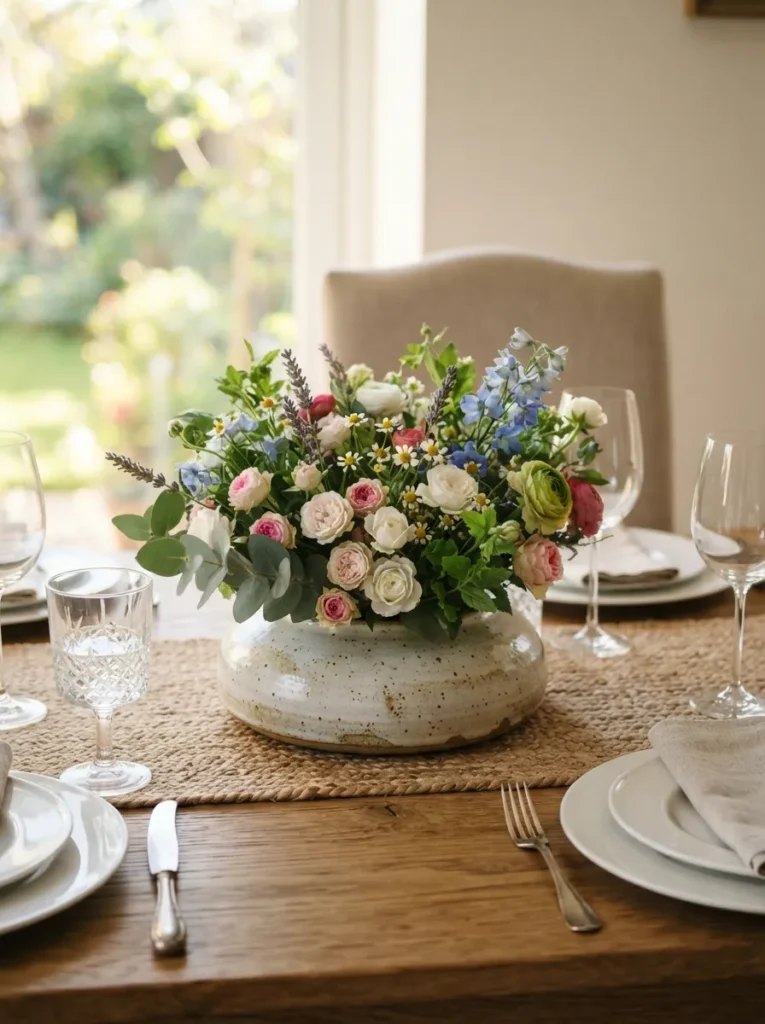
For dinner parties where conversation matters more than height drama, a low, wide vase keeps everyone visible across the table.
- Short-stemmed flowers — ranunculus, garden roses — suit this shape best.
- Wide vases also feel more stable, which matters with an active dinner table full of reaching arms.
Spatial tip: this is the strongest option for smaller or narrower dining tables, where a tall vase would dominate too much of the limited surface.
11. Asymmetrical Groupings for a Curated, Collected Look
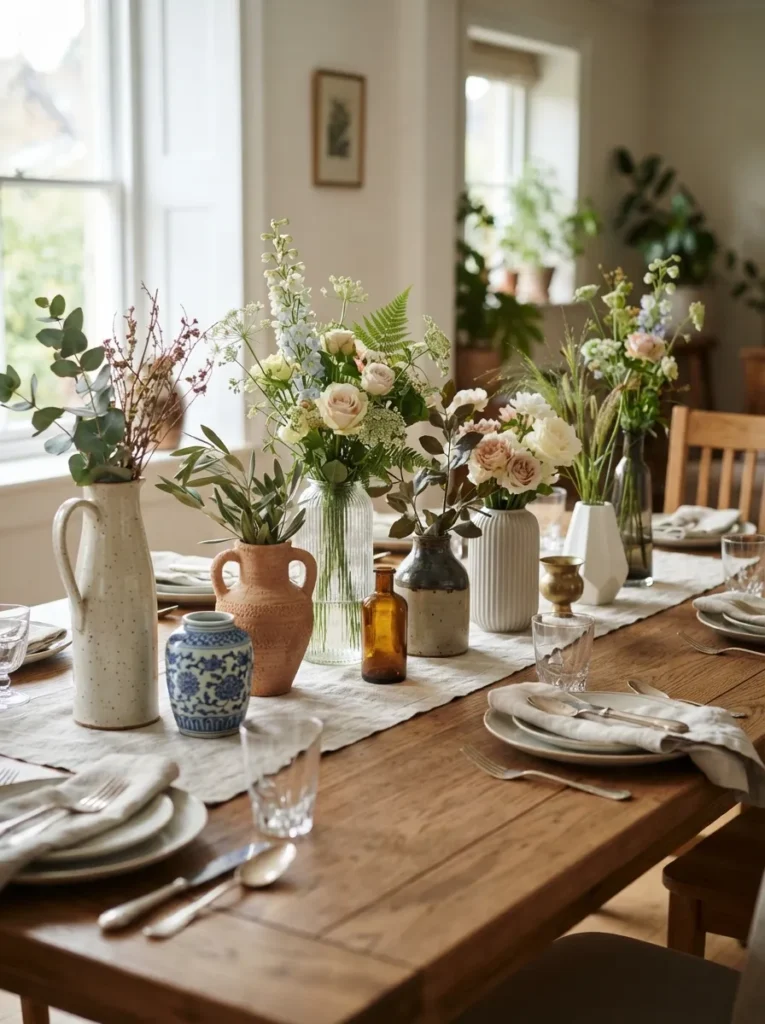
Perfectly centered, matched groupings can feel a little stiff. An asymmetrical cluster — varied heights, shapes, and materials — reads more like a space that evolved naturally over time.
- Anchor the grouping toward one end or side rather than dead center.
- Mix one tall piece, one mid-height, and one low piece for the most dynamic visual rhythm.
Design insight: this arrangement style works especially well for long tables, where a single centered vase would look lost or disconnected from the ends.
A great vase does more for a dining table than almost any other single object in the room. Pick one with real character, group it with intention, and that table finally looks like it’s hosting something — even on an ordinary Tuesday.