10 Japandi Living Room Design Ideas Minimalist Warmth
There’s a living room aesthetic that manages to feel like a deep exhale — calm without being cold, minimal without being austere, beautiful without trying too hard. It doesn’t shout for attention. It simply exists, quietly and completely, in a way that makes every other room feel slightly overstimulated by comparison. That aesthetic has a name: Japandi. And if the living room currently feels like it can’t quite decide what it wants to be — too much furniture, too many conflicting styles, too many things that “came with” the space — Japandi is the reset button it’s been waiting for.
Japandi living room design is the cultural fusion that nobody saw coming but everybody immediately understood. Japanese minimalism — its emphasis on negative space, craftsmanship, impermanence, and the profound beauty of simplicity — meets Scandinavian hygge — its dedication to warmth, natural materials, functional beauty, and the comfort of the everyday. Together, they create a design philosophy that is more than the sum of its parts: a living room that feels intentional, restful, and genuinely human in a way that neither pure minimalism nor pure coziness can achieve alone.
The design principles behind great Japandi living room design are remarkably consistent: a warm neutral palette anchored in nature, low-profile furniture with clean lines and honest materials, deliberate negative space treated as an active element rather than an oversight, and layers of organic texture that invite touch as much as they invite the eye. Nothing exists in a Japandi living room without a reason. And that reason is always either beauty, function, or — most satisfyingly — both.
Whether starting from scratch or refining an existing space toward this aesthetic, these 10 Japandi living room design ideas will create the calm, considered, deeply livable room that the philosophy promises.
Let’s jump into the ideas that make a living room feel like intentional calm rather than accidental quiet.
1. Low-Profile Sofa in Natural Linen or Bouclé
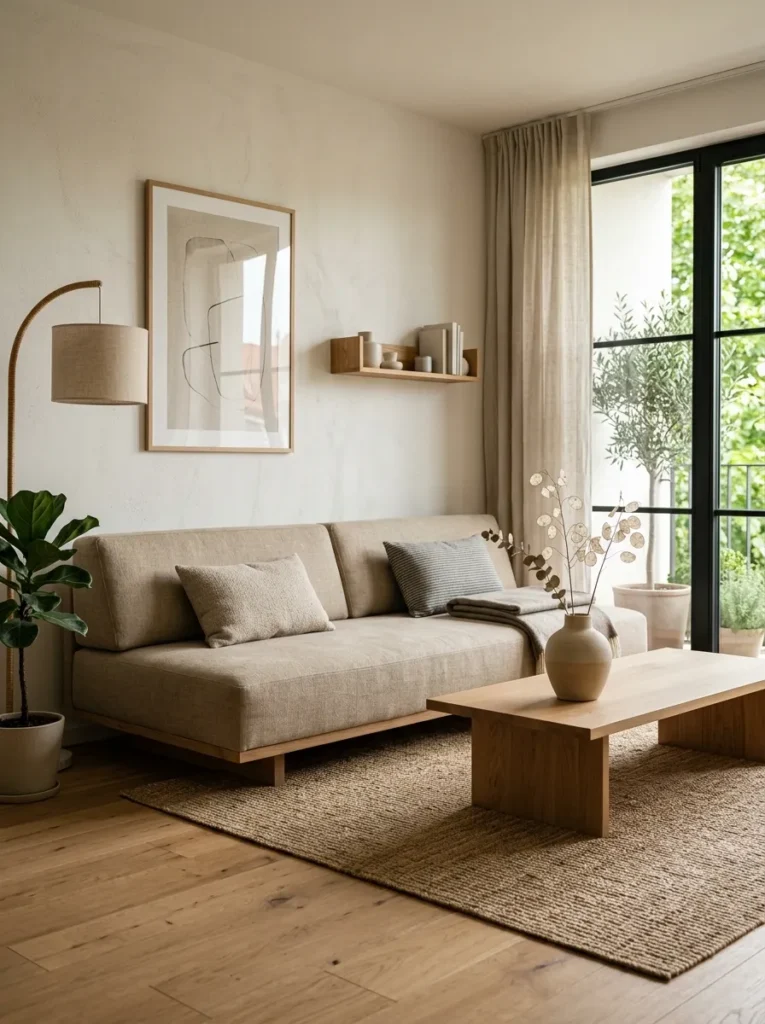
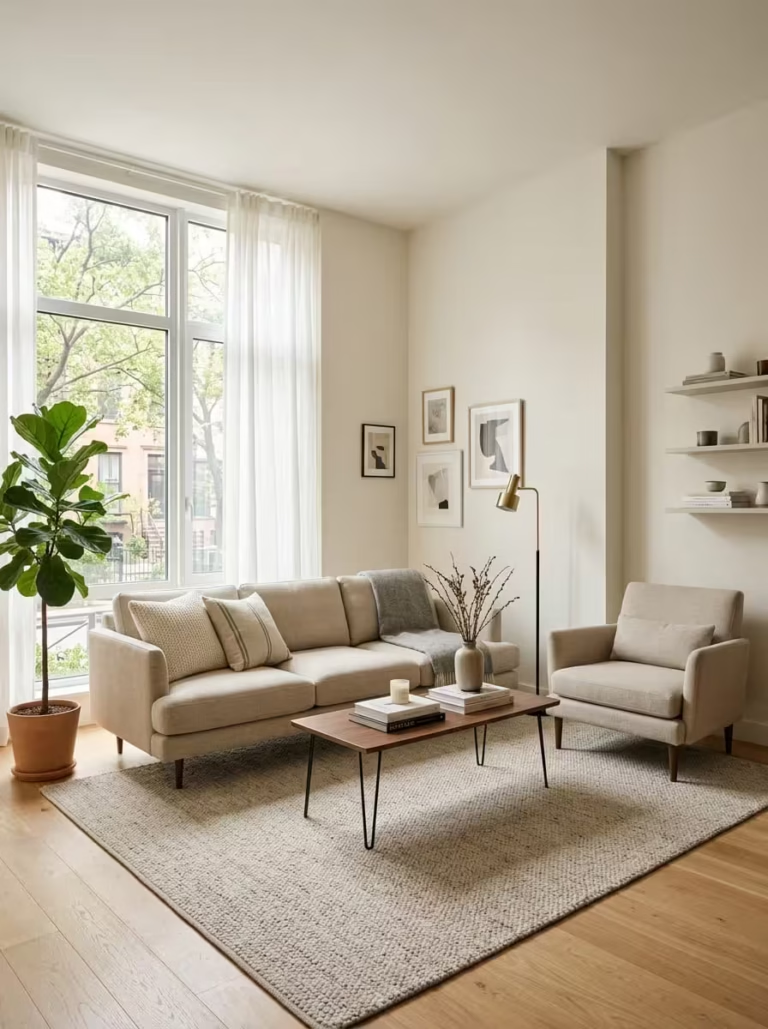
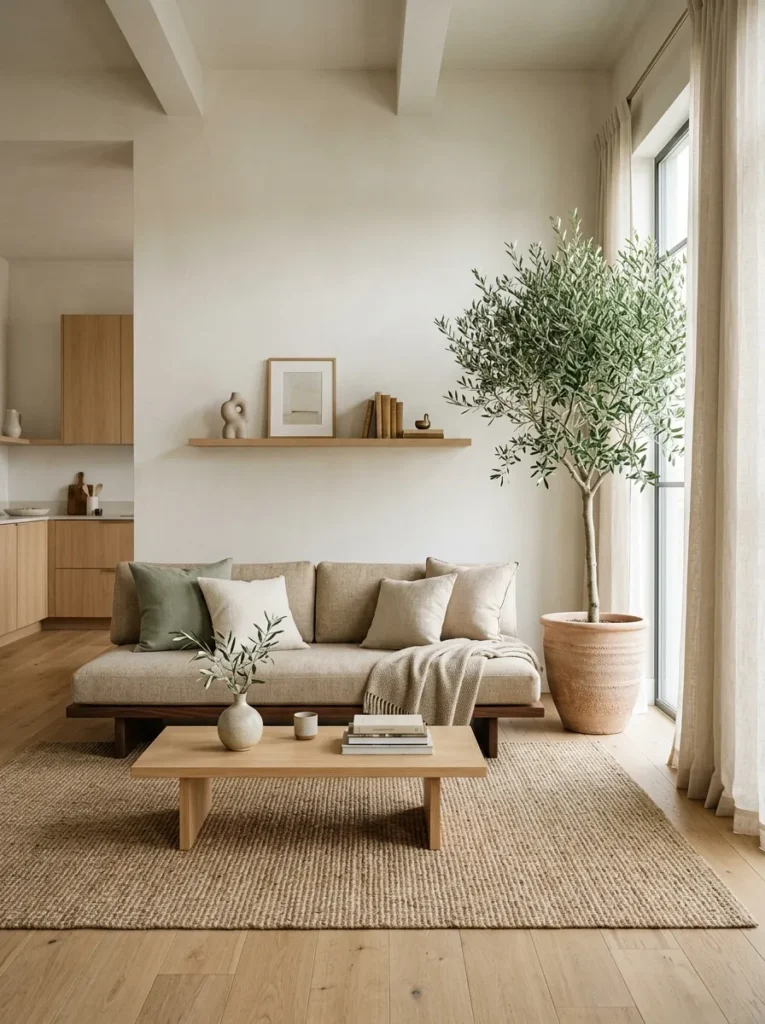
The sofa is the most important furniture decision in any Japandi living room design — and the guiding principle is clear: low, simple, and honest in material. A low-profile sofa (seat height of 14–16 inches rather than the standard 18–20 inches) immediately shifts the room’s center of gravity downward, creating the grounded, meditative quality that defines the Japanese half of the Japandi equation. The Scandinavian half arrives in the material: warm, touchable linen or bouclé in an oat, cream, or warm taupe tone.
- Seat height is the critical measurement: lower seats create a more contemplative, Japanese-influenced spatial feeling
- Avoid tufting, ornate legs, curved arms, or decorative details — clean, straight lines are non-negotiable in Japandi design
- Natural linen wrinkles beautifully and gets softer with use — its imperfection is a feature, not a flaw
- Bouclé adds tactile warmth without pattern or color, keeping the visual calm intact
The low sofa doesn’t just look Japandi. It makes the whole room feel like Japandi — because scale and height communicate as powerfully as color and material.
2. A Warm Neutral Palette Inspired by Nature
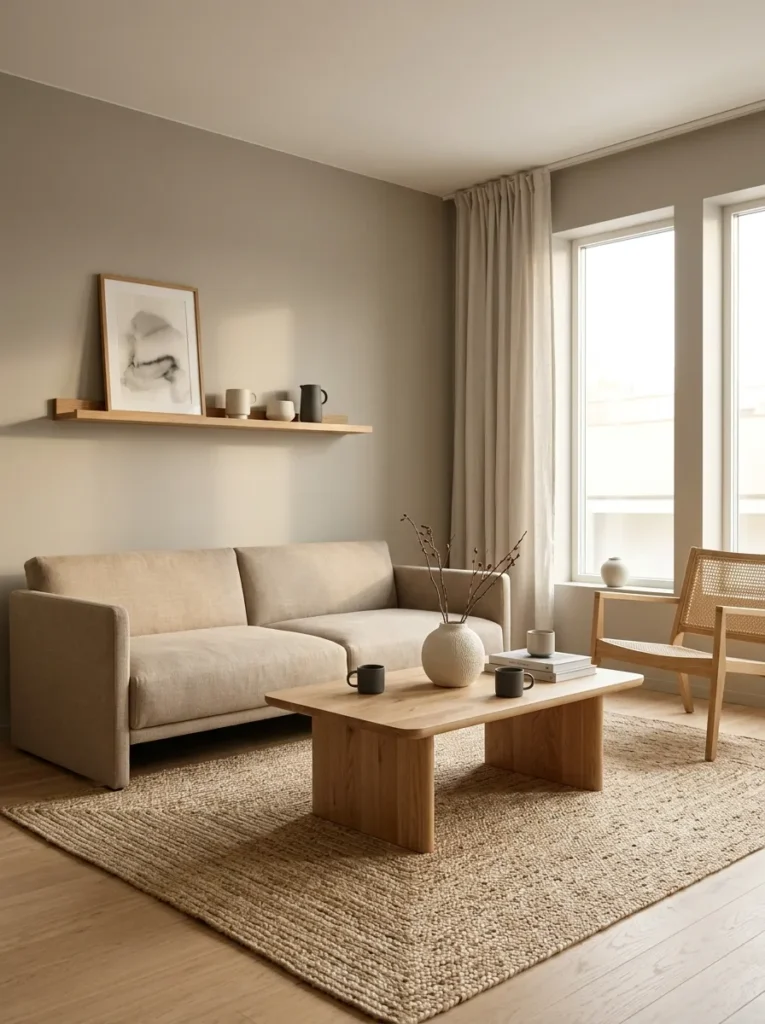
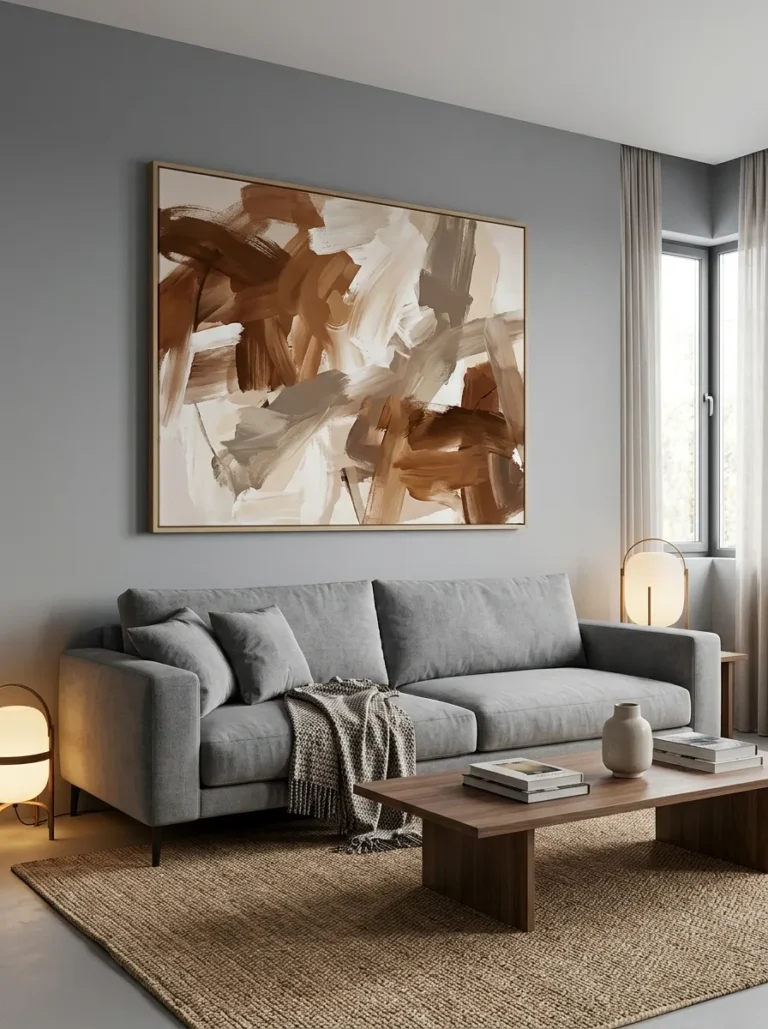
Color in Japandi living room design is not an absence of color — it’s a very deliberate curation of it. The palette is borrowed directly from nature: warm greige walls (beige + gray, leaning warm), undyed linen and natural cotton textiles, honey and walnut wood tones, matte cream and charcoal ceramics, and the occasional dusty sage or soft terracotta as an accent that reads as organic rather than decorative. The result is a room that feels like it grew from the earth rather than was assembled from a shopping cart.
- Warm greige (2–3 parts beige, 1 part gray) is the Japandi wall color sweet spot — warmer than Scandinavian cool gray, quieter than traditional beige
- Limit the palette to four tones at maximum: one wall color, one primary textile tone, one wood tone, one accent
- Introduce the accent color through ceramics, a single cushion, or a dried botanical — not through a feature wall or statement furniture
- Matte and natural finishes throughout — gloss, chrome, and high-contrast materials disrupt the palette’s cohesion
The Japandi color palette is not boring. It’s considered. There’s a fundamental difference, and spending time in a room with this palette makes the distinction immediately clear.
3. A Low Coffee Table in Light Oak or Bamboo
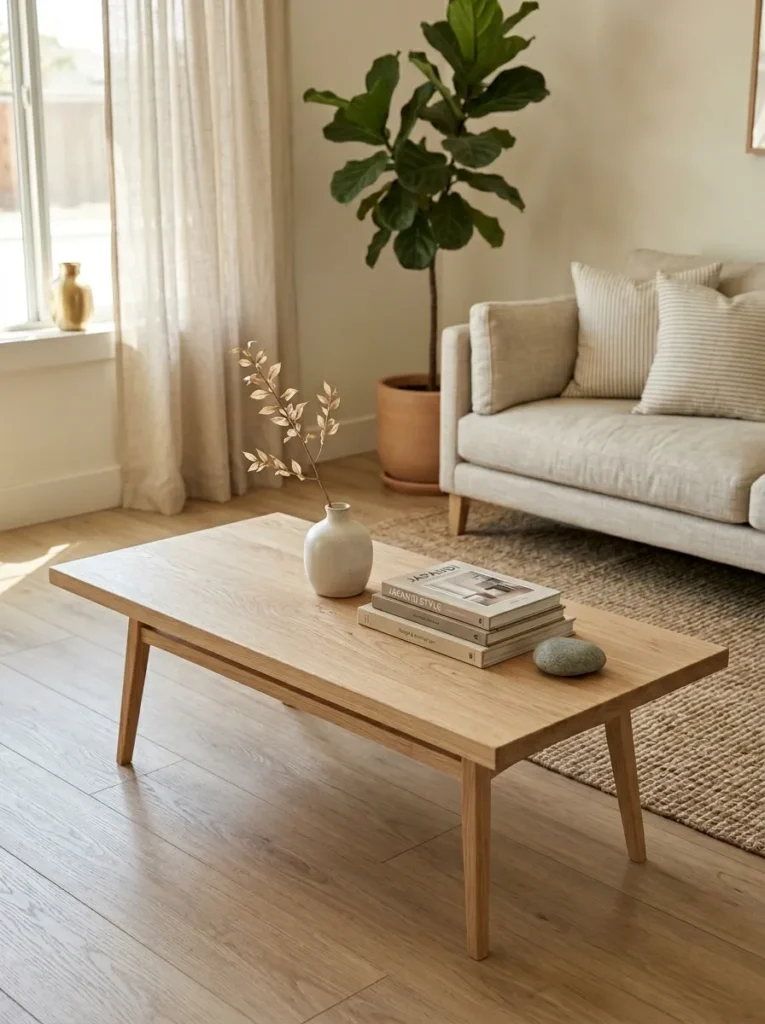
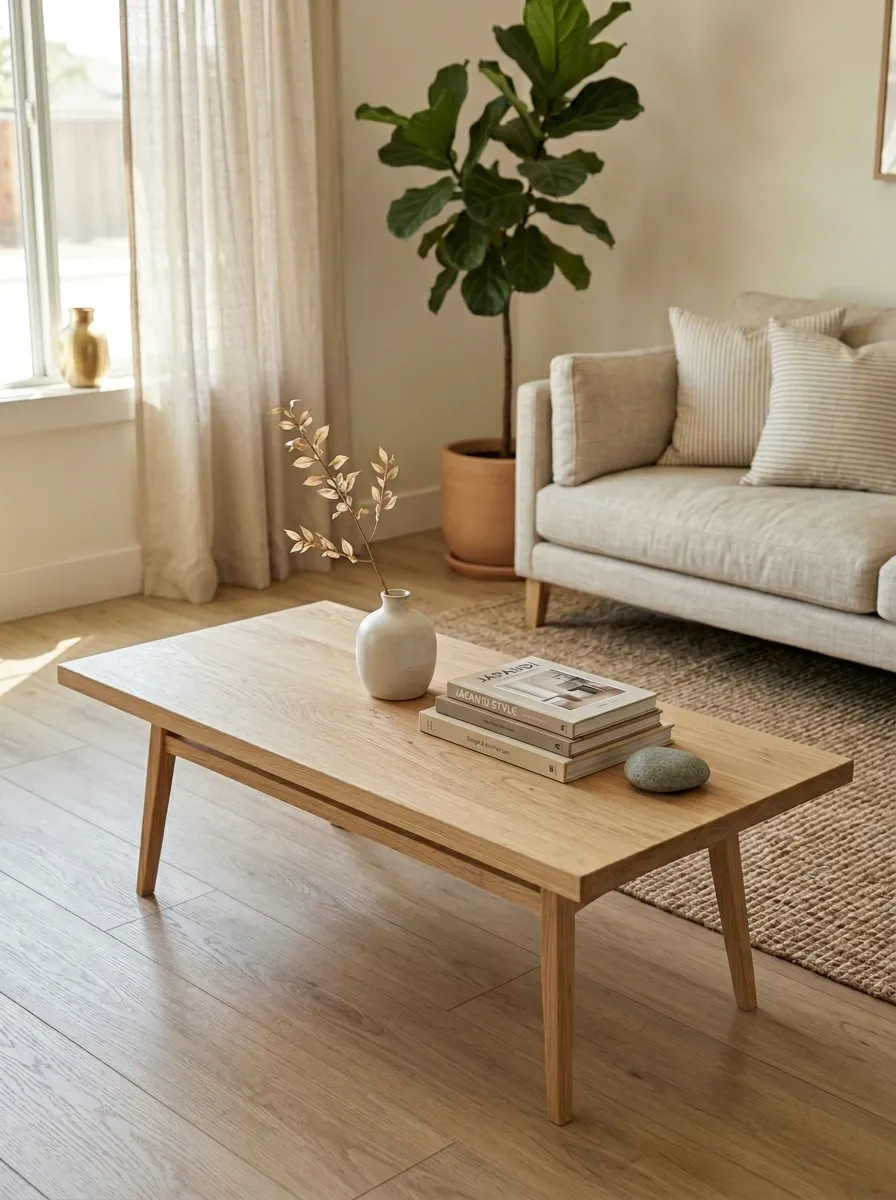
In Japandi living room design, the coffee table is not just a surface — it’s a philosophy object. It should be low (in keeping with the room’s grounded aesthetic), constructed from an honest natural material (light oak, bamboo, or solid ash), and styled with extreme restraint: three objects maximum, each chosen deliberately. The negative space on the table is part of the styling — resist the urge to fill it.
- Leg height matters: a coffee table at 12–14 inches sits in correct proportion to a low sofa
- Light, unstained or lightly oiled oak is the most authentically Japandi wood choice — darker walnut works but reads as more Scandinavian-forward
- The three-object rule for coffee table styling: one ceramic vessel, one book or small tray, one natural object (stone, driftwood, a single stem)
- Avoid glass tops, metal frames, and high-gloss surfaces — they introduce visual weight that disrupts the organic calm
- Amazon find: WLIVE Mid-Century Low Coffee Table (Solid Wood Legs, Light Oak, 43-inch) – honest materials, low profile, correct proportions for Japandi living room design
4. Woven Natural Fiber Area Rug as the Room’s Foundation
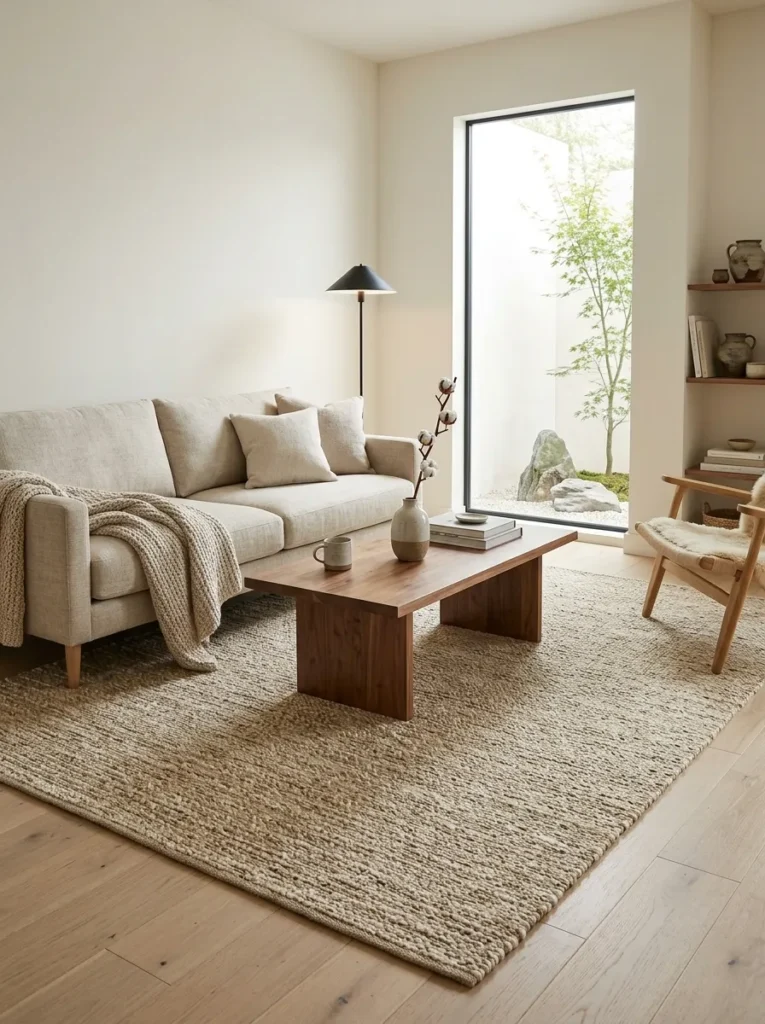
The area rug in a Japandi living room design is the room’s foundation layer — literally and visually. It grounds the furniture arrangement, adds tactile warmth underfoot, and contributes the natural fiber texture that both Japanese wabi-sabi and Scandinavian hygge philosophies celebrate. A jute, seagrass, or wool rug in undyed or warm neutral tones is the material choice that connects the room to the earth in the most direct, physical way possible.
- Size up: the rug should extend under the front legs of the sofa and well beyond the coffee table — a too-small rug floats the furniture and creates visual disconnection
- Undyed natural jute and sisal bring raw, organic texture at an accessible price point
- A wool flat-weave in warm natural tones adds softness underfoot that hard fiber rugs can’t match — worth the premium for the tactile difference
- Avoid patterns, geometric prints, and high contrast colors — the rug’s contribution to Japandi is texture, not decoration
The right rug makes the furniture feel like it belongs together. The wrong rug makes even perfect furniture feel assembled.
5. Deliberate Negative Space — The Art of the Empty Corner
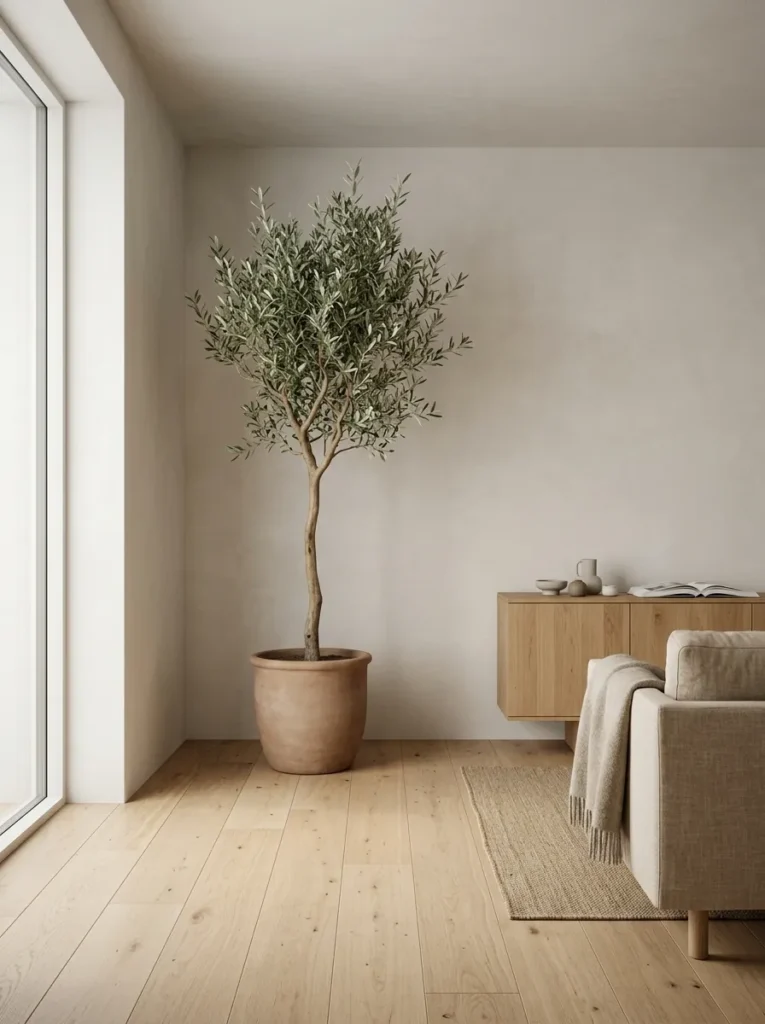
This is the Japandi living room design principle that requires the most courage and delivers the most impact: leaving space empty on purpose. In Western interiors, an empty corner is a problem to be solved — a place to add a lamp, a plant, a chair, a decorative object. In Japanese design philosophy, empty space (ma) is a presence in itself — a breathing room that gives the objects around it room to be truly seen and appreciated.
- Identify the room’s emptiest corner and resist the urge to fill it — or reduce what’s already there to a single, perfect object
- A single large plant in a well-chosen pot is the most Japandi use of a corner — it fills without cluttering
- The floor should be visible throughout the room — furniture that exposes the floor beneath creates the most open, breathable spatial feeling
- Editing is the ongoing practice: every few months, remove one object from the room and observe whether the room improves. It almost always does
Negative space is not an absence of design. In Japandi, it is the design — and that reframe changes everything about how a living room is approached.
Blending Zen minimalism with Scandinavian hygge creates a tranquil environment, an aesthetic you can fully immerse yourself in by curating tailored japandi interiors living room pieces.
This post contains affiliate links. If you buy something through them, I may earn a small commission at no extra cost to you.
6. Wabi-Sabi Ceramics and Handcrafted Objects
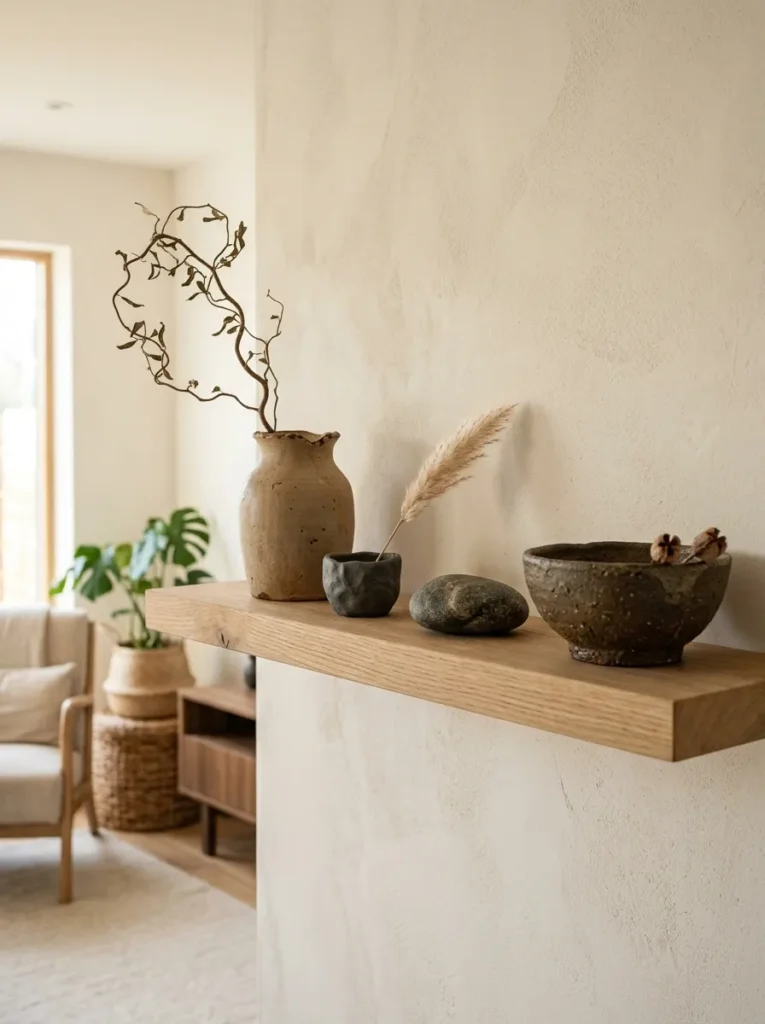
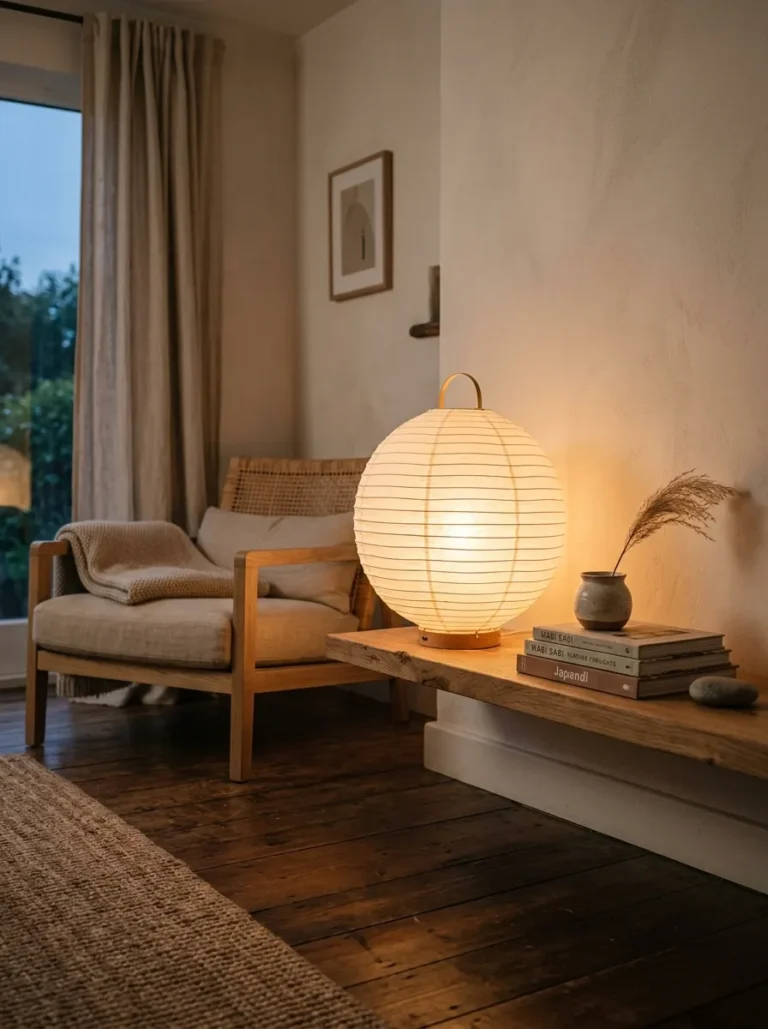
Wabi-sabi — the Japanese aesthetic philosophy of finding beauty in imperfection, impermanence, and incompleteness — is the living room styling principle that distinguishes authentic Japandi design from its imitations. A perfectly uniform, mass-produced vase is not Japandi. A hand-thrown ceramic with a slightly irregular rim and a fingerprint in the clay is. The handmade, the asymmetrical, the visibly crafted — these are the objects that bring genuine soul to a Japandi living room design.
- Shop for ceramics at local pottery studios, craft markets, and artisan online marketplaces rather than mass retailers
- Matte finishes in earth tones (clay, ash gray, sand, charcoal) read as most authentically wabi-sabi
- A slight imperfection in form — a rim that’s not quite level, a surface with visible tool marks — is the quality to seek, not avoid
- Group three pieces of varied height on a shelf or coffee table; the grouping creates context for each individual piece
Each wabi-sabi object is a conversation about beauty that doesn’t need perfection to be profound. That’s the philosophy made visible.
7. Shoji-Inspired Screens or Room Dividers
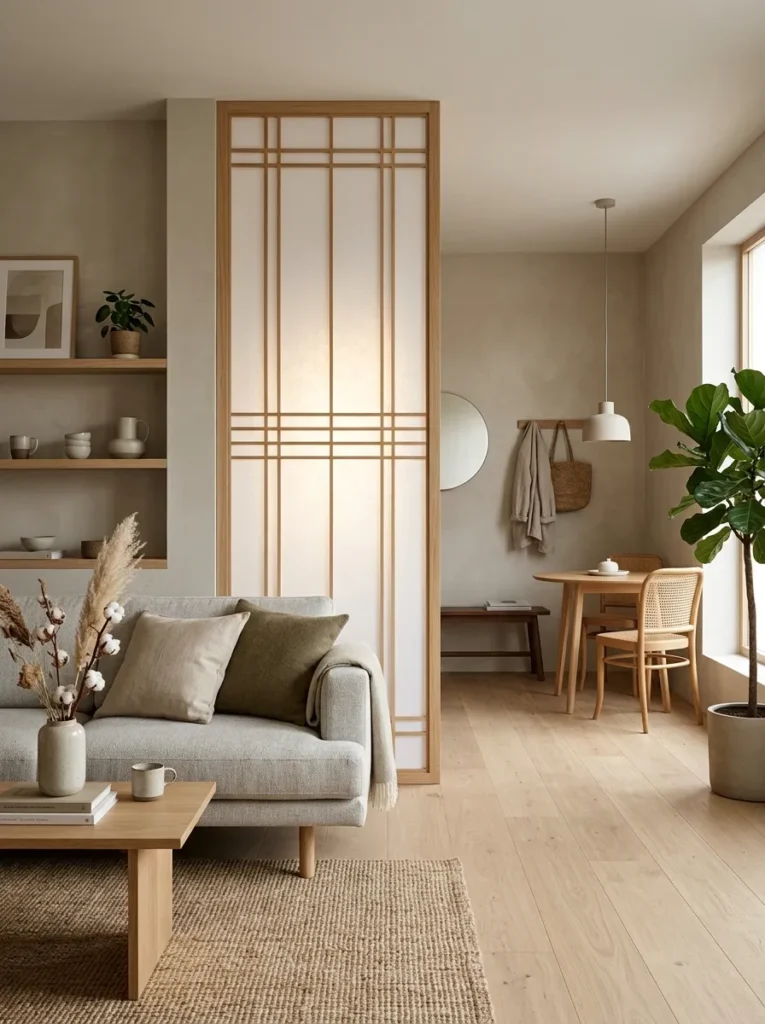
The shoji screen — Japan’s traditional sliding panel in a slim wood grid with translucent washi paper — translates into the Japandi living room as both a functional space divider and a deeply considered design element. A contemporary shoji-inspired screen in natural oak framing with frosted acrylic or fabric panels diffuses light beautifully, adds architectural structure to an open-plan space, and introduces the Japanese element of the Japandi fusion in its most recognizable and authentic form.
- Position a screen to partially divide an open-plan living space without closing it off — the translucency maintains visual connection
- Natural wood grid frames in pale oak, bamboo, or unstained pine are all authentic to the aesthetic
- A three-panel folding screen provides flexibility — it can be repositioned seasonally or as the room’s needs change
- The light that passes through a shoji screen is uniquely beautiful — it softens and diffuses rather than blocks or concentrates
The shoji screen is the living room element that makes a room feel like it was designed by someone who had actually been to Japan. That quality reads from across the room.
8. Rattan and Wicker Accent Furniture
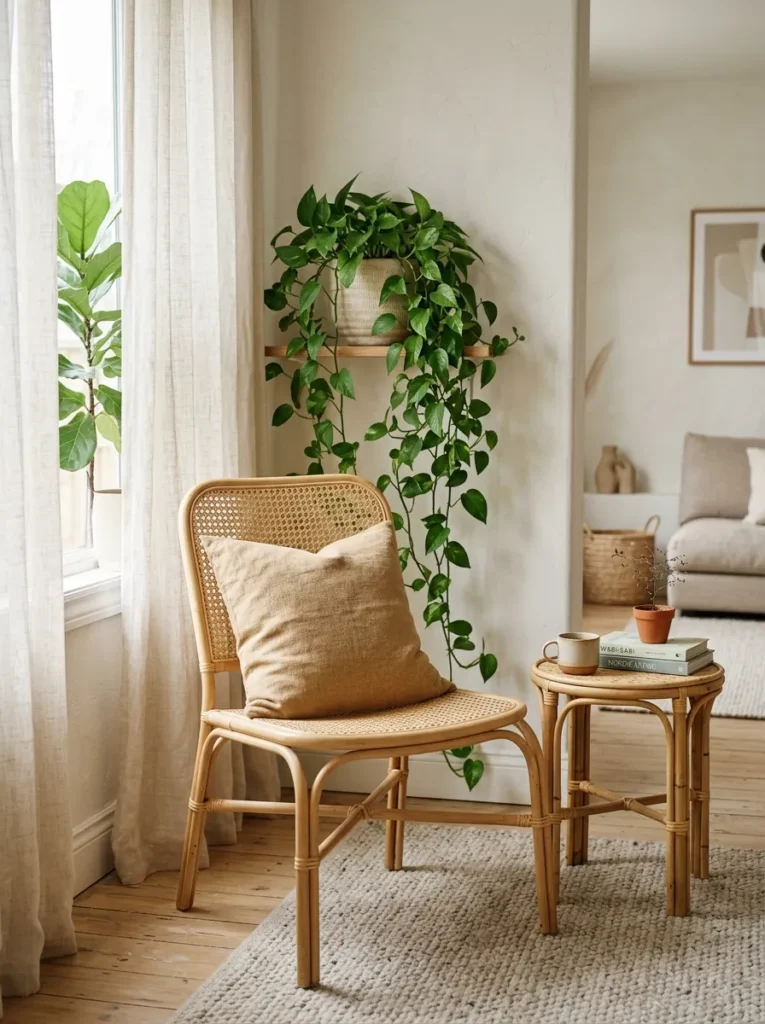
Rattan and wicker in a Japandi living room design occupy a specific role: they provide the natural material warmth and organic texture that heavier wood furniture can’t — lightness both physical and visual. A slim rattan accent chair, a woven seagrass side table, or a wicker storage basket introduces craft, natural material, and the gentle curves that punctuate a room of predominantly straight lines without disrupting the overall calm.
- Rattan’s natural honey tone works with every warm neutral palette — it never clashes because it comes from the same earth as every other natural material in the room
- Slim, simple rattan forms (no ornate Victorian curves) are the most Japandi-appropriate profiles
- A rattan chair beside the primary seating zone creates a secondary seat that feels intentional rather than obligatory
- Wicker or seagrass baskets as storage beneath a side table or beside the sofa add function that looks beautiful
Rattan is the Japandi material that the Scandinavians brought to the conversation — and it has never been more at home there.
9. Layered Linen Textiles for Hygge Warmth
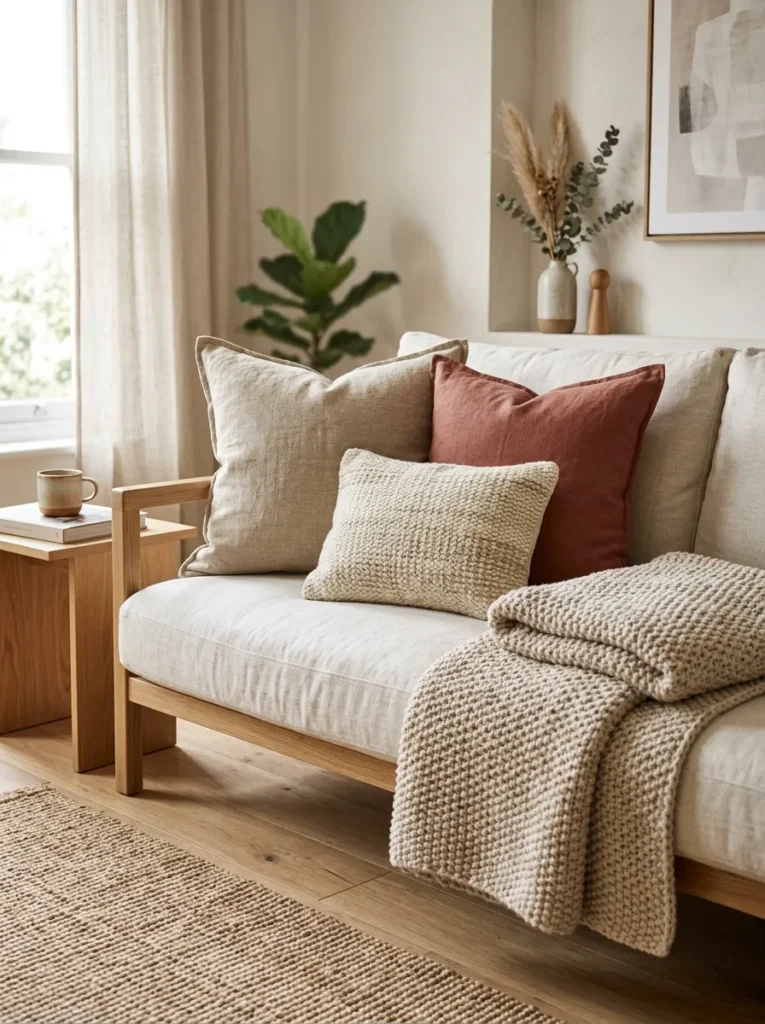
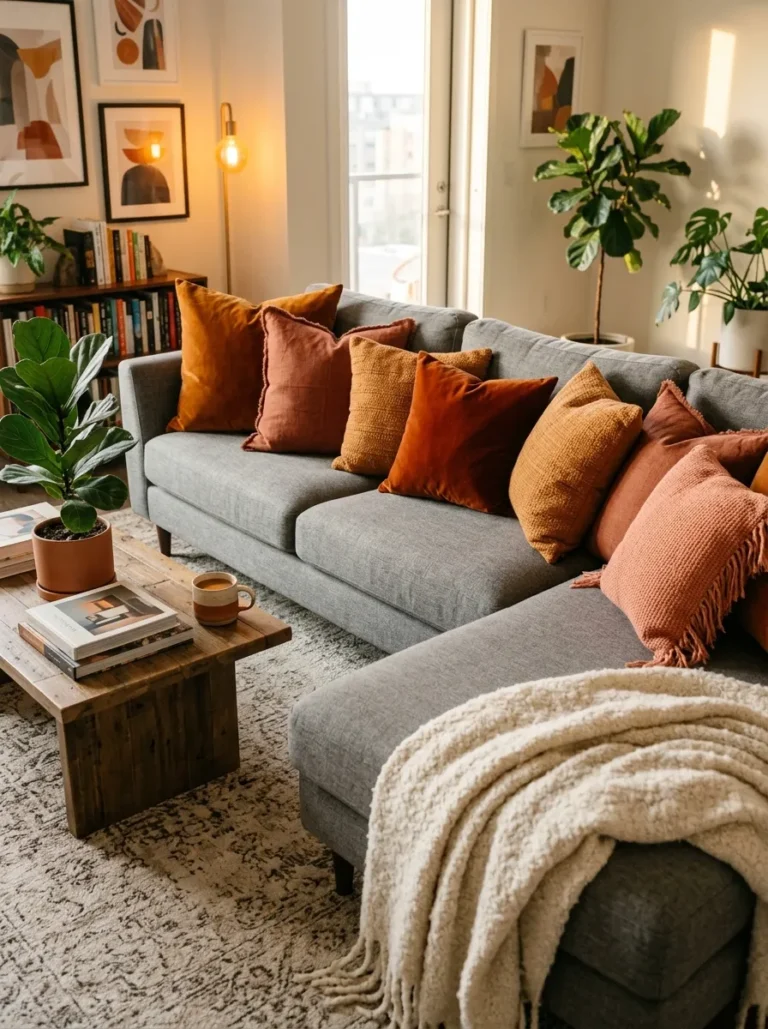
The Scandinavian half of Japandi living room design arrives most tangibly in the textiles — because hygge is fundamentally a tactile philosophy. The desire to be warm, to be comfortable, to have something beautiful within reach — these are needs that linen throws, woven wool cushions, and layered natural fiber blankets address directly. The key is layering without patterning: multiple textures in the same tonal family create warmth without visual noise.
- Build the cushion grouping in the same palette: oat, warm cream, dusty sage, and soft terracotta are the Japandi textile colors
- Mix textures within that palette: smooth linen beside chunky knit beside woven wool — the interest comes from texture, not color contrast
- A single throw draped casually over one arm of the sofa — not arranged symmetrically — adds the relaxed quality that distinguishes hygge from mere decoration
- Natural fibers only: linen, cotton, wool, bouclé — synthetic blends feel different underhand and read as different to the eye
The right textile layer makes a Japandi sofa the place everyone gravitates toward in a room. That’s hygge, operating exactly as intended.
10. A Single Statement Plant With Architectural Form
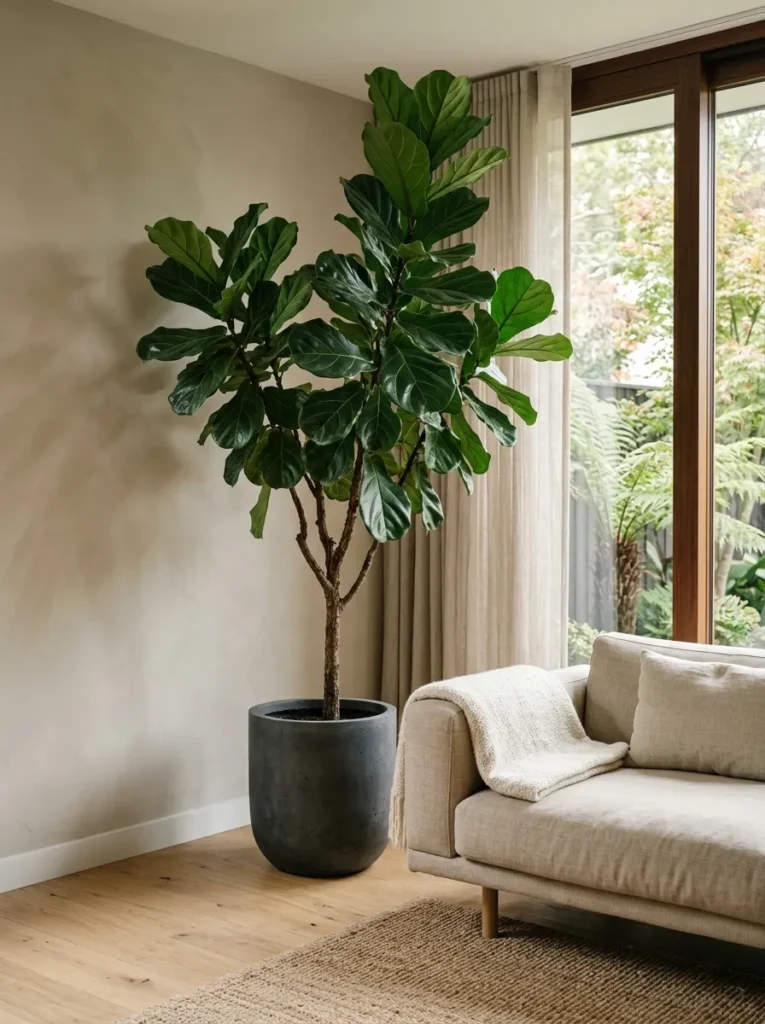
In Japandi living room design, the plant is not decoration — it is the living expression of the philosophy’s deepest principle: that nature is not a theme to be applied to a space but a presence to be invited into it. One significant plant with genuine architectural form — a fiddle leaf fig, an olive tree, a large snake plant, a weeping fig — placed in a considered location and given room to exist without competition, communicates more about the room’s design intelligence than ten smaller plants scattered across every surface.
- Scale matters enormously: a plant that reaches 5–6 feet brings the living element to human scale, making the room feel inhabited rather than decorated
- The pot is as important as the plant: matte concrete, terracotta, or stone composite in a simple cylindrical form reads as most authentically Japandi
- Position beside the primary seating zone or in an otherwise empty corner — the plant’s presence should be felt from every seat in the room
- Resist the urge to add secondary plants nearby — one significant plant, given space to breathe, delivers more than five plants competing for attention
The Japandi living room plant is a statement of restraint. And restraint — exercised consistently and with confidence — is the whole philosophy made visible.
Japandi living room design doesn’t ask for perfection — it asks for intention, and the difference between those two things is where all the warmth lives. Choose the ideas that speak to the space, edit with conviction, and let the room become exactly what Japandi has always promised: the calm that feels like home.