11 Clever Small Bedroom with Queen Bed Ideas to Maximize Space
This post contains affiliate links. If you buy something through them, I may earn a small commission at no extra cost to you.
Squeezing a queen mattress into a tight room usually goes one of two ways — a cramped, furniture-jammed obstacle course, or a smart, architectural layout that actually breathes. Most people default to the first without even realizing they had a choice.
The good news? A small bedroom with queen bed dreams doesn’t have to feel like a compromise. Let’s fix your floor plan.
1. Choose a Low-Profile Frame to Trick the Eye
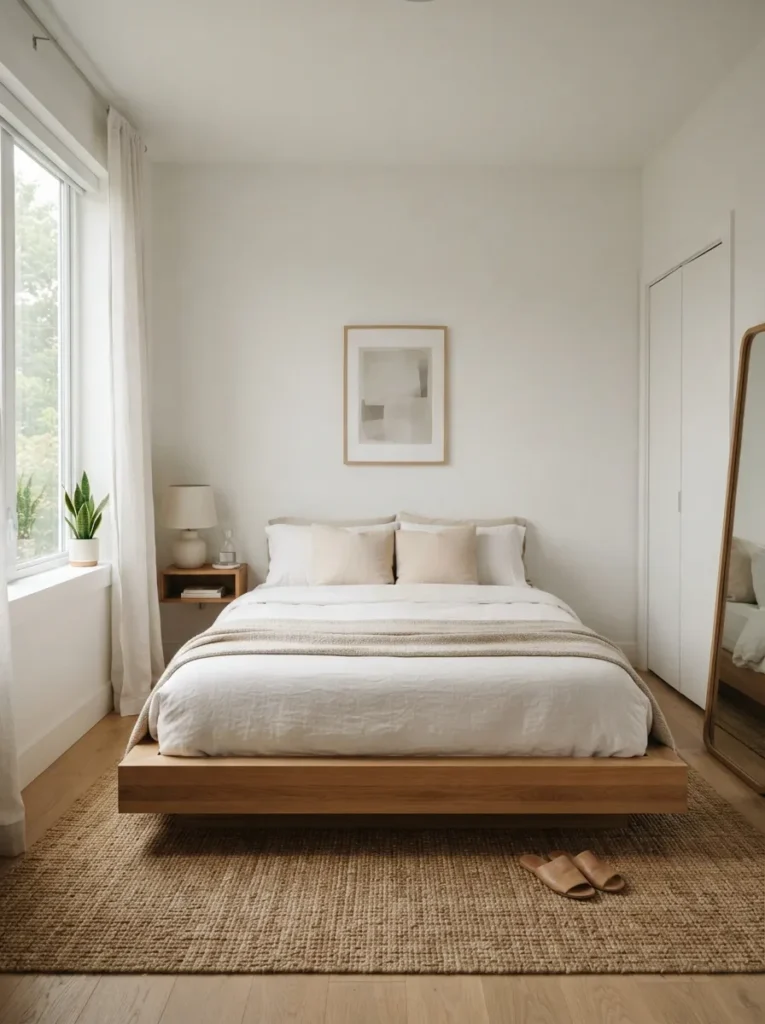
Height is your enemy in a small room, even if you don’t realize it. A queen bed on a tall, boxy frame reads as a wall of furniture the second you walk in.
Swap it for a low-profile platform frame — anything under 14 inches off the ground keeps sightlines open above and around it.
Why this works: lower furniture lets more of the room’s actual wall space stay visible, which makes the whole space feel taller and less boxed-in.
Pair it with a slim mattress, around 10-12 inches, so the overall bed height stays proportional to the rest of the room.
2. Push the Bed Into the Furthest Corner First
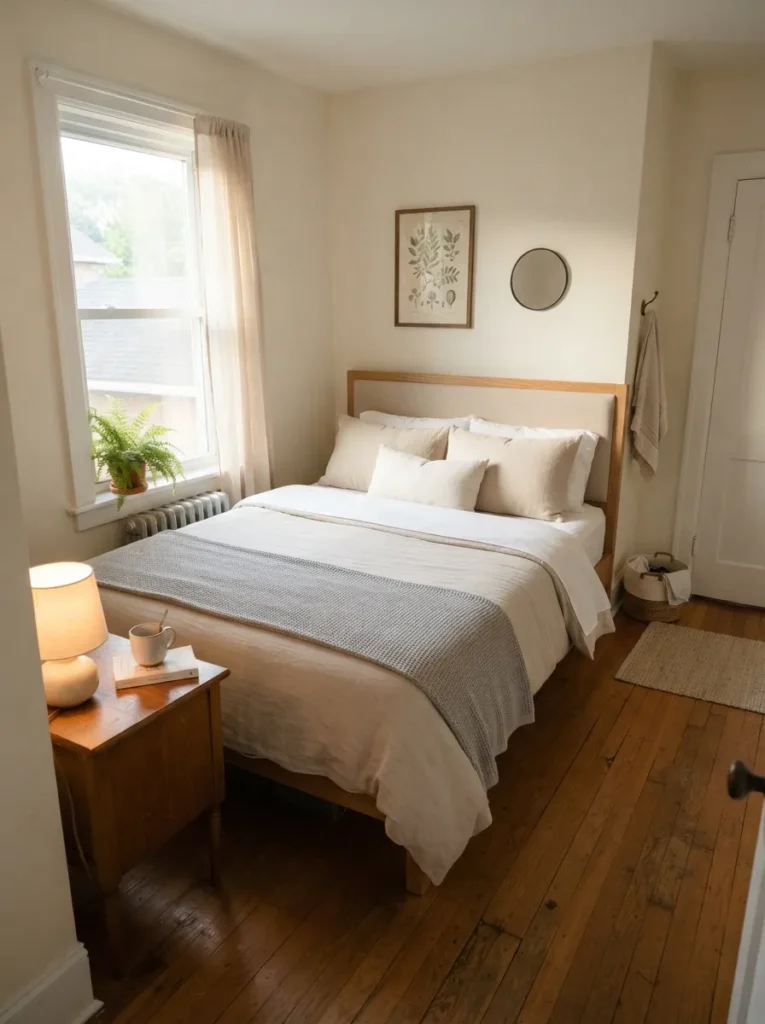
Don’t center a queen bed in a small room and hope for the best — start by pushing it into the corner furthest from the door.
This single move frees up an entire adjacent wall for a dresser, desk, or walking path that a centered placement would have eaten alive.
Layout tip: measure your remaining walkway after this placement — you want at least 24 inches of clearance on the side you actually use to get in and out of bed.
Corner placement isn’t just practical — it also creates a natural cove effect that makes a queen bed feel intentionally tucked in rather than crammed.
3. Build Storage Into the Headboard
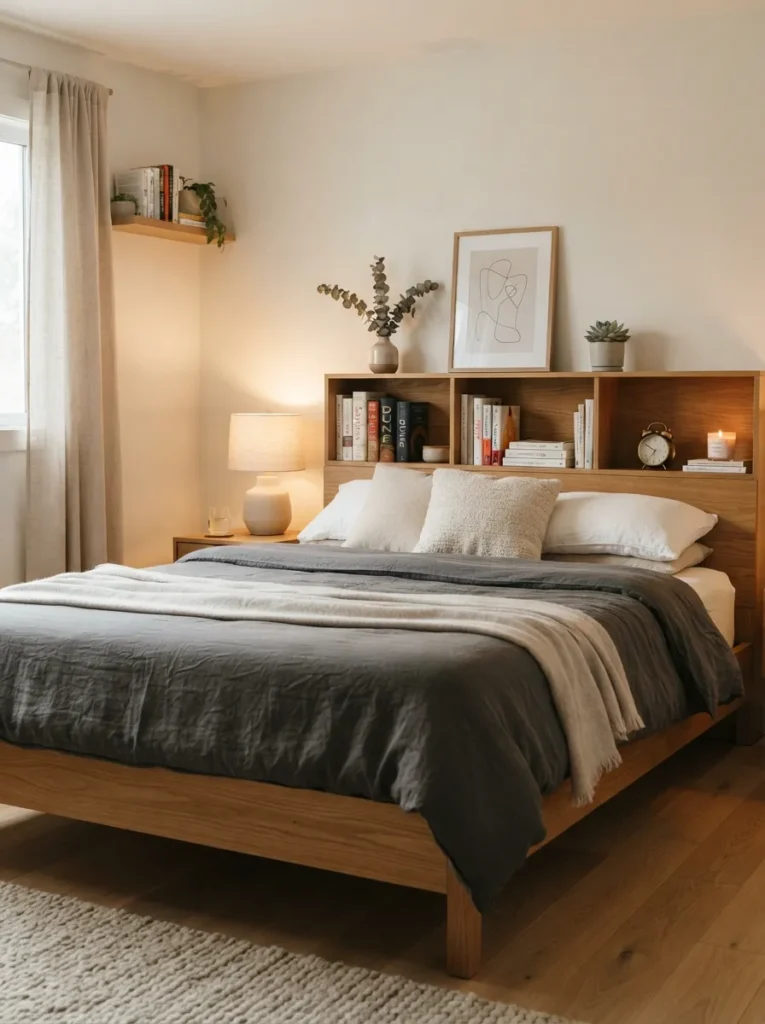
A queen bed already claims most of your floor space — so let the headboard pull double duty instead of adding a separate dresser.
Built-in headboard storage, whether open cubbies or closed cabinet doors, absorbs books, chargers, and clutter without needing extra square footage.
Material tip: stick to a matte finish headboard rather than glossy laminate — matte reads as furniture, glossy can look cheap and reflects too much light in a tight room.
This is one of the smartest space saving moves for anyone trying to fit a queen into a genuinely compact layout, since it turns dead vertical space into functional storage.
4. Skip the Overhead Light for Wall Sconces
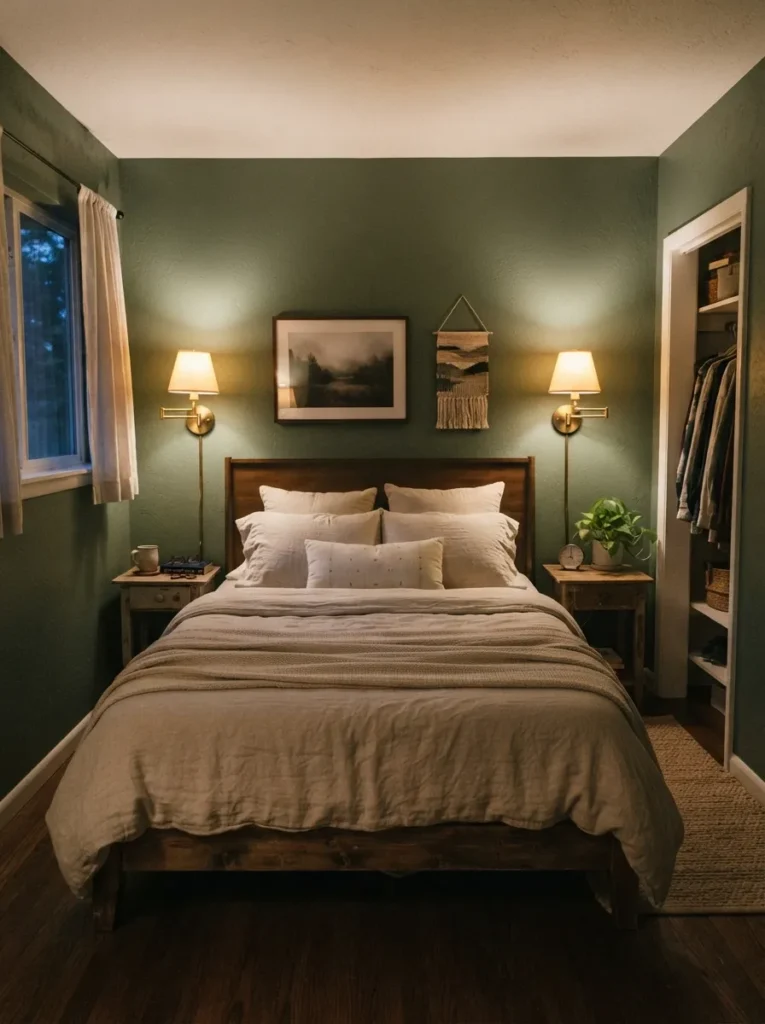
A queen bed in a small room usually sits close enough to the walls that a ceiling fixture becomes redundant — and honestly, kind of harsh.
Wall-mounted sconces flanking the headboard free up your nightstand surfaces entirely and add a soft, layered glow that a single overhead bulb can’t match.
Lighting tip: mount sconces about 24-28 inches above the mattress top so the light hits your reading angle without glaring into your eyes.
This swap also means one less lamp cord tangled across your already-tight nightstand real estate — a small but real quality-of-life win.
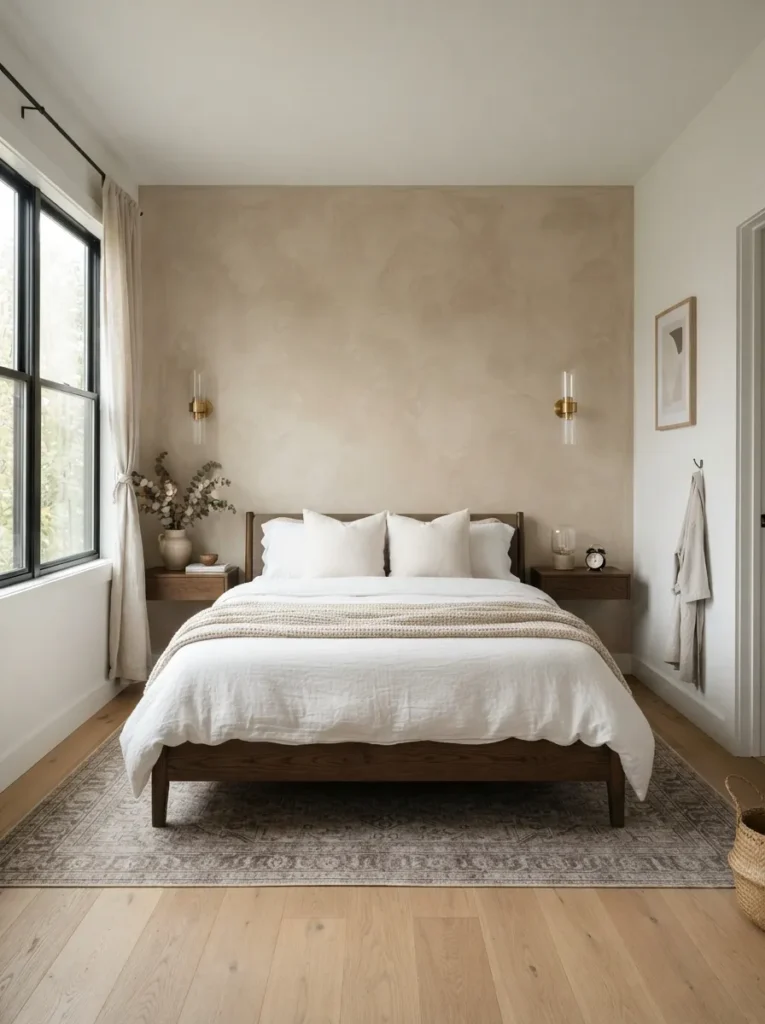
5. Float Your Nightstands to Reclaim Floor Space
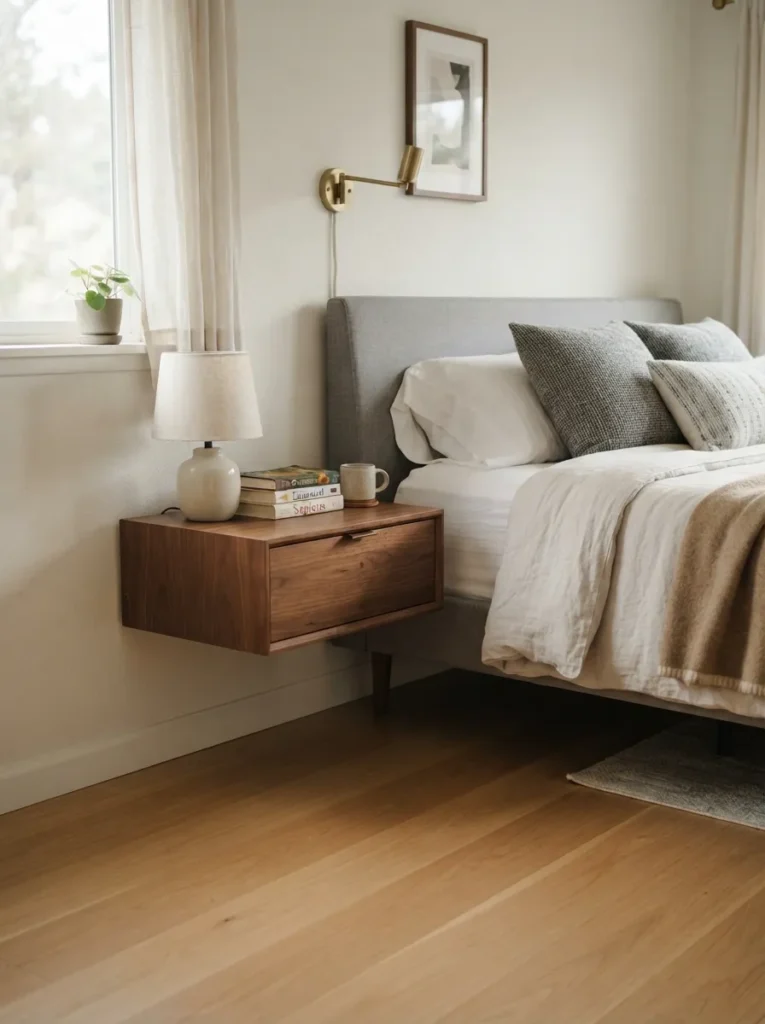
Floor-standing nightstands next to a queen bed can eat up more space than people expect, especially in a room where every inch counts.
Wall-mounted, floating nightstands solve this by keeping the floor visually — and literally — clear beneath them.
Design tip: keep floating surfaces to 10-12 inches deep max. Anything larger starts to visually compete with the bed itself.
This is a favorite trick among renters, too, since many floating shelf brackets install with minimal wall damage and remove easily at move-out.
6. Use a Slim Bench Instead of a Footboard Chair
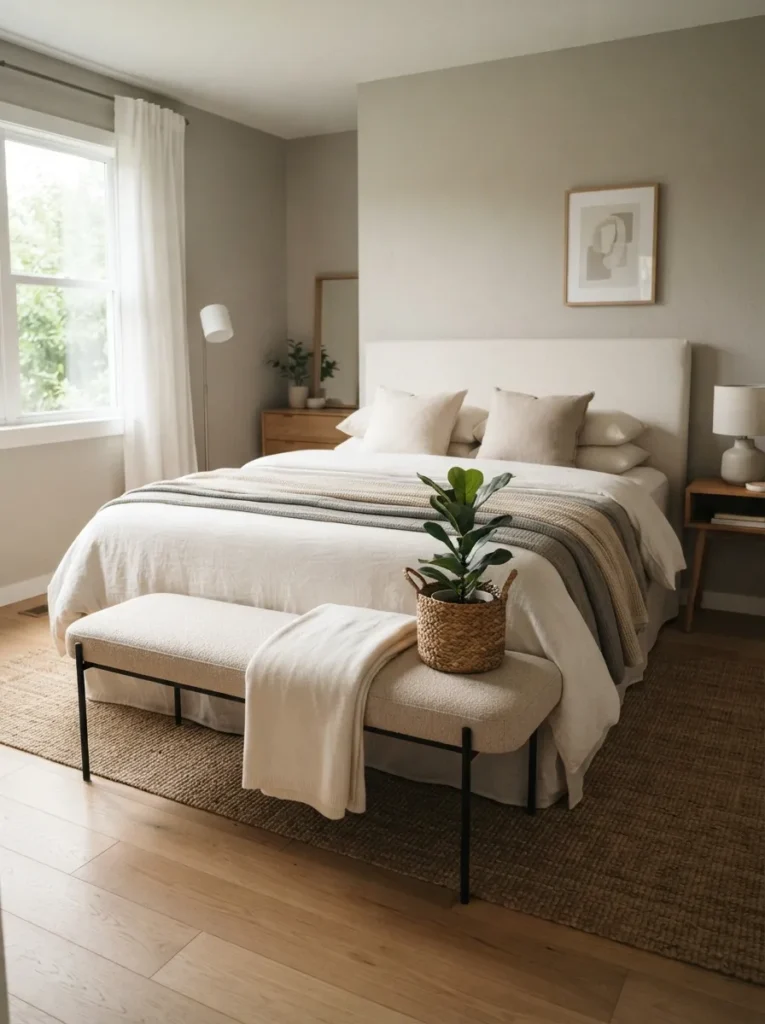
A queen bed already takes up most of a small room’s footprint, so anything placed at the foot needs to earn its spot. A bulky armchair rarely does — but a slim bench absolutely can.
Choose a bench no wider than your bed frame, ideally under 16 inches deep, so it doesn’t block your exit path.
Why this works: a low bench adds function — extra seating, a spot to toss clothes — without creating the visual bulk a chair does in a tight footprint.
Upholstered options in a soft neutral tone keep it from feeling like an extra piece of “furniture” and more like an extension of the bed itself.
7. Anchor the Room with a Statement Rug, Not More Furniture
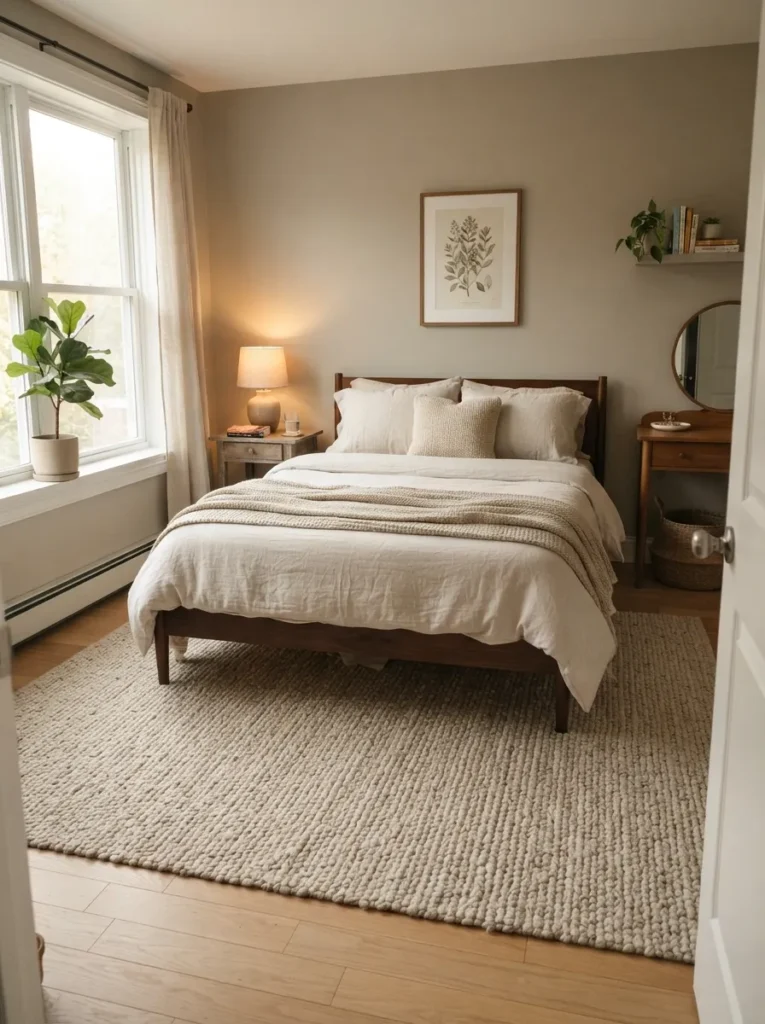
When a queen bed dominates a small room’s footprint, resist the urge to fill the remaining gaps with more furniture. A well-placed rug does more visual work with zero added clutter.
its soft, low-pile texture adds warmth and definition without crowding the remaining floor space.
🛒 Check Price on AmazonChoose a rug that extends at least 18 inches beyond the sides of the bed. Anything smaller floats awkwardly and makes the whole layout feel unfinished, even when everything else is dialed in.
8. Mirror the Wall Opposite the Window
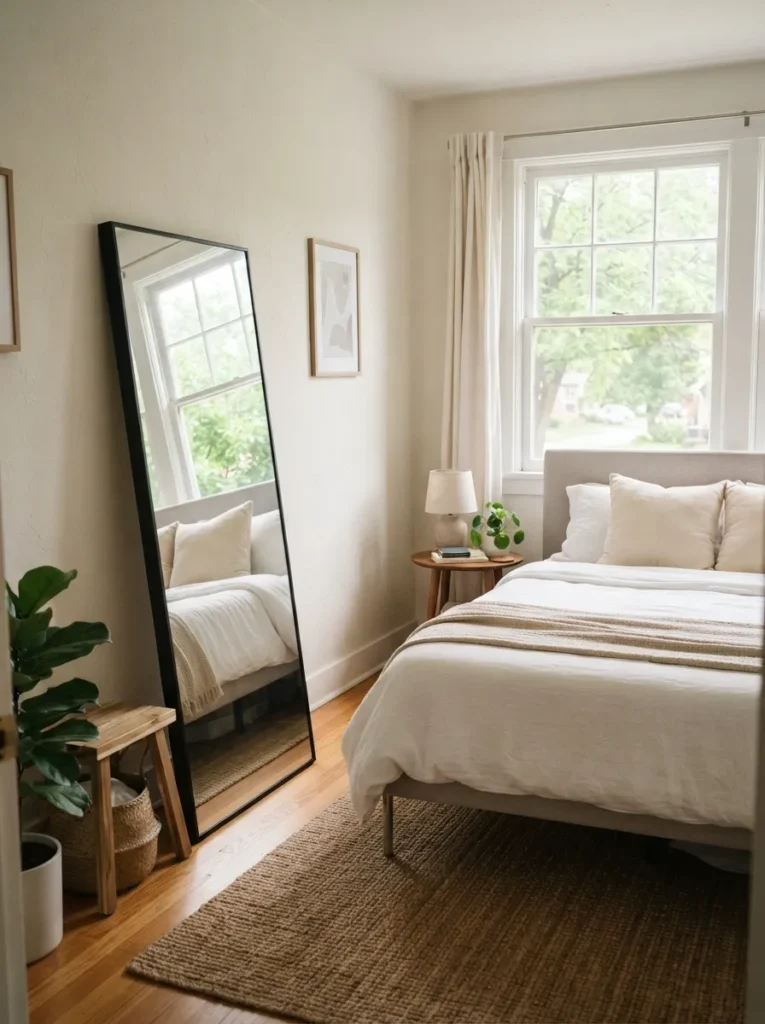
This trick punches way above its weight in a room where a queen bed already dominates the square footage. A large mirror opposite your window doubles the perceived natural light and visually pushes that wall back.
its slim frame and floor-leaning design adds visual depth without consuming closet or floor space.
🛒 Check Price on AmazonAvoid placing it directly across from the bed if you’re sensitive to feng shui — a diagonal angle gets you the same light-bouncing benefit without that concern.
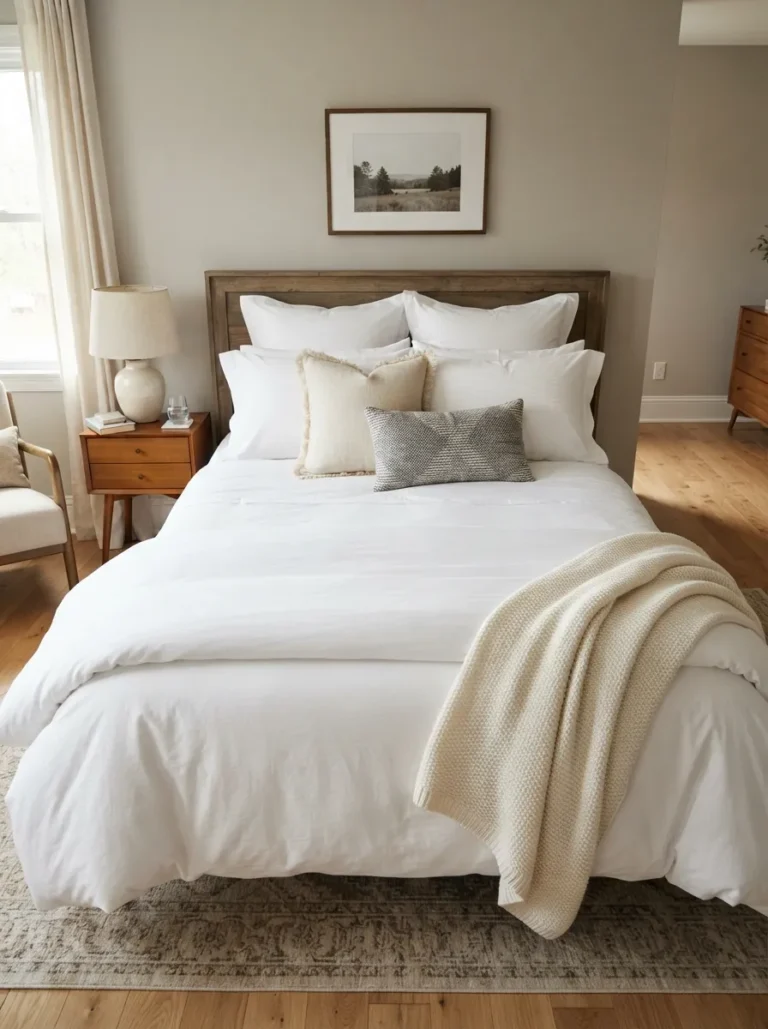
9. Keep Bedding Monochromatic to Reduce Visual Noise
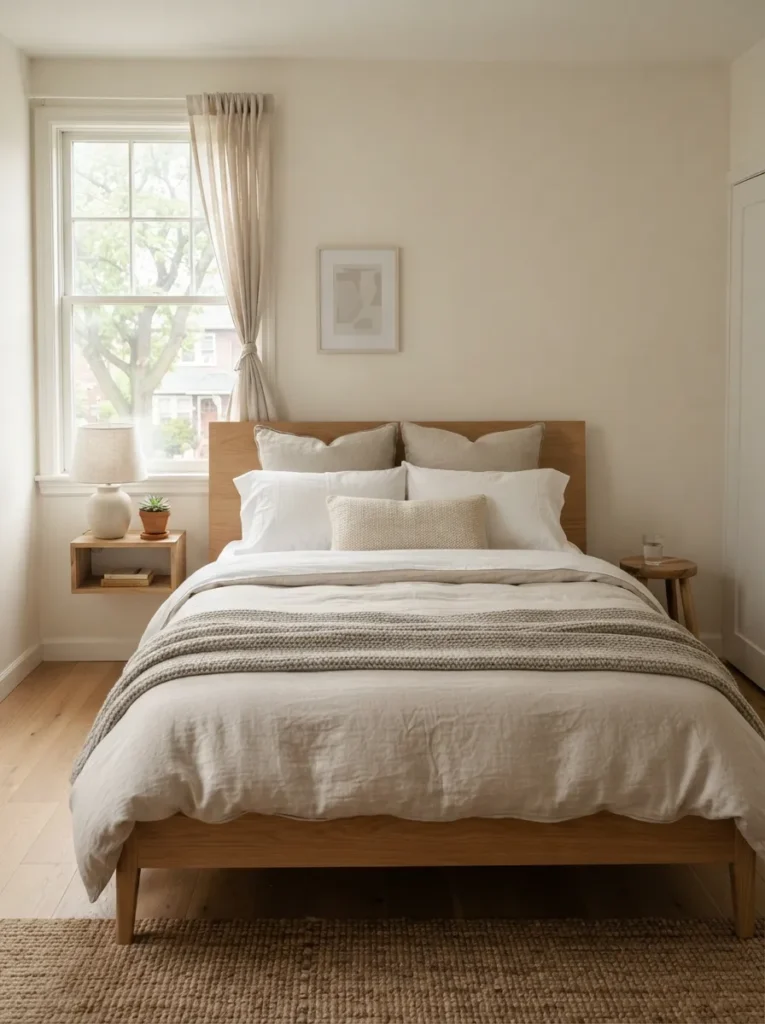
A queen bed already takes up the lion’s share of visual real estate in a small room — busy, patterned bedding just amplifies how much space it appears to occupy.
Stick to one or two tones across your duvet, sheets, and pillows. Layer texture instead of pattern for interest.
Why this works: a monochromatic bed reads as one clean visual block instead of a cluttered focal point, which makes the entire room feel calmer and larger by association.
Save bold pattern for a single throw pillow or blanket if you want a pop of personality without overwhelming the layout.
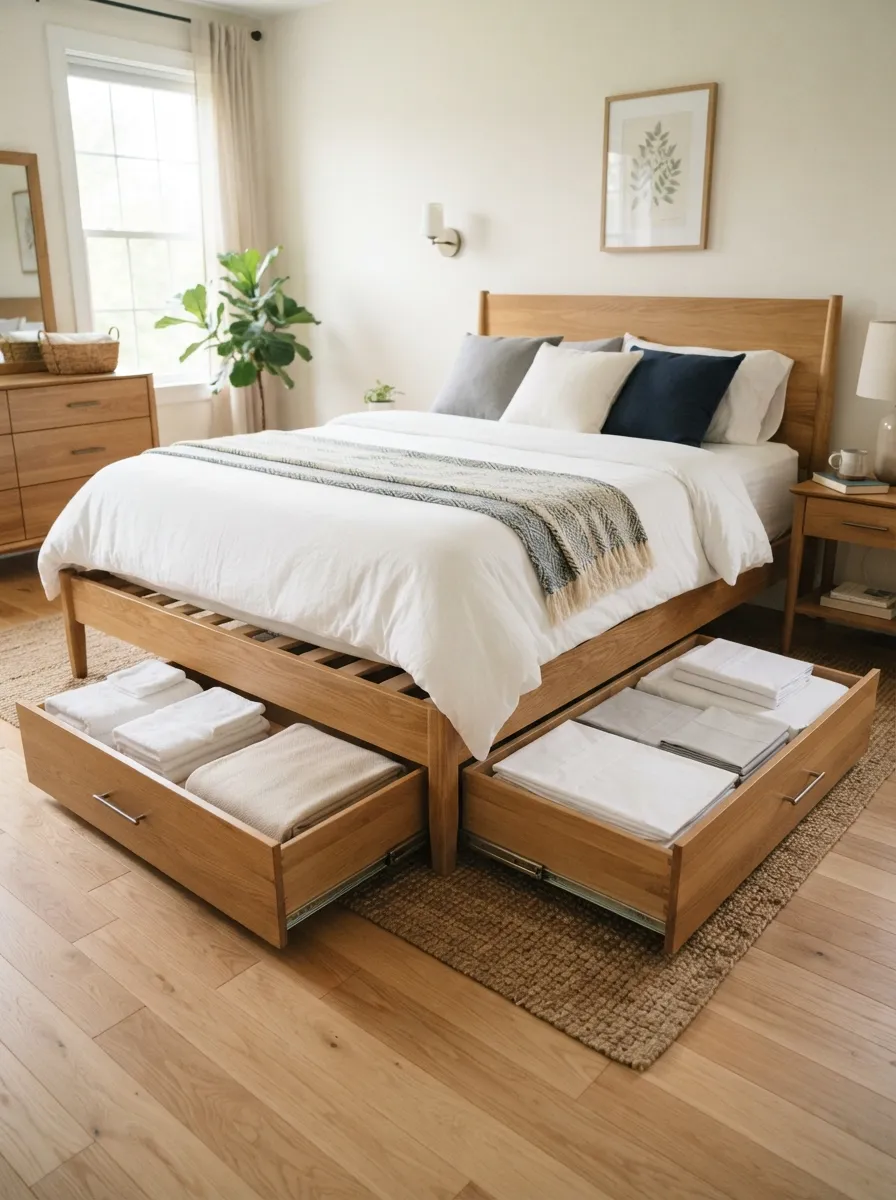
10. Add Under-Bed Storage to Offset Lost Floor Space
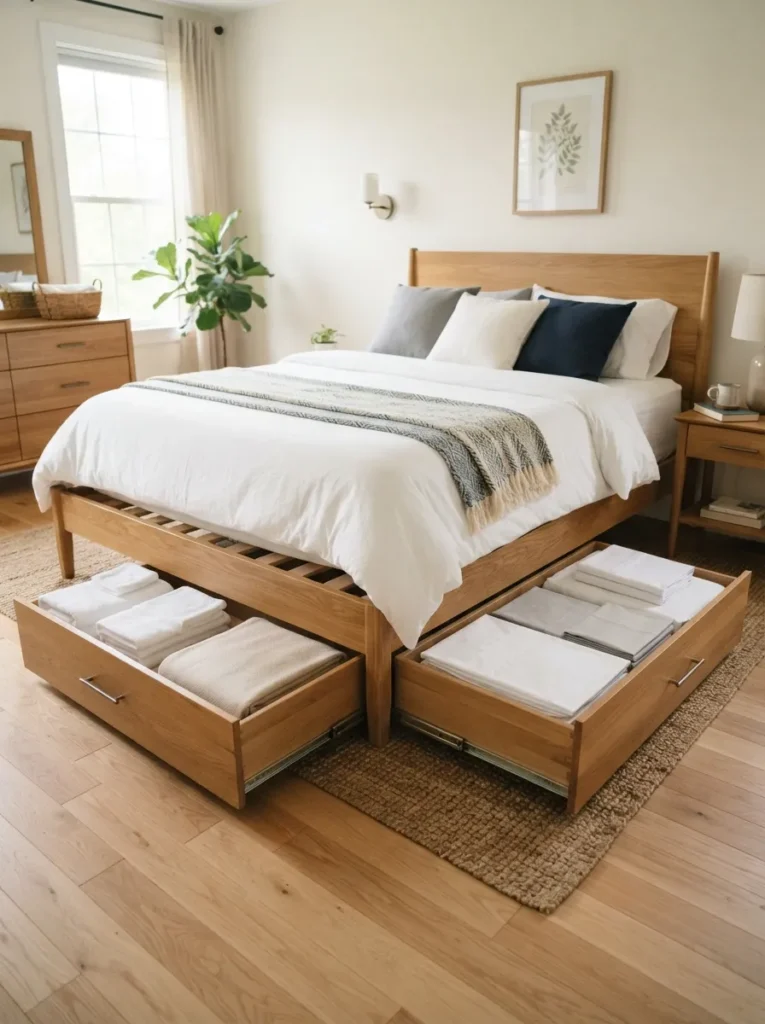
A queen frame with built-in drawers, or simple rolling bins underneath, can absorb an entire dresser’s worth of clothing and linens.
their low-profile design slides easily under a queen frame and keeps out-of-season items dust-free.
🛒 Check Price on AmazonMeasure your bed’s clearance before buying storage. Anything under 7 inches limits you to flat items like linens rather than bulkier folded clothing.
This is the single most efficient move on this list because it recovers storage without touching your visual footprint at all — it just quietly works in the background.
11. Zone the Room with Lighting Temperature, Not Furniture
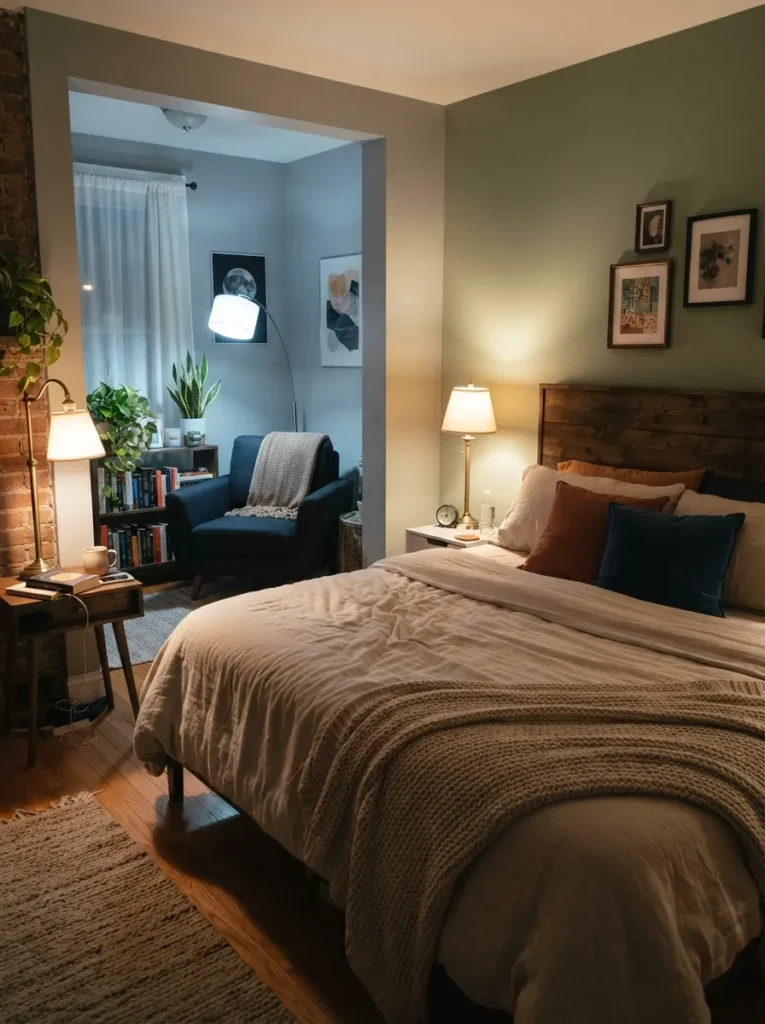
When there’s no room left for a physical divider, let lighting do the zoning instead. Warmer, dimmer light near the bed signals “rest,” while a cooler task light near a desk or reading chair signals “activity.”
Lighting tip: stay in the 2700K-3000K range near the bed, and bump up to 3500K in any small work nook to keep the two zones feeling distinct.
This is one of the easiest small bedroom with queen bed solutions to execute since it costs almost nothing and requires zero furniture rearranging — just a few bulb swaps and a dimmer switch.
A queen bed and a small room aren’t mismatched — they just need a layout that respects both. Pick a few of these moves, commit to the details, and watch your “too-tight” bedroom finally feel like it was designed on purpose.