9 Kitchen Pantry Organization Ideas Easy & Smart
Dinner is in 20 minutes. The recipe calls for smoked paprika. The pantry, however, has other plans — three mystery spice jars with no labels, a cascade of canned goods, and what appears to be a bag of quinoa from the Obama administration. Sound like a Tuesday night? You’re not alone.
Kitchen pantry organization is one of those things that everybody wants but most people treat like a “someday” project. Someday never shows up. What does show up is another chaotic grocery run that ends with duplicates of everything you already had — buried somewhere behind the soup cans.
Here’s the truth that every interior designer and professional organizer will tell you for free: a functional pantry isn’t about having more space. It’s about using the space you have with intention. Categories, containers, labels, and smart vertical systems can transform even the most chaotic reach-in or cramped walk-in into something that actually works — for busy weeknight dinners, weekend baking projects, and every snack emergency in between.
These nine kitchen pantry organization ideas are practical, scalable, and genuinely satisfying to implement. No contractor required. No Pinterest-level budget necessary.
Let’s jump into the ideas that’ll make your pantry work as hard as you do…
1. Build Your System Around Food Categories First
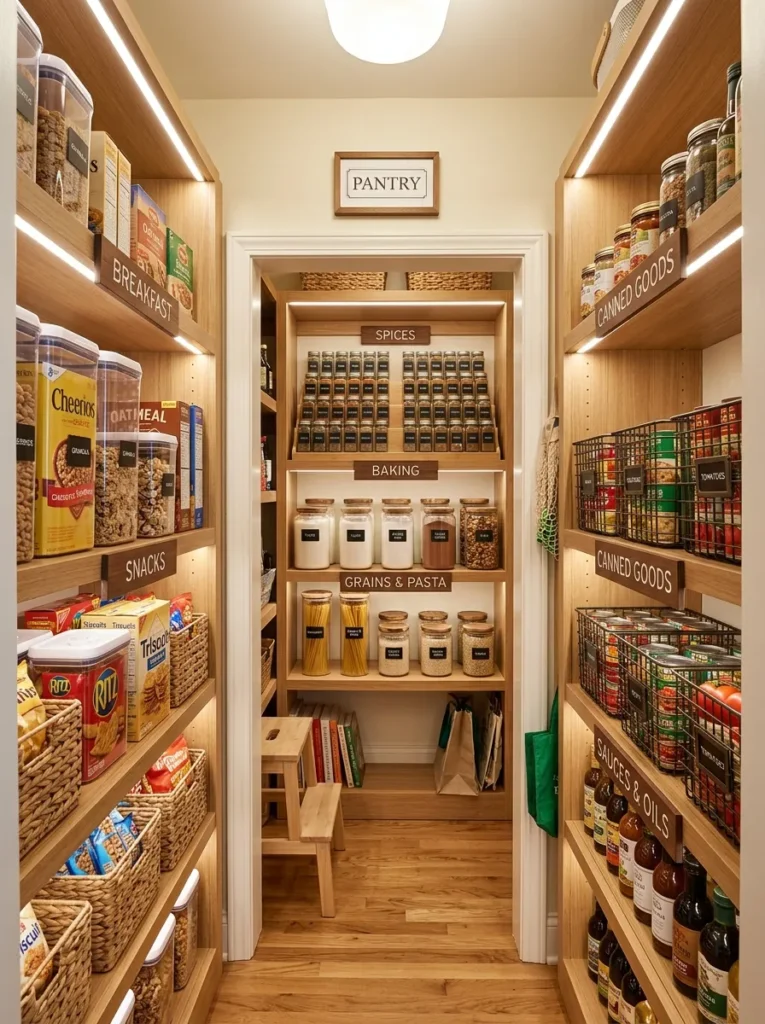
Before a single bin gets purchased or a single label gets printed, the most important step in kitchen pantry organization is deciding on your categories. This is the foundation everything else is built on — and skipping it is exactly why most pantry organization attempts unravel within two weeks.
Think about how your household actually cooks and eats, then group accordingly:
- Baking supplies (flour, sugar, baking powder, chocolate chips)
- Breakfast items (cereals, oats, pancake mix)
- Snacks (chips, crackers, nuts, dried fruit)
- Canned and jarred goods (beans, tomatoes, broth, sauces)
- Grains and pasta
- Spices and condiments
Once categories exist, everything has a home — and putting groceries away becomes a system instead of a guessing game. This single step is the difference between a pantry that stays organized and one that devolves back into chaos by week three.
2. Decant Dry Goods into Matching Airtight Canisters
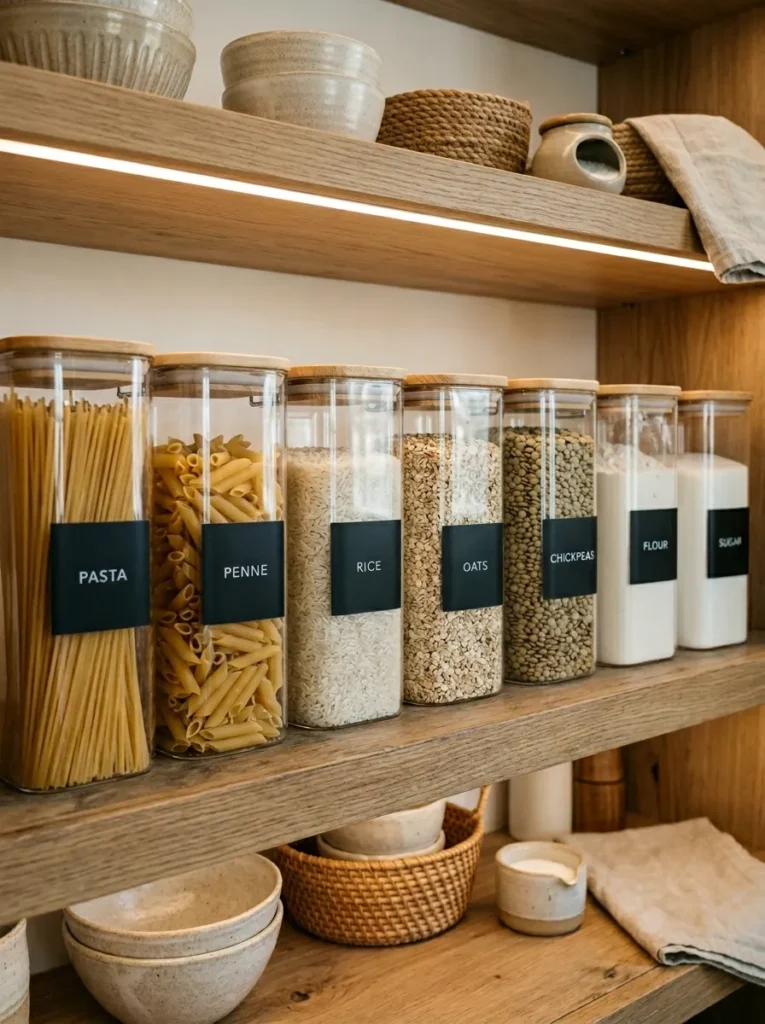
This is the kitchen pantry organization move that separates the “organized-ish” from the genuinely spectacular. Decanting — transferring dry goods from their original bulky, crinkly, fall-apart packaging into uniform airtight containers — is part function, part design flex.
The functional case: airtight canisters keep dry goods fresher significantly longer than their original packaging. Pasta, rice, flour, and oats all benefit. The aesthetic case: a row of identical canisters reads as intentional and calm, even when the shelf is full to capacity.
- Square or rectangular canisters pack more tightly than round ones — crucial in kitchen pantry organization where space is finite
- Label each canister with the contents AND the expiry date on the bottom
- Start with the items you use most: flour, sugar, pasta, rice, oats, and coffee
Yes, decanting takes an afternoon. That afternoon pays dividends every single time you open the pantry door.
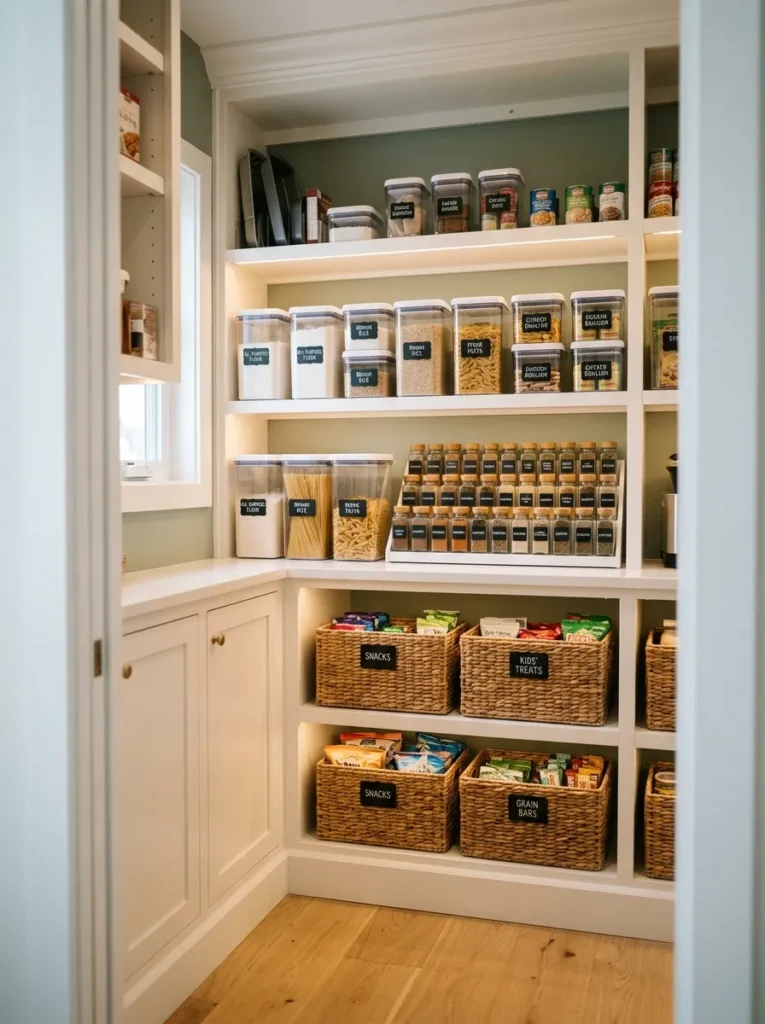
3. Use Clear Bins to Contain and Categorize Every Shelf
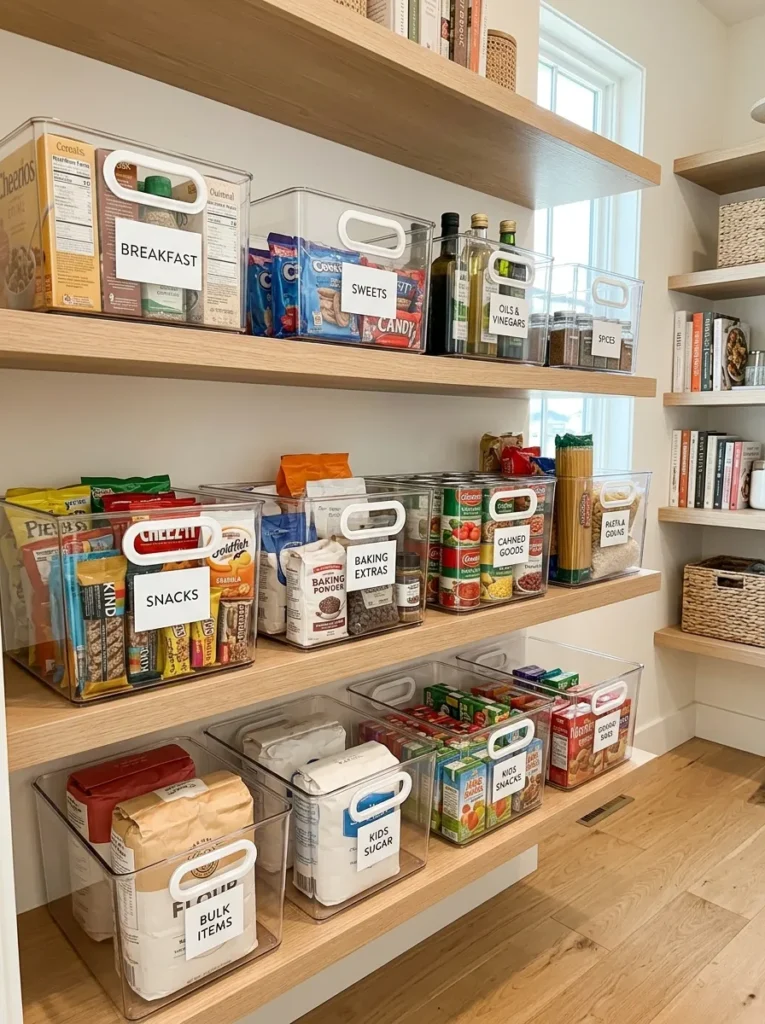
Clear bins are to kitchen pantry organization what a great pair of jeans is to a wardrobe — they make everything work better and look better simultaneously. The concept is simple: instead of individual items scattered across a shelf, each category lives in its own bin. Pull the bin out, grab what you need, slide it back in. Done.
The “clear” part matters. Opaque bins force you to remember what’s inside. Clear bins let you see at a glance when the crackers are running low or the snack situation is getting critical — which, if there are kids in the house, is always.
- Uniform bins across all shelves create visual harmony that makes the whole pantry feel curated
- Opt for bins with handles for deep shelves — reaching into the back without handles is how shoulders get pulled
- Dedicate one bin per category and resist the urge to double up until you absolutely have to
- Amazon find: mDesign Large Rectangular Storage Bins with Handles (4-pack) – sturdy, stackable, and sized perfectly for standard pantry shelves
4. Label Every Single Thing — No Exceptions
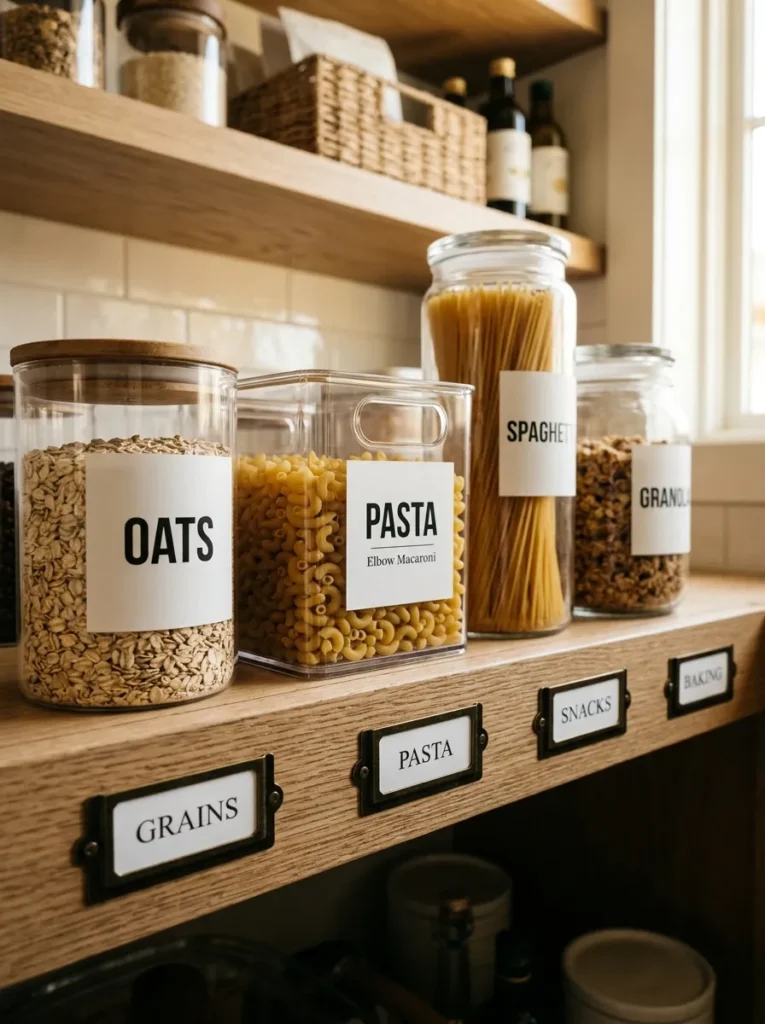
Here’s a universally unpopular truth: an unlabeled pantry organization system is a temporary pantry organization system. Labels are what make the whole thing stick — literally and figuratively. They remove ambiguity, keep every household member accountable, and ensure that “where does this go?” becomes a question nobody needs to ask.
In kitchen pantry organization, labeling works on two levels:
- Bin labels — tell you what category lives in each container (Snacks, Baking, Grains, Canned Goods, etc.)
- Shelf edge labels — mark the zone even when the bin is removed, so items always go back in the right place
Label maker options range from sleek and minimal (Brother P-Touch) to warm and handwritten-style (chalkboard labels on glass jars). Either works. What doesn’t work is the honor system.
Pro tip: label the shelf edge in addition to the bin. Future-you — the one grocery shopping on autopilot at 9pm — will be grateful.
5. Install a Dedicated Spice Organization System
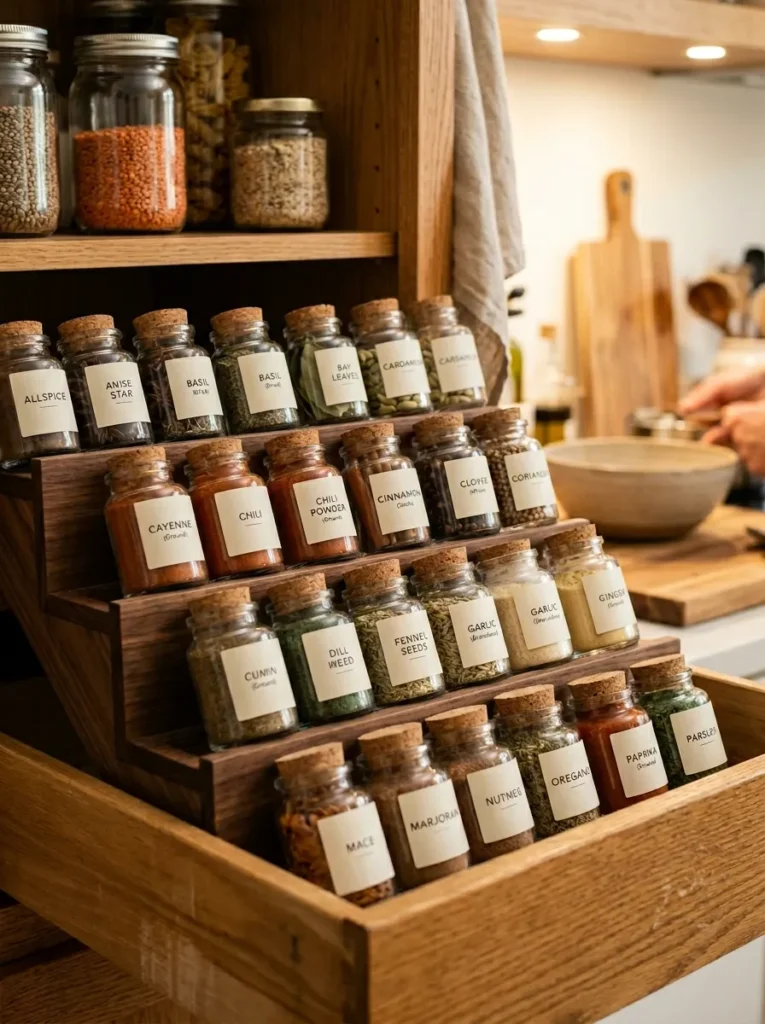
Spices deserve their own section in any serious kitchen pantry organization conversation — because spices are where pantry chaos goes to thrive. They’re small, they multiply mysteriously, they come in wildly different packaging sizes, and they love to hide. A jar of cumin is not useful if it takes four minutes to locate.
The fix is a dedicated spice system that removes all guesswork:
- Tiered shelf inserts elevate back-row spices so every jar is visible at a glance
- Uniform spice jars with matching labels make the whole section look intentional and editorial
- Alphabetical order sounds extra, but it cuts spice-finding time down to seconds
- Door-mounted spice racks work brilliantly in reach-in pantries where shelf real estate is premium
Decanting spices into matching glass jars is the move that makes the pantry look like it belongs in a Nora Ephron kitchen montage. Labels facing forward. Always.
An organized food storage system saves you money on groceries, but if your shelving layout happens to be awkwardly deep, you’ll need specialized deep pantry organization ideas.
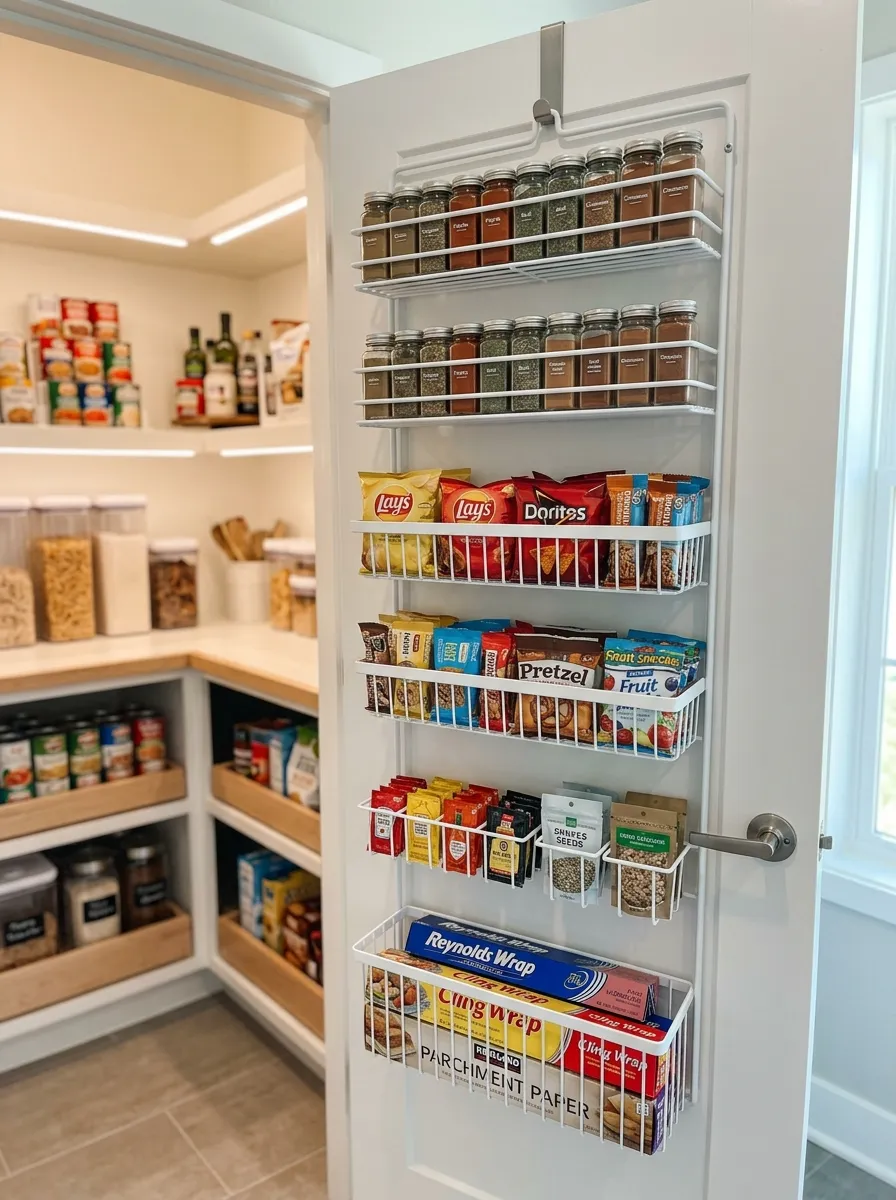
6. Take the Door Seriously — It’s a Bonus Shelf
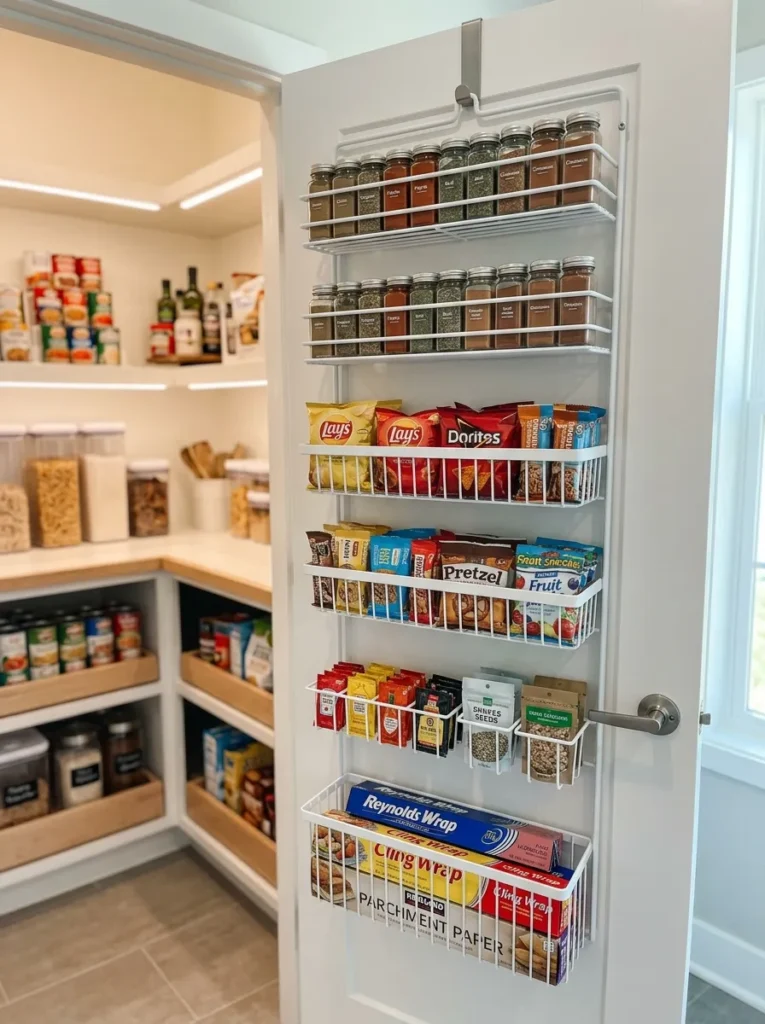
The pantry door is the most overlooked surface in kitchen pantry organization. Most people use it for nothing. The bold, organized move is to use it for everything small. Over-the-door organizers transform a flat, empty surface into tiered, accessible storage without using a single inch of shelf space.
What lives on the door? The items you grab most often:
- Spice jars and small condiment bottles
- Snack bags and single-serving packets
- Foil, cling wrap, and parchment boxes
- Vitamin bottles or small supplement jars
The key rule: measure the clearance between the door and the first shelf before ordering. A beautiful organizer that won’t close the door is just a very expensive mistake.
This post contains affiliate links. If you buy something through them, I may earn a small commission at no extra cost to you.
7. Add Lazy Susans to Every Deep or Corner Shelf
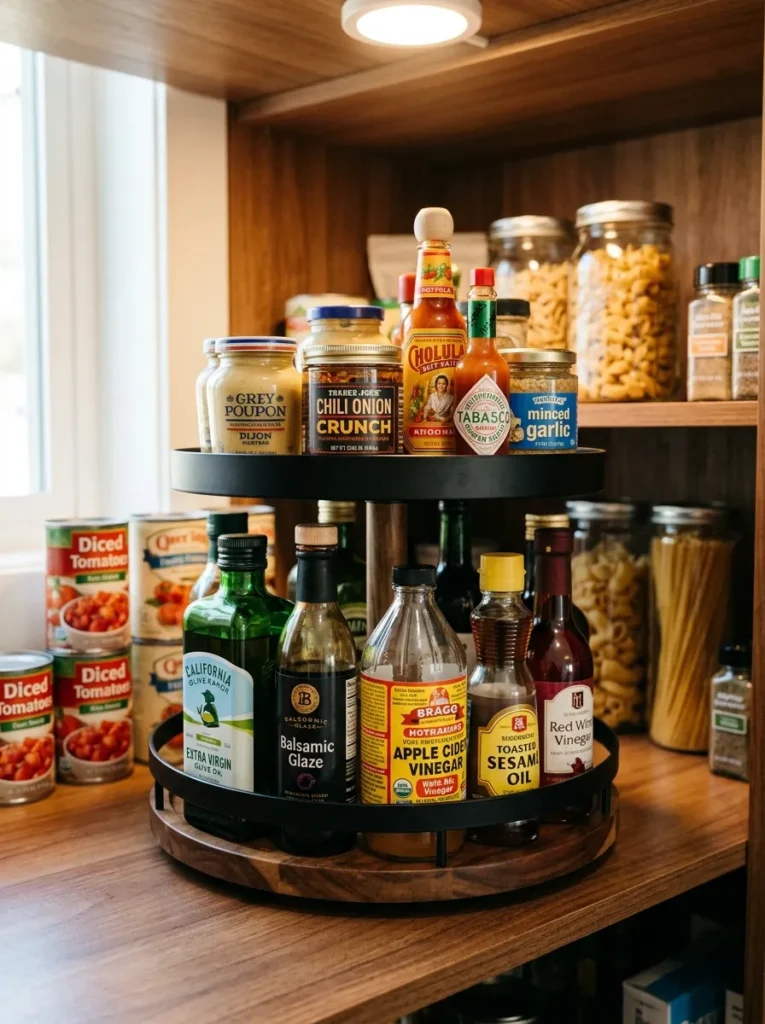
Deep shelves are the classic villain of kitchen pantry organization. They look like abundant storage right up until the moment you realize everything you need is behind everything you don’t. The lazy Susan — bless its rotating soul — solves this entirely.
One spin. Everything comes to you. No archaeological digging through canned goods required.
- Use a double-tiered Lazy Susan for spices and small bottles to maximize vertical use of the same shelf footprint
- Single-tier, large-format options work brilliantly for oils, vinegars, and condiment bottles
- Corner shelves in walk-in pantries are practically begging for a large turntable — the geometry alone makes them otherwise impossible to use efficiently
- Bamboo Lazy Susans add warmth; acrylic ones keep the look clean and modern
This is one of those kitchen pantry organization additions that costs under $20 and immediately earns its place on the permanent roster.
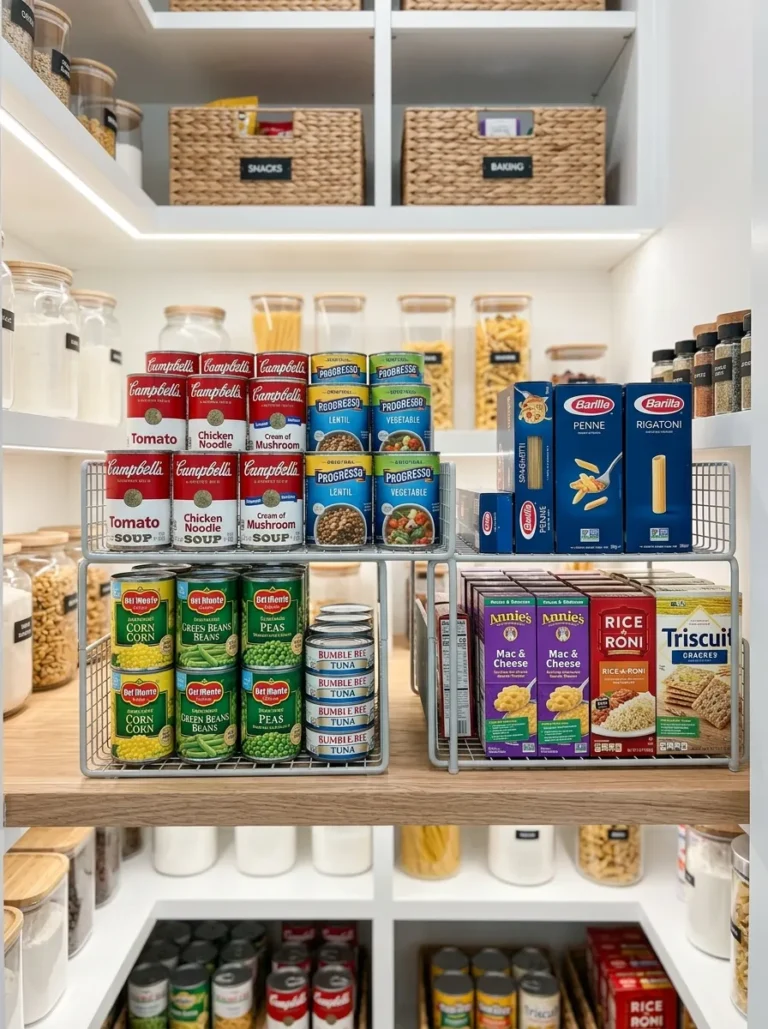
8. Use Shelf Risers to Create Double-Decker Storage
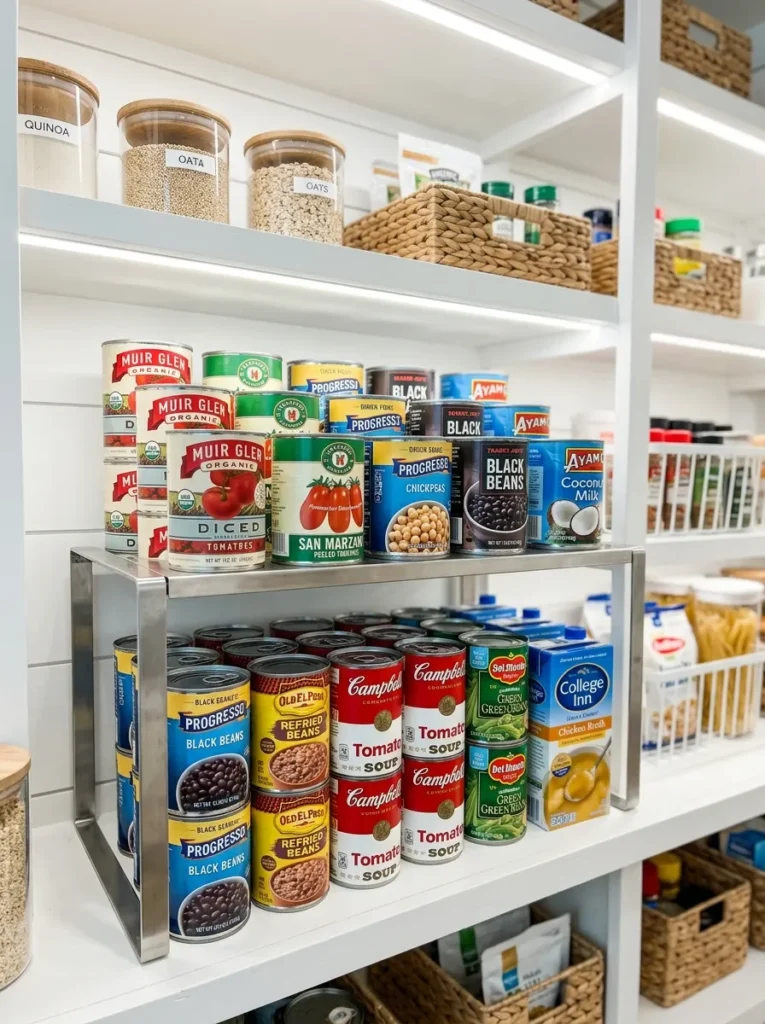
Here’s the kitchen pantry organization trick that feels like discovering a cheat code: stackable shelf risers. These simple inserts create a second level on any existing shelf — meaning one shelf effectively does the job of two, with zero installation, zero drilling, and zero commitment.
Canned goods are the ideal candidate. Instead of one long row disappearing into shelf depth, risers give you two clearly visible rows in the same footprint. It’s basically building a second story in your pantry, and unlike real construction, it takes about 90 seconds.
- Metal risers are durable and easy to clean — important when the occasional can of broth inevitably leaks
- Bamboo risers add a warm, artisanal quality if the aesthetic matters to the overall design
- Works beautifully for canned goods, boxed goods, and small jars
- Also pulls double duty inside kitchen cabinets for dishes and glassware — making it a multi-room purchase
9. Create a Weekly “Pantry Reset” Habit to Maintain the System
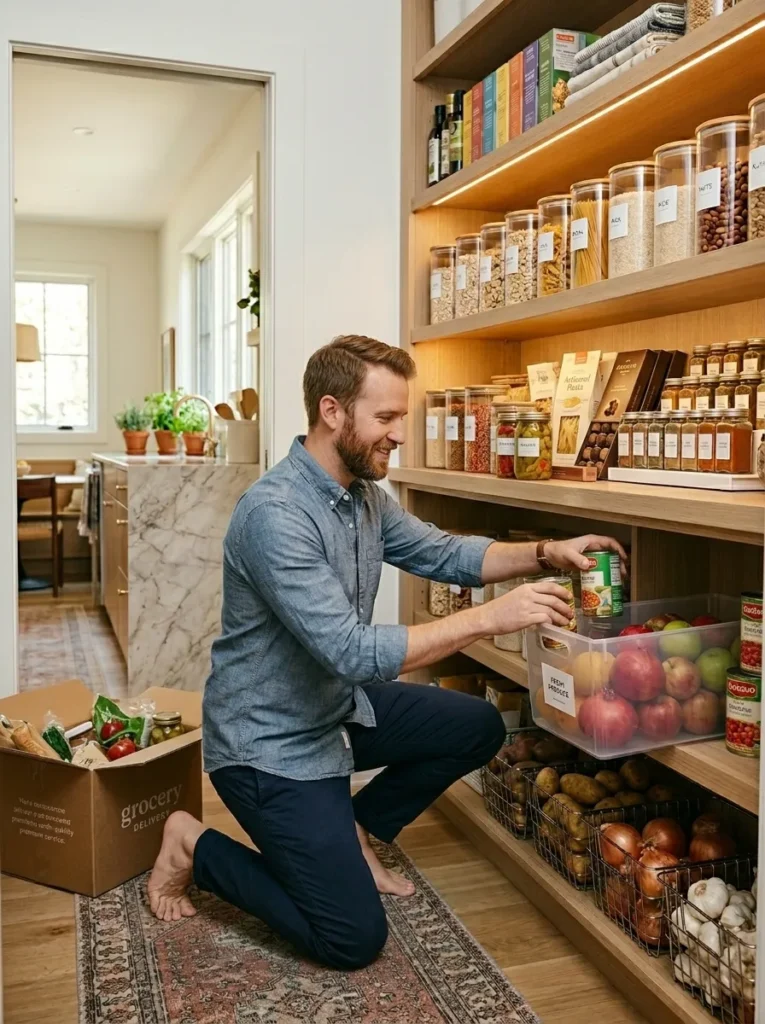
Even the most beautifully executed kitchen pantry organization system will drift into chaos without one simple maintenance habit: the weekly pantry reset. This isn’t a deep clean. It’s a 10-15 minute weekly reset that keeps the system honest and the pantry functional.
Think of it as the pantry equivalent of making the bed — a small, regular act that maintains the standard.
What the reset covers:
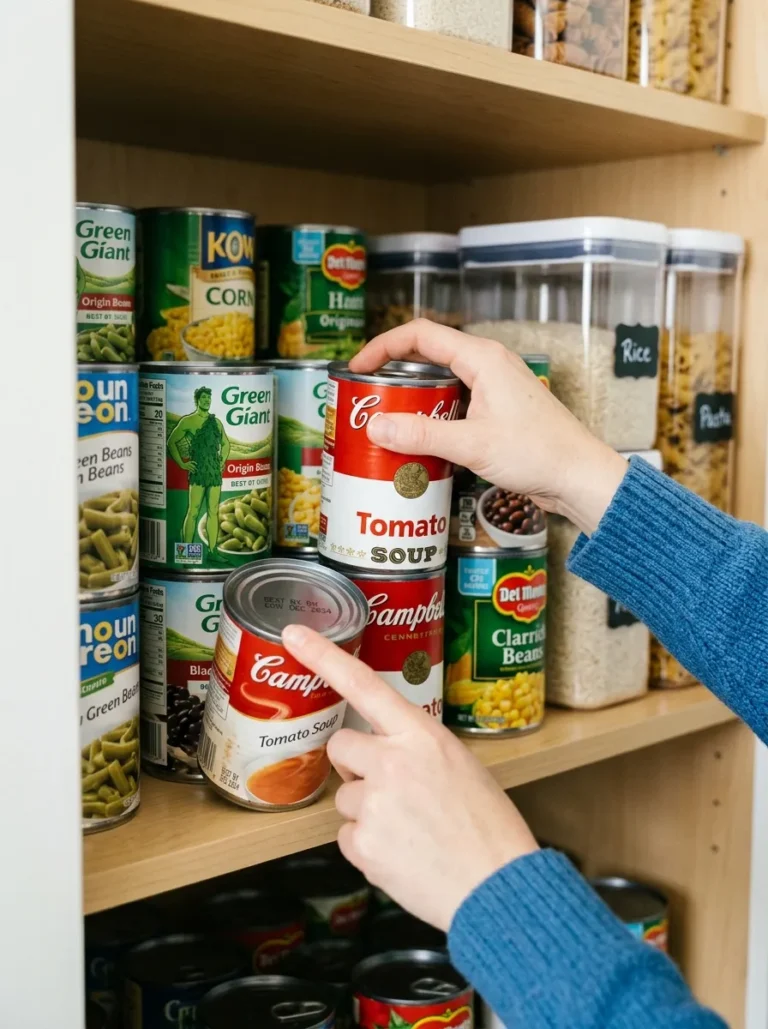
- Rotate stock — move older items to the front (first-in, first-out), newer items to the back
- Consolidate duplicates — two half-empty boxes of the same pasta become one
- Check expiry dates on anything that’s been sitting for a while
- Return strays — items that migrated to the wrong bin or shelf during the week
- Restock labels if any have peeled or faded
The weekly reset is what separates a pantry that looks good in photos from one that actually functions beautifully every day of the week. Systems without maintenance are just expensive clutter with better aesthetics.
A well-executed kitchen pantry organization system doesn’t just save time — it saves money, reduces food waste, and turns the daily act of cooking from a scavenger hunt into something that actually feels enjoyable. Pick two or three ideas from this list, start this weekend, and watch how quickly a functional pantry becomes the thing you quietly brag about to every guest who walks into the kitchen.