9 Pantry Organization Ideas for a Clutter-Free Home
Picture this: it’s 6:30 p.m., dinner needs to happen in the next 30 minutes, and somewhere in the pantry is a can of diced tomatoes that you know you have because you bought three of them last month. Twenty minutes later, having moved the pasta boxes twice, excavated behind the mystery spice collection, and discovered a bag of quinoa you don’t remember buying, the tomatoes remain unfound. Dinner is now takeout. Again.
This is not a grocery problem. It’s a pantry organization problem — and it’s one of the most universally relatable kitchen frustrations in existence. A disorganized pantry doesn’t just create daily friction. It wastes food (things expire in the dark, unseen), wastes money (duplicates get bought because nothing is visible), and wastes the most valuable commodity of all: time. The pantry is supposed to make cooking easier. When it doesn’t, the entire kitchen suffers.
Here’s what professional organizers and kitchen designers have understood for years: great pantry organization ideas aren’t about buying a lot of expensive containers. They’re about building a system — one that accounts for how the household actually shops, cooks, and accesses food. The goal is a pantry where everything is visible, accessible, and in its designated home. Where the diced tomatoes are exactly where they always are. Where opening the pantry door brings a small, genuine moment of satisfaction rather than a mild existential crisis.
Whether the pantry is a full walk-in closet, a reach-in cabinet with four shelves, or a single deep kitchen cupboard that’s been quietly holding resentment for years — these 9 pantry organization ideas will transform it from a source of daily chaos into one of the most functional spaces in the home.
Let’s jump into the ideas that make the pantry work the way it always should have.
1. Decant Dry Goods Into Uniform Airtight Canisters
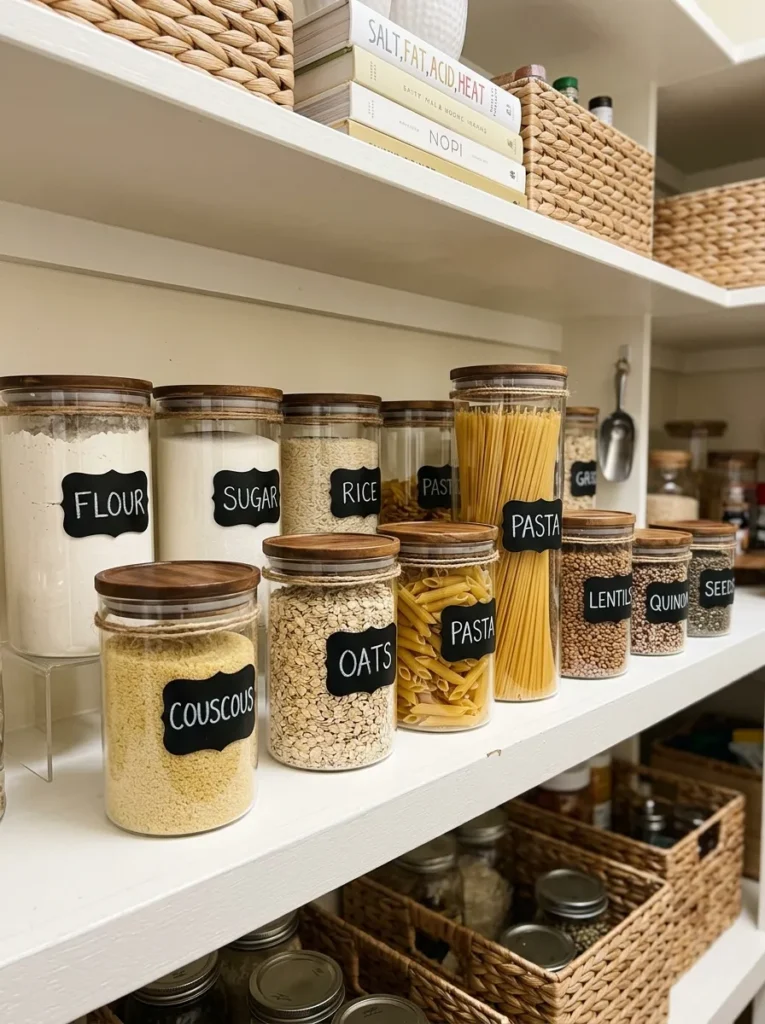
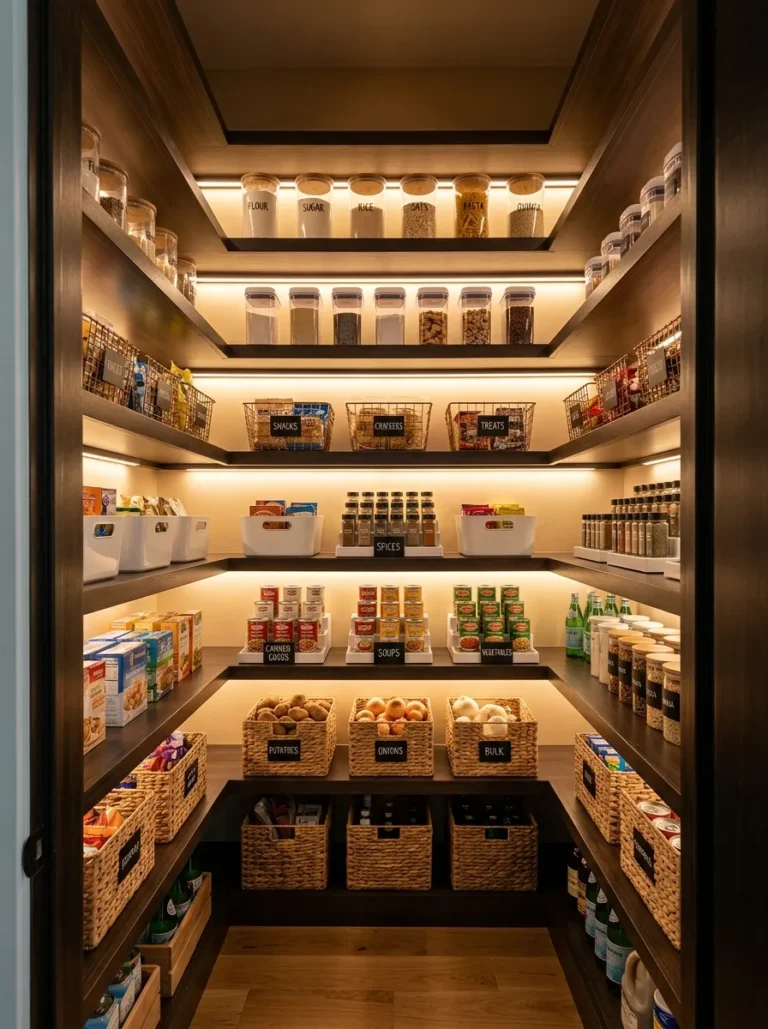
This is the pantry organization idea that launched a thousand Instagram posts — and it earns every one of them. Transferring dry goods from mismatched bags and boxes into a uniform set of clear airtight canisters transforms the visual chaos of a pantry shelf into something that looks designed, immediately readable, and genuinely calming. It’s the organizational equivalent of tucking in the shirt — the whole look changes.
- Clear canisters allow contents to be identified at a glance without pulling anything off the shelf
- Airtight seals keep dry goods fresh significantly longer than their original packaging
- Uniform sizing creates visual cohesion — a row of matching canisters reads as a system, not a collection of accidents
- Label everything, even the obvious items — when another household member is looking, “obvious” is rarely universal
Bold claim: decanting dry goods is the single pantry organization idea with the highest satisfaction-to-effort ratio available. One afternoon, genuinely transformative results.
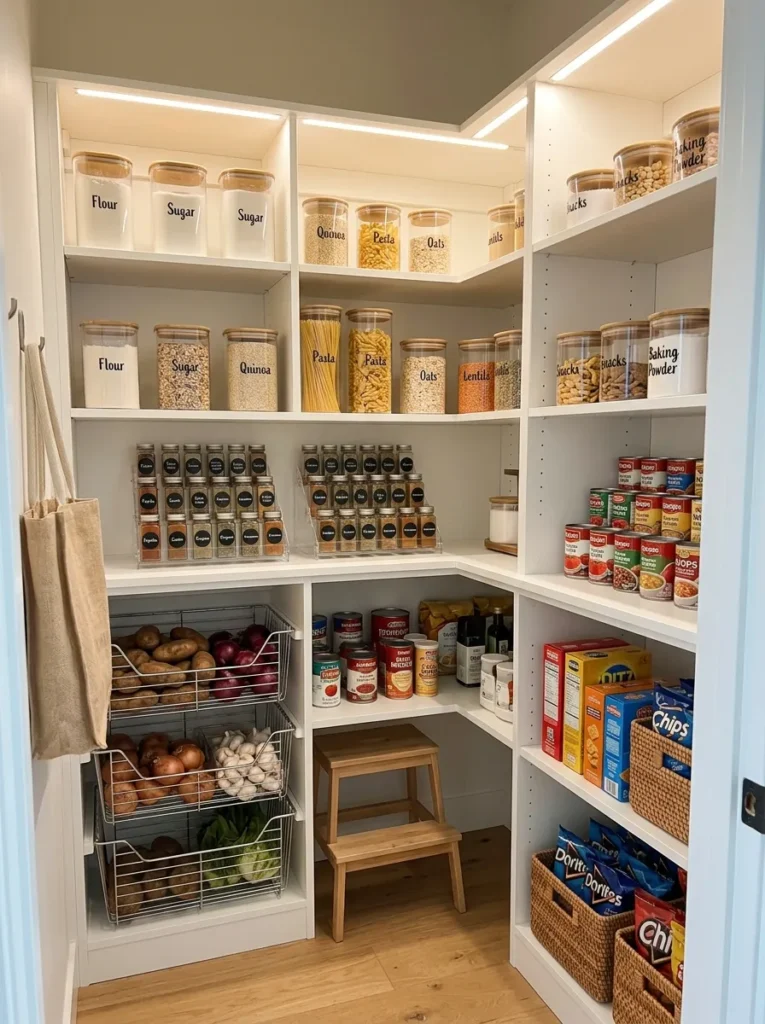
2. Group Items Into Clear, Labeled Zones
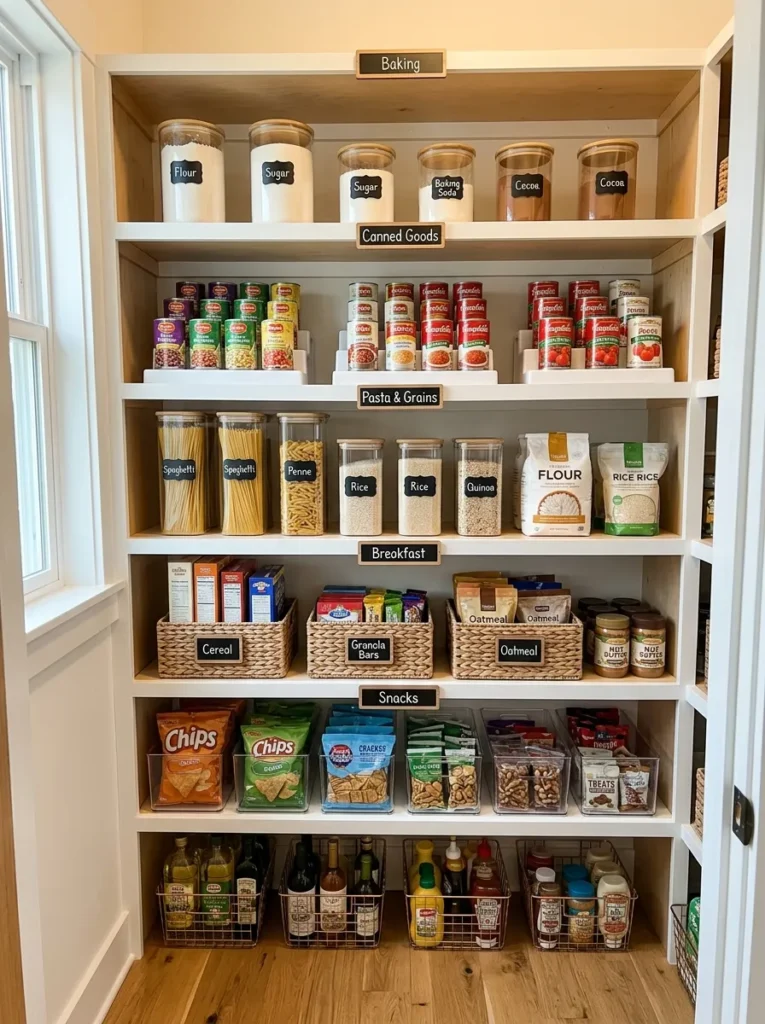
The single greatest structural pantry organization idea — and the one that makes every other idea on this list work better — is zoning. Assigning every category of food a designated shelf or section means that when something is put away, it goes to one specific place. And when it’s needed, there’s only one place to look. That simple logic eliminates the excavation problem entirely.
- Create zones based on how the household actually cooks: Baking, Breakfast, Snacks, Canned Goods, Pasta and Grains, Condiments, Kid Stuff
- Label each zone — a small adhesive label on the shelf edge is enough — so every household member knows the system
- Place the most frequently accessed zones at eye level; least-used categories go high or low
- Resist the urge to over-categorize: six to eight zones is usually ideal; more than that creates decision fatigue
A zoned pantry is not just organized. It’s self-maintaining — because when everything has a home, putting things back becomes automatic rather than optional.
3. Use Pull-Out Baskets or Drawer Inserts for Deep Shelves
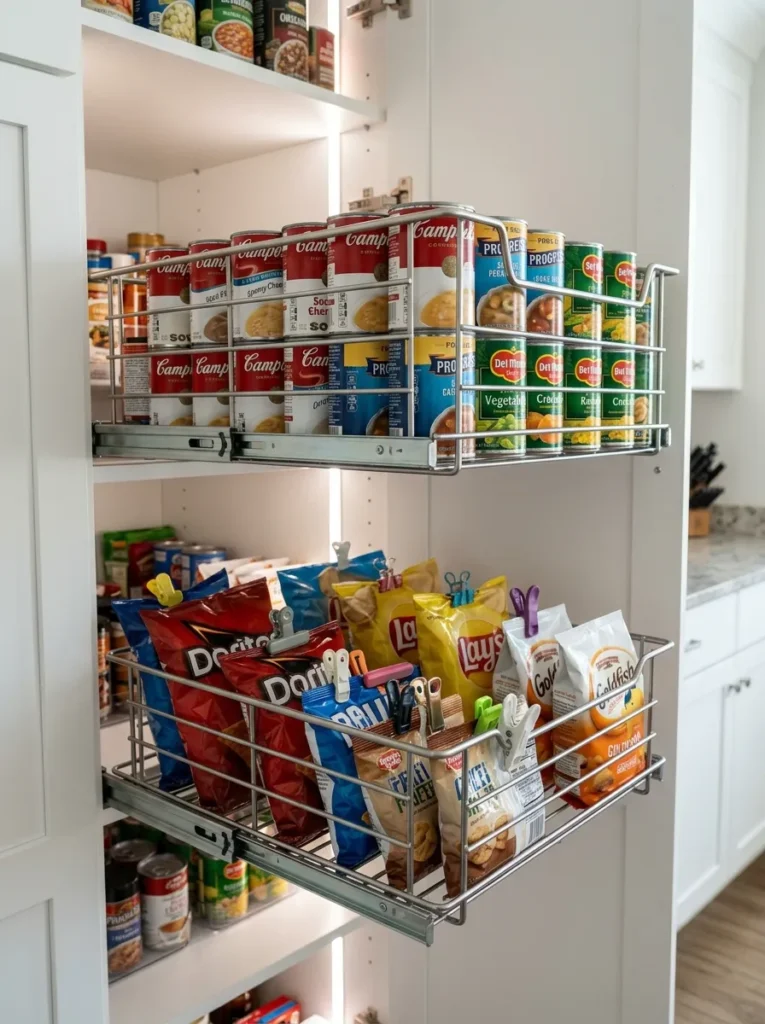
Deep pantry shelves are a trap disguised as storage space. The back half of a deep shelf is a black hole — items disappear into it, forgotten until they expire and get discovered during the biannual pantry excavation. Pull-out baskets or drawer inserts fitted onto deep shelves convert that inaccessible back space into fully visible, fully reachable storage. It’s the most impactful pantry organization idea for anyone dealing with a reach-in or cabinet pantry.
- Wire pull-out baskets allow contents to be seen from above and from the front simultaneously
- Full-extension slides ensure items at the very back come fully into view when the basket is pulled out
- Use one basket per category zone: one for canned goods, one for snacks, one for baking extras
- Plastic pull-out bins work equally well and are often more budget-friendly than wire versions
The back of the shelf is no longer an exile. It’s just… further forward now.
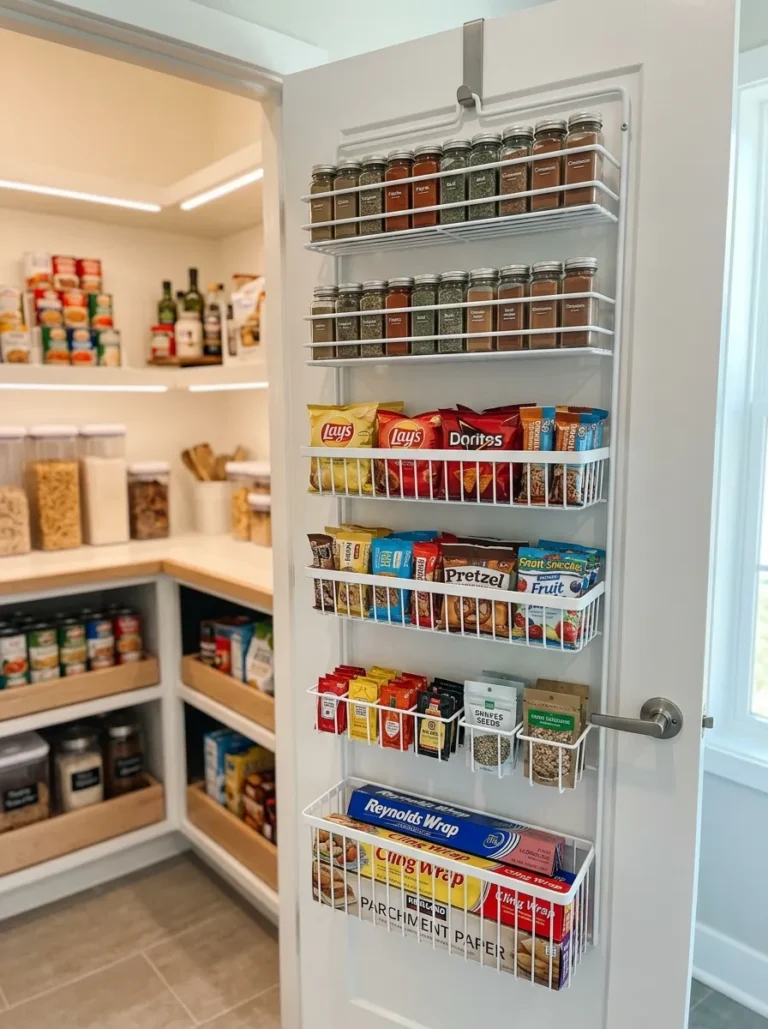
4. Install a Door-Mounted Spice and Condiment Rack
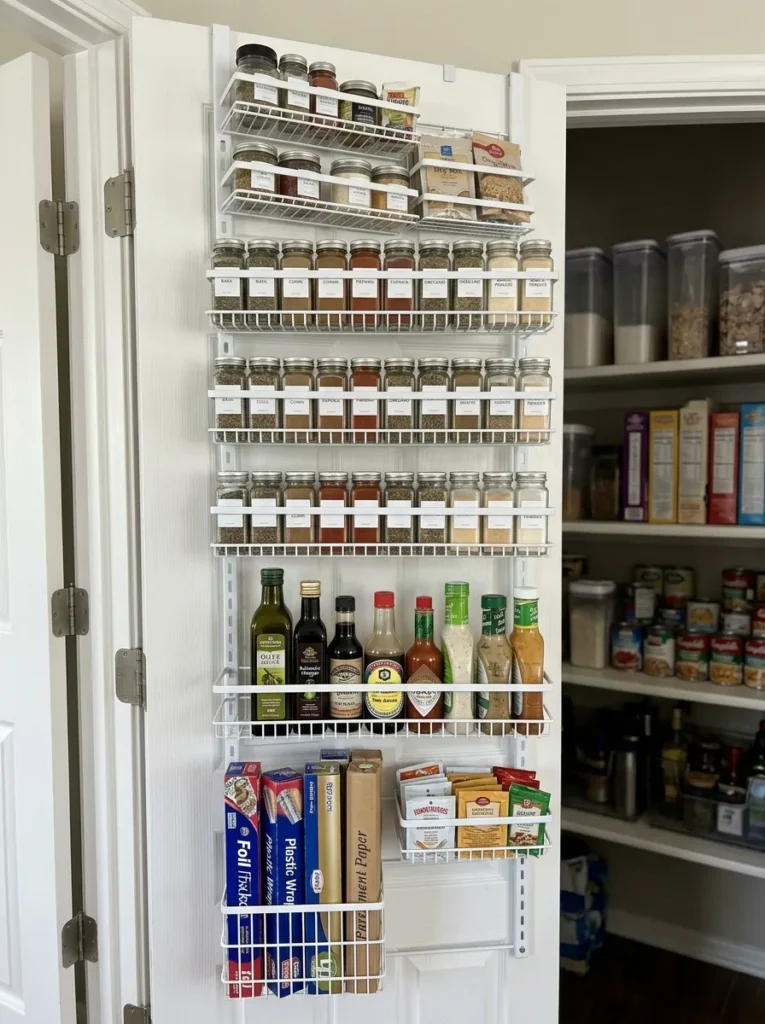
The inside of the pantry door is the most chronically underused surface in the entire kitchen — a flat, unobstructed plane of real estate that most households are leaving completely empty while their pantry shelves struggle with overcrowding. A door-mounted spice and condiment rack converts that blank door into a highly functional vertical storage zone that alone can free up an entire shelf inside the pantry.
- Over-the-door racks with adjustable shelves accommodate everything from spice jars to full condiment bottles
- A dedicated door rack means spices are always accessible without reorganizing other items to reach them
- Look for racks with a lip on each shelf — essential for preventing items from sliding off when the door opens and closes
- A full-height door organizer can hold 40–60 individual items: spices, sauces, foil boxes, sauce packets, and more
This is the pantry organization idea that homeowners wish someone had told them about ten years ago. Unanimous verdict.
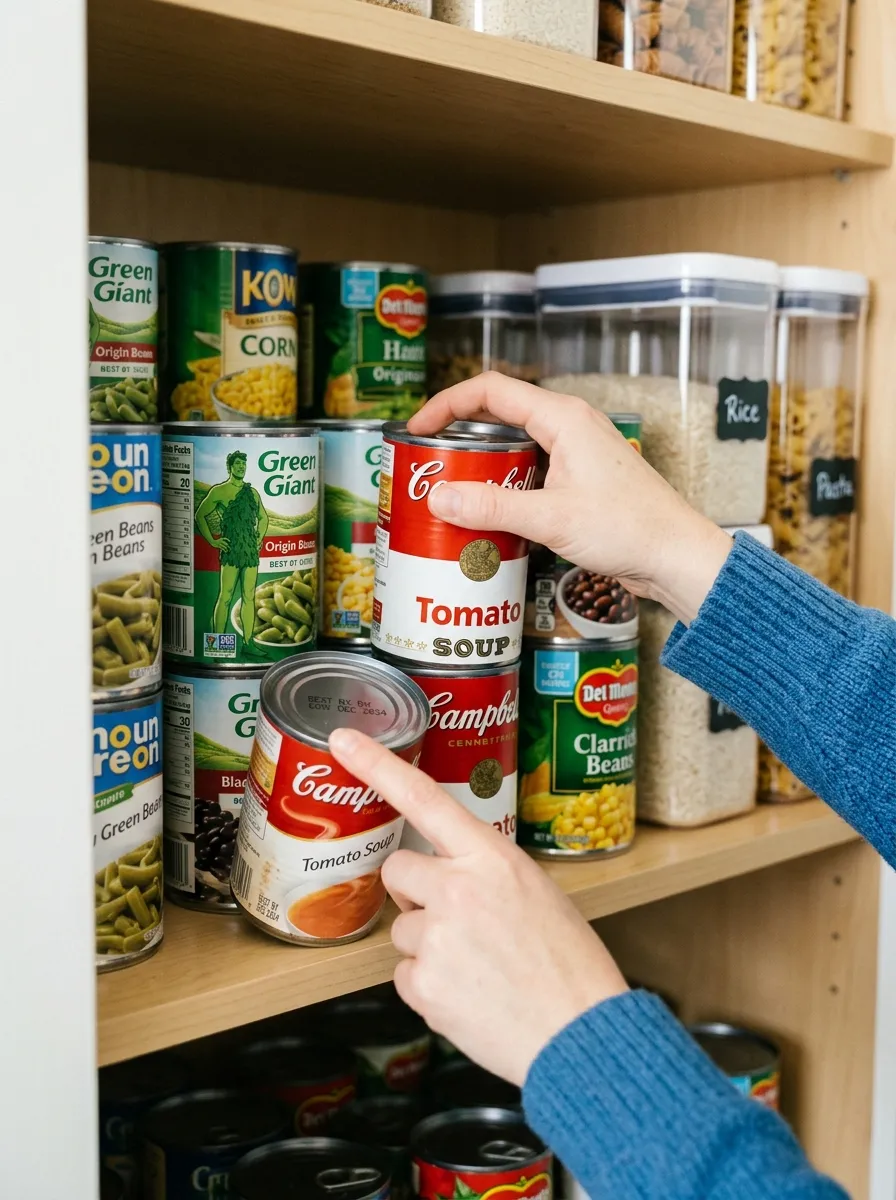
5. Invest in Tiered Shelf Risers for Canned Goods
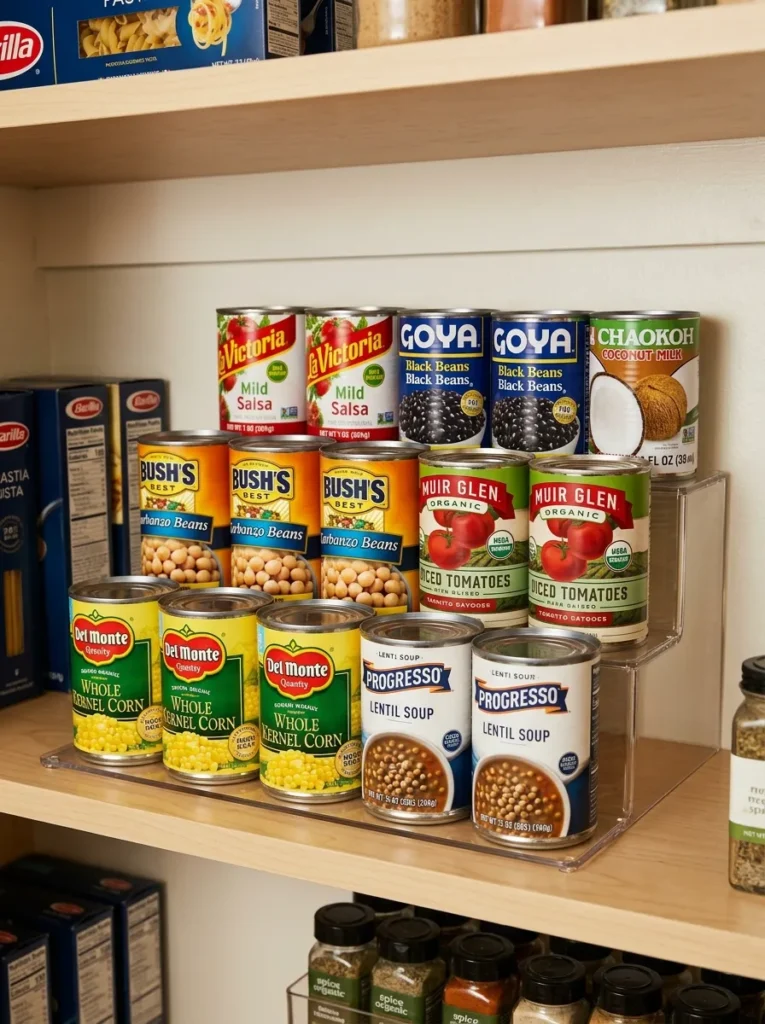
The canned goods shelf is where pantry organization ideas go to be tested — and usually fail. Stack cans two or three deep on a flat shelf and the ones in the back become mystery items that never get rotated and invariably expire. A tiered shelf riser solves this with elegant simplicity: it elevates the back rows so every can in every row is visible from the front. No digging, no guessing, no expired salsa from 2022.
- Three-tier risers are the most useful configuration for a standard pantry shelf depth
- Face every can label forward as items are placed in — this small habit pays daily dividends
- Dedicated tiered risers for spices (narrower tiers) are a separate essential for the spice zone
- Expandable versions can be adjusted to fit any shelf width without cutting or installation
Tiered risers are the unsung hero of pantry organization ideas. They cost almost nothing and make the canned goods shelf look professionally organized instantly.
This post contains affiliate links. If you buy something through them, I may earn a small commission at no extra cost to you.
6. Use Clear Bins for Snack and Packet Organization
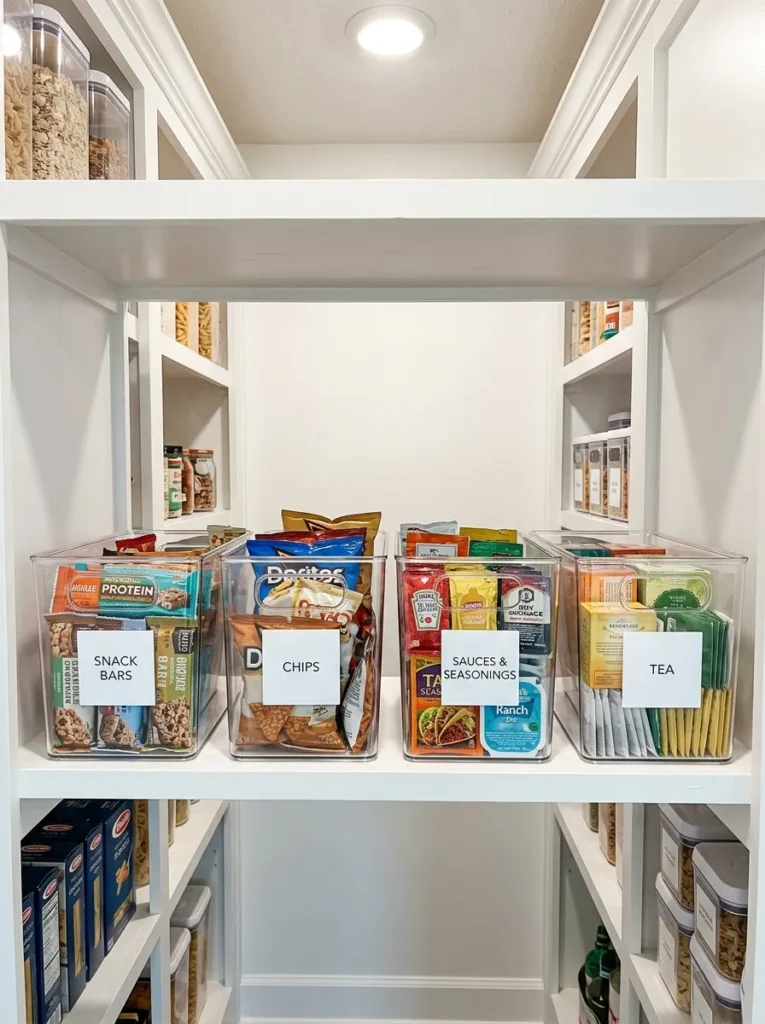
Loose snacks, individual packets, and small bags are the nemesis of pantry organization — they don’t stack, they don’t stand up, and they migrate constantly. The solution is to coral them into clear labeled bins that give the chaos a defined boundary. One bin for granola bars, one for chips, one for sauce packets — the category is contained, the shelf looks intentional, and finding a specific snack takes three seconds instead of a full pantry rummage.
- Clear bins allow contents to be identified without removing the bin from the shelf
- Label the front of each bin — printed labels look cleaner than handwritten for a more polished result
- Consistent bin sizing across the shelf creates the visual cohesion that makes a pantry look professionally organized
- Shallow bins (4–5 inches deep) work best for snack bags; deeper bins work for boxed items or larger packets
This is the pantry organization idea that families with children particularly appreciate — because it teaches even young kids exactly where the snacks live. Double-edged sword, perhaps, but organizationally sound.
Grouping items into designated zones using clear plastic bins keeps your inventory visible, an organizing habit that is crucial for conquering a tight small pantry organization layout.
7. Implement a First-In, First-Out Rotation System
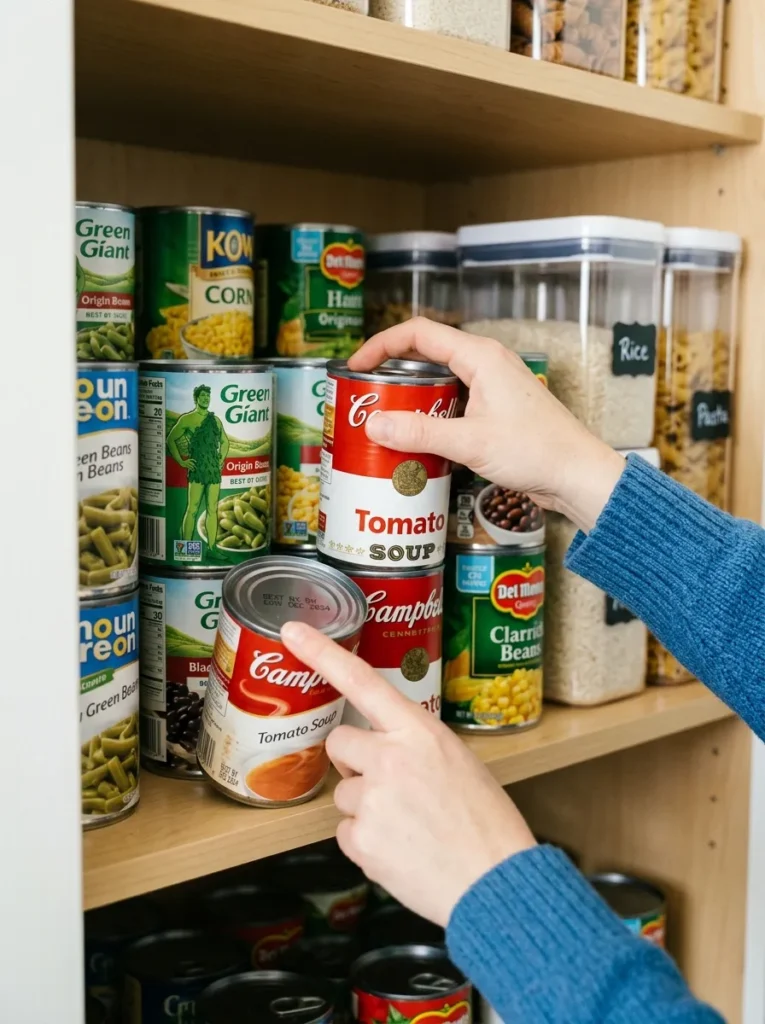
The most functional pantry organization ideas aren’t always about containers or hardware — sometimes they’re about habits. The first-in, first-out (FIFO) rotation system is the method used by every professional kitchen and grocery store in the world, applied to the home pantry. New purchases go to the back; older stock moves to the front. The item with the nearest expiration date is always the first one used. Food waste drops dramatically. The “what expired?” discovery on deep-clean day becomes a rarity.
- Every time groceries are put away, move existing stock forward and place new items behind
- This system works best in combination with tiered risers (idea #5) — the riser makes rotation effortless
- Apply to canned goods, dry goods, and any item purchased repeatedly
- Date-labeling items when bought is optional but helpful for households that buy in bulk
This isn’t glamorous. It’s not photogenic. But it is genuinely one of the most impactful pantry organization ideas in terms of real household savings. Food waste in the average household costs roughly $1,500 per year — and poor pantry rotation is a significant contributor.
8. Maximize Vertical Space With Stackable Storage
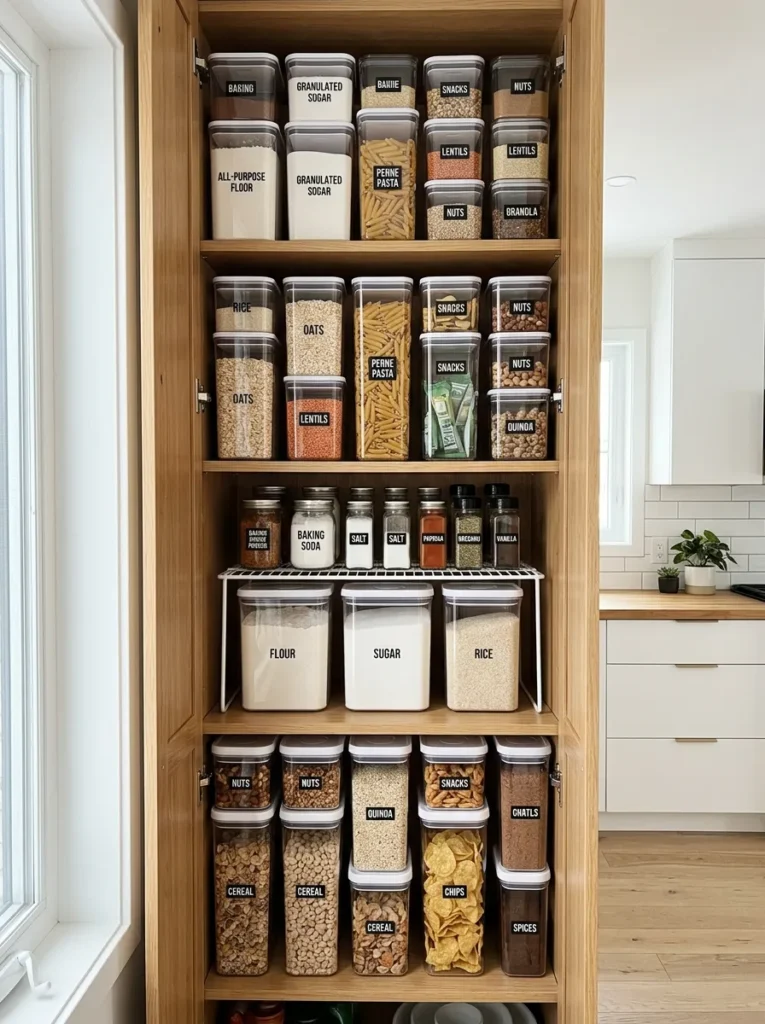
Most pantry shelves are spaced with the assumption that everything inside will be the same height — an assumption that is never true. The gap between the top of a box of pasta and the shelf above it is wasted vertical space, repeated across every shelf in the pantry, adding up to a significant amount of lost storage. Stackable containers and adjustable shelf dividers exploit that vertical gap and return it to functional use.
- Stackable clear containers specifically designed for dry goods click or nest securely without toppling
- A small adhesive shelf riser (half-shelf) can be added between two main shelves to create a mid-level for shorter items
- Boxes that are too tall for a shelf can often be stored on their side — check before assuming they won’t fit
- Adjustable pantry shelving systems allow shelf heights to be repositioned to match the actual contents
The pantry that uses its full vertical height has, functionally, more storage than the same pantry that doesn’t. That’s free space — and it requires only a bit of rethinking.
9. Create a Dedicated “Use First” Bin for Expiring Items
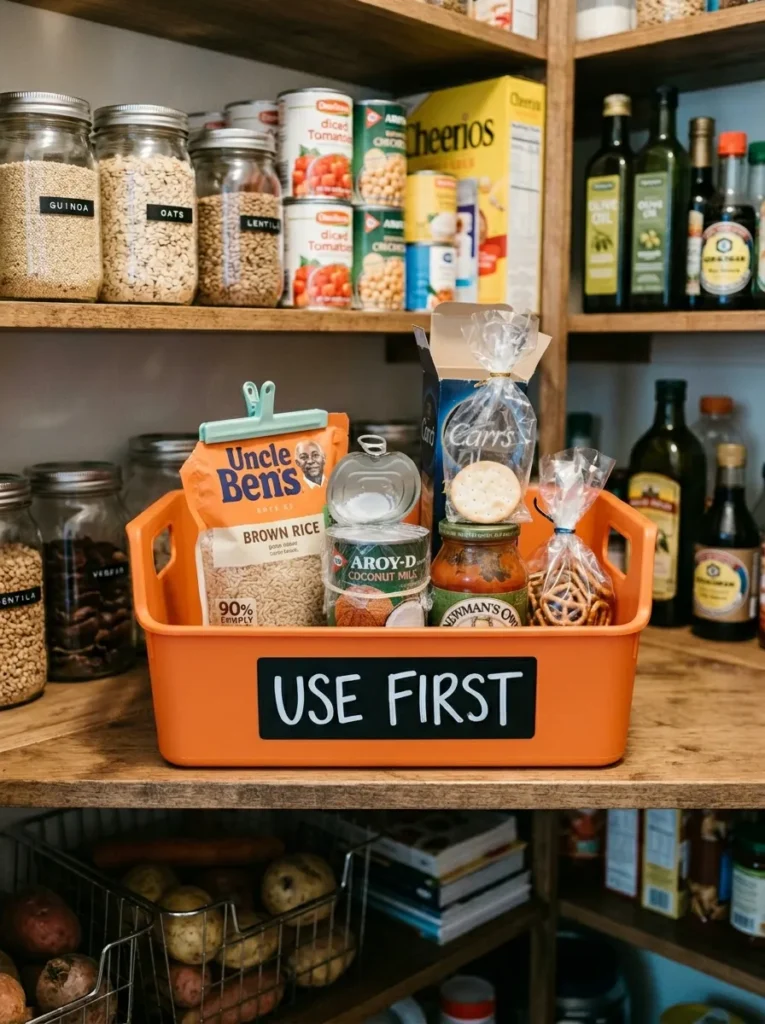
The final pantry organization idea is perhaps the most practically brilliant — and the least Instagrammable, which is probably why it doesn’t get talked about enough. A dedicated “Use First” bin placed at eye level on the most accessible pantry shelf holds any item that’s approaching its expiration date, has been opened and needs to be used up, or is a partial package that tends to get lost and forgotten. It’s the pantry’s equivalent of the urgent tray on a desk.
- One clearly labeled bin is sufficient — a simple chalkboard label or adhesive “USE FIRST” tag does the job
- Check the bin before meal planning each week — it often solves the “what should I make?” question automatically
- Move items into the bin as they’re noticed during regular pantry use, not only during deep cleans
- Keep the bin at eye level in the most prominent zone — visibility is the entire point
A “Use First” bin is the pantry organization idea that saves money quietly, consistently, and without requiring any lifestyle overhaul. It just works — every single week.
A truly organized pantry doesn’t just look good in photos — it makes every meal easier, every grocery run smarter, and every weeknight dinner less of an archaeological expedition. Start with zones and canisters, build the system from there, and let the pantry finally do the job it was always supposed to do.