9 Stylish Rug Under Dining Table Ideas for Every Aesthetic
This post contains affiliate links. If you buy something through them, I may earn a small commission at no extra cost to you.
Bare floors under a dining table look unfinished. Wall-to-wall carpet under a dining table looks like a stain waiting to happen. There’s a middle ground, and it’s a lot more forgiving than either extreme.
The right rug anchors the whole setup — visually and literally, since chairs stop skidding across hardwood. Let’s jump into the rug under dining table ideas that actually hold up to daily meals.
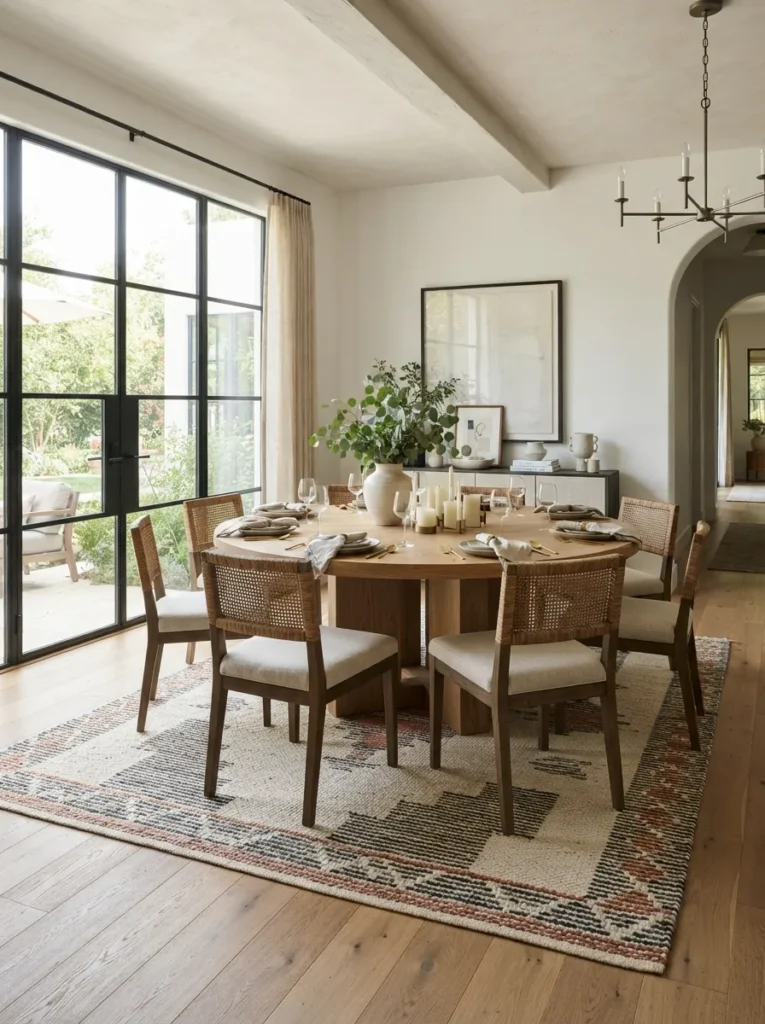
1. Size It Up — Way Up
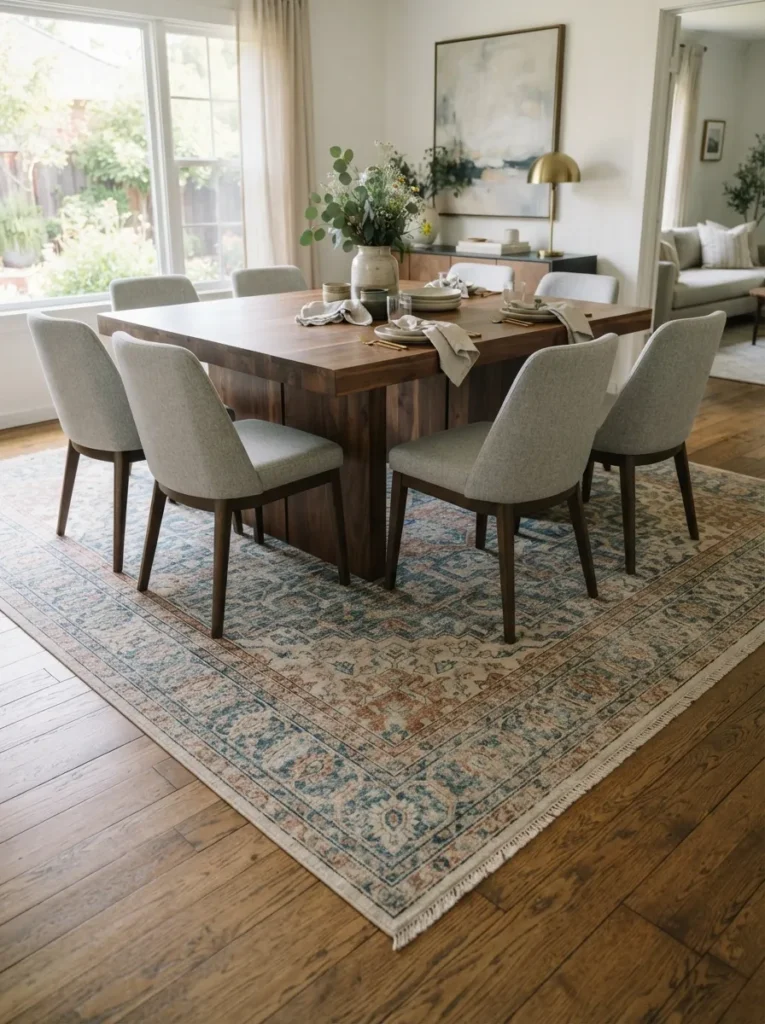
The single biggest rug mistake happens before pattern or color even enters the conversation: buying too small.
Every chair leg needs to stay on the rug, even when pulled out for someone to sit down.
- Rule of thumb: add 24–30 inches of rug beyond the table edge on all sides.
- A rug that’s too small makes chair legs catch the edge constantly — annoying at every single meal.
Material to avoid: thick shag piles. Chairs sink in and dragging them becomes a workout.
2. Flat-Weave for the Win
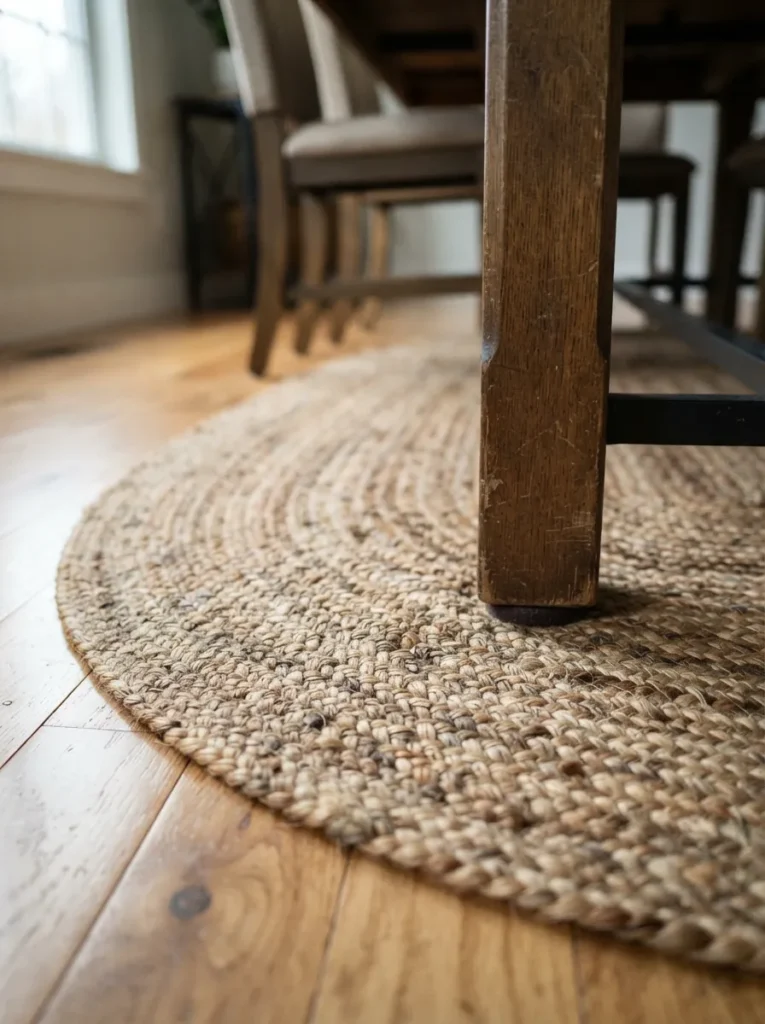
Flat-weave rugs are the unsung heroes of dining spaces. No pile means no crumbs hiding, no fibers snagging on chair legs.
They also sit low enough that doors swing freely and chairs glide instead of catching.
- Why it works: flush profiles handle daily wear without flattening or matting.
- Jute and wool flat-weaves both clean up fast with a quick vacuum.
Anyone who’s fought a plush rug after a spaghetti night already knows why this matters.
3. Let Pattern Do the Hiding
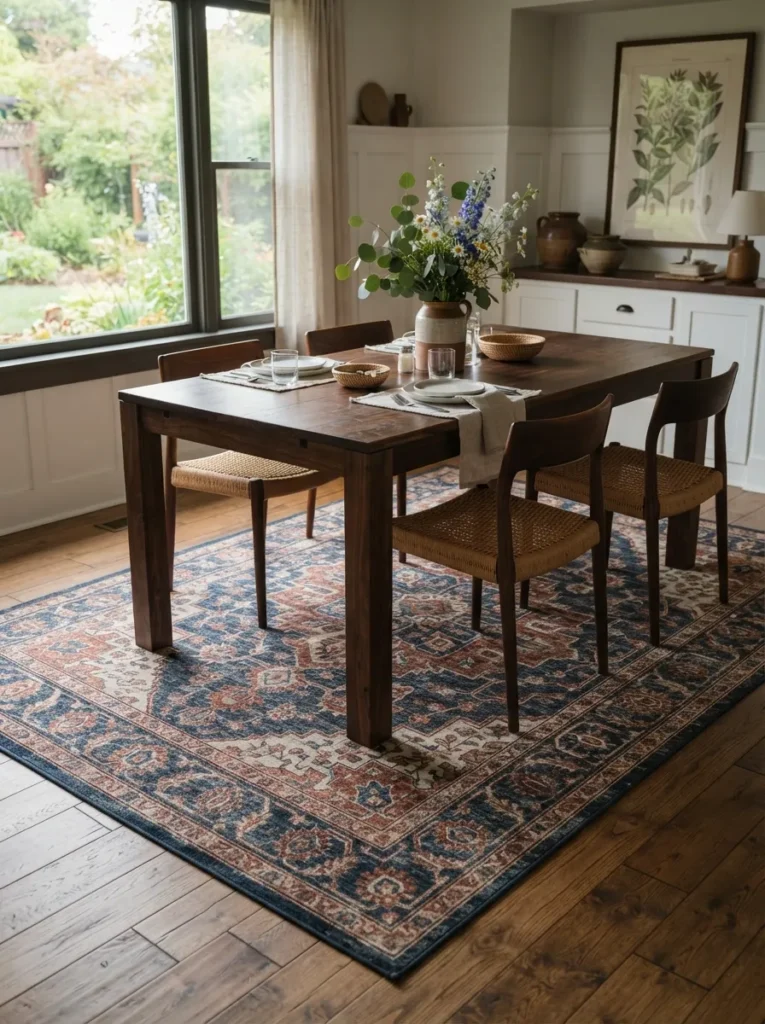
A busy pattern isn’t just a style choice — it’s camouflage. Spills, crumbs, and the occasional dropped meatball disappear into a good print far better than they do on a solid.
- Medallion and trellis patterns hide stains especially well.
- Darker tones in the palette forgive daily life faster than pale neutrals.
Design insight: pair a patterned rug with a simple, unfussy table. Two loud elements in one small zone starts to feel chaotic instead of curated.
4. Go Round Under a Round Table
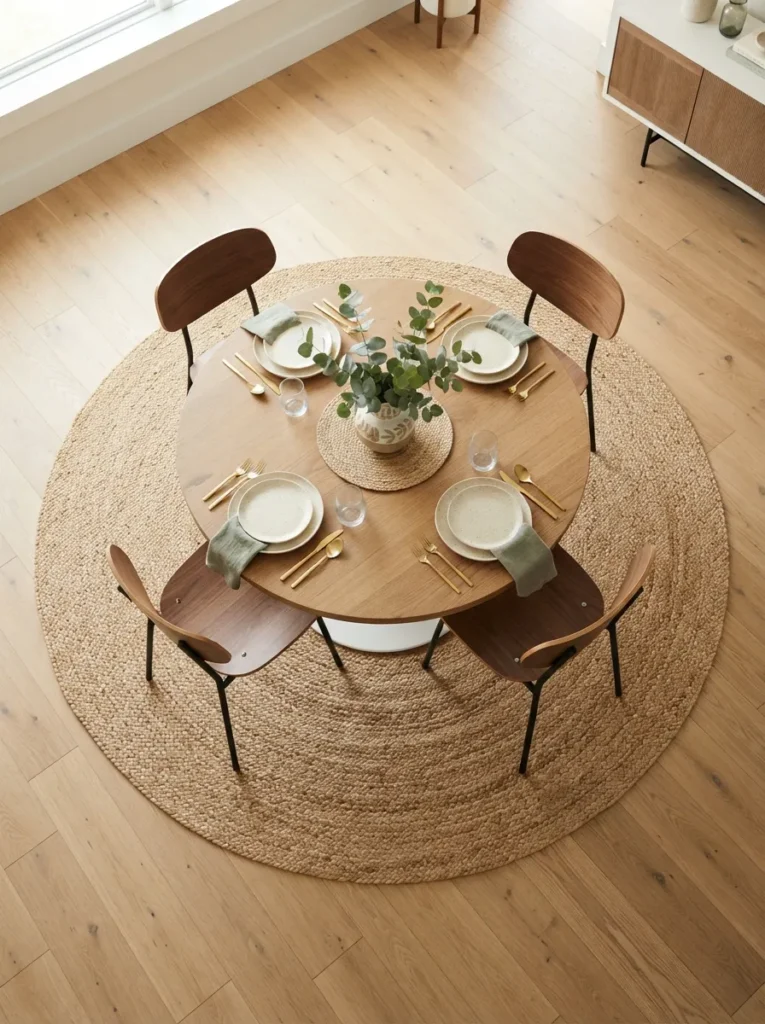
Matching rug shape to table shape sounds obvious, but it’s skipped constantly — usually because rectangular rugs are easier to find.
A round rug under a round table creates a clean, intentional echo instead of awkward corners poking out from under a curved edge.
- Measure the table diameter, then add at least 24 inches to the rug diameter.
- Round rugs also soften a room full of straight lines — sharp cabinets, square windows, boxy furniture.
Spatial tip: this pairing works especially well in smaller dining nooks, where round shapes reduce visual bulk.
5. Stain-Resistant Synthetics Aren’t Cheating
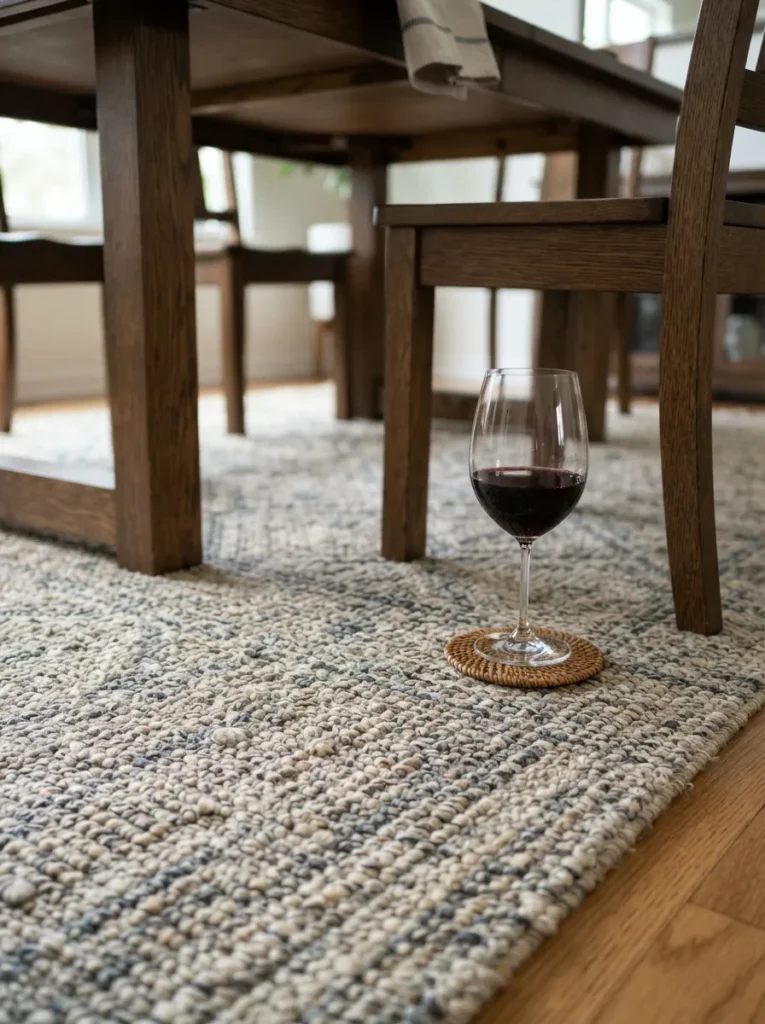
Natural fiber snobbery is real, but polypropylene and other synthetic-blend rugs have gotten shockingly good — and they laugh in the face of red wine.
mimics the look of wool at a fraction of the maintenance.
🛒 Check Price on AmazonHouseholds with kids, pets, or a genuinely unreasonable number of dinner parties benefit most here. Spills wipe up instead of soaking in.
Trade-off to know: synthetics can feel slightly less soft underfoot than natural wool. For a dining room, that’s a fair trade for durability.
6. Layer a Rug Pad Underneath
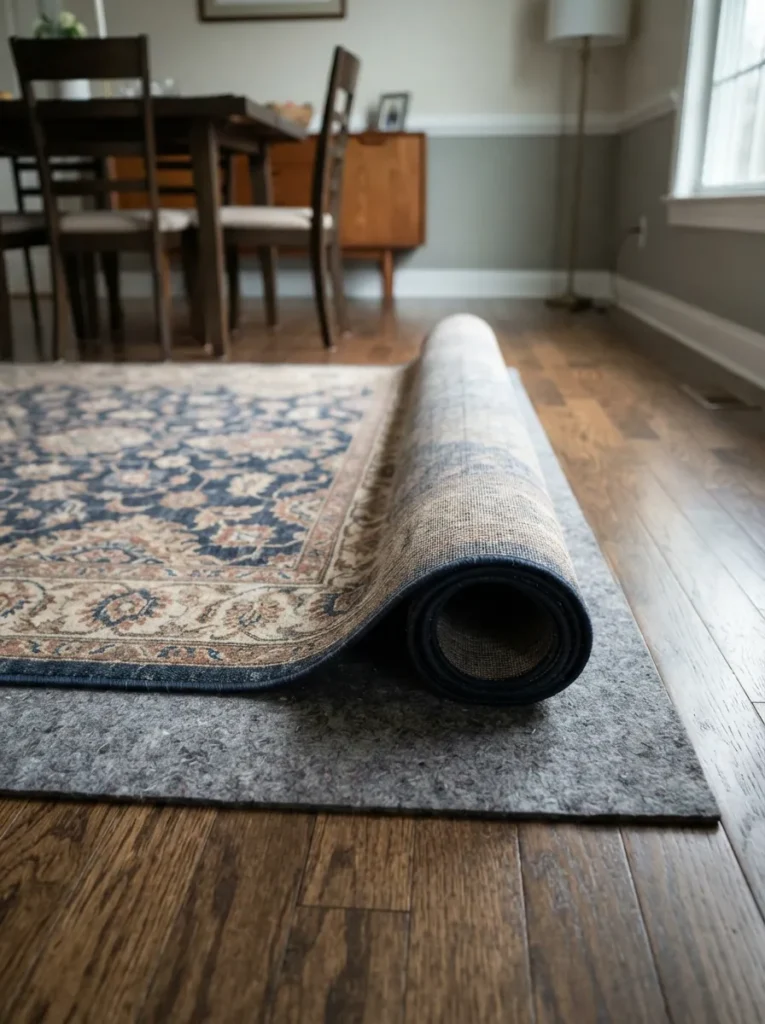
This isn’t a styling idea so much as a non-negotiable. A rug pad keeps everything in place, adds cushioning, and protects the floor underneath from scratches.
prevents shifting under heavy dining chairs and adds a layer of floor protection.
🛒 Check Price on AmazonWithout a pad, rugs on hardwood slide every time a chair scoots back. On top of that, trapped moisture from spills can damage flooring finish over time.
Lighting tip: pads also reduce the shadow gap under a rug’s edge, so the rug lies flatter and reads more polished under pendant lighting.
7. Neutral Doesn’t Mean Boring
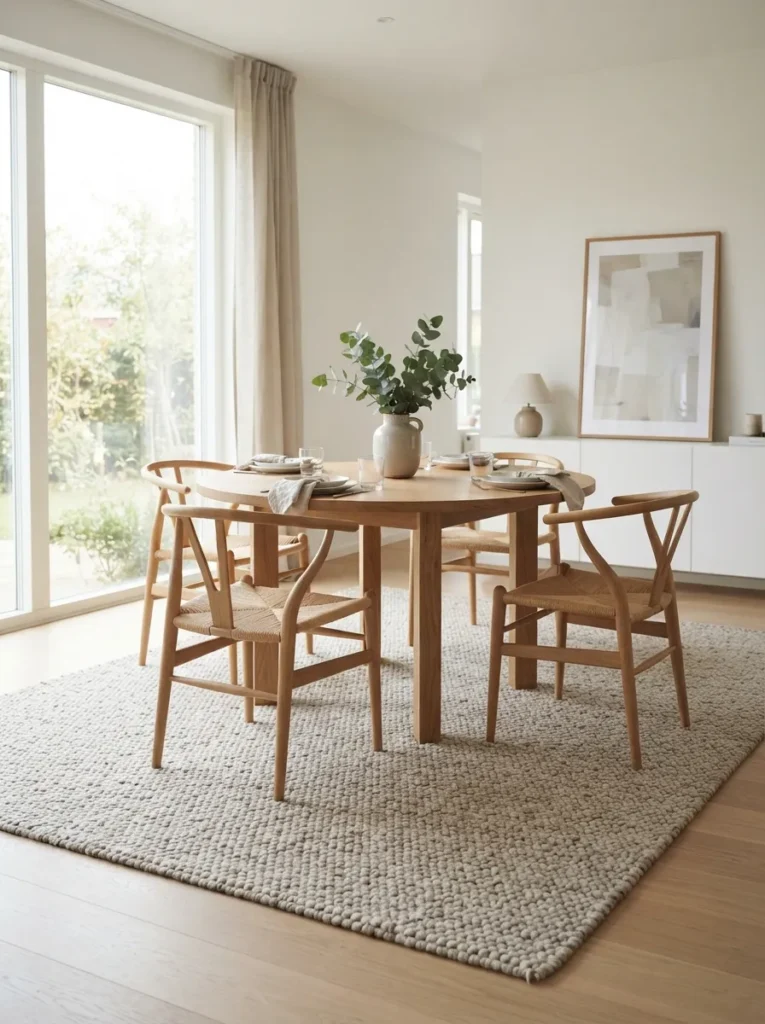
Not every space wants a bold statement rug, and that’s completely fine. Neutral rugs still bring texture and warmth without competing with an already busy room — wallpaper, art, a statement light fixture.
grounds the space without adding visual noise.
🛒 Check Price on AmazonLook for texture through weave variation rather than color. Herringbone, basket-weave, and chunky flat-weaves all add depth while staying quiet.
Why it works: neutral rugs also age better with changing decor trends, so the investment lasts through more than one design phase.
8. Layer Two Rugs for Depth
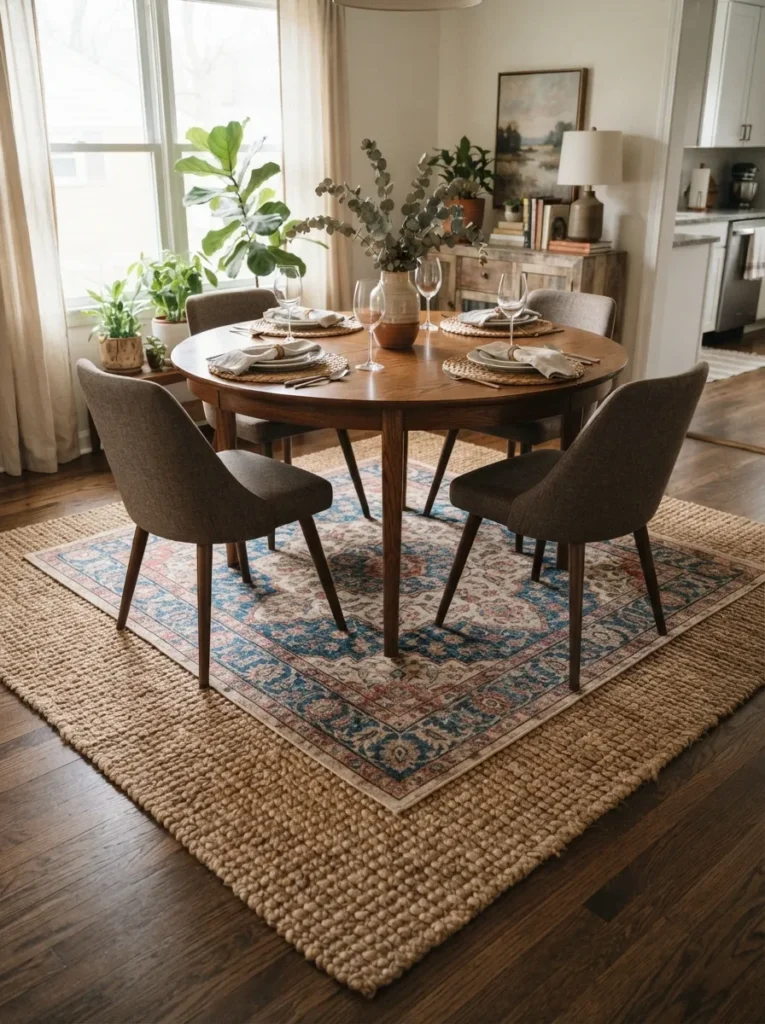
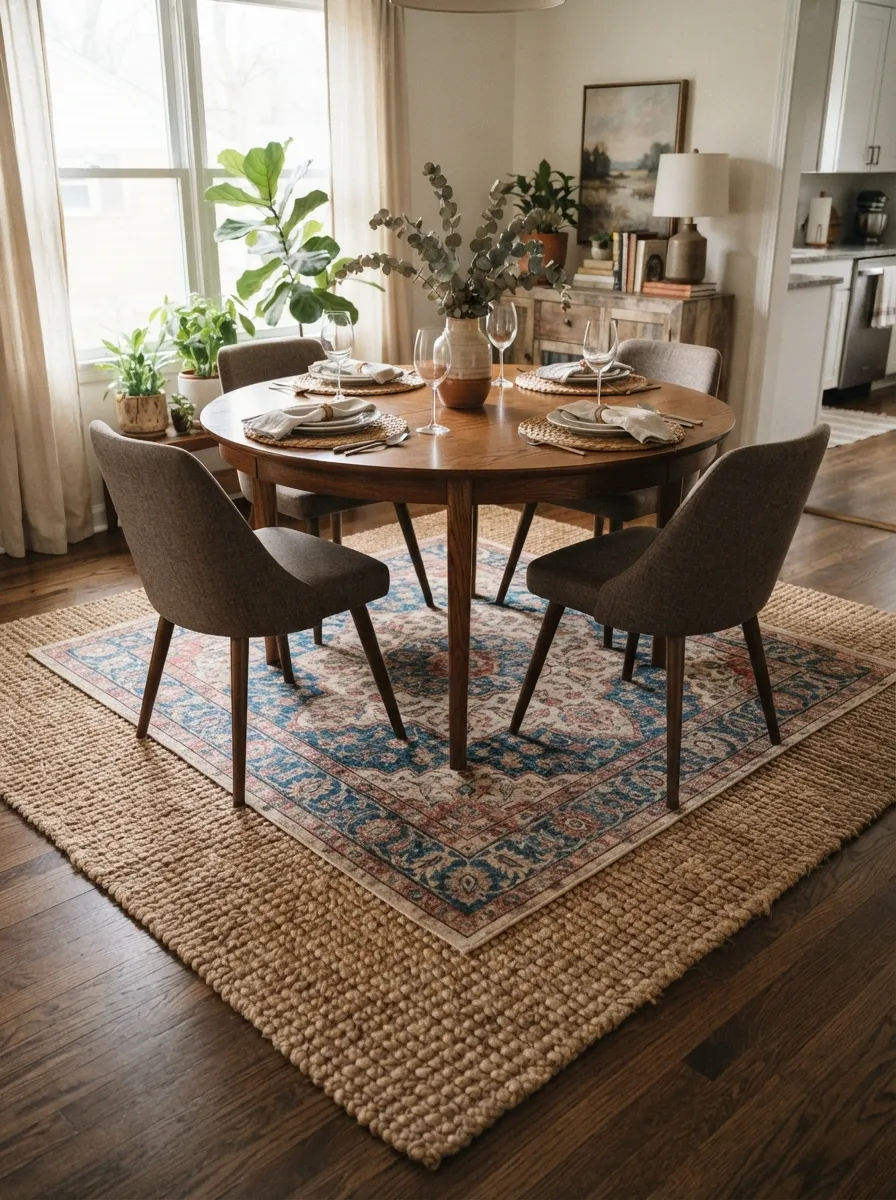
Rug layering isn’t just for living rooms. A jute base rug with a smaller patterned rug on top adds texture and dimension under a dining set — assuming the table doesn’t sit directly on the seam.
- Keep the top rug low-pile so chair legs don’t catch on an edge transition.
- This works best in larger dining areas with room to spare; tight spaces make the layered edges feel cramped instead of intentional.
Design insight: layering also lets a smaller vintage or patterned rug shine without needing it in an oversized, expensive format.
9. Match the Rug to the Flooring Tone
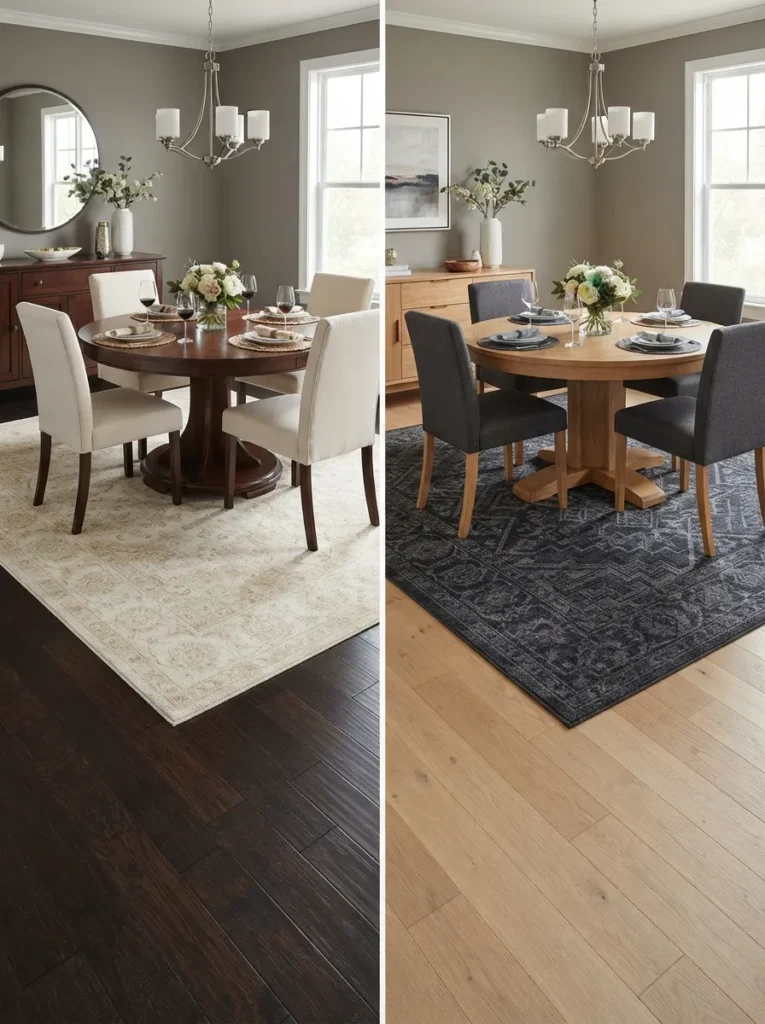
The most overlooked variable: how a rug relates to the floor beneath it, not just the furniture above it.
- On dark hardwood, a lighter rug creates contrast and keeps the room from feeling heavy.
- On light flooring, a deeper-toned rug grounds the space and prevents everything from blending together.
Pros: intentional contrast makes a dining area feel designed, not accidental. Cons to watch: too much contrast (near-black rug on pale oak, for instance) can look stark rather than styled — test swatches before committing.
Stop treating the rug as an afterthought — it’s doing more design work than half the furniture in the room. Pick the right size, the right texture, and dinner spills become a non-issue instead of a crisis.