11 Farmhouse Dining Room Rug Ideas for a Cozy Space
This post contains affiliate links. If you buy something through them, I may earn a small commission at no extra cost to you.
Bare wood floors under a farmhouse table look half-finished — like the room forgot to put pants on. A generic beige rug isn’t much better; it just adds a layer of boring on top of unfinished.
Farmhouse style thrives on texture, warmth, and a little imperfection. Let’s jump into the dining room rug ideas farmhouse spaces actually deserve.
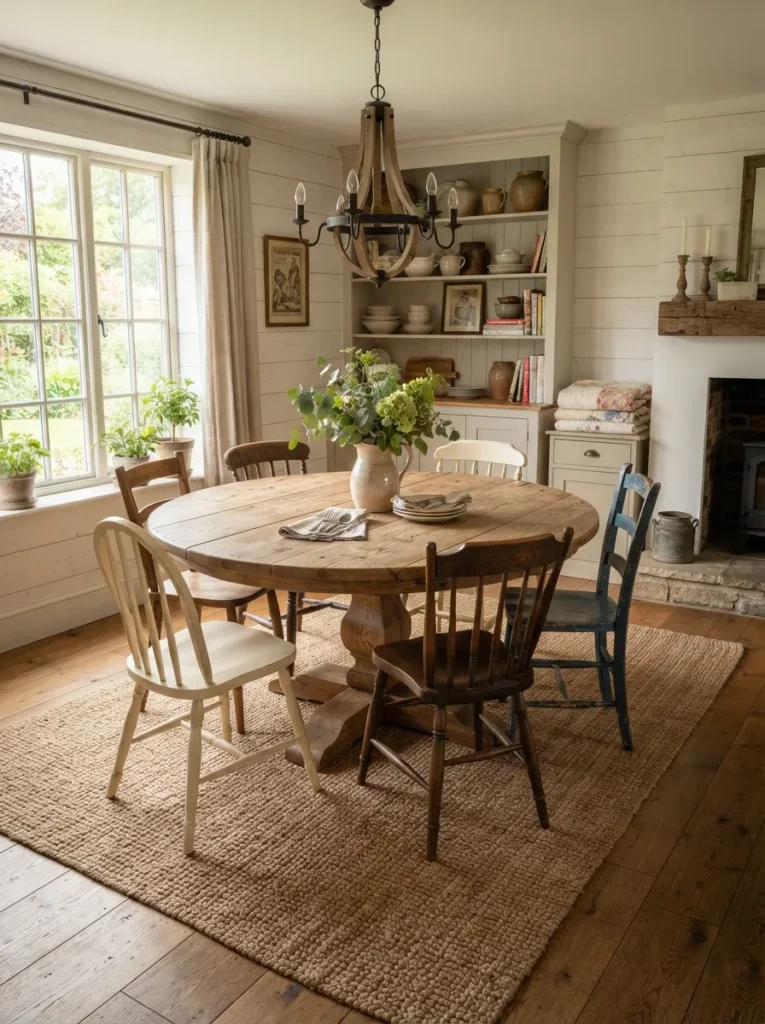
1. Jute for That Effortless Rustic Base
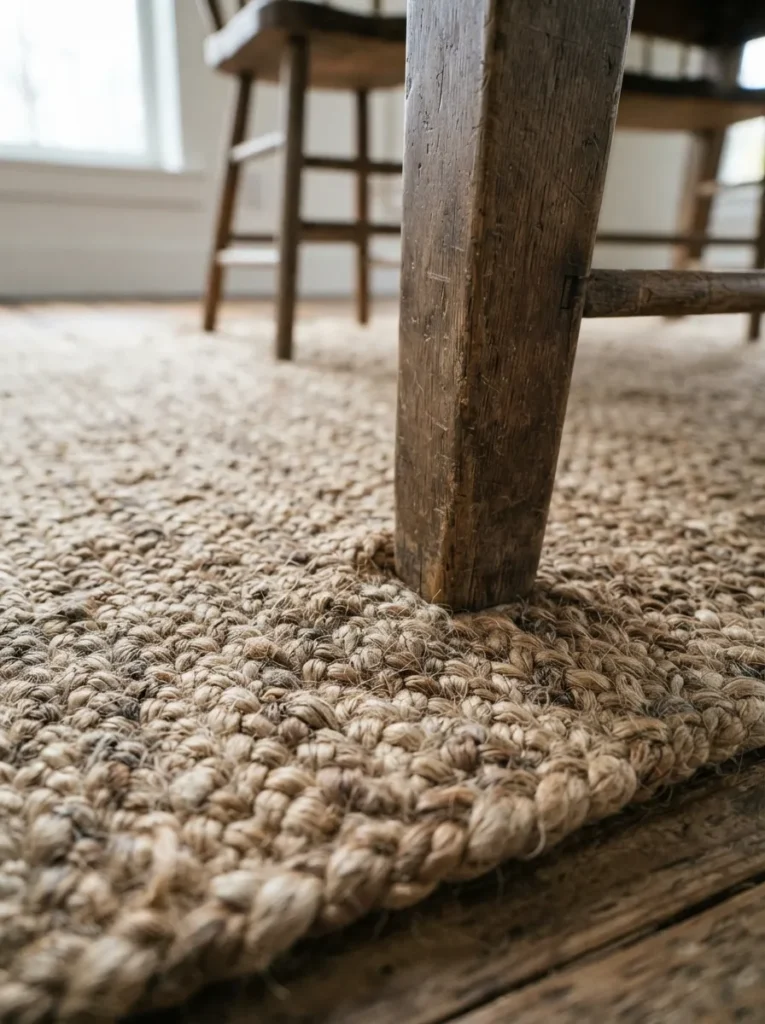
Jute is the backbone of farmhouse style — textured, imperfect, and completely at home under a distressed wood table.
Its chunky woven look adds warmth without competing with anything else in the room.
- Jute pairs beautifully with shiplap, exposed beams, and iron light fixtures.
- The natural fiber hides dust and crumbs far better than a flat solid ever could.
Material to avoid: jute stains easily with liquid spills, so it’s better suited to low-mess zones or paired with a protective mat under the table’s highest-traffic spot.
2. Sisal for a Slightly More Refined Texture
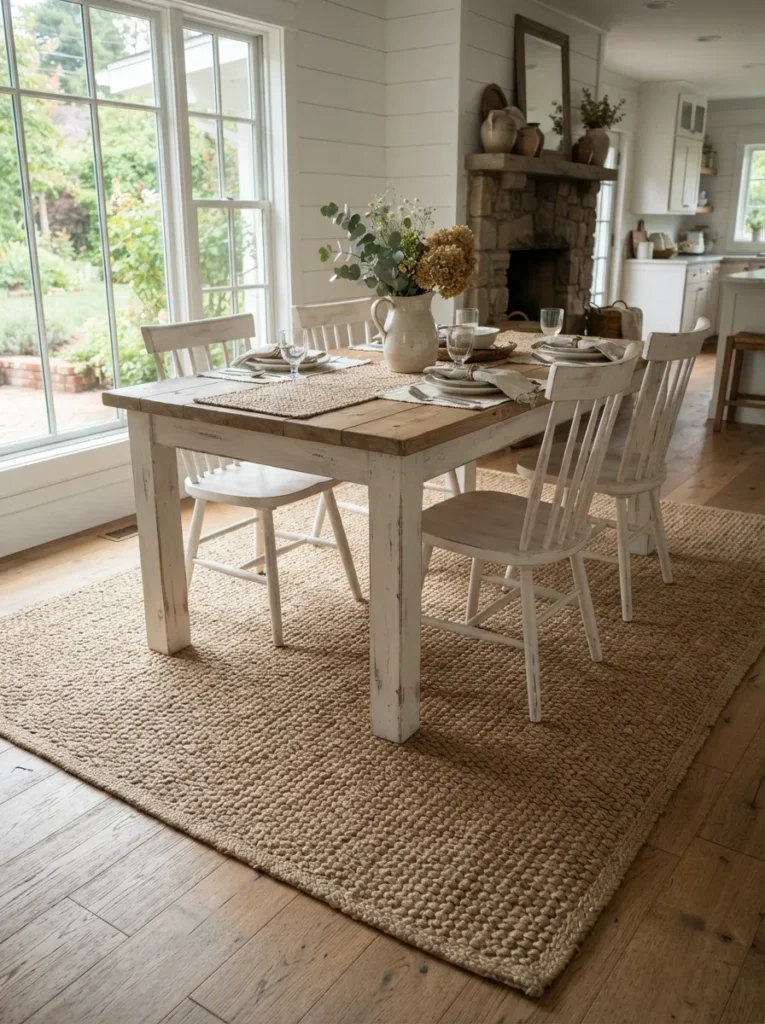
Sisal looks like jute’s tidier cousin — same rustic texture, cleaner finish, a bit more durability underfoot.
It handles daily wear better than jute, which matters enormously in a room where chairs scrape back and forth constantly.
- Sisal resists flattening under heavy furniture legs.
- The tighter weave makes vacuuming considerably less of a chore.
Design insight: sisal works especially well in farmhouse dining rooms with a lot of natural wood tones already in play — it echoes that same earthy palette instead of fighting it.
3. Distressed Vintage Prints for Character
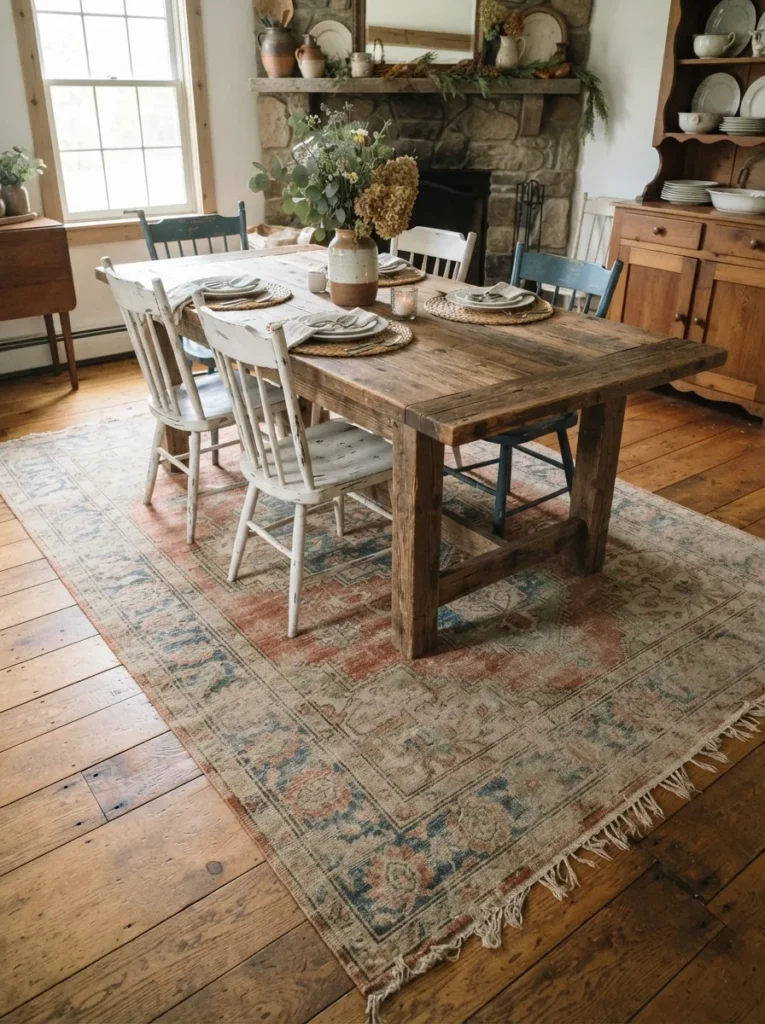
Nothing says “this room has a story” like a rug that looks like it’s already lived a full life somewhere else.
Distressed vintage prints — faded medallions, muted borders — bring instant depth to a farmhouse dining space.
- Muted reds and blues soften a room full of crisp white walls.
- The worn-in look hides stains and wear far better than a pristine new rug.
Why it works: farmhouse style leans into imperfection, so a rug that already looks a little weathered fits the aesthetic instead of undermining it.
4. Neutral Plaid for Cozy Structure
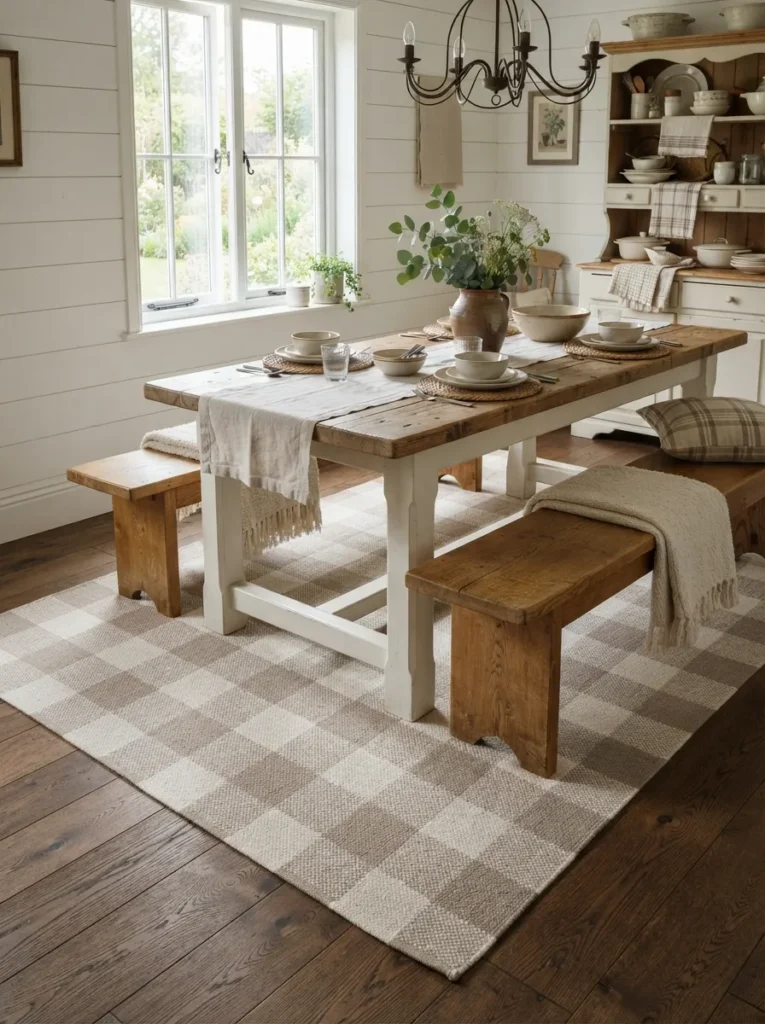
Plaid brings pattern without shouting. A neutral buffalo check or gingham grounds a dining space while keeping things cozy rather than busy.
- Pair plaid with solid linen chair cushions to avoid pattern overload.
- Cream-and-tan combinations feel softer than stark black-and-white for everyday dining.
Spatial tip: plaid rugs work particularly well in smaller farmhouse dining nooks, where the structured grid pattern makes the space feel more intentional and less cluttered.
5. Washable Low-Pile for Real Life
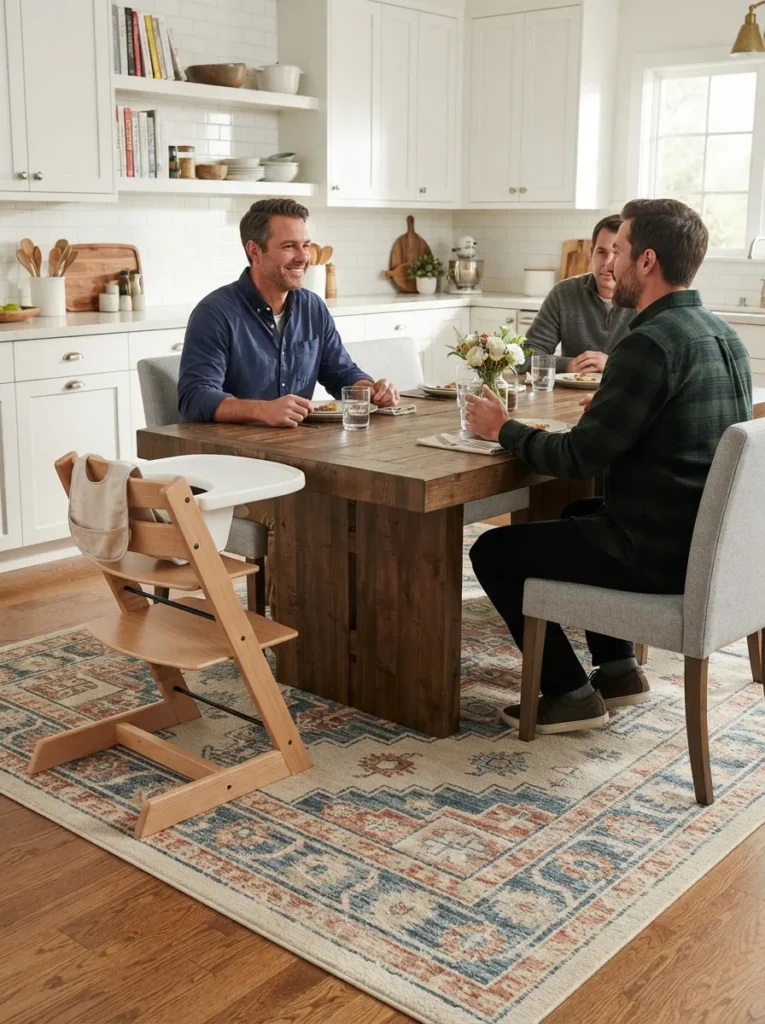
Farmhouse charm and toddler dinners don’t always mix well, which is exactly why washable low-pile rugs exist.
These rugs pull out of the room, toss into a washing machine, and go right back down — no professional cleaning required.
- Low-pile construction means chairs glide instead of catching.
- Machine-washable options handle spilled milk and dropped spaghetti without drama.
Trade-off to know: washable rugs often have a slightly flatter texture than jute or wool, so they read a touch more casual — great for daily use, less ideal for a formal dining room.
6. Muted Florals for Soft Farmhouse Romance
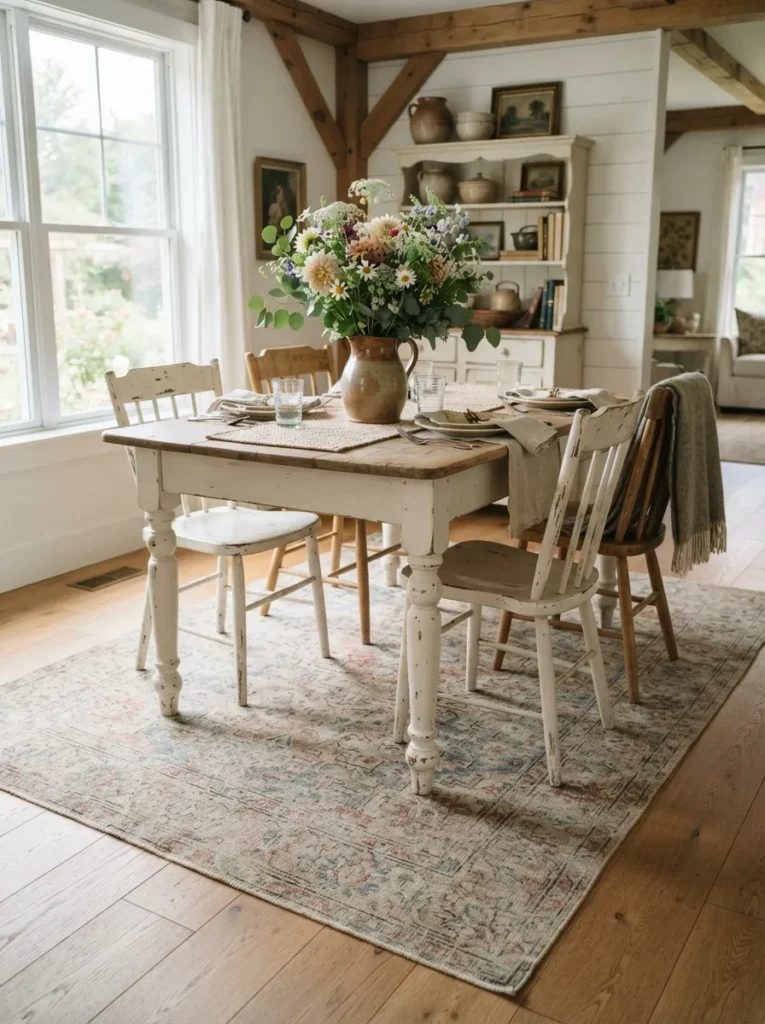
Florals don’t have to mean grandma’s parlor. Muted, faded floral rugs bring a soft romantic layer to farmhouse dining without tipping into overly sweet territory.
- Look for washed-out, antique-style florals rather than bright saturated prints.
- Sage green and dusty rose tones pair especially well with whitewashed wood.
Design insight: keep the rest of the room simple when a floral rug takes center stage. One statement piece is charming — two competing patterns starts to feel like a fabric store.
7. Layer Two Rugs for Farmhouse Depth
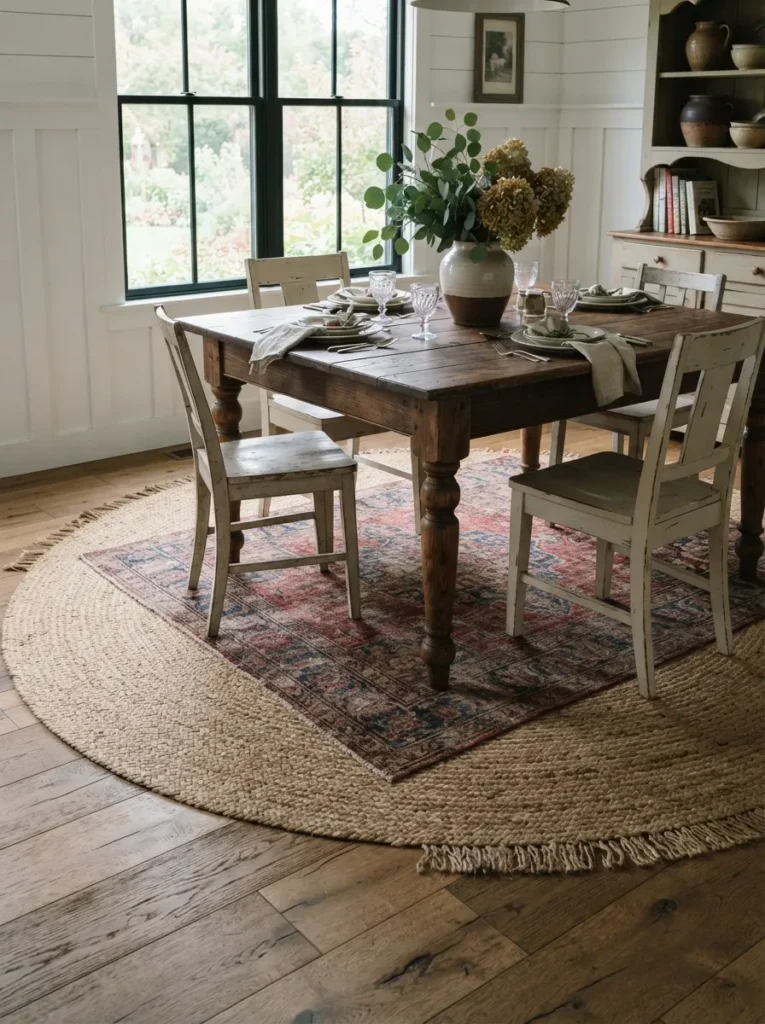
Layering isn’t just a living room trick. A large jute base with a smaller vintage or plaid rug on top adds farmhouse depth without needing an oversized statement piece.
serves as the ideal neutral base layer for a smaller patterned rug on top.
🛒 Check Price on AmazonThis approach also stretches budget further, since the top rug can be smaller and less expensive than sizing one statement rug for the whole table.
Con to watch: layered edges can create a slight lip that chairs occasionally catch on — keep the top rug thin and low-pile.
8. Round Rugs Under Farmhouse Pedestal Tables
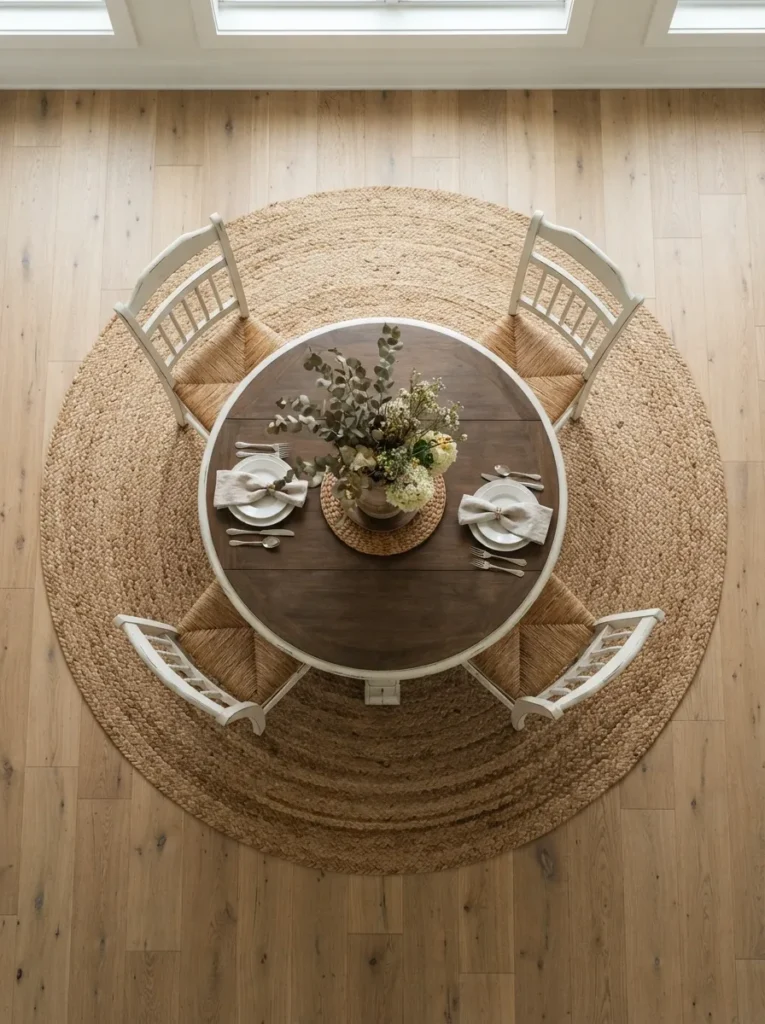
Farmhouse pedestal tables are having a real moment, and a round rug underneath completes the look far better than a rectangle ever could.
- Round rugs echo the curved table shape instead of leaving awkward corners exposed.
- They also soften a room full of straight-edged shiplap and square windows.
Spatial tip: measure the table diameter and add at least 24 inches to the rug diameter so chairs stay fully supported even when pulled out.
9. Herringbone Weave for Subtle Texture
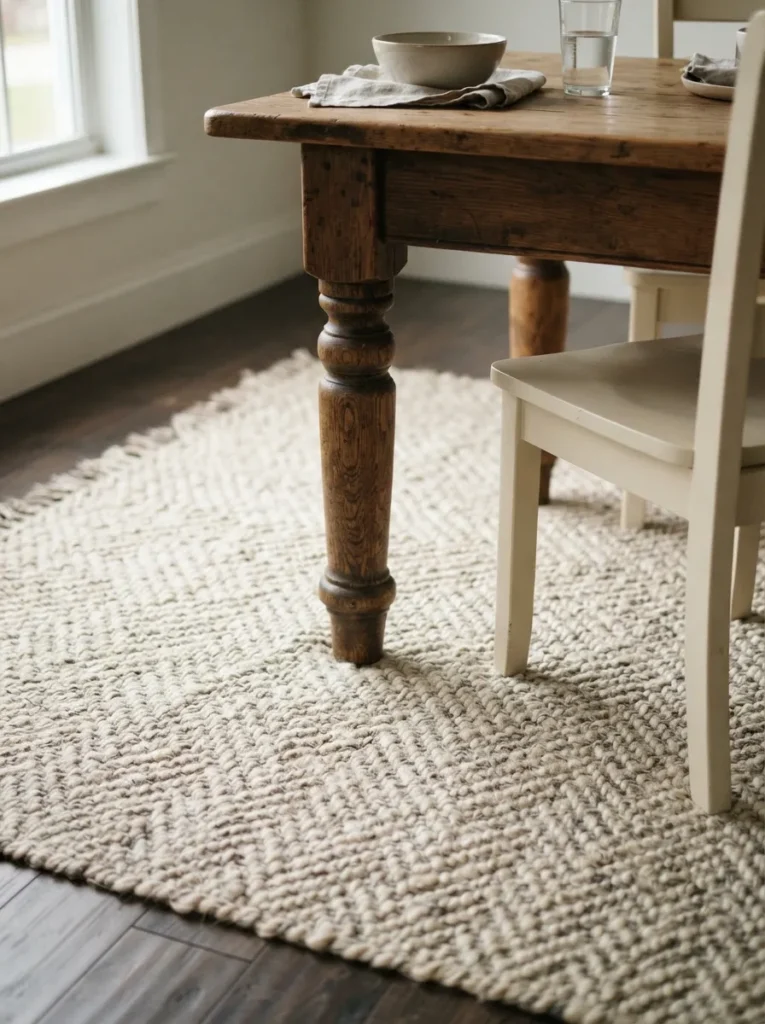
Not every farmhouse rug needs a bold print. Herringbone weaves add texture and visual interest through pattern in the weave itself, not color.
adds quiet texture without competing with existing farmhouse decor.
🛒 Check Price on AmazonThis works beautifully in dining rooms that already have a lot going on — open shelving, patterned dishware, a chunky wood table. The subtle texture adds interest without adding noise.
Why it works: herringbone also hides footprints and vacuum lines better than a flat solid weave.
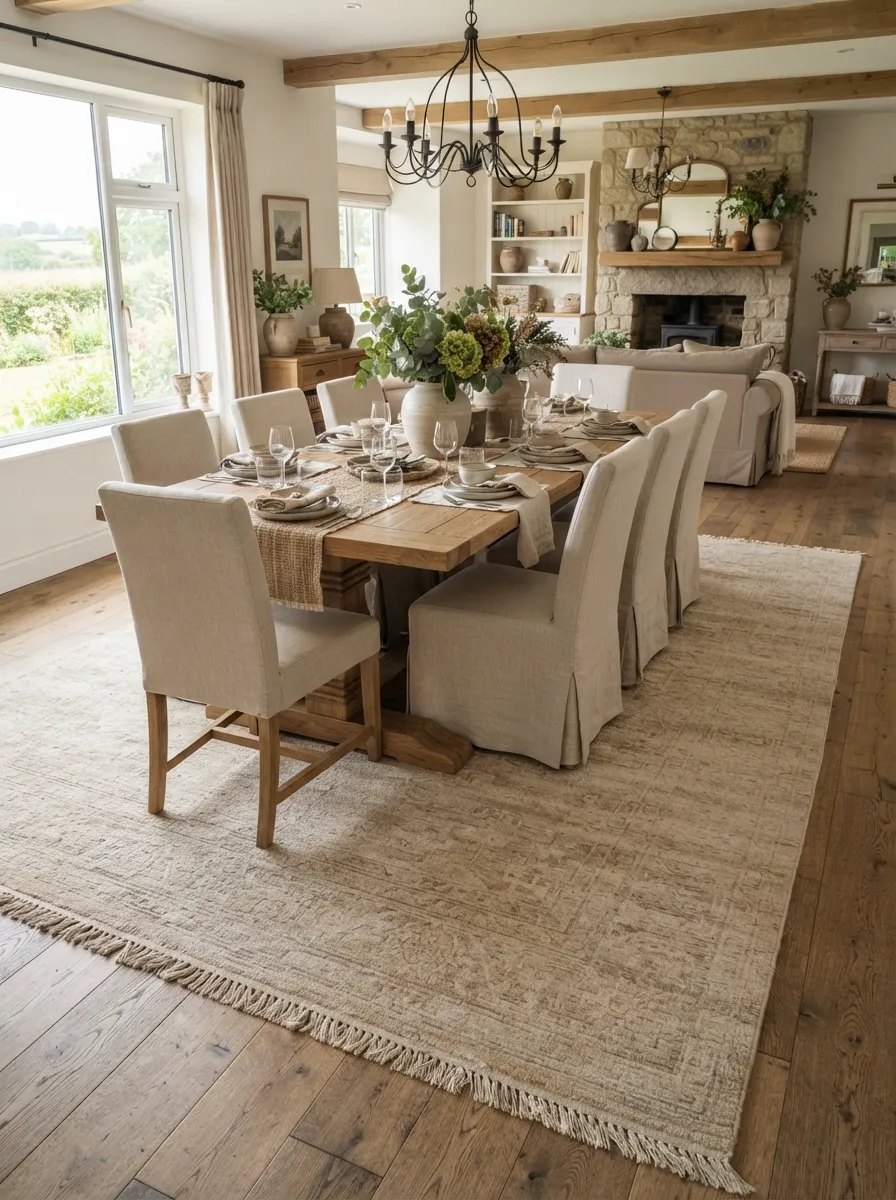
10. Oversized Rugs for a Grounded, Anchored Look
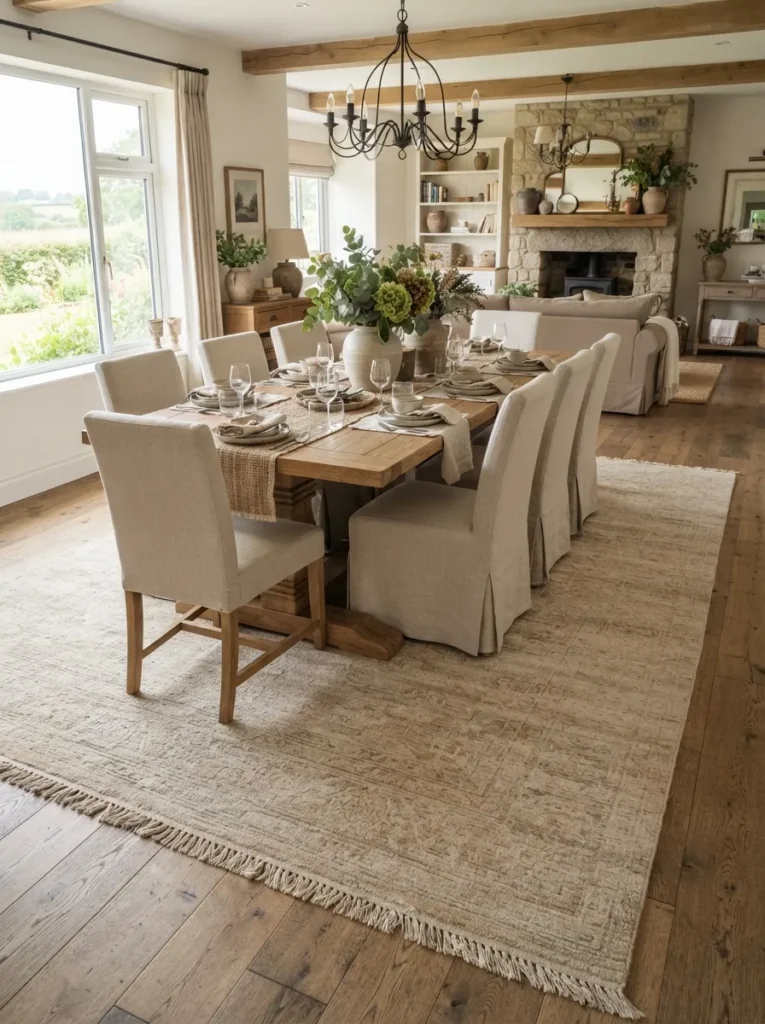
Undersized rugs are the number one thing making a farmhouse dining room feel awkward instead of pulled together.
sized generously enough to keep all chair legs on the rug even when pulled out.
🛒 Check Price on AmazonAn oversized rug — extending well past the chair legs on all sides — makes the whole dining zone feel deliberate rather than accidental.
Rule of thumb: add 24–30 inches of rug beyond the table edge on every side, more if the budget and room allow it.
11. Striped Flat-Weaves for Modern Farmhouse Edge
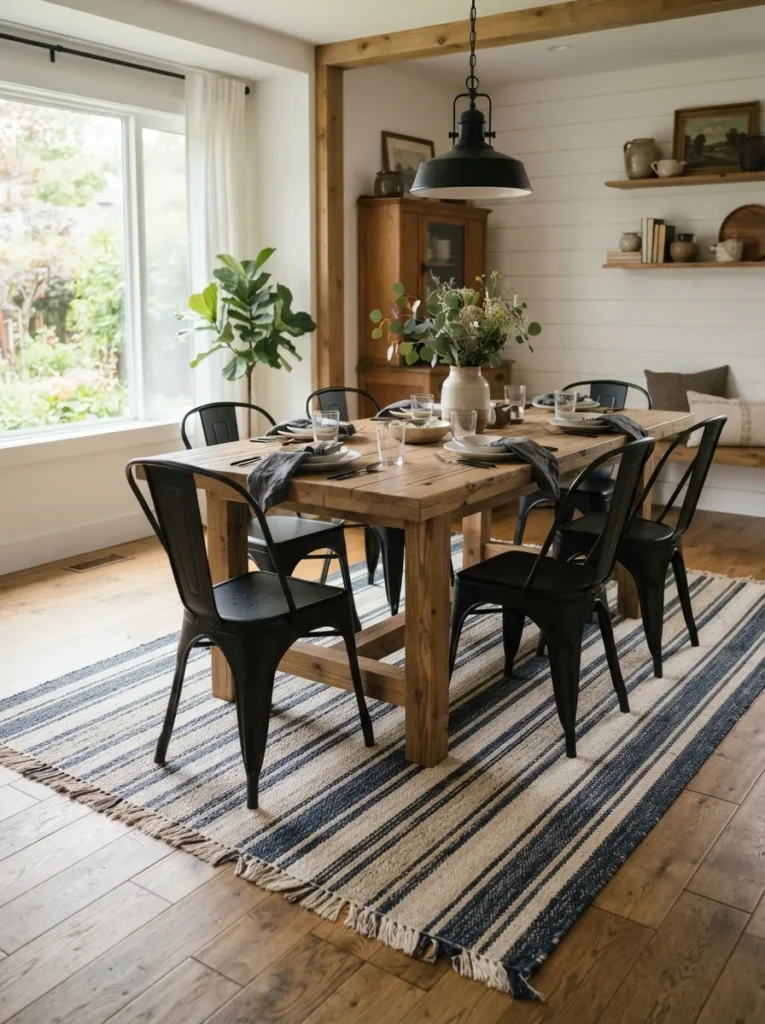
Modern farmhouse leans a little cleaner, a little less rustic-cabin — and striped flat-weave rugs deliver exactly that balance.
- Horizontal stripes visually widen a narrow dining room.
- Muted stripe colors (charcoal, cream, soft clay) feel farmhouse-appropriate without looking dated.
Design insight: pair a striped rug with black metal chair frames for a modern farmhouse contrast that still feels warm thanks to the rug’s texture underneath.
Farmhouse dining rooms live or die by texture, and the rug is doing more heavy lifting than most people realize. Pick one with real character, size it generously, and that table finally gets the grounded, cozy setup it’s been missing all along.