11 Small Japandi Living Room Ideas Big Calm
A small living room is not a design problem — it’s a design excuse, and it’s time to stop using it. If your compact space currently feels like a storage unit with a sofa in it, the issue isn’t the square footage, it’s every choice that’s been made inside it.
Japandi was practically invented for small spaces: low furniture, light palettes, zero clutter, maximum breathing room. Let’s jump into 11 ideas that prove a small japandi living room can feel bigger, calmer, and more intentional than rooms twice the size.
1. Low Furniture Only — Every Inch of Wall Space Is Yours
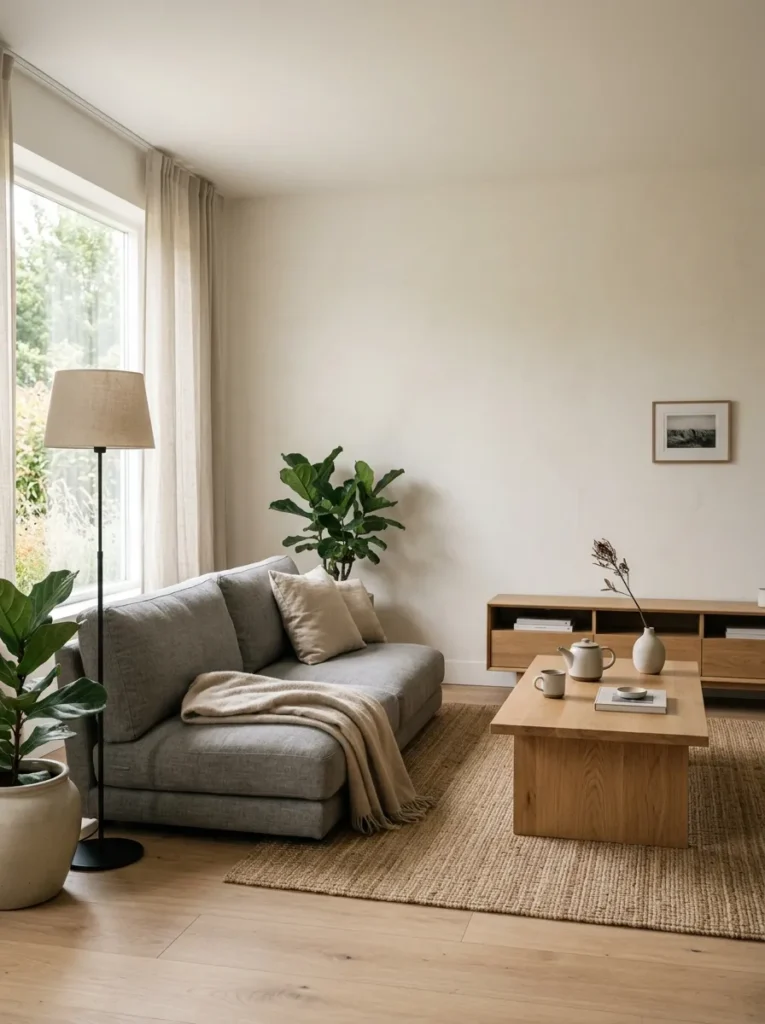
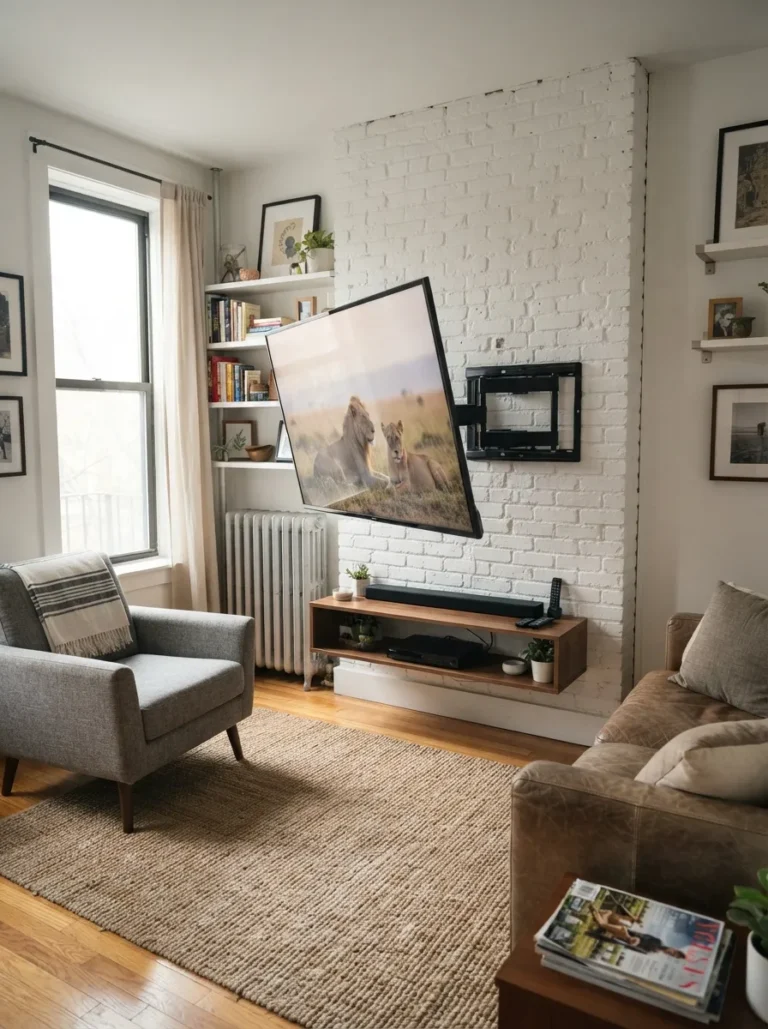
In a small room, tall furniture is the enemy — it chops the wall into awkward segments and makes the ceiling feel lower by comparison. Low-profile everything is the first and most important rule of the small japandi living room.
Low-Profile Solid Oak TV Media Unit
its floor-hugging silhouette keeps visual weight down and wall space free in any compact Japandi living room.
Check Price & Options on Amazon →- Sofas under 70 cm in height, coffee tables under 40 cm, shelves mounted low on the wall
- The eye travels upward when furniture is low — and suddenly the ceiling feels miles away
- Avoid bookshelves taller than 120 cm unless they’re built-in and flush with the wall
- Low furniture also makes the room feel safer, calmer, and more grounded — not just bigger
2. The One-Rug Rule for Small Japandi Living Room Proportions
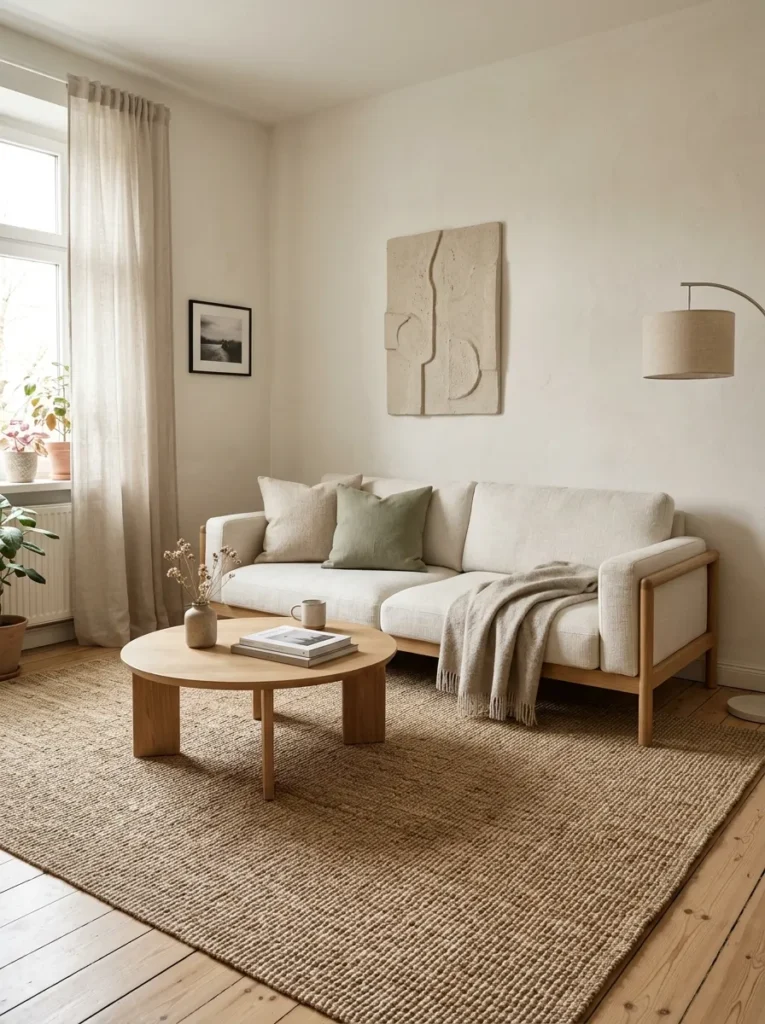
Most small room rug mistakes come from going too small — a tiny rug in a small room just outlines how small everything is. Counter-intuitively, a large rug makes a small japandi living room feel more expansive, not more cramped.
- Size up, always: the rug should extend at least 30 cm beyond each side of the sofa
- Natural fibers — seagrass, jute, sisal — in a single flat weave keep things visually quiet
- A large, pale rug unifies the seating area and signals “this is a complete, considered space”
- Avoid rugs with bold borders or geometric patterns; they cut the floor into sections, which shrinks the perception of space
One rug, the right size, in the right tone — that’s it. That’s the whole idea.
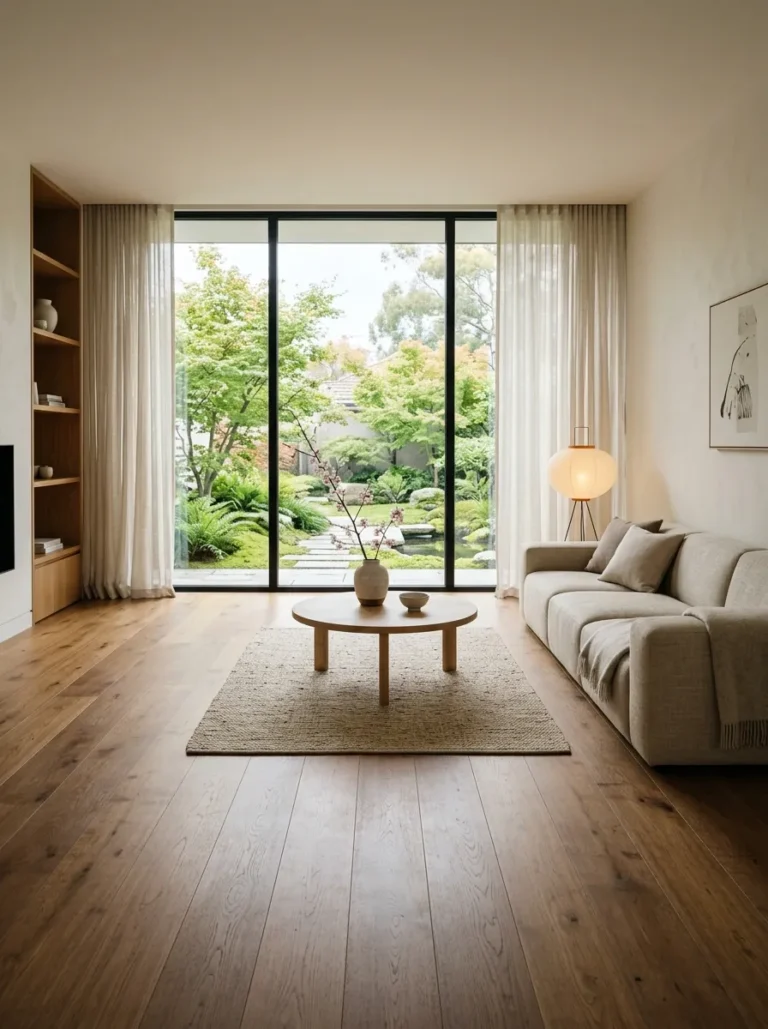
3. Sheer Floor-to-Ceiling Curtains That Lie About the Window Size
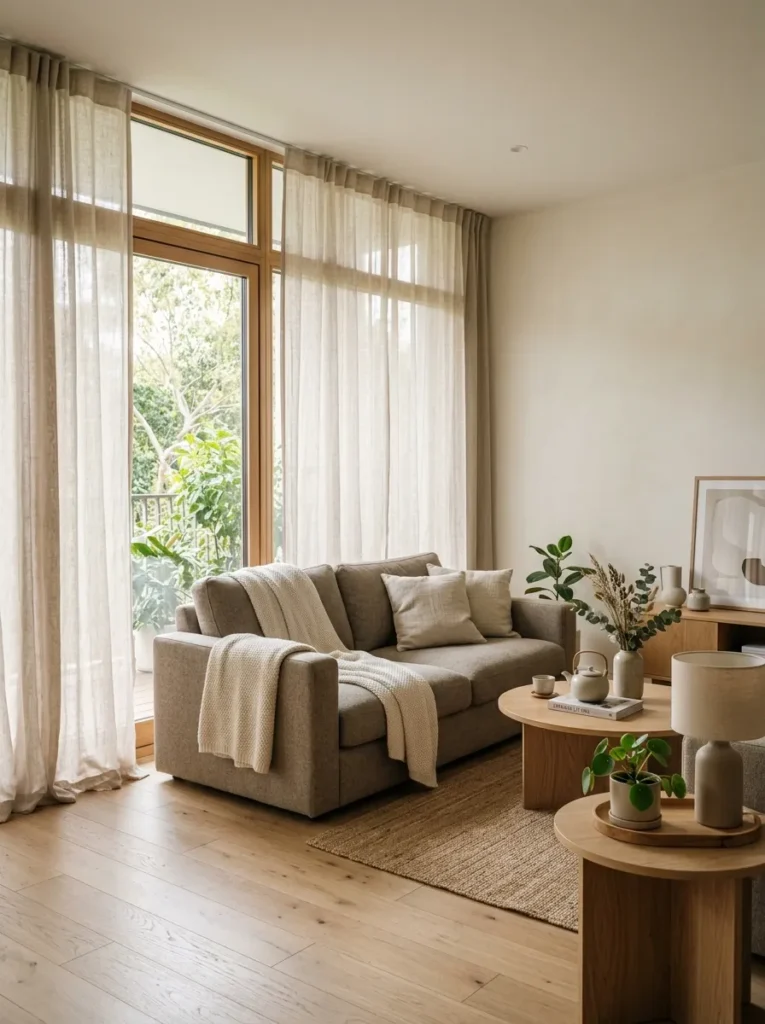
Hanging curtains exactly at window width is a crime against small rooms everywhere. Hang them wide, hang them high, and let the sheer linen do the spatial magic it was born to do.
Sheer Linen Curtain Panels in Warm White, Floor-to-Ceiling Length
hung beyond the window frame, these create the illusion of a grand window in even the most modest small japandi living room .
Check Price & Options on Amazon →- Mount the curtain rod as close to the ceiling as possible — not just above the window
- Extend the rod 30 to 40 cm beyond each side of the window frame
- Sheer panels in warm white or oat let light flood through while softening the view
- The result looks like you have enormous windows — and nobody needs to know the truth
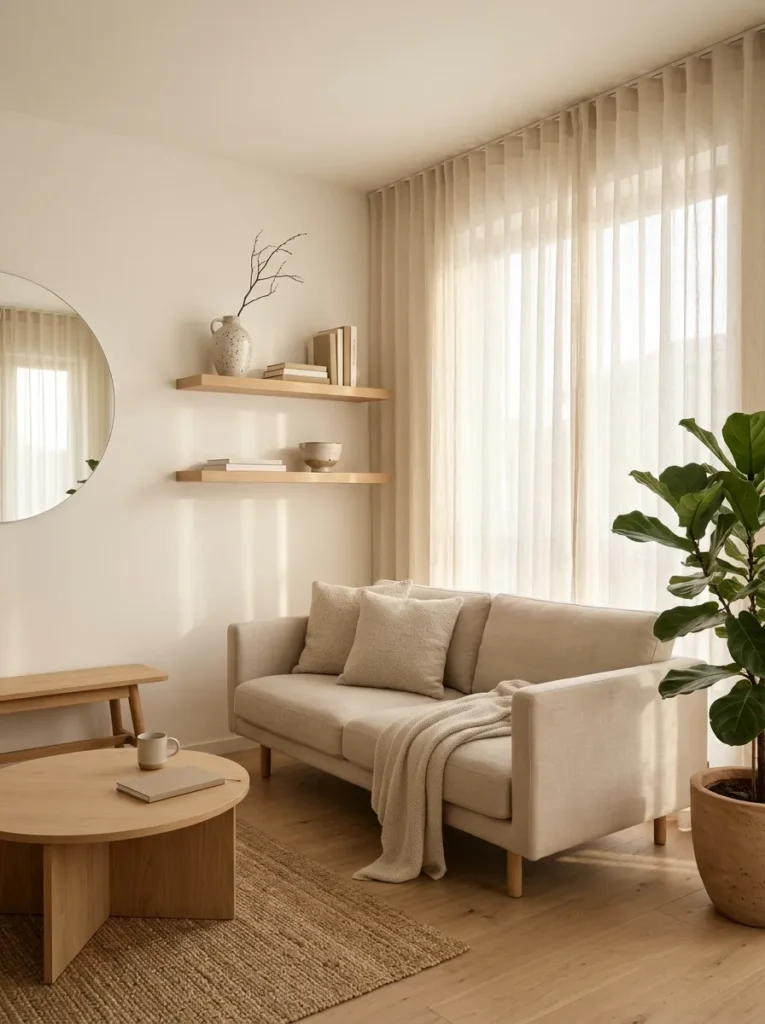
4. Floating Shelves Instead of Furniture That Eats Floor Space
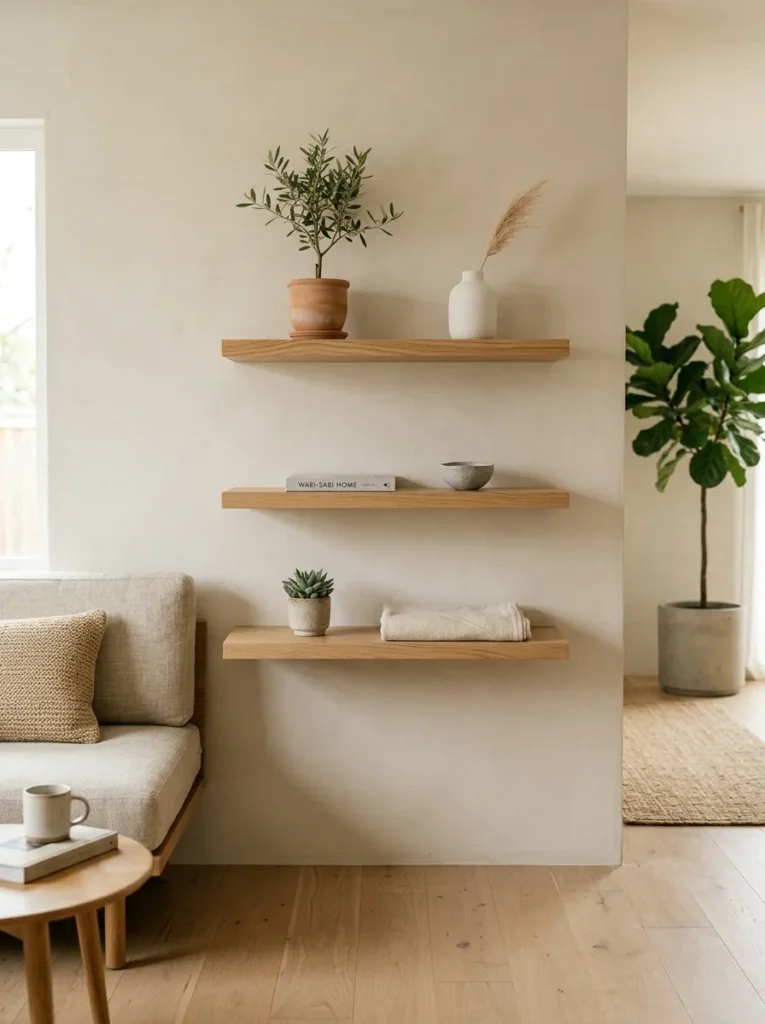
Every piece of furniture with legs on the floor is using up visual square footage. Floating shelves store and display without touching the ground — which means the floor stays clear and the room stays breathable.
- Mount shelves in solid oak or ash at varying heights for visual rhythm — not in a rigid grid
- Each shelf holds a maximum of two or three objects: one plant, one ceramic, one book — done
- The empty wall space around the shelves is as important as the shelves themselves; don’t crowd them
- This approach is particularly powerful in a small japandi living room where every square centimetre of floor matters
5. A Neutral Palette With One Deliberate Warm Accent
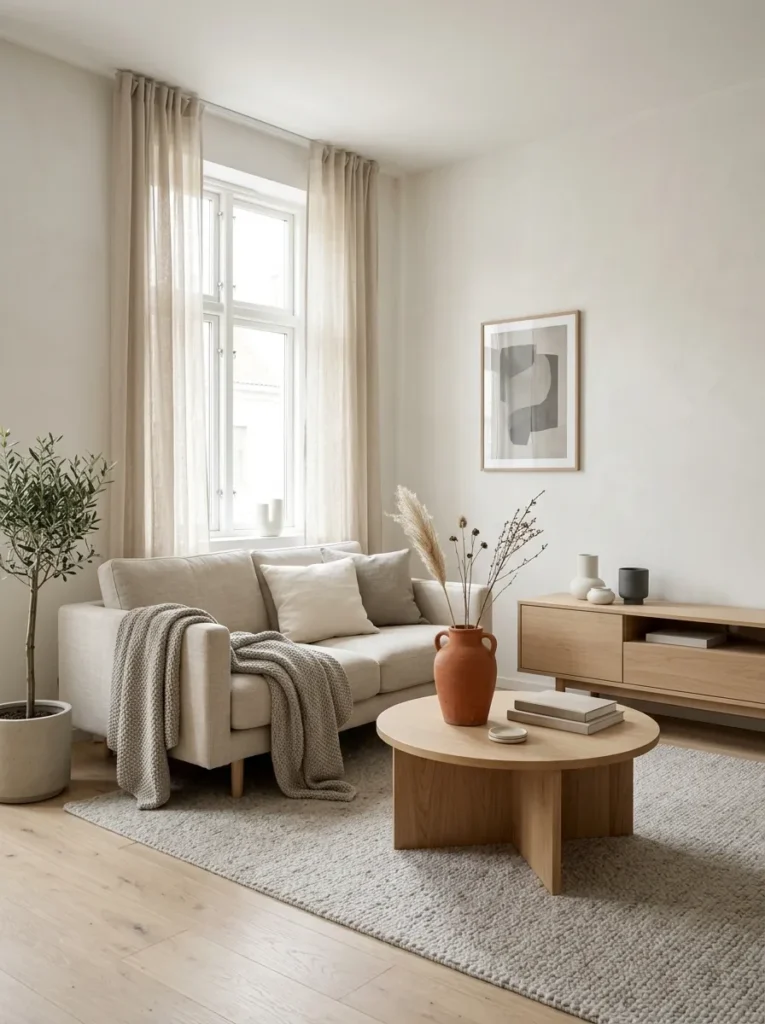
A small room in multiple competing colours feels like a crowded elevator — uncomfortable, overwhelming, and hard to escape. A near-monochrome Japandi palette with one deliberate warm accent is the antidote.
Handmade Matte Terracotta Ceramic Decorative Vase
a single earthy accent that warms an all-neutral small Japandi living room without breaking the calm of the palette .
Check Price & Options on Amazon →- Base palette: warm white walls, oat or greige sofa, light oak or ash wood furniture
- One accent only: terracotta, sage, or dusty clay — in a single object, not repeated throughout
- The restraint is the design — every tone serves the calm rather than competing for attention
- Paint the ceiling the same colour as the walls to remove the visual “lid” from the room
This post contains affiliate links. If you buy something through them, I may earn a small commission at no extra cost to you.
6. Small Japandi Living Room Lighting — Three Sources, No Overhead Glare
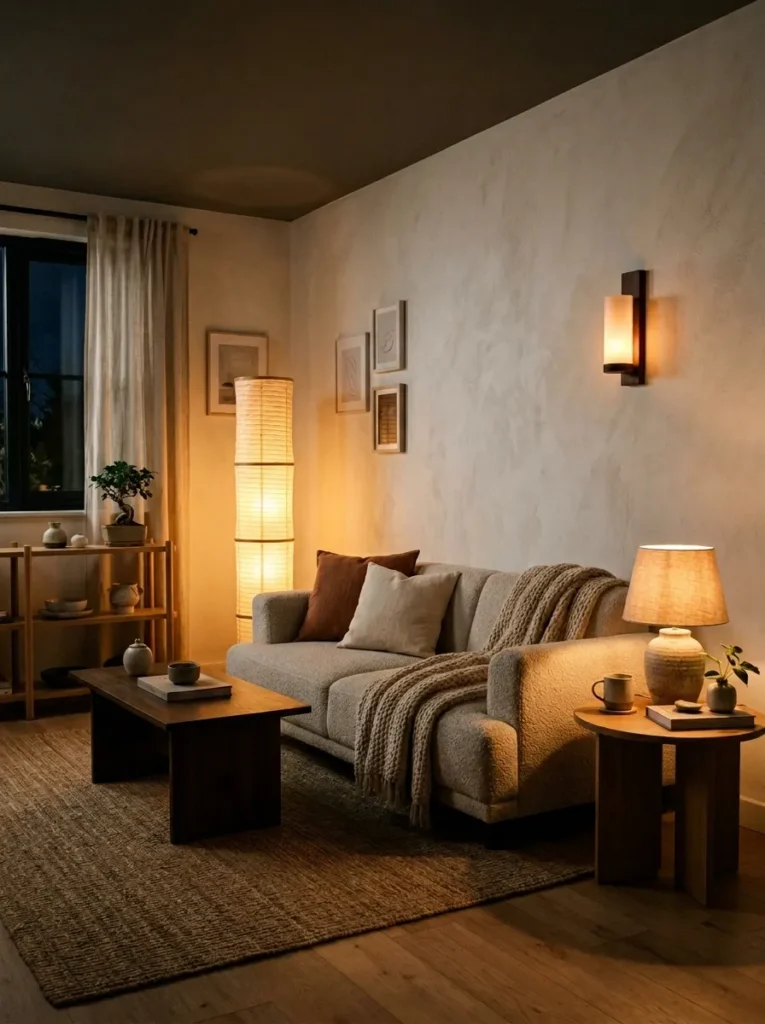
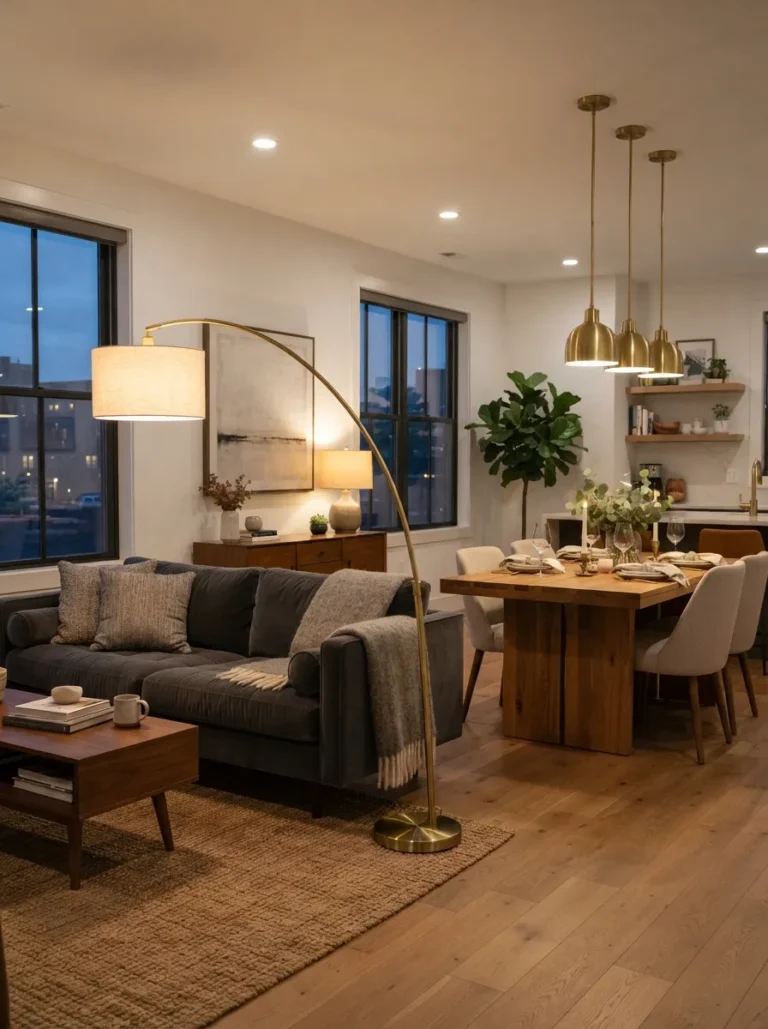
Harsh overhead lighting in a small room flattens everything — the shadows, the texture, the depth — and makes the space feel like a fitting room at a discount retailer. A layered lighting approach fixes this completely.
- Position a bamboo or washi paper floor lamp in the corner farthest from the sofa
- Add a small ceramic table lamp on a low side table beside the seating area
- A wall-mounted sconce at eye height in a dark corner adds depth without touching floor space
- Warm bulbs only — 2700K maximum — cool light makes small rooms feel stark, not serene
Three warm sources, zero overhead glare — a small japandi living room lit this way feels twice as large and ten times as inviting.
7. Multi-Functional Furniture That Earns Every Square Metre
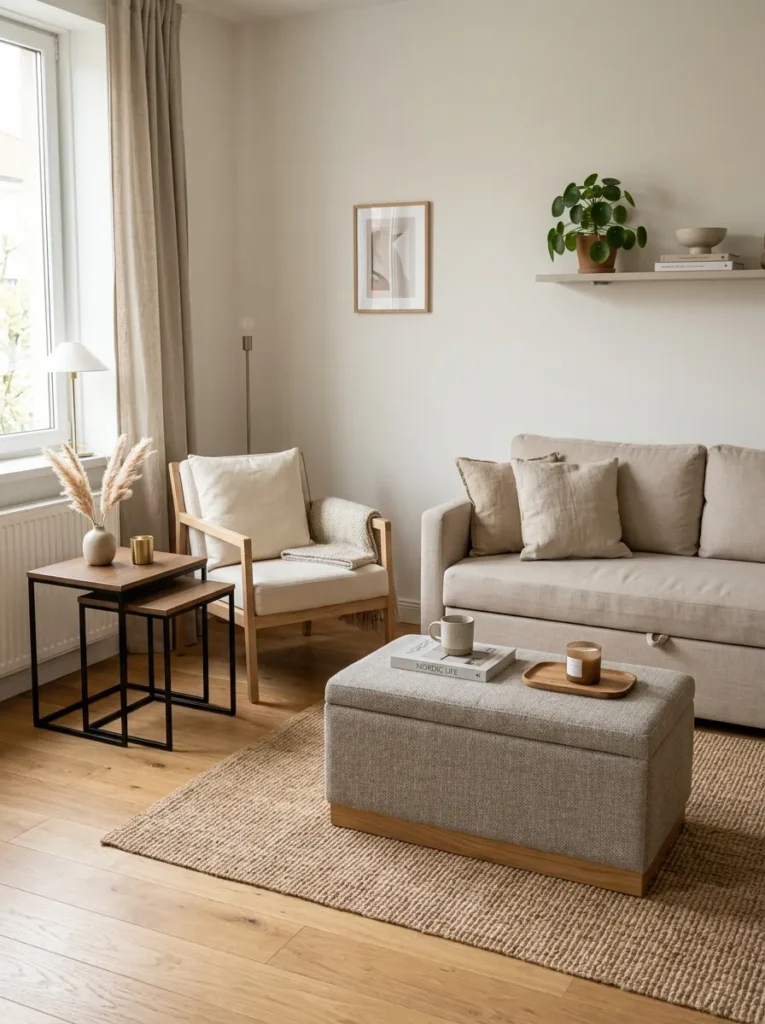
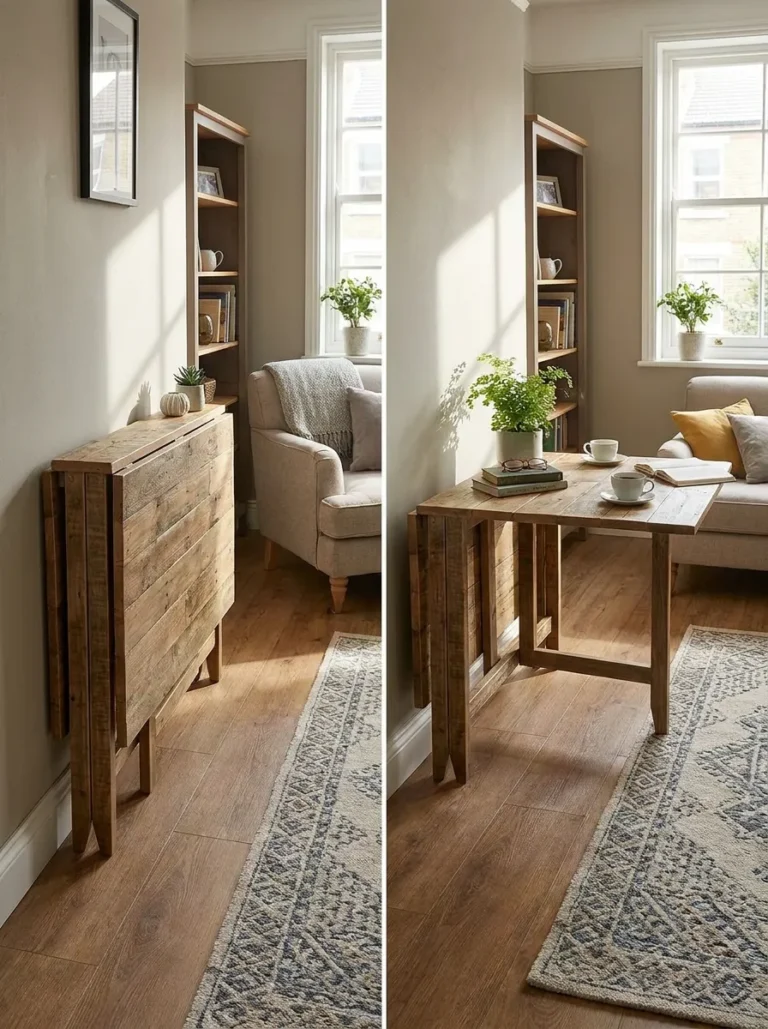
In a small space, furniture that does only one job is a luxury you simply cannot afford. Every piece should pull double duty — and in Japandi’s world, that means doing it beautifully, without looking like a prop from a space-saving infomercial.
Low Storage Ottoman in Natural Linen with Oak Legs
functions as coffee table, extra seating, and hidden storage while keeping the Japandi aesthetic immaculate .
Check Price & Options on Amazon →- Storage ottomans replace coffee tables and hide blankets, remotes, and everything else that creates clutter
- Nesting tables are the Japandi answer to occasional tables — they disappear when not needed
- A sofa with under-seat storage gives you a whole hidden drawer without adding a single cm of bulk
- The goal is to eliminate the need for extra furniture, not to accumulate clever pieces that still crowd the room
8. Mirrors Used Like Windows — Not Like Decoration
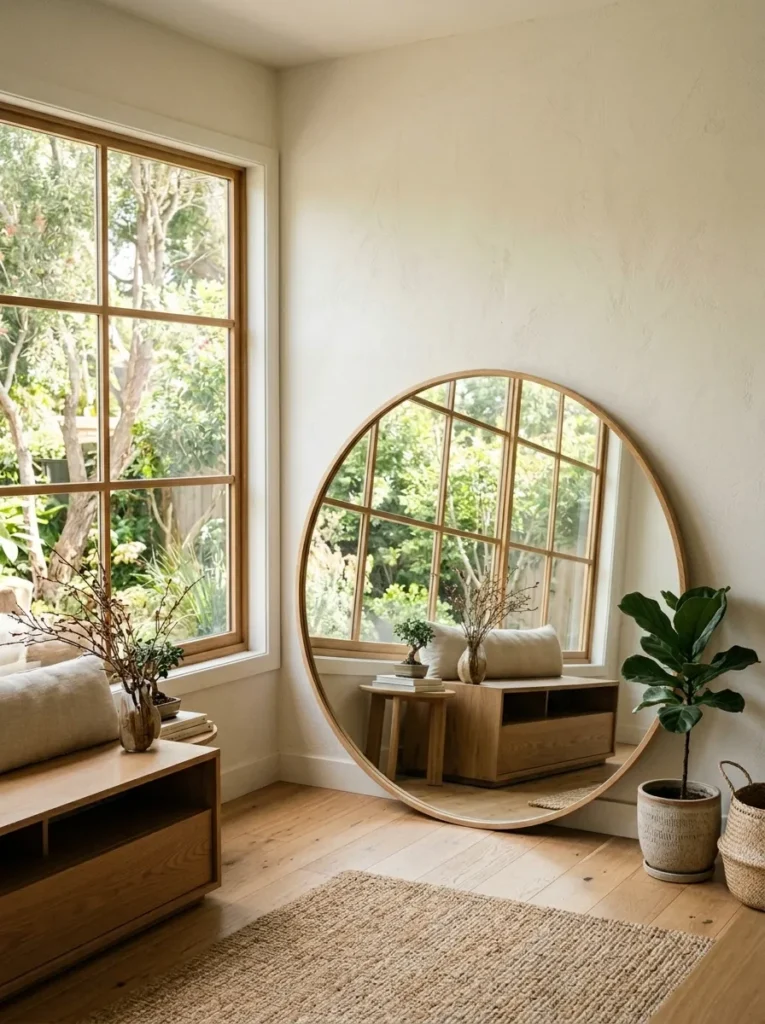
A mirror in a small room isn’t decoration — it’s infrastructure. Positioned opposite a window, a large mirror doubles the perceived depth of the room and throws light into every corner that natural light can’t reach.
- Round or oval shapes in thin natural wood frames read Japandi; ornate or baroque frames are the opposite of everything
- Lean it against the wall rather than hanging it — this reads more relaxed and avoids the “hotel hallway” effect
- Size up: a mirror smaller than 60 cm in diameter in a small room is decorative at best, useless at worst
- Position it to reflect either the window, the greenery outside, or the most beautiful part of the room
“Since the couch acts as the ultimate anchor in any minimalist layout, you can easily set the foundation for a peaceful space by choosing from these 10 Japandi Sofa Living Room Ideas Low & Lovely.
9. One Statement Plant, Not a Jungle
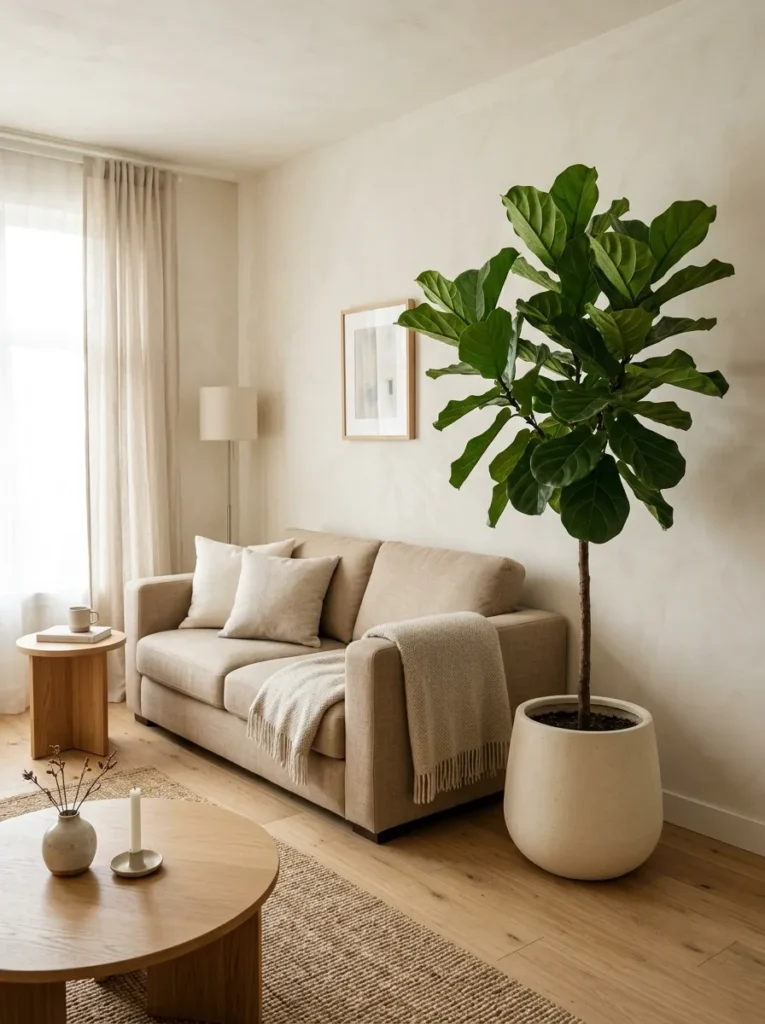
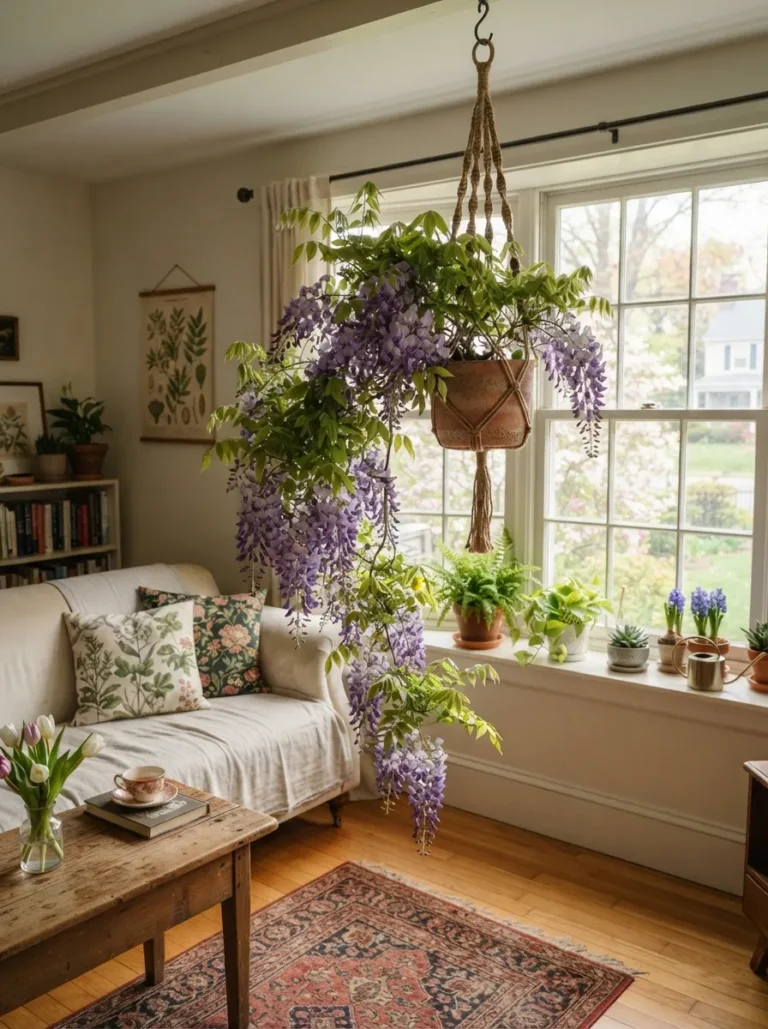
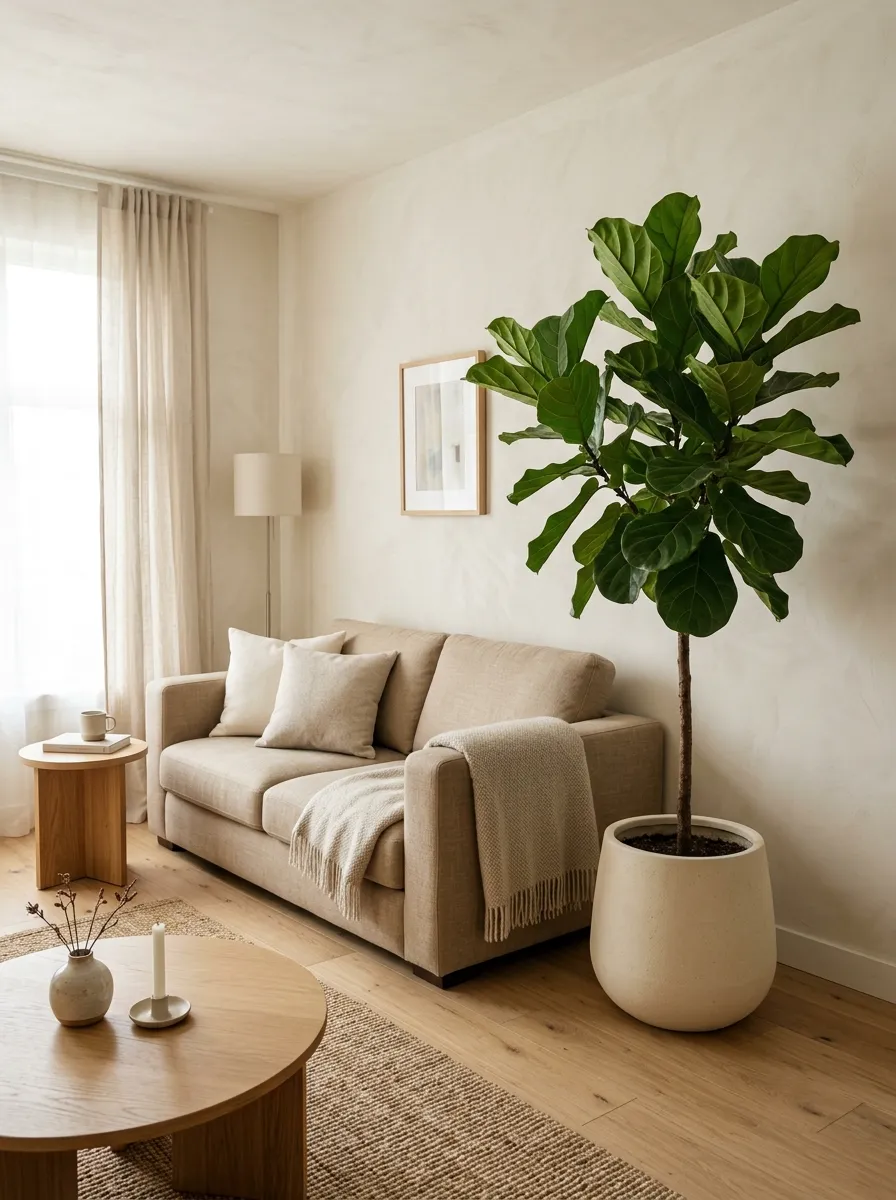
Plants in a small japandi living room are welcome — but only one is invited to the party. A single large plant in a beautiful matte ceramic planter commands the corner with far more presence than six small pots scattered across every surface.
Large Matte White Ceramic Plant Pot with Drainage, 30cm Diameter
the clean, considered form complements a single statement plant beautifully in a compact Japandi space .
Check Price & Options on Amazon →- Choose architectural plants: fiddle leaf fig, olive tree, snake plant, or a sculptural cactus
- One plant, one corner, one planter — repetition of this rule is the point
- Small plants on multiple surfaces create visual noise; one large plant creates a focal point
- The planter matters as much as the plant: matte ceramic in sand, white, or sage only
10. Declutter the Sofa — Two Pillows Max
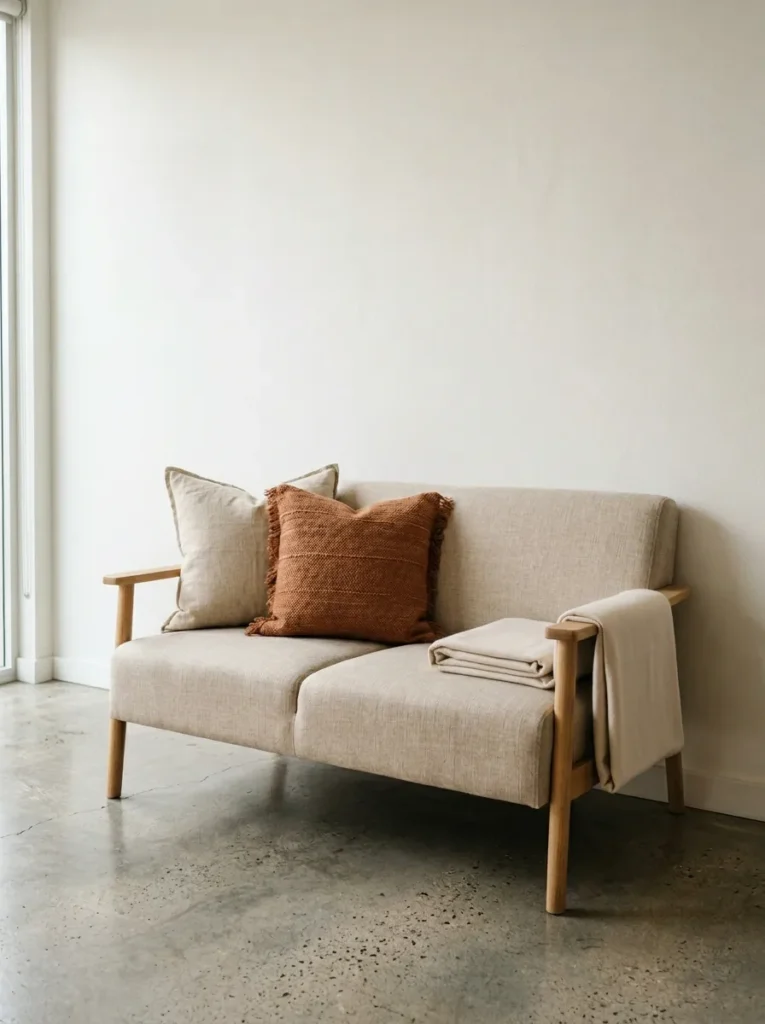
A small sofa buried in six throw pillows isn’t cosy — it’s a cry for help. The Japandi approach to pillow styling in a small living room is ruthless: two pillows, one throw, nothing else.
- Two pillows in tonal neutrals — one slightly warmer, one slightly cooler, for subtle contrast
- One throw, folded in thirds and draped over the arm rather than thrown (the name is misleading)
- The visual weight of the sofa should be light and open, not heaped and heavy
- More pillows signal comfort but deliver clutter — and in a small japandi living room, clutter is the only real enemy
11. Negative Space as a Design Choice, Not an Accident
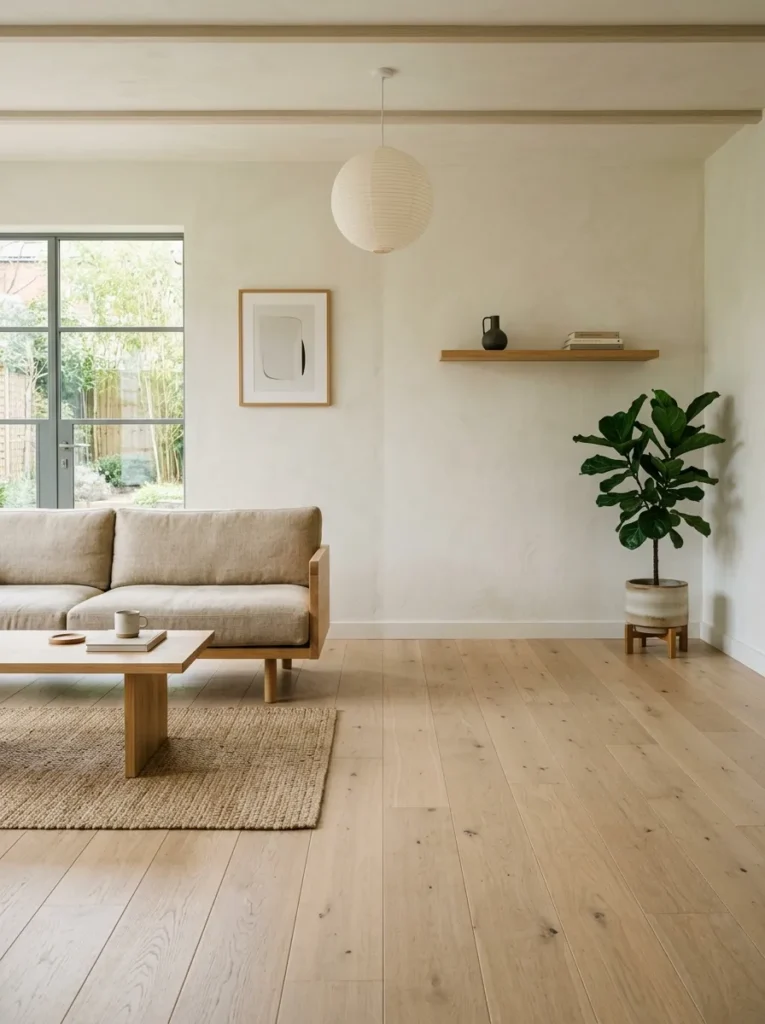
The most counterintuitive truth about small japandi living room design is this: empty space is not wasted space — it is the design. The deliberate gaps between furniture are what make the room feel curated rather than cramped.
- Leave at least one full wall with nothing on it
- The floor between the sofa and the entrance should be completely clear — it creates a visual runway that makes the room feel longer
- Negative space around objects — a shelf, a vase, a lamp — is what makes each object feel intentional
- Resist every urge to fill. Fill is the enemy. Empty is the aesthetic.
A room that breathes is a room that calms — and that is the entire point of Japandi in a small space.
Small doesn’t have to mean cramped, and minimal doesn’t mean cold — it means every single choice you make has room to land. Pick two of these ideas, implement them this weekend, and watch a compact room quietly become the most peaceful place in your home.