
The Ultimate Potty Chart Printable: How to Train Your Toddler in Days
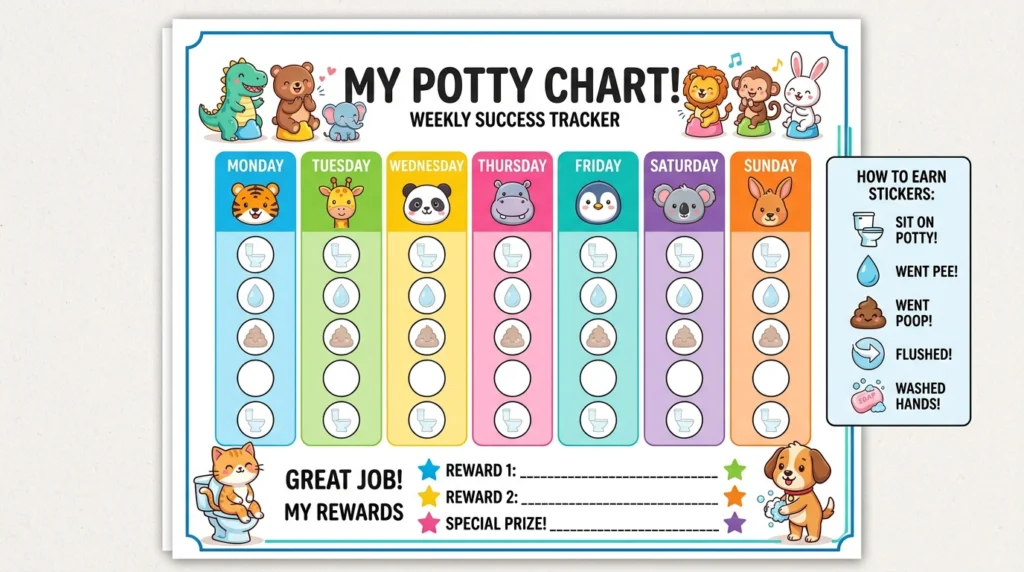
Embarking on the toilet training journey is one of the most significant milestones in early childhood development—and often one of the most daunting for parents. Between cleaning up sudden accidents, managing toddler resistance, and trying to stay patient through weeks of false starts, it is easy to feel overwhelmed by conflicting advice. Many families dive into the process armed only with enthusiasm, quickly finding themselves bogged down by mixed signals, inconsistent daily routines, and unexpected regressions.
When expectations are unclear, toddlers often respond with confusion and resistance, turning what should be a milestone celebration into a daily power struggle. The proven antidote to training chaos is a methodical, rapid-success framework paired with a personalized visual guide. Using an ultimate potty chart printable acts as your master blueprint, breaking down a complex developmental transition into manageable, bite-sized achievements. In this comprehensive guide, we will walk through the science of rapid toilet training, pre-training logistics, an intensive 3-day execution schedule, and expert troubleshooting strategies to ensure your family achieves stress-free success.
Part 1: The Psychology and Physiology of Rapid Training
1.1 Neurological and Bladder Readiness Milestones
Before introducing any rapid-training framework or hanging your tracking sheet, it is essential to evaluate whether your child’s body and brain are truly primed for success. Toilet training is not merely a matter of parental persistence; it requires specific physiological and neurological maturity.
- Sphincter Control: Around 20 to 36 months of age, children begin developing voluntary control over their urethral and anal sphincters. Prior to this window, elimination is largely an involuntary reflex.
- Neurological Pathways: The brain must develop the neural myelination necessary to sense a full bladder, send a signal to the cerebral cortex, and inhibit the reflex long enough to reach a toilet.
- Behavioral Indicators: Look for behavioral cues such as staying dry during naps (signaling bladder storage capacity), showing active interest in bathroom routines, or expressing verbal or physical discomfort with soiled diapers.
1.2 The Neurobiology of Instant Reward Loops
Behavioral psychology demonstrates that immediate positive reinforcement triggers small bursts of dopamine in the developing brain, reinforcing the neural pathways associated with desired behaviors. When an intensive, rapid-training method is deployed, high-frequency tracking becomes critical.
- Placing a sparkly sticker or coloring in a milestone box immediately after a successful bathroom trip gives the toddler instant gratification.
- This immediate feedback loop bridges the gap between adult expectations and a toddler’s present-moment mindset, transforming a routine bodily function into an exciting, rewarding accomplishment and minimizing power struggles.
Part 2: Pre-Training Logistics: Setting the Stage
2.1 Environmental Engineering at Home
Success in rapid toilet training is built long before your child ever sits bare-bottomed on the potty chair. Environmental preparation reduces friction and prevents household stress.
- Clearing Distractions: For the initial intensive days, clear the primary training zones of rugs and carpets where accidents are difficult to clean.
- Strategic Placement: Position portable potty chairs in high-traffic areas (such as the living room or play area) during day one so that the distance between play and the potty is minimal.
- Accessibility: Keep extra undergarments, wipes, hand towels, and your master tracking sheet organized in a portable caddy so you never have to leave your child unattended during a crucial moment.
2.2 Equipping Your Command Center
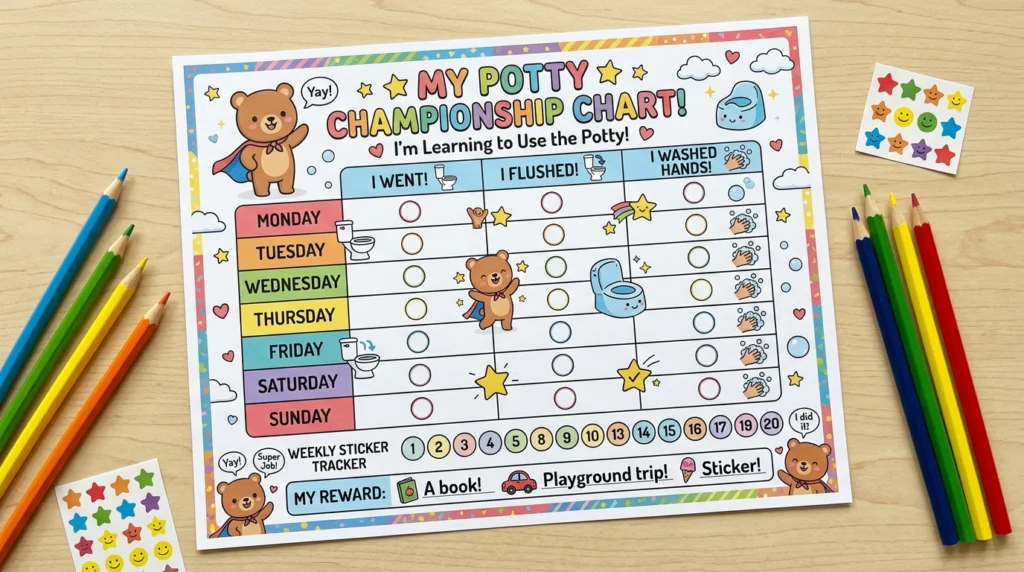
Having the right digital and physical assets ready before day one prevents scrambling mid-training. Sourcing professional, high-resolution layouts through digital resource hubs like the potty chart printable collection ensures you always have clean, highly engaging templates ready to print. Laminating your sheets or slipping them into clear plastic sheet protectors allows your child to use dry-erase markers or reusable stickers repeatedly without destroying the paper.
Part 3: The Intensive Training Blueprint: Days 1 Through 3
3.1 Day One: Bare-Bottomed Awareness and Constant Tracking
The first 24 hours of an intensive training program are designed to build acute body awareness.
- The Bare-Bottom Rule: Dress your toddler from the waist down in nothing at all (or a loose, long t-shirt). Eliminating clothing removes the sensory autopilot of pulling down pants and lets the child feel the exact moment urine begins to release.
- Observation and Timing: Watch your child like a hawk. Note their telltale physical signs—sudden stopping of play, squatting, or clutching themselves.
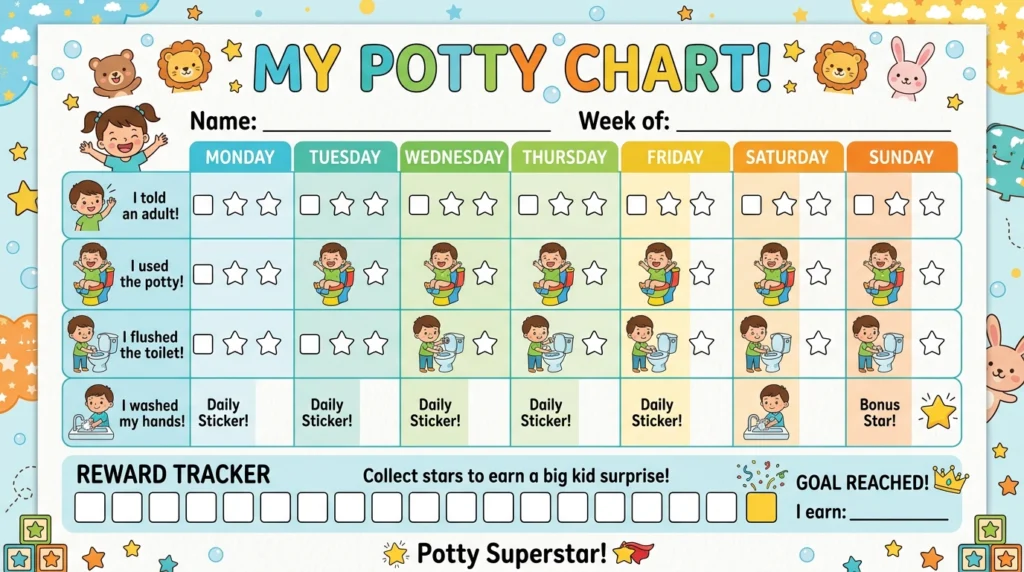
- Immediate Chart Updates: The second a successful trip happens, celebrate wildly and update your potty chart printable together. Let your child place the sticker themselves to cement the positive connection.
3.2 Day Two: Introducing Underwear and Public Exposure
Once your child has mastered recognizing their bodily sensations indoors on day one, day two introduces the sensation of wearing “big kid” training pants or underwear.
- Transitioning to Underwear: Underwear hugs the skin similarly to diapers, which can sometimes trick a toddler’s sensory perception into thinking they are wearing a diaper. Expect a few minor accidents on day two as they adjust.
- Gentle Check-Ins: Prompt your child every 45 to 60 minutes rather than waiting for them to ask. Frame each visit as an exciting mission to check on their tracking sheet progress.
3.3 Day Three: Establishing Autonomous Outings and Routine Check-Ins
By day three, the neurological connection between bladder sensation and the toilet should be forming solidly.
- Short Outings: If house training is going well, venture out for short, structured 30-minute trips (such as a quick walk around the block), reminding your child where the public restroom is located before you leave.
- Shift to Independence: Begin transitioning from parent-prompted bathroom visits to encouraging your child to tell you when they feel the urge, validating their growing autonomy on the tracking sheet.
Part 4: Troubleshooting Resistance and Regressions
4.1 Navigating the Day-Two Slump and Emotional Breakdowns
It is completely normal for day two or three to bring a wave of frustration, exhaustion, or stubborn refusal. Toddlers test boundaries when new routines become demanding.
- Stay Calm and Neutral: Never yell, shame, or force a child onto the toilet. Forcing compliance triggers defensive defiance.
- Pivot and Pause: If your child digs their heels in, take a 30-minute break, read a favorite book together, and approach the bathroom later with a playful, low-pressure attitude.
4.2 Handling Relapses and Setting Up Long-Term Consistency
Accidents will happen even after a successful intensive weekend. Approach every miss as neutral data. Reassure your child, clean up calmly, and maintain consistency across all household caregivers (parents, grandparents, and babysitters) to reinforce steady habits.
Conclusion & Resource Directory
Rapid toilet training does not have to be an exhausting, unpredictable ordeal. By combining physiological readiness, careful environmental preparation, and an intensive visual tracking framework, you empower your child to master independence with confidence.
Ready to begin your rapid-success journey? Explore professional, ready-to-use templates designed to make toilet training fun and stress-free by visiting the potty chart printable store page today.