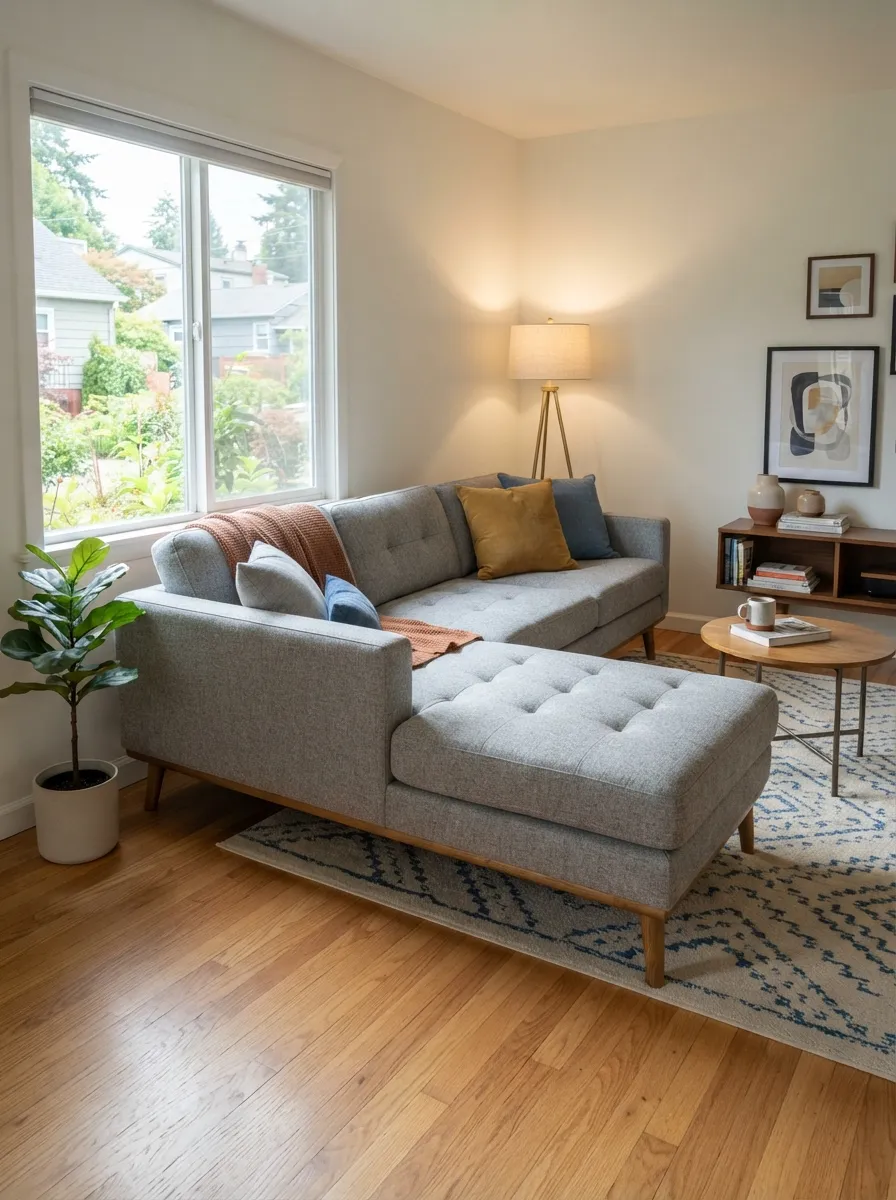
10 Smart Small Living Room with Sectional Layouts
A sectional in a small living room sounds like a contradiction — that much seating, that little square footage. But the right sectional, placed the right way, can actually make a compact room feel more functional than a handful of scattered chairs ever could.
The trick is choosing wisely and arranging smartly, not avoiding sectionals altogether. Let’s jump into the small living room with sectional layouts that prove big comfort and tight square footage are not mutually exclusive.
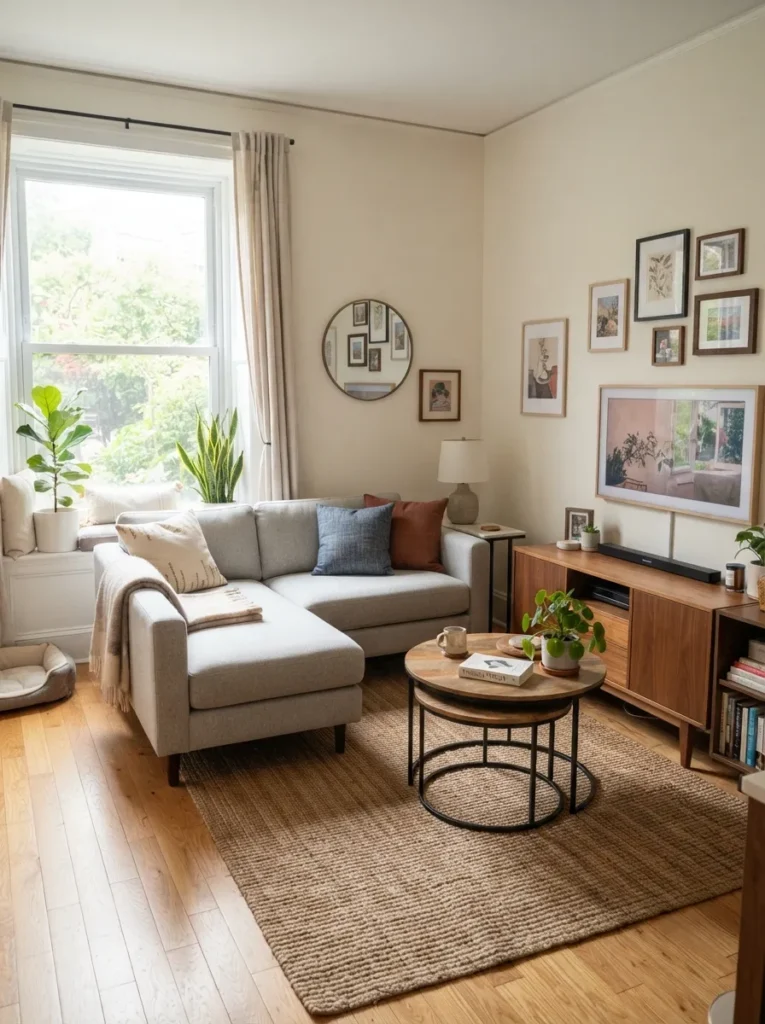
1. Choose an L-Shaped Sectional Over a U-Shaped One
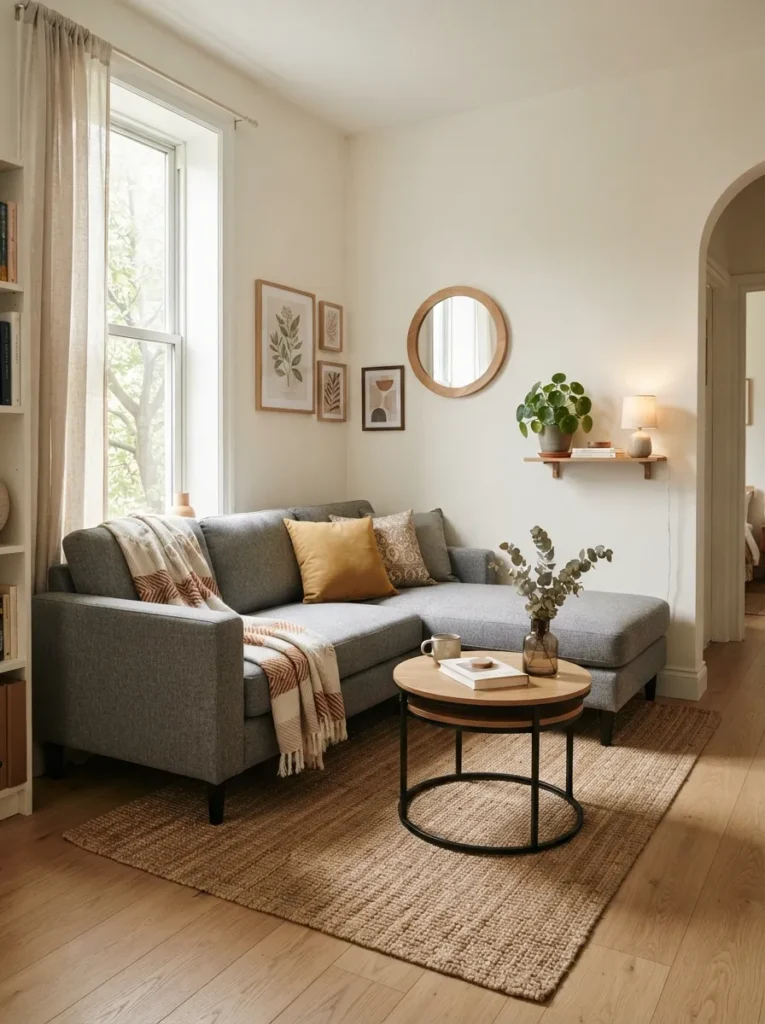
A U-shaped sectional practically requires its own zip code, which makes it a rough match for a compact room.
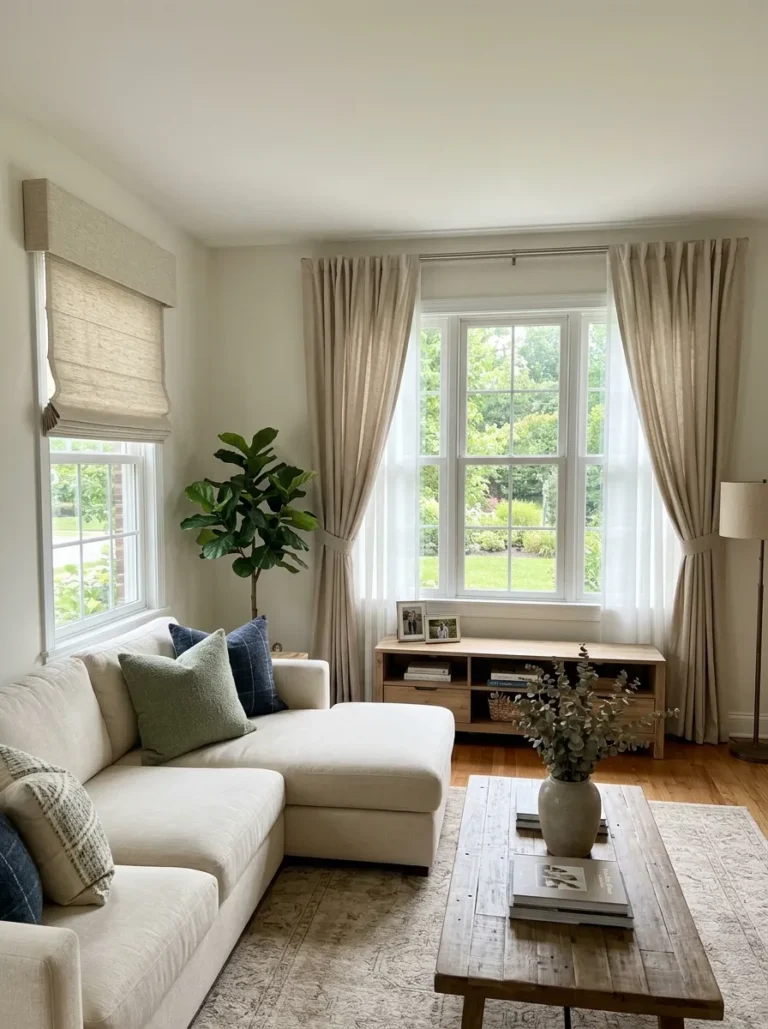
An L-shaped sectional tucks efficiently into one corner, offering generous seating without demanding the floor space a wraparound U-shape needs on both ends. Among small living room with sectional layouts, this shape remains the most space-efficient starting point for nearly any compact floor plan.
- Measure the corner depth before committing to a specific L-shaped model
- Choose a chaise length proportional to the room’s actual size
- Leave clear walking space around the sectional’s shorter end
2. Tuck the Sectional Into a Corner to Free Up the Center
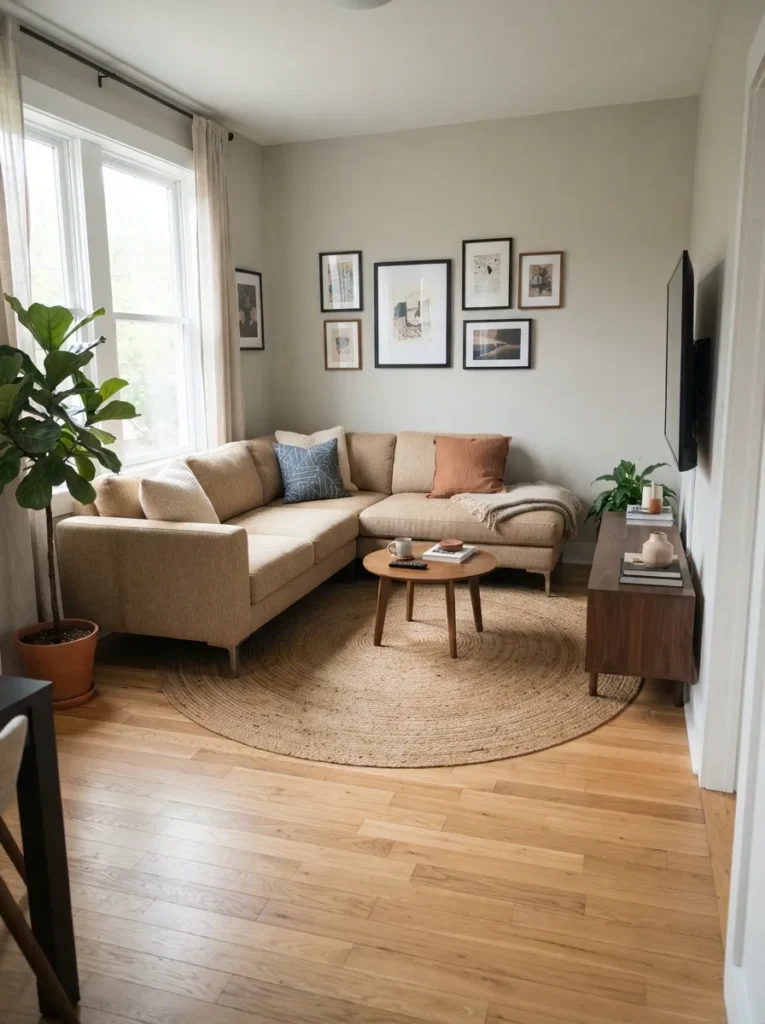
Placing a sectional in the middle of a small room instantly swallows the one thing that room cannot spare — open floor space.
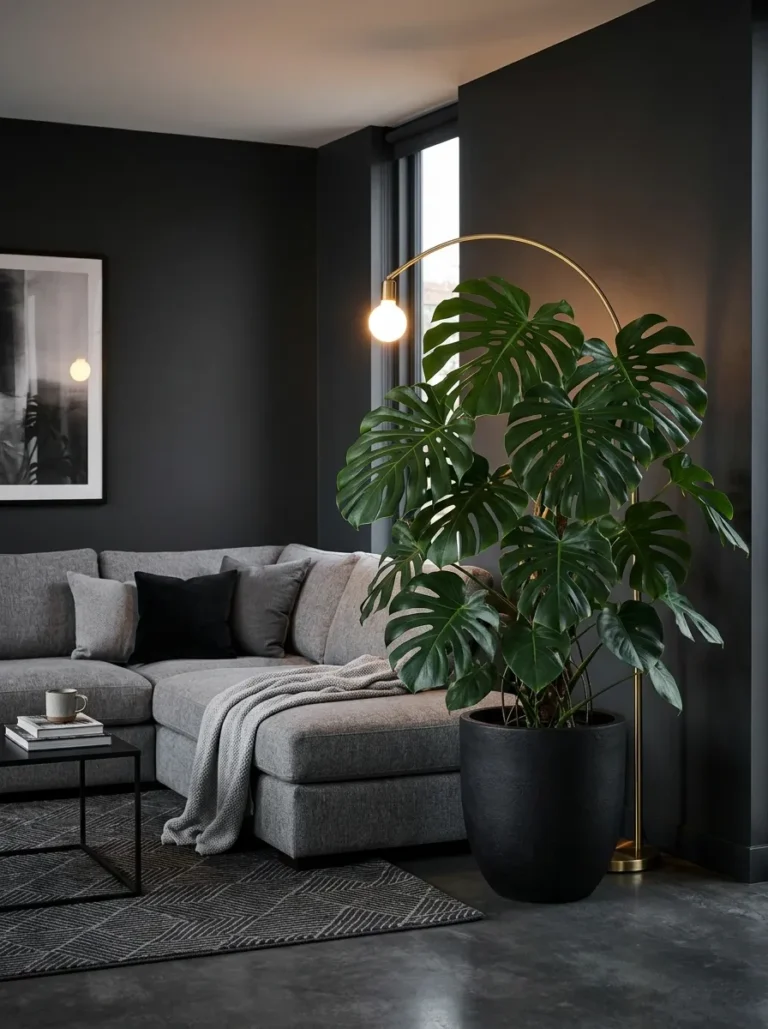
Pushing the sectional into a corner frees up the center of the room for walking paths, a coffee table, or simply the visual breathing room a small space desperately needs. This corner-first placement strategy is foundational to nearly every small living room with sectional layout that actually works.
- Choose a corner near a window for natural light to fill the seating area
- Leave at least a couple feet of walking space in front of the sectional
- Anchor the opposite corner with a chair or plant for balance
3. Choose a Sectional With a Reversible Chaise
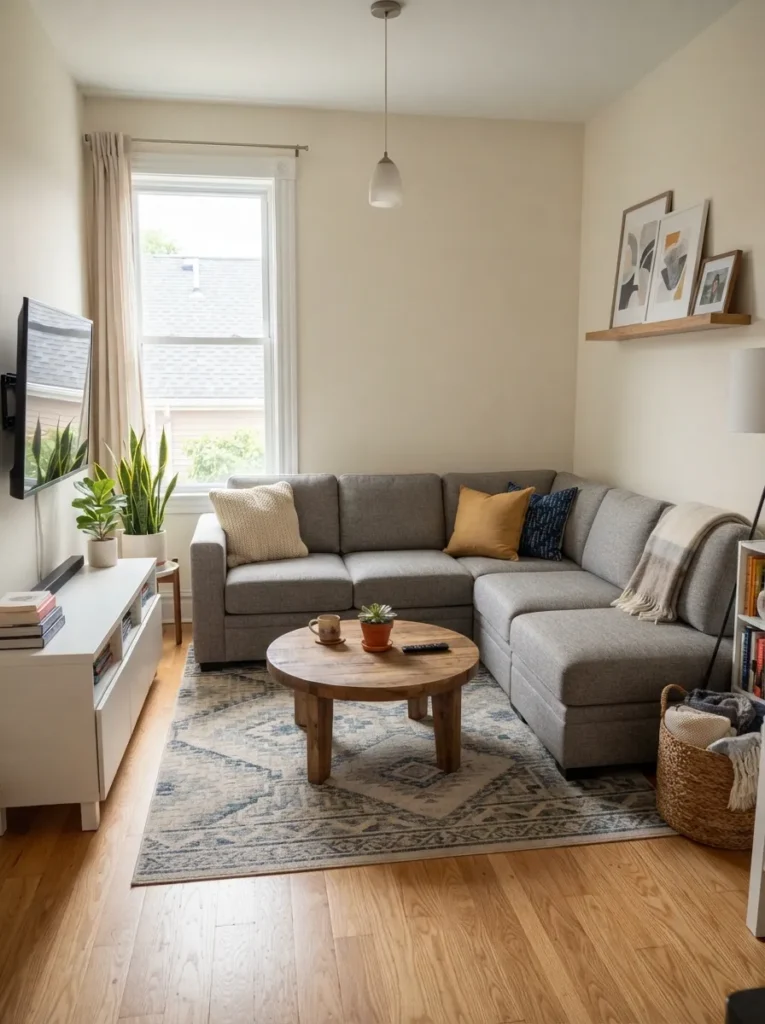
Committing to one fixed sectional layout forever is a big ask when a small living room’s needs might shift down the road.
A sectional with a reversible or movable chaise offers flexibility to reconfigure the layout for a new apartment, a rearranged room, or simply a fresh look, without buying an entirely new sofa. This adaptability is one of the more practical features to look for across small living room with sectional shopping lists.
Reversible chaise sectional sofa
adapts to nearly any small living room layout with one flexible design.
Check Price & Options on Amazon →Check the manufacturer’s specs for reversibility before assuming every sectional offers this feature.
4. Pair the Sectional With a Slim Coffee Table
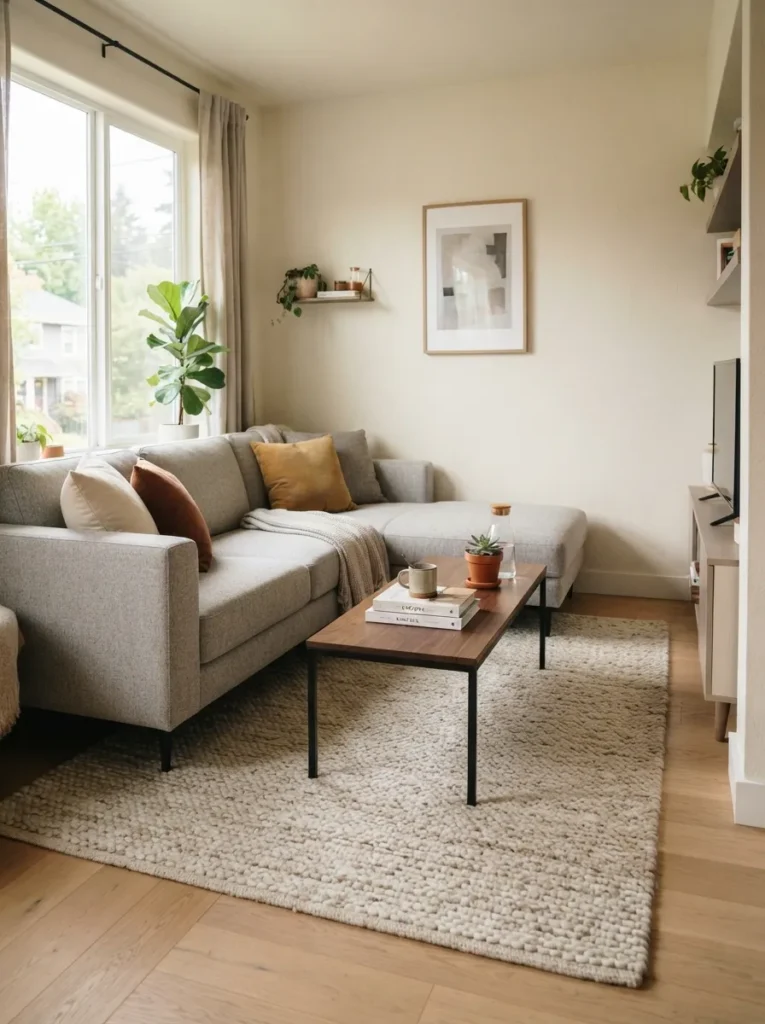
A bulky coffee table crowding an already substantial sectional can make the whole seating area feel like a furniture pile-up.
Choosing a slim, low-profile coffee table — or a round one with a smaller footprint — keeps proportions balanced and leaves enough walking space around the sectional’s edges. This pairing consideration matters more in small living room with sectional layouts than almost any other furniture decision in the room.
- Choose a table narrower than the sectional’s longest side
- Round or oval shapes often navigate tight spaces more easily than sharp corners
- Leave at least 14 to 18 inches of clearance between the table and the sectional
5. Choose Light, Neutral Upholstery to Avoid a Heavy Look
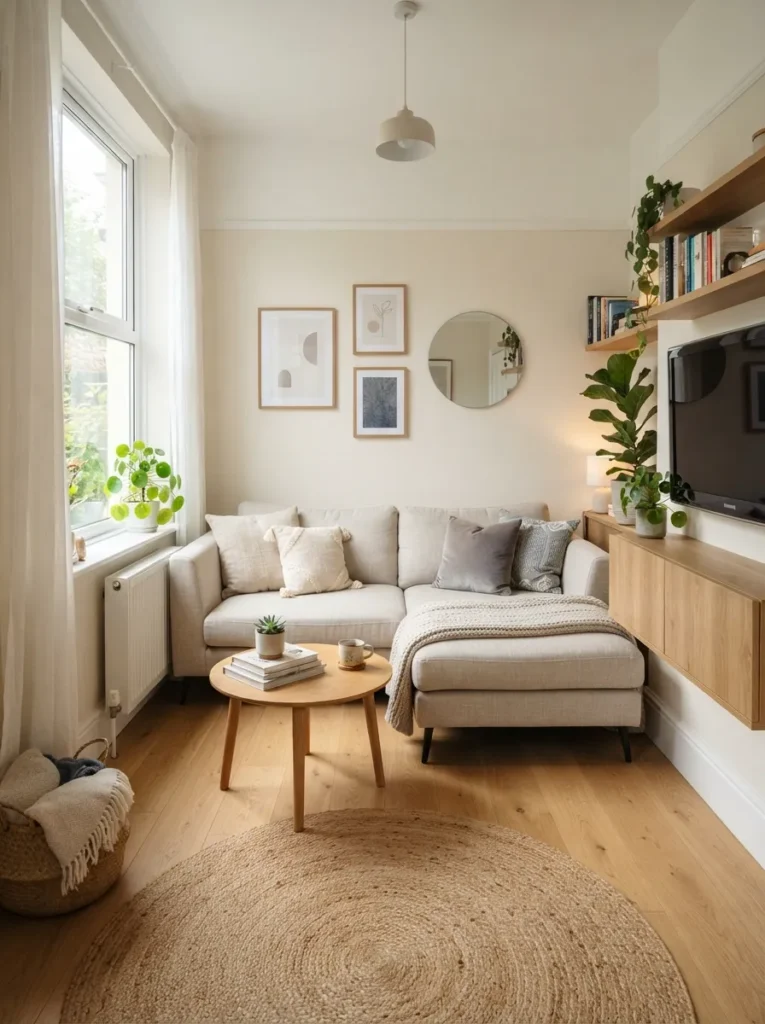
A large, dark sectional can visually dominate a small living room in a way that makes the whole space feel more cramped than it actually is.
Choosing light, neutral upholstery — soft gray, warm beige, cream — keeps a sizable sectional from feeling heavy or overwhelming, letting it blend into the room rather than looming over it. This color strategy is one of the simplest tricks for making a small living room with sectional feel airy instead of crowded.
- Choose performance fabric in a light tone for durability without sacrificing brightness
- Pair a light sectional with a slightly darker rug for grounding contrast
- Save bold, dark upholstery for smaller accent chairs instead
This post contains affiliate links. If you buy something through them for the living room upgrades above, a small commission may be earned — at no extra cost to you. It helps keep the cozy ideas coming. 🛋️
6. Choose a Sectional With Exposed, Slim Legs
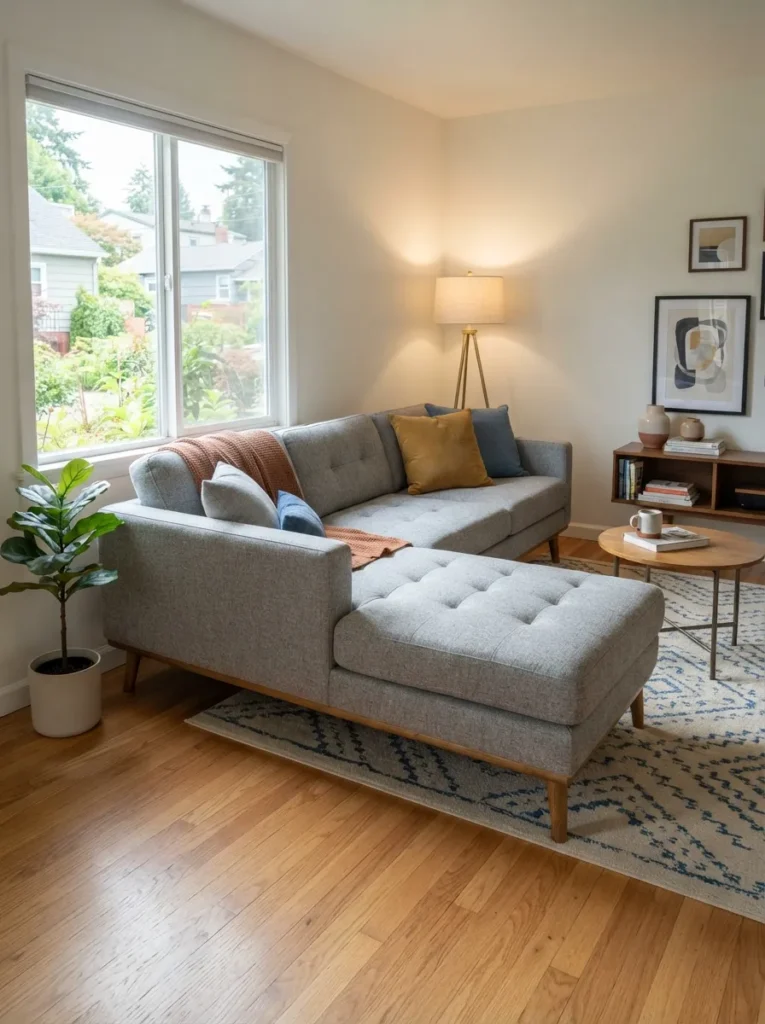
A sectional that sits flush on the floor blocks sightlines and visually eats up more space than one with a bit of a gap underneath.
A sectional with exposed, slim legs lets light and floor space peek through beneath the frame, creating an airier silhouette than a floor-hugging, skirted base. This detail-level choice makes a noticeable difference across small living room with sectional layouts, especially in rooms with limited natural light.
- Favor slim wood or metal legs over floor-length upholstered skirting
- Pair with a rug that shows a visible floor border around the edges
- Check leg height, since even an extra inch or two changes the whole look
7. Choose a Sectional With Built-In Storage
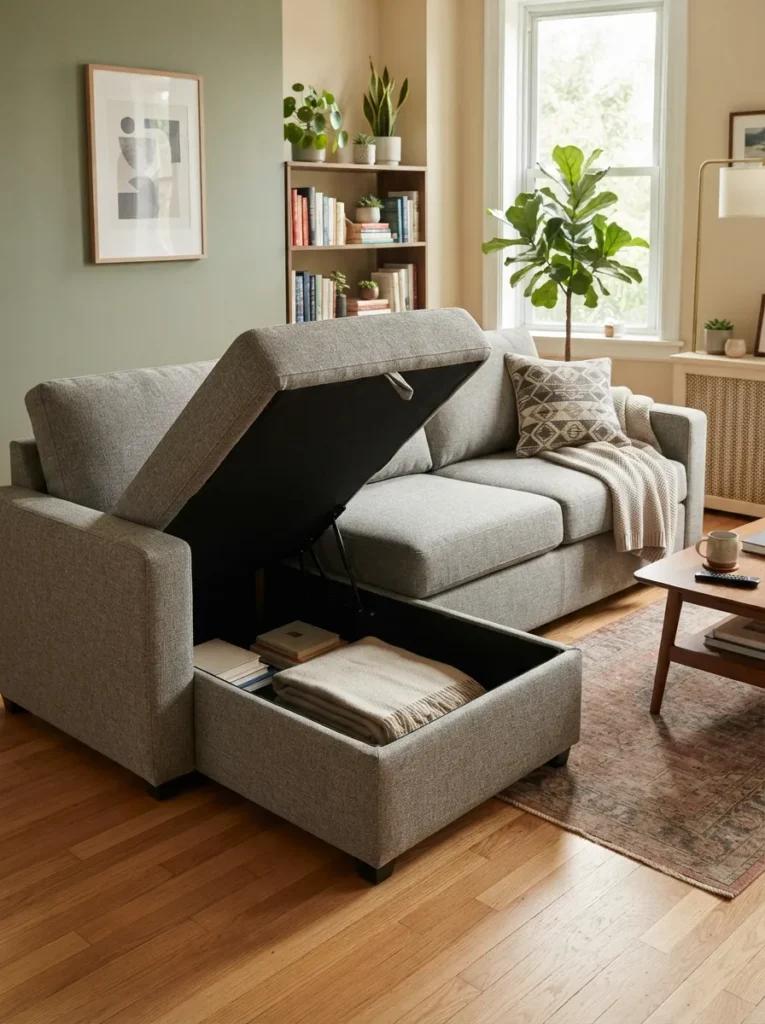
A small living room rarely has room to spare for a separate storage ottoman on top of an already generous sectional.
A sectional with a built-in storage compartment — often hidden beneath a lift-up chaise cushion — swallows blankets, remotes, and extra pillows without requiring any additional furniture. This multitasking feature belongs on nearly every small living room with sectional shopping checklist for maximizing function.
Storage chaise sectional sofa
hides blankets and extras without adding a single extra piece of furniture.
Check Price & Options on Amazon →Check weight limits and compartment depth before loading it up with bulkier items.
8. Choose a Sectional Scaled to the Room, Not the Showroom
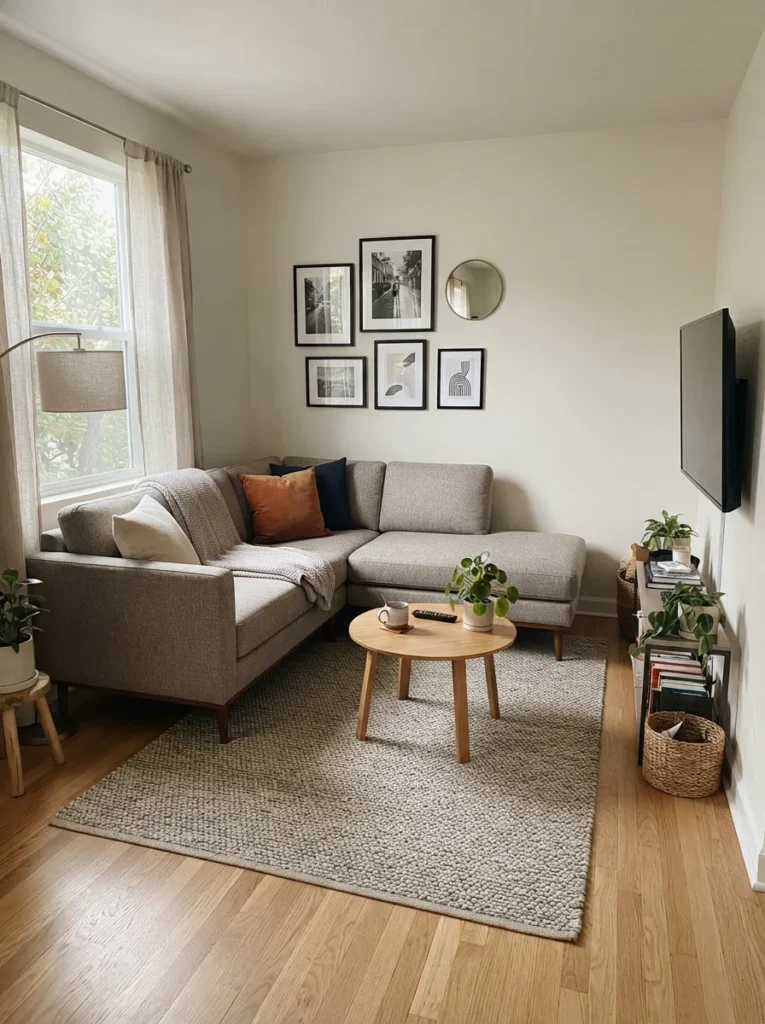
A sectional that looked perfectly reasonable in a spacious showroom can suddenly feel enormous once it lands in an actual small living room.
Measuring the room’s real dimensions — including doorways and hallways for delivery — before choosing a sectional prevents the all-too-common mistake of buying something simply too large for the space. Getting scale right is the single most important decision in any small living room with sectional purchase.
- Measure walking paths and doorways before finalizing a purchase
- Choose a sectional length that leaves at least a few feet of open floor space
- When in doubt, size down slightly rather than up
9. Add a Console Table Behind a Floating Sectional
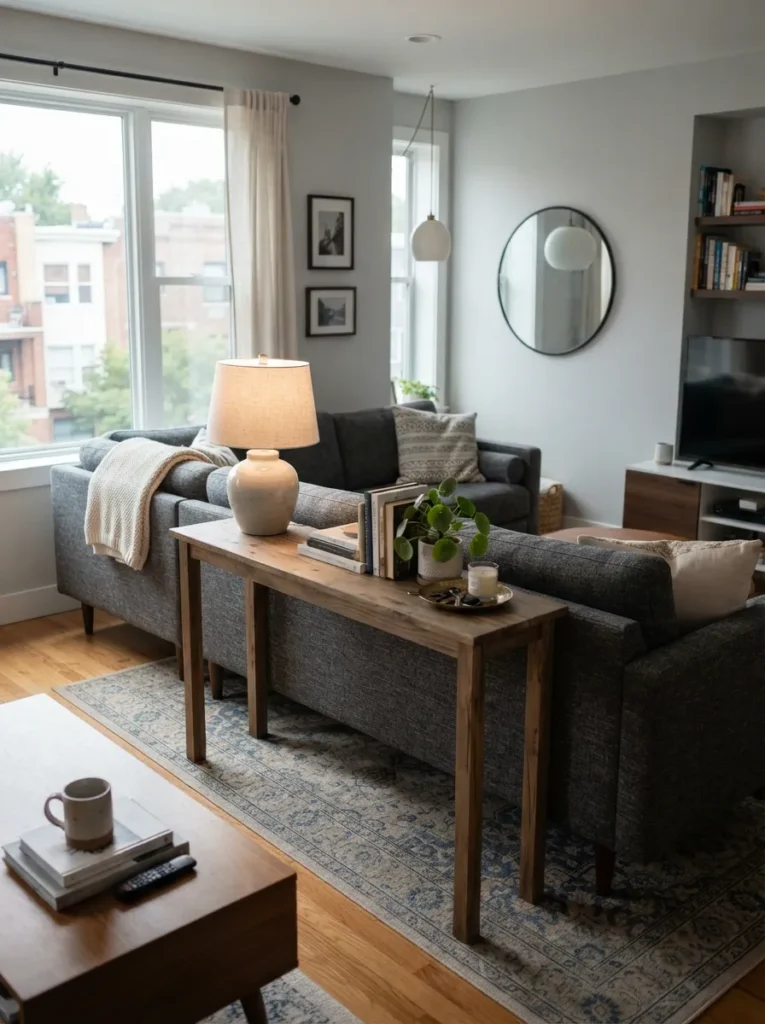
Floating a sectional away from the wall opens up the room, but it can also leave an awkward strip of unused space behind it.
A slim console table filling that gap adds extra surface area and storage while reinforcing the sectional’s placement as an intentional design choice rather than an accident. This finishing touch rounds out many of the more polished small living room with sectional layouts seen in professionally designed spaces.
- Choose a console narrower than the sectional to avoid crowding
- Style the top with a lamp or a small plant for added function
- Leave enough space behind the console for comfortable walking clearance
Positioning a sectional in a compact space is a brilliant way to maximize seating, but it immediately dictates where the rest of your furniture must go. Once you’ve anchored your large sofa in the perfect corner, your next puzzle is figuring out where to place the screen so everyone gets a comfortable view without straining their necks. Solve your media placement dilemma with these 9 Small Living Room TV Setup Ideas for Smart Spaces.
10. Choose a Modular Sectional for Long-Term Flexibility
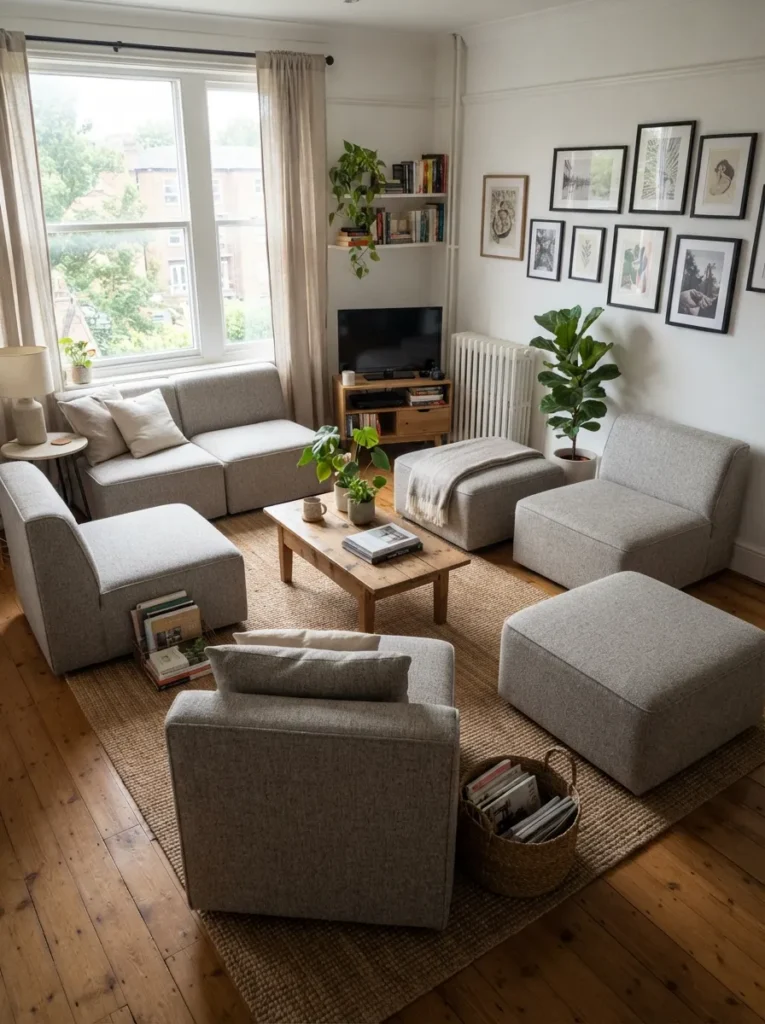
A fixed, one-piece sectional locks a small living room into a single layout, which can feel limiting if the space or the furniture needs ever change.
A modular sectional separates into individual pieces that can be rearranged, split apart for extra seating elsewhere, or reconfigured entirely for a new layout down the road. This long-term flexibility makes modular designs one of the smartest choices across small living room with sectional shopping guides.
- Choose modular pieces with matching heights for seamless reconfiguration
- Add casters to select pieces for easier rearranging
- Keep upholstery neutral so mismatched arrangements still look intentional
A sectional in a small living room was never a contradiction — it just needed the right shape, the right spot, and a little smart planning. Choose one of these small living room with sectional layouts, and the whole space starts working just as hard as the furniture inside it.