10 Stunning Living Room Indoor Tree Ideas for a Lush, Elevated Space
This post contains affiliate links. If you buy something through them, I may earn a small commission at no extra cost to you.
A room full of small plants scattered on every surface looks busy. A single indoor tree, given real room to exist, looks designed. That distinction is the entire difference between a cluttered plant collection and an actual architectural feature.
Trees do something small pots never can — they add height, structure, and a sense of permanence to a room. Here are 10 living room indoor tree ideas built to bring genuine lushness without turning the space into a greenhouse.
1. Let a Fiddle Leaf Fig Set the Room’s Scale
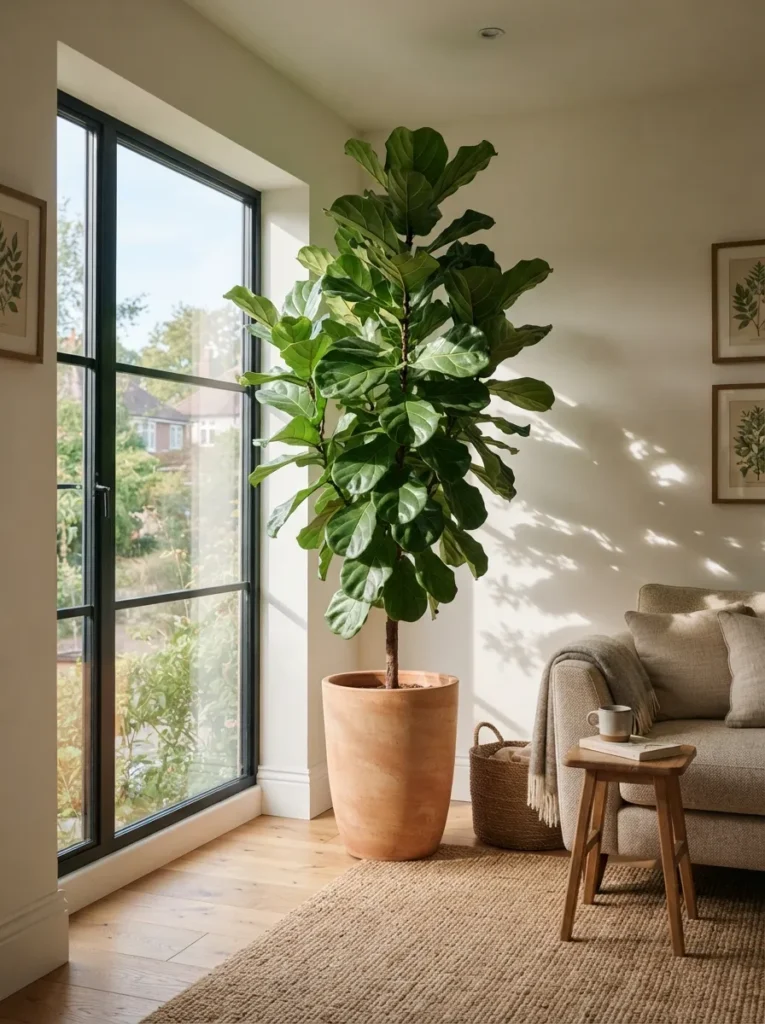
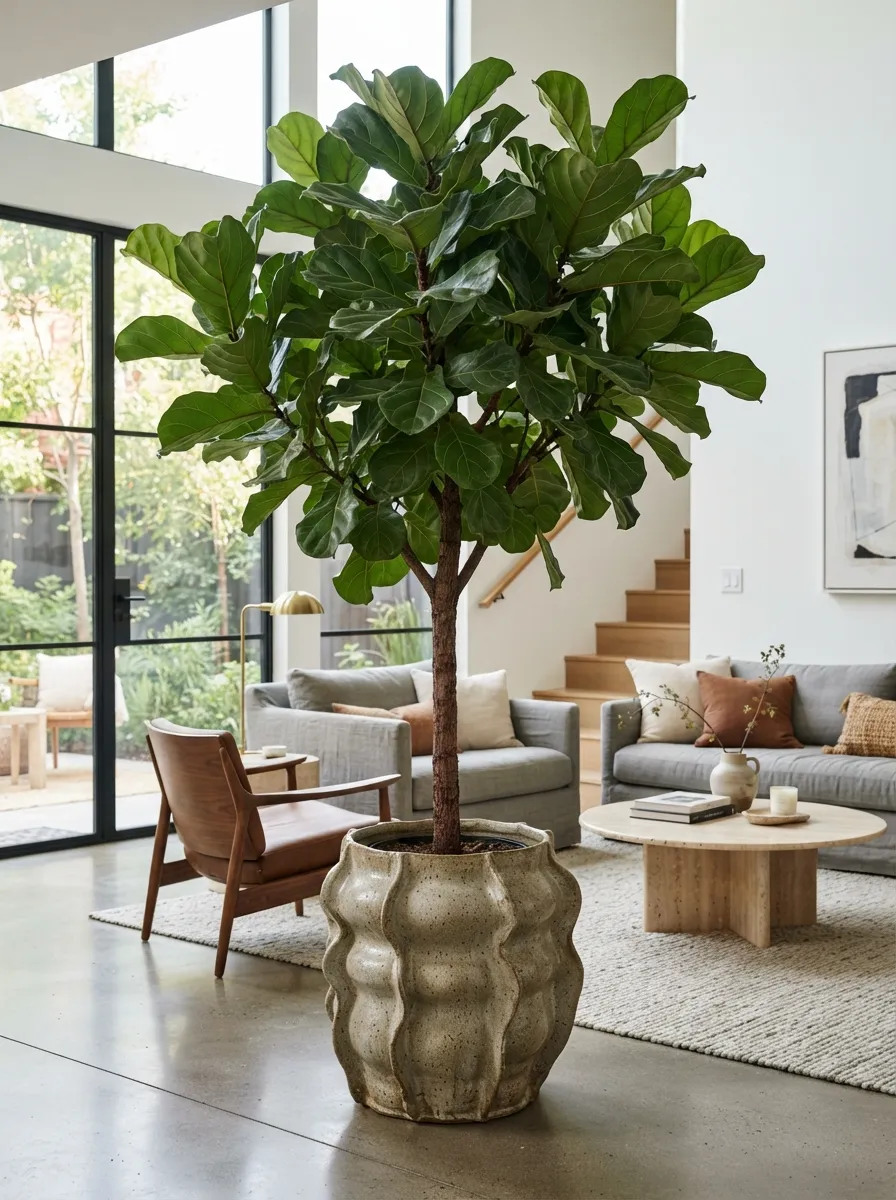
Few indoor trees command a room the way a mature fiddle leaf fig does — its broad, upright leaves read as intentional the moment it is given proper floor space.
Positioned near, but not directly against, a bright window, it becomes the visual scale-setter for the entire room, with everything else arranged in relation to its height and presence.
Growth reality check: fiddle leaf figs are notoriously fussy about being moved or rotated too often. Choose a permanent spot early rather than repositioning it every few weeks while decorating — the leaves drop in protest at sudden change.
Where it struggles: drafty corners near frequently opened doors or vents. Consistent temperature matters more to this tree than almost any other on this list.
2. Choose an Olive Tree for a Softer, More Muted Silhouette
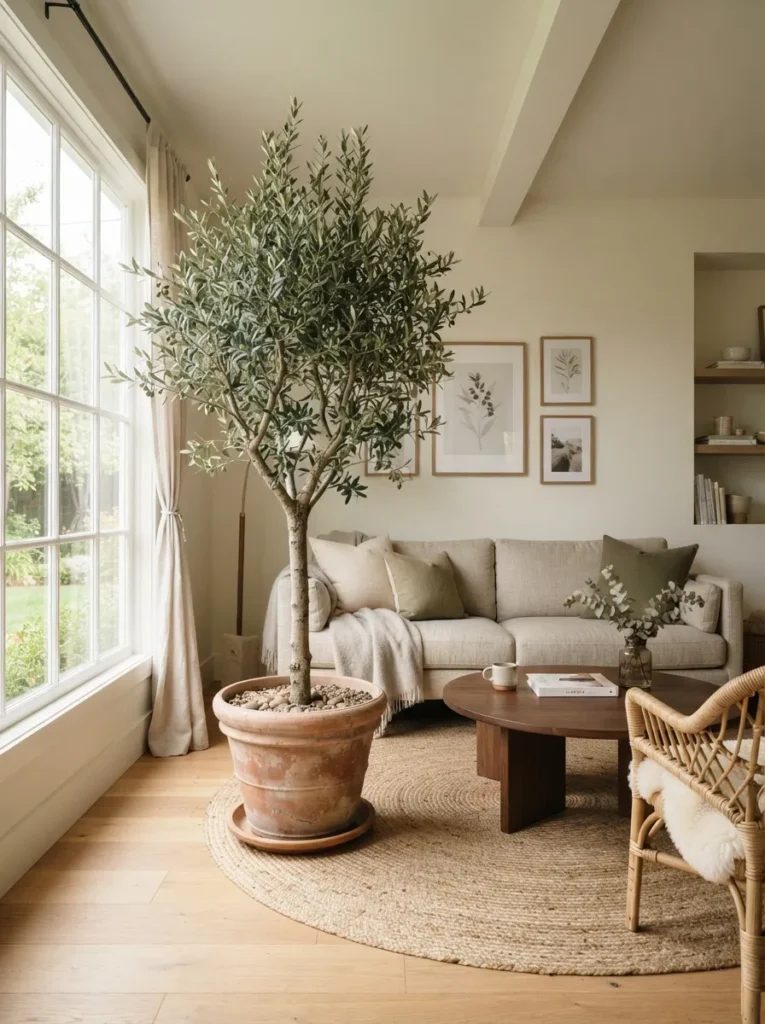
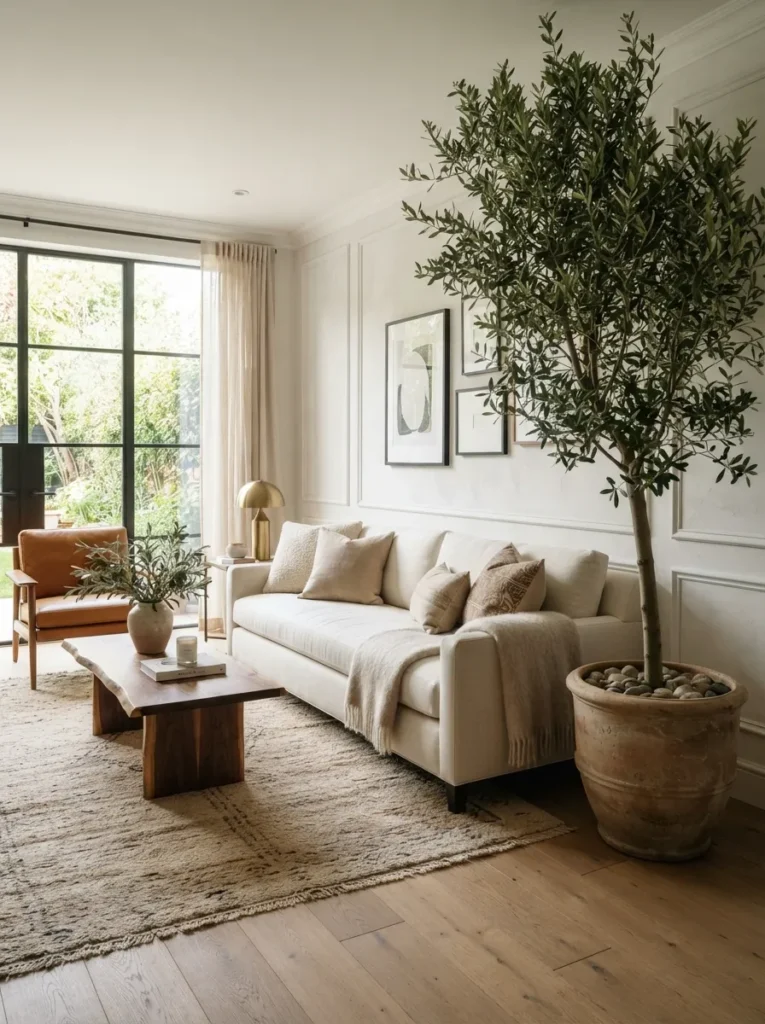
Not every indoor tree needs bold, broad foliage. An olive tree brings height with a much quieter, silvery-green presence and a slightly gnarled trunk that reads as more mature and grounded than younger, straighter varieties.
This suits Mediterranean, coastal, or neutral-palette living rooms particularly well — spaces where a fiddle leaf fig’s large leaves might feel visually louder than the room wants.
Light requirement: olive trees originate from full-sun climates, so they need serious, consistent brightness — ideally a south-facing window — to maintain a full, healthy canopy indoors.
Why this works in smaller rooms: the narrow, airy canopy takes up less lateral space than broadleaf trees, delivering real height without crowding nearby furniture.
3. Use a Weeping Fig for Classic, Elegant Texture
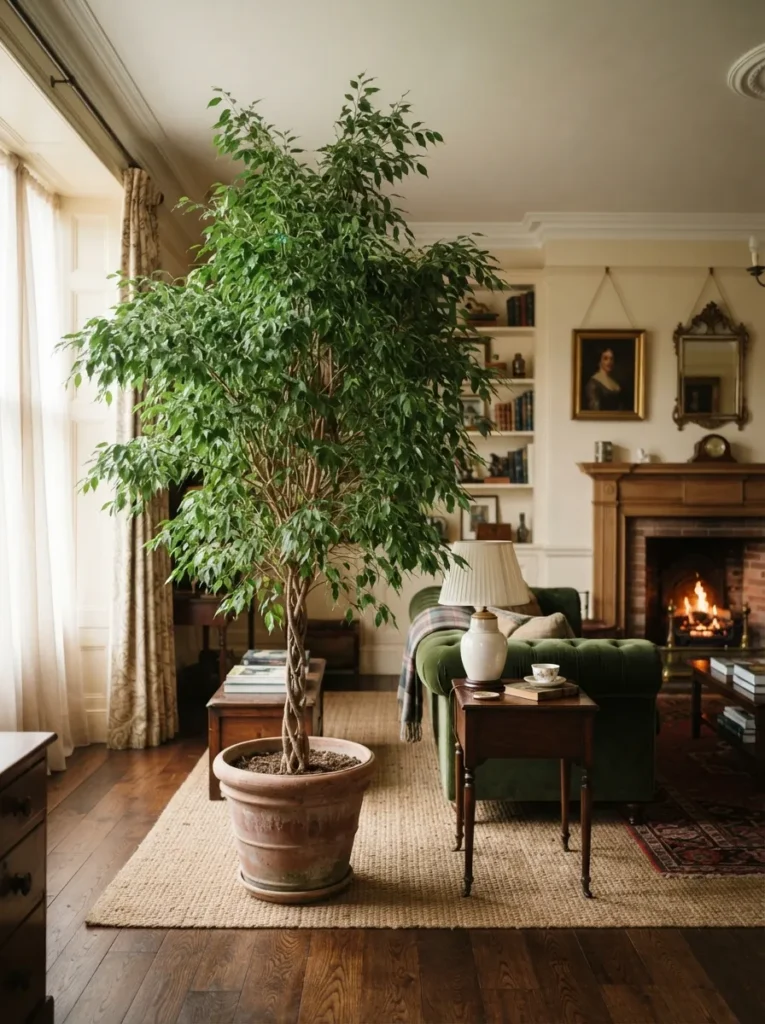
The weeping fig has been a design staple for decades, and its fine, cascading leaves bring a softer, more traditional texture than the bold statement varieties dominating design feeds lately.
Its dense, layered canopy fills vertical space gracefully, making it a strong choice for living rooms leaning classic, traditional, or transitional rather than stark modern.
Consistency matters: weeping figs are famous for dropping leaves when relocated or exposed to sudden temperature swings. Once placed, keep it in that exact spot — this is not a tree to rearrange seasonally.
Styling pairing: its finer texture contrasts beautifully against broader-leafed neighbors, making it a smart complementary choice in a room that already features something bolder like a Monstera.
4. Bring in a Majesty Palm for Tropical, Feathery Height
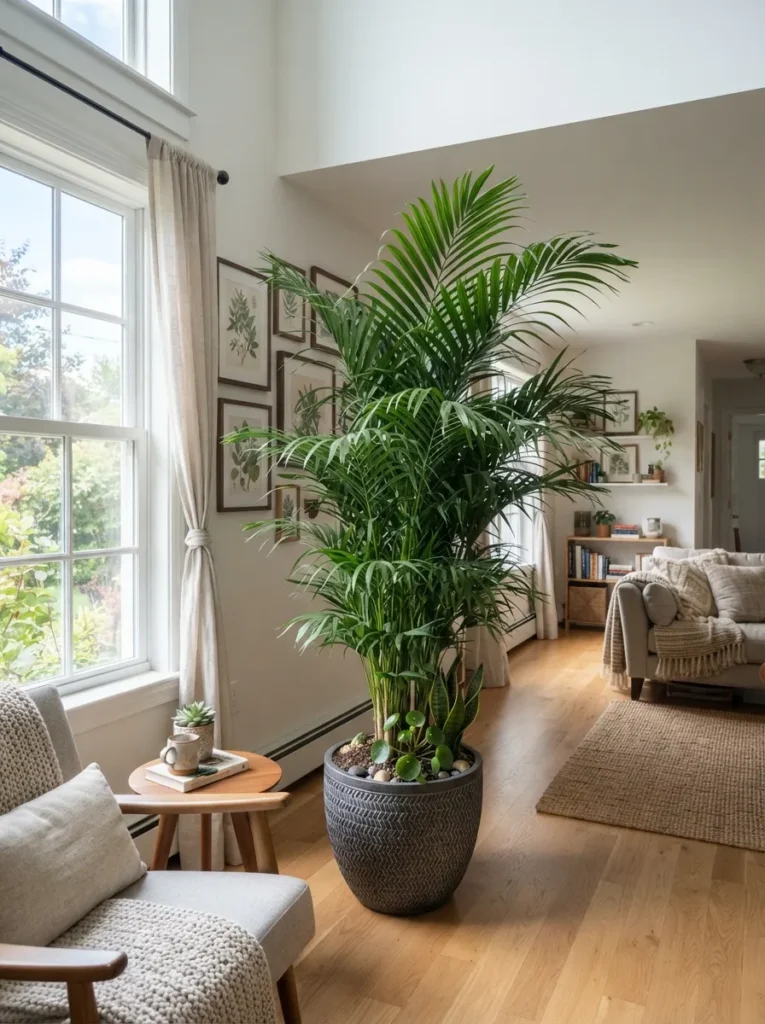
For anyone craving a tropical, resort-like feel indoors, a majesty palm delivers feathery, arching fronds that soften a room in a completely different way than broad, structural leaves.
Its airy silhouette works especially well beside a reading chair or in a bright corner, where the fine texture catches light and casts a gentle, dappled shadow throughout the day.
Moisture requirement: majesty palms are thirstier than most indoor trees on this list and prefer consistently moist soil rather than a dry-out-completely cycle — a detail worth knowing before committing.
Humidity tip: these palms also appreciate higher humidity than a typical living room offers, so occasional misting or a nearby humidifier extends their health considerably.
5. Choose a Dragon Tree for Bold, Architectural Lines
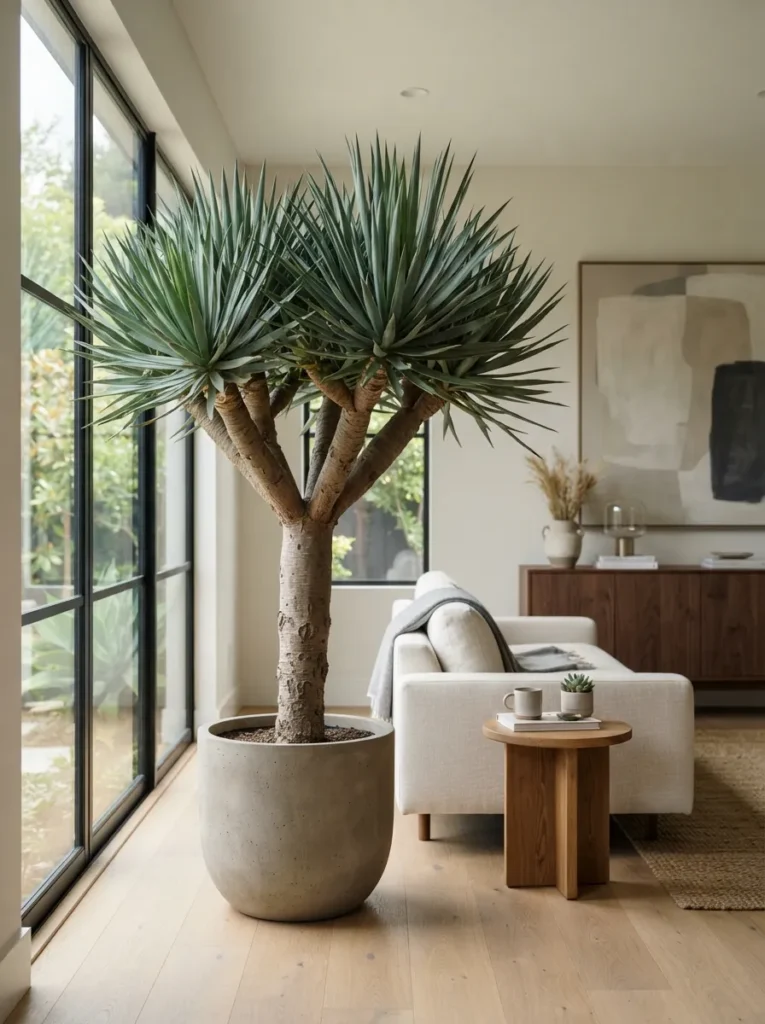
A dragon tree brings something none of the softer varieties on this list can — genuinely architectural, spiky foliage that reads as modern and sculptural rather than lush and organic.
Its upright, radiating leaf pattern suits minimalist or contemporary living rooms particularly well, where a softer, rounder tree might feel visually at odds with the room’s clean lines.
Durability bonus: dragon trees tolerate lower light and inconsistent watering far better than fiddle leaf figs or weeping figs, making this a genuinely low-maintenance option among living room indoor tree ideas.
Pet consideration: dragon trees are toxic to cats and dogs if ingested — worth checking against household pets before bringing one home.
6. Add a Citrus Tree for Fragrance and Seasonal Interest
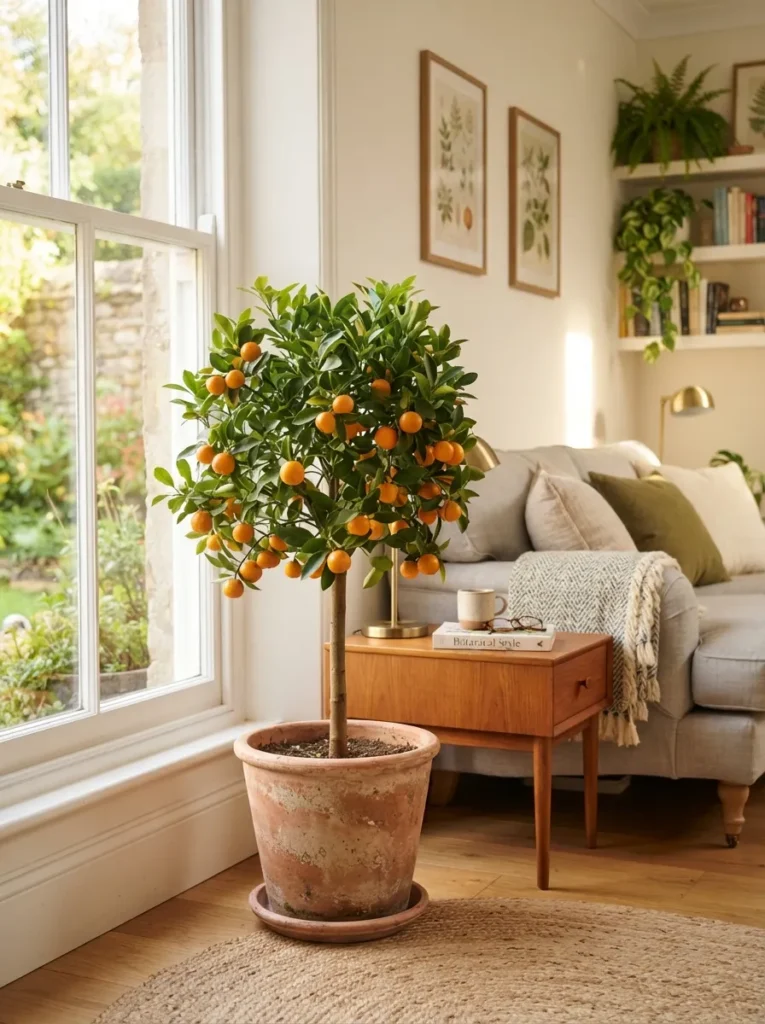
Most indoor trees offer texture and height. A citrus tree offers those plus fragrant blossoms and, with the right care, actual fruit — a genuinely different sensory layer than foliage alone provides.
A dwarf Meyer lemon or calamondin orange tree works particularly well indoors, staying compact enough for living room scale while still producing fragrant flowers seasonally.
Light demand: citrus trees need the brightest, most direct light of anything on this list — a south-facing window is close to non-negotiable for consistent flowering and fruit production indoors.
Realistic expectation: indoor citrus rarely produces the same yield as an outdoor tree, so treat any fruit as a bonus rather than the primary reason for bringing one home.
7. Pair an Indoor Tree With a Sculptural Floor Planter
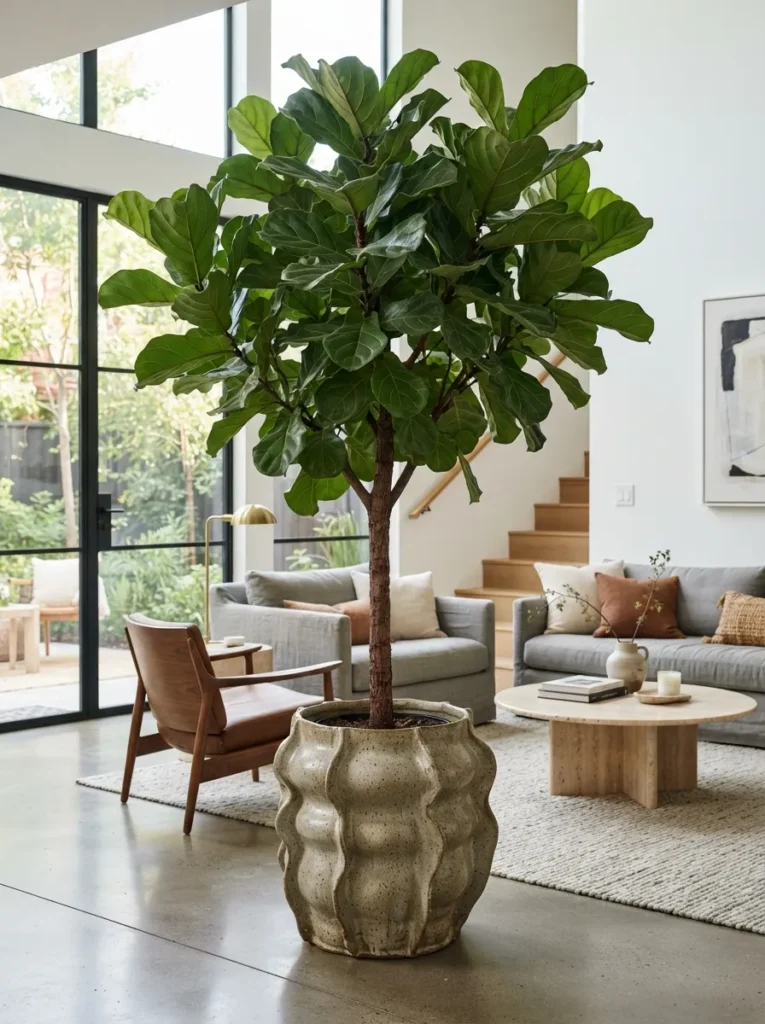
The tree rarely undermines a room’s design on its own. The plain plastic grow pot sitting underneath it usually does.
A sculptural floor planter — ribbed ceramic, matte concrete, or woven rattan — elevates any indoor tree from “recently purchased” to “genuinely styled,” instantly changing how the whole corner reads.
gives a tall indoor tree a finished, gallery-worthy base instead of a plain grow pot.
🛒 Check Price on AmazonMaterial to avoid: thin, glossy plastic pots read as temporary no matter how healthy the tree looks growing out of them.
8. Use a Rolling Plant Stand for Seasonal Light Adjustments
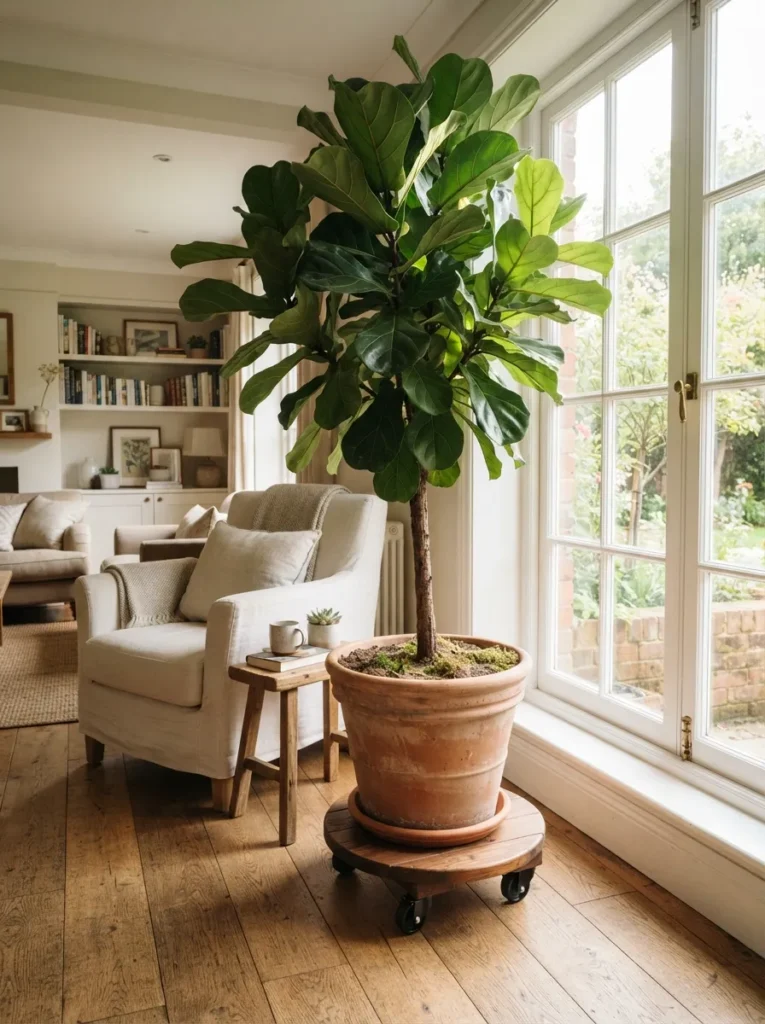
Indoor trees are heavy, and dragging one across the floor to chase shifting seasonal light is a genuine hassle most people avoid until the tree suffers for it.
A rolling stand hidden beneath the planter solves that entirely, letting a large tree get repositioned toward brighter winter light without straining anyone’s back or scratching the floor underneath.
makes repositioning a heavy indoor tree effortless without damaging flooring.
🛒 Check Price on AmazonPractical upside: this also protects floors from moisture rings that heavy ceramic planters tend to leave behind after repeated watering.
9. Choose a High-Quality Artificial Tree for Zero-Maintenance Impact
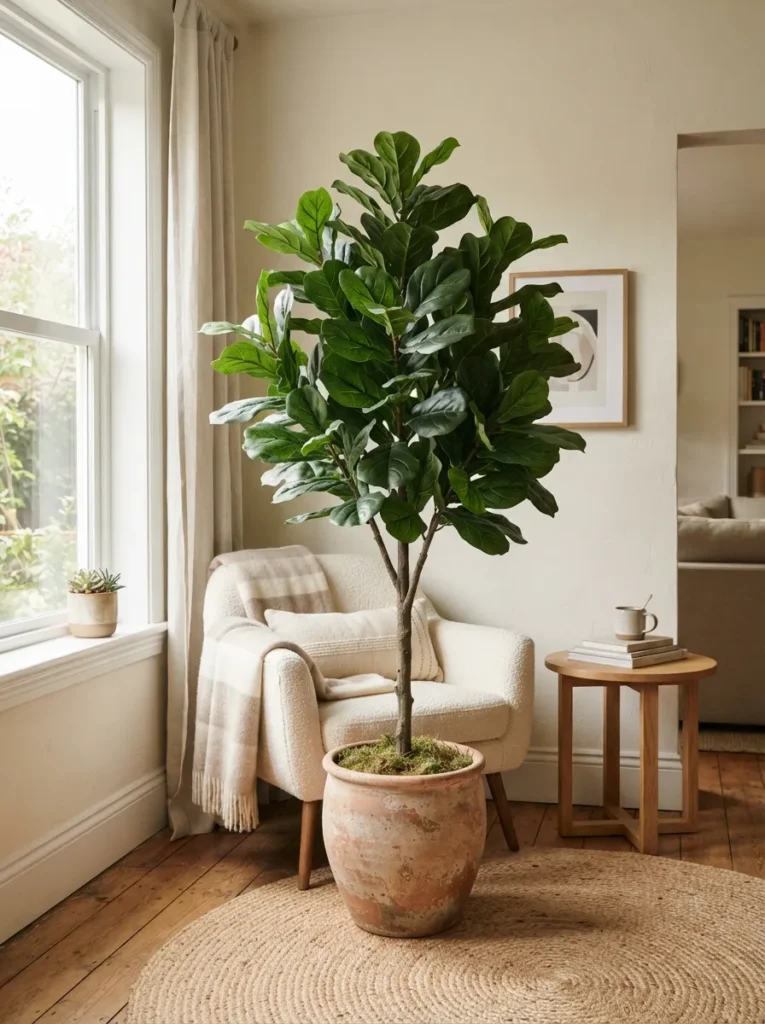
Not every household has the light, humidity, or patience a living tree demands, and there is nothing wrong with admitting that upfront.
A well-made artificial tree — with realistic leaf texture and a natural, slightly irregular branch structure — delivers the same architectural height and visual impact without a single watering schedule to maintain.
delivers the same architectural height and leaf texture with zero watering or light requirements.
🛒 Check Price on AmazonQuality tip: avoid artificial trees with obviously uniform, plastic-looking leaves or unnaturally symmetrical branching — the realism (or lack of it) is immediately noticeable up close.
10. Let One Indoor Tree Replace an Entire Corner’s Furniture Plan
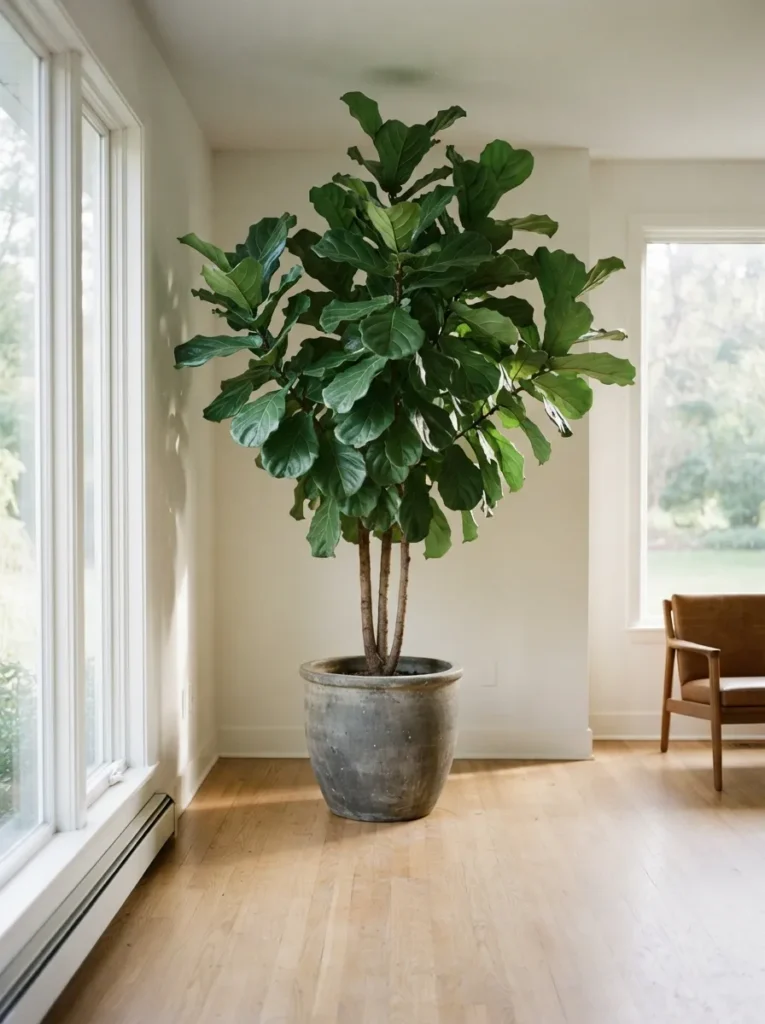
Not every awkward corner needs a chair, a side table, and a lamp crammed into it. Sometimes one striking tree does more design work alone.
Swapping a cluttered furniture attempt for a single indoor tree simplifies the whole corner while still giving it genuine presence — proof that living room indoor tree ideas can subtract complexity just as easily as they can add greenery.
Why this works: a single large-scale element reads as more intentional than several small pieces competing for attention, and it solves the “what do I even put here” problem corners so often present.
A living room without at least one indoor tree is missing its own sense of scale. Choose one of these living room indoor tree ideas, give it the light and room it actually needs, and let the whole space finally feel as grounded as it looks.