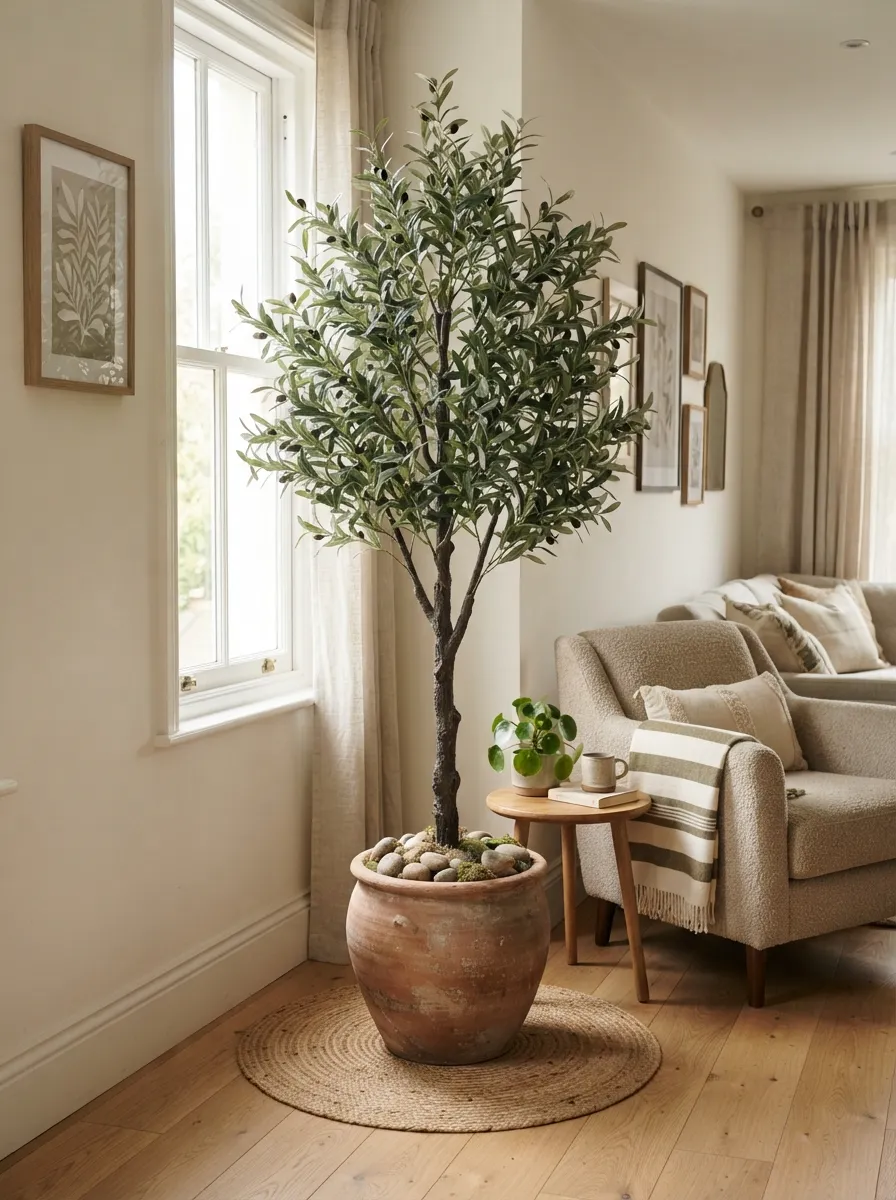
9 Effortless Living Room Olive Tree Ideas That Bring Mediterranean Charm Home
This post contains affiliate links. If you buy something through them, I may earn a small commission at no extra cost to you.
Most statement plants shout. An olive tree just quietly stands there, being effortlessly correct in almost any room it enters. That understated, silvery-green presence is exactly why it has become the design world’s go-to for warmth without the visual noise.
It solves a problem bolder tropical plants often create — height and texture without a single leaf competing for attention. Here are 9 living room olive tree ideas built to bring that quiet Mediterranean charm home.
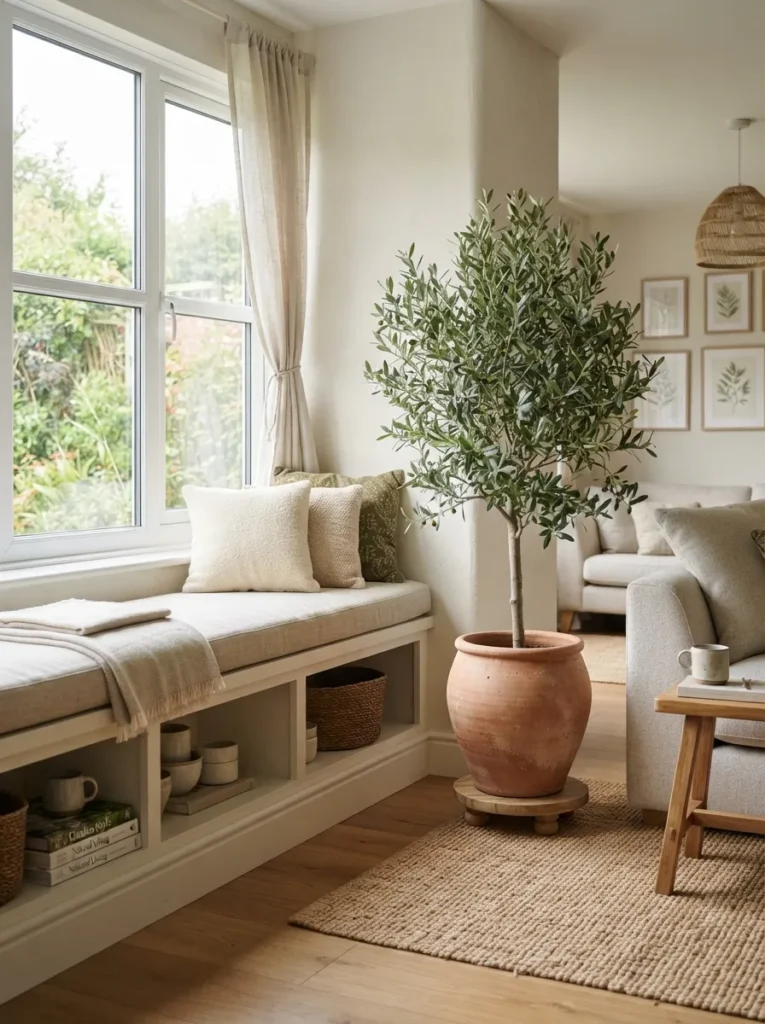
1. Frame a Window Seat With an Olive Tree on Either Side
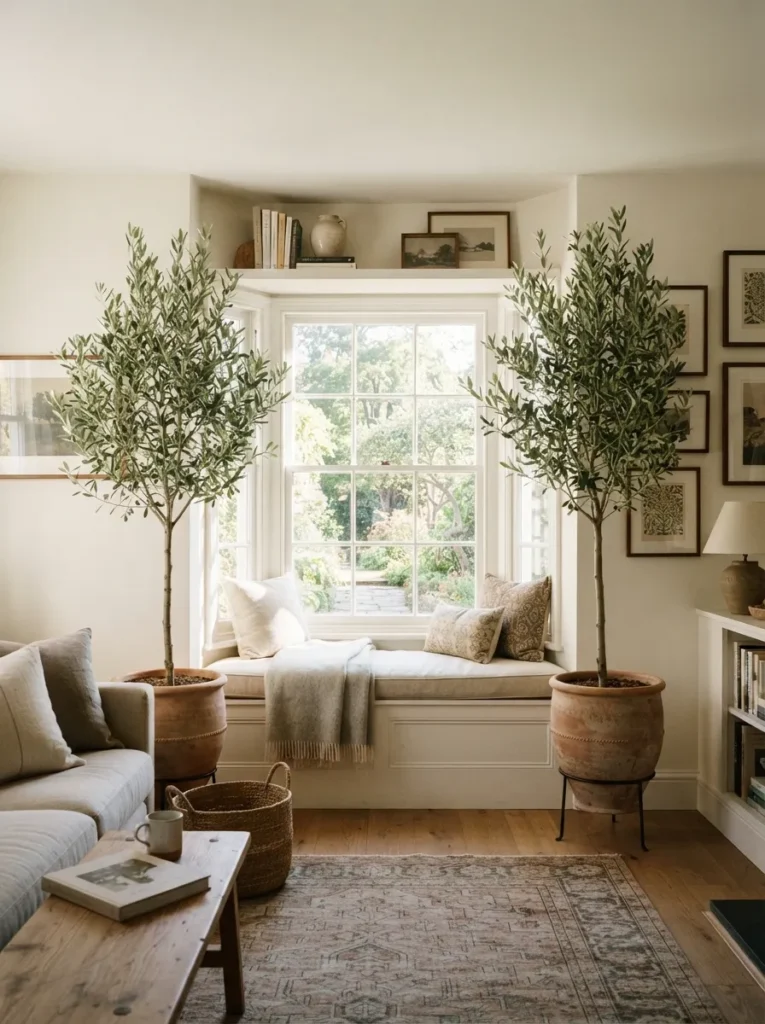
A window seat without anything anchoring its edges can feel a little exposed, like furniture placed without a plan.
Two olive trees positioned symmetrically on either side create a natural frame, echoing the way outdoor courtyards use potted olives to define a seating area. The narrow canopy keeps the window’s light from being blocked, unlike broader-leafed trees that would.
Spatial rule: confirm the window seat’s width can actually support two full-grown trees without crowding — if space is tight, a single tree on one side reads just as intentional without the symmetry demand.
Light check: window seats already tend to be a room’s brightest spot, making this one of the more reliable placements for a light-hungry tree like this.
2. Fill a Reading Nook With Quiet, Grounding Height
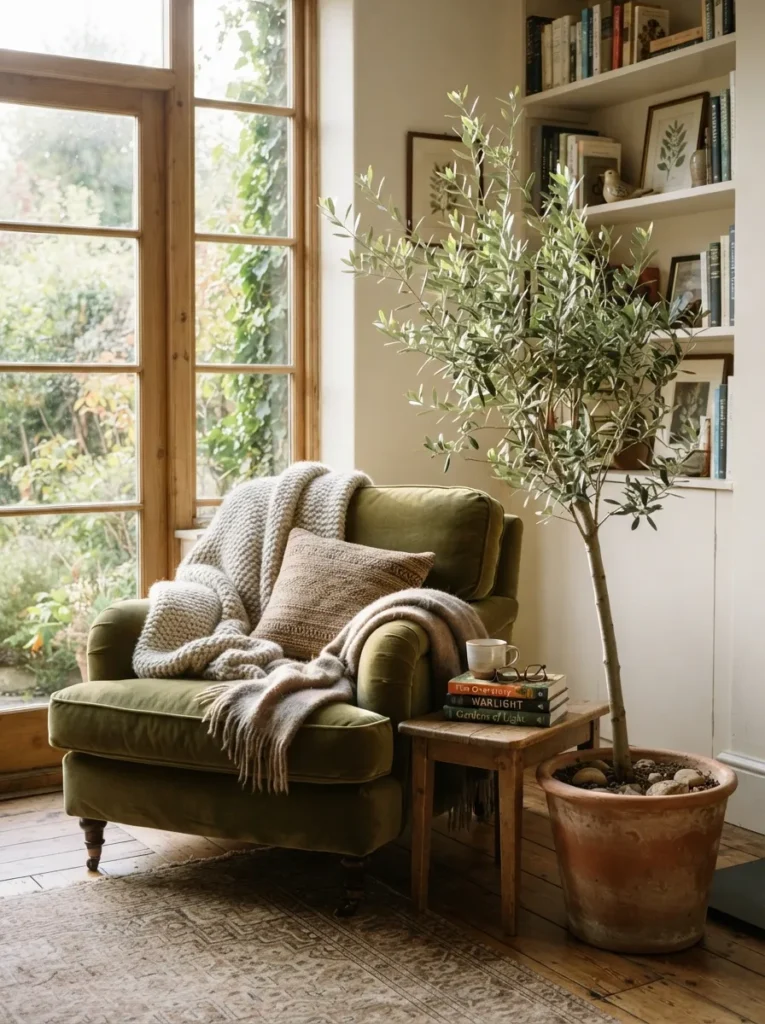
A reading nook with just a chair and a lamp can feel a little sparse, missing the sense of enclosure that makes a corner feel like an actual retreat.
An olive tree positioned just behind or beside the chair adds height and a soft, textured backdrop without the visual weight a bookshelf or larger piece of furniture would introduce into a small space.
Why this pairing works: the tree’s narrow, airy silhouette does not block the natural light a reading nook depends on, unlike bushier plants that can cast the whole corner into shadow.
Placement detail: position it slightly behind the chair’s shoulder rather than directly in the sightline toward the window, so the view stays open while the tree still reads as part of the vignette.
3. Choose a Rustic Terracotta Pot for Authentic Mediterranean Texture
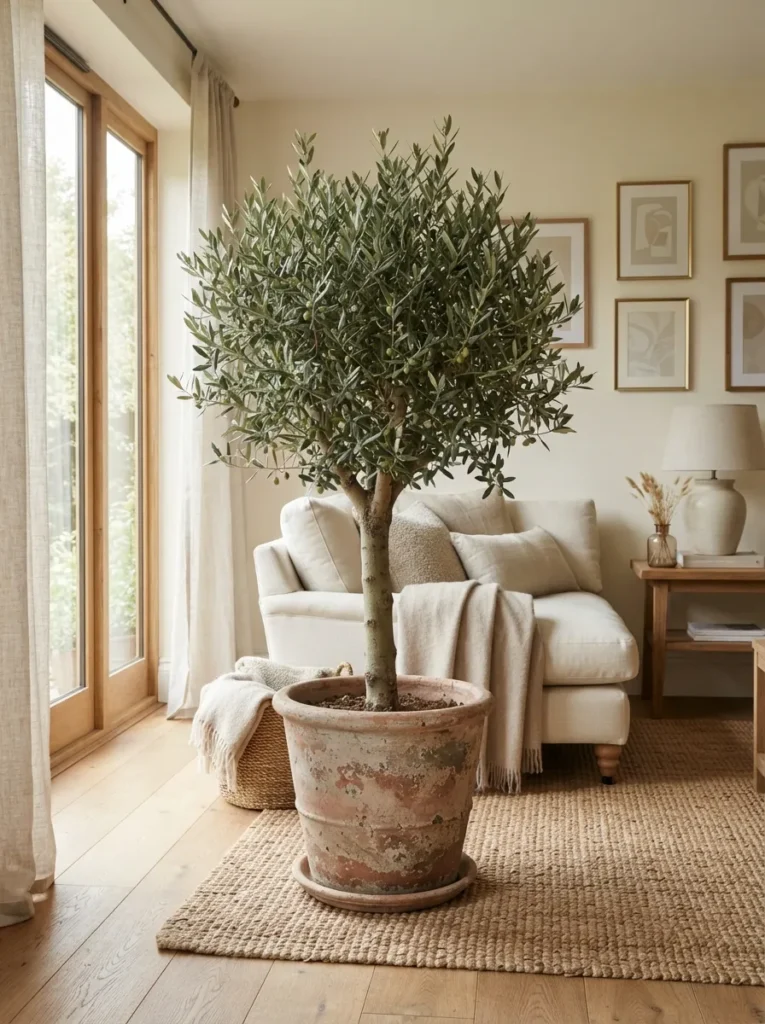
Terracotta is the material an olive tree would choose for itself, if given the option — it is practically synonymous with the trees’ Mediterranean origins.
A weathered or naturally aged terracotta pot reinforces that authentic feel far more convincingly than a glossy, modern planter ever could, especially in a room already leaning warm and earthy.
Material note: unglazed terracotta is porous, meaning soil dries out faster than in ceramic or plastic. Check moisture more frequently with this pairing, particularly during warmer months.
Aesthetic pairing: terracotta pairs beautifully against white walls, exposed wood beams, or warm neutral palettes — it can look slightly out of place in a stark, cool-toned modern room without other warm materials nearby.
4. Use a Micro-Cement Planter for a Modern Rustic Look
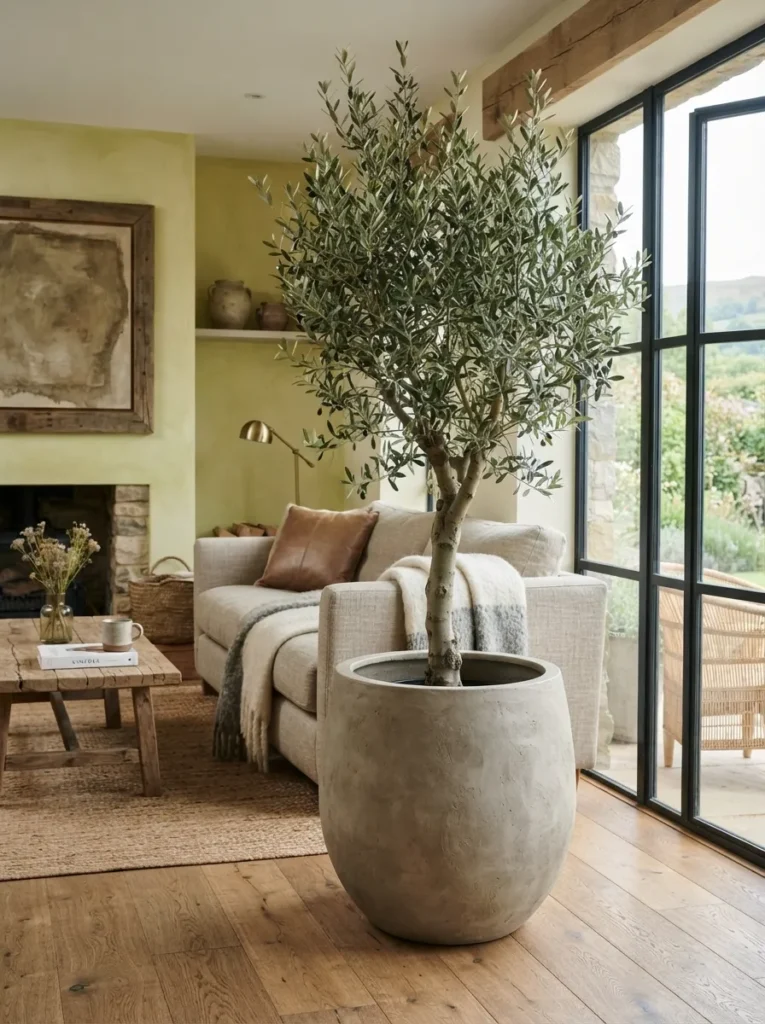
Not every space wants the traditional terracotta route. A micro-cement planter delivers the same earthy, organic feel with a smoother, more contemporary finish.
The matte, slightly industrial texture bridges modern minimalism and rustic warmth, making it a smart choice for living rooms that want the olive tree’s Mediterranean charm without leaning fully traditional.
Why this works for modern rustic interiors: micro-cement’s neutral gray tone reads as architectural rather than decorative, letting the tree’s silvery foliage stay the visual focus instead of competing with a more ornate pot.
Weight consideration: cement planters are considerably heavier than terracotta or plastic, so factor that into any plans for repositioning the tree seasonally.
5. Let the Olive Tree Anchor a Minimalist Living Room Corner
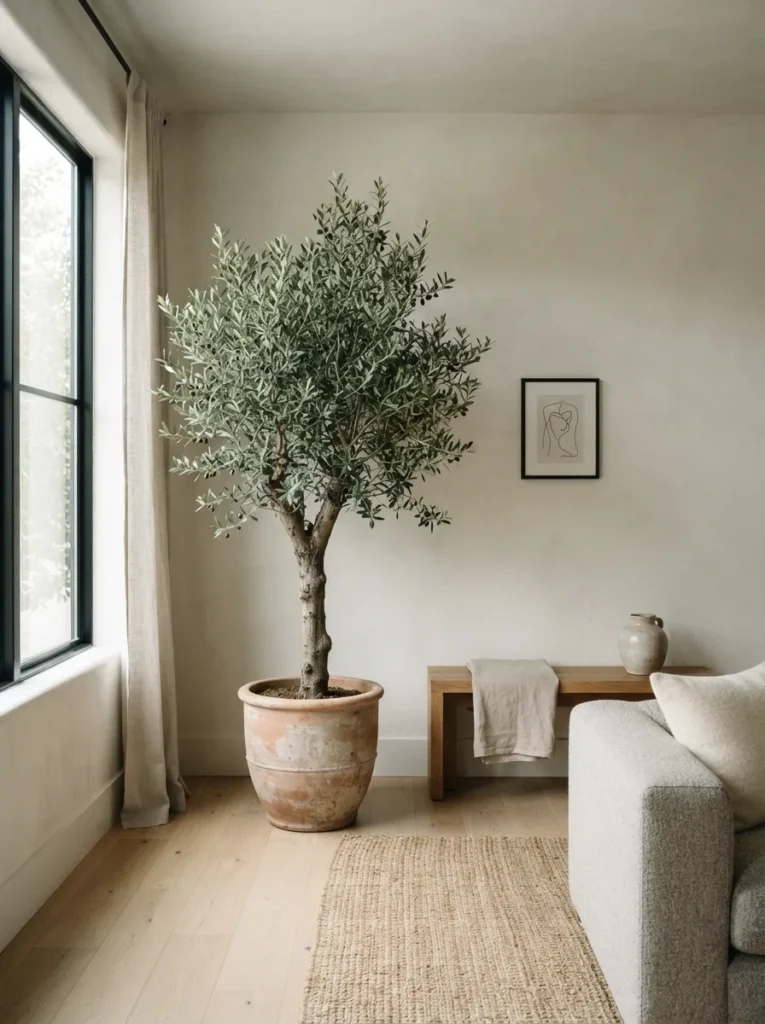
Minimalist rooms often struggle with feeling a little cold or unfinished, since the whole point is resisting the urge to add more objects.
A single olive tree solves that tension perfectly — it adds organic warmth and genuine visual interest without contradicting a minimalist room’s restraint, since it functions as one considered element rather than clutter.
Why this pairing works so well: the tree’s narrow, uncomplicated silhouette suits a room that is already avoiding visual noise, unlike bushier or more dramatic plants that would clash with minimalist restraint.
Styling tip: keep everything else in the corner genuinely empty. Adding a side table or extra decor next to the tree undercuts the very simplicity that makes this pairing work.
6. Choose a Faux Olive Tree for Zero-Maintenance Charm
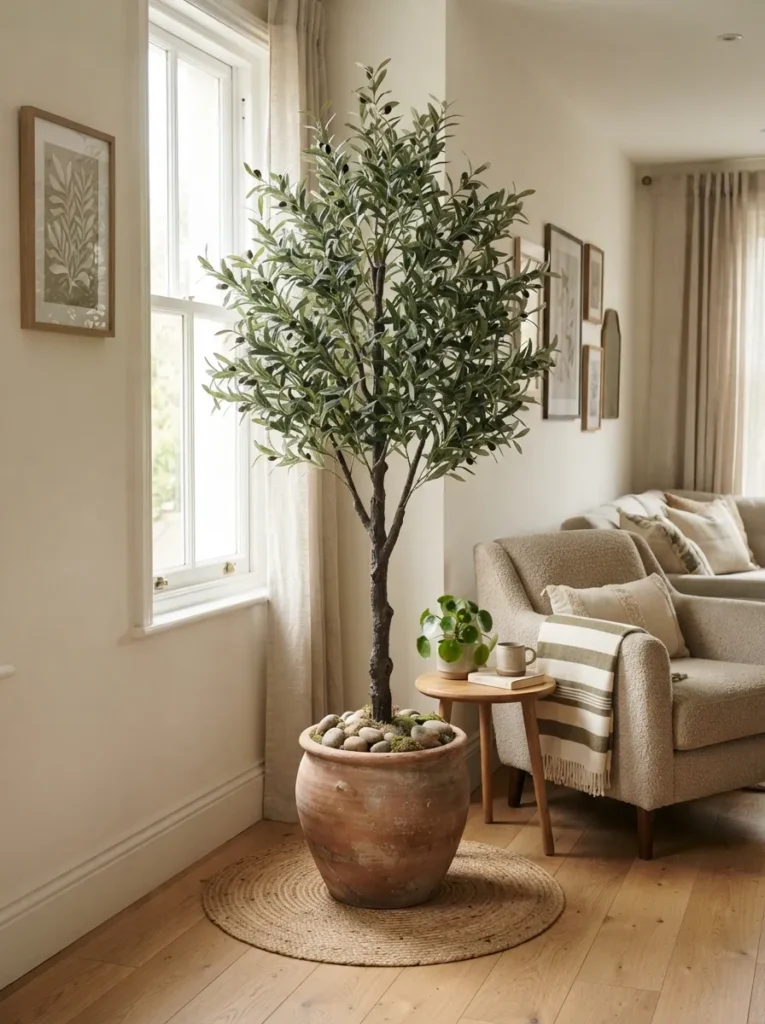
Not every living room gets the bright, consistent light a real olive tree demands, and there is no shame in admitting that upfront.
A well-made faux olive tree delivers the same silvery, Mediterranean silhouette without a single watering schedule or light requirement to manage, making it a realistic option for darker apartments or busy households.
delivers the same silvery Mediterranean silhouette with zero light or watering requirements.
🛒 Check Price on AmazonQuality tip: look for faux trees with varied leaf coloring and a slightly irregular branch structure — uniform, perfectly symmetrical faux foliage is the fastest way to spot a low-quality fake from across the room.
7. Add a Woven Basket Cover for Softer, Textural Warmth
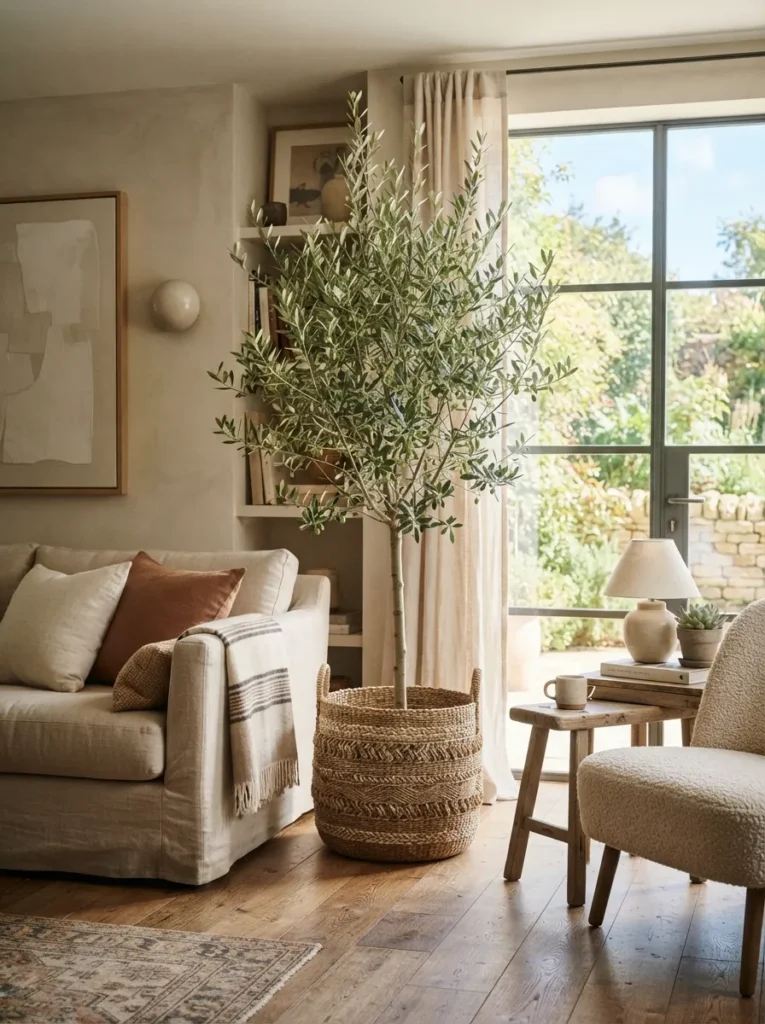
A woven basket slipped over the plain grow pot softens the base of the tree with natural texture, bridging the gap between a bare nursery container and a fully potted, finished look.
This works especially well for renters who cannot commit to repotting but still want the finished, styled appearance a proper planter provides.
adds instant textural warmth around an olive tree’s base without repotting.
🛒 Check Price on AmazonPractical detail: most woven covers are not waterproof, so keep the plant in its original nursery pot nested inside rather than pouring water directly into the woven material.
8. Use a Rolling Plant Stand to Chase Seasonal Light
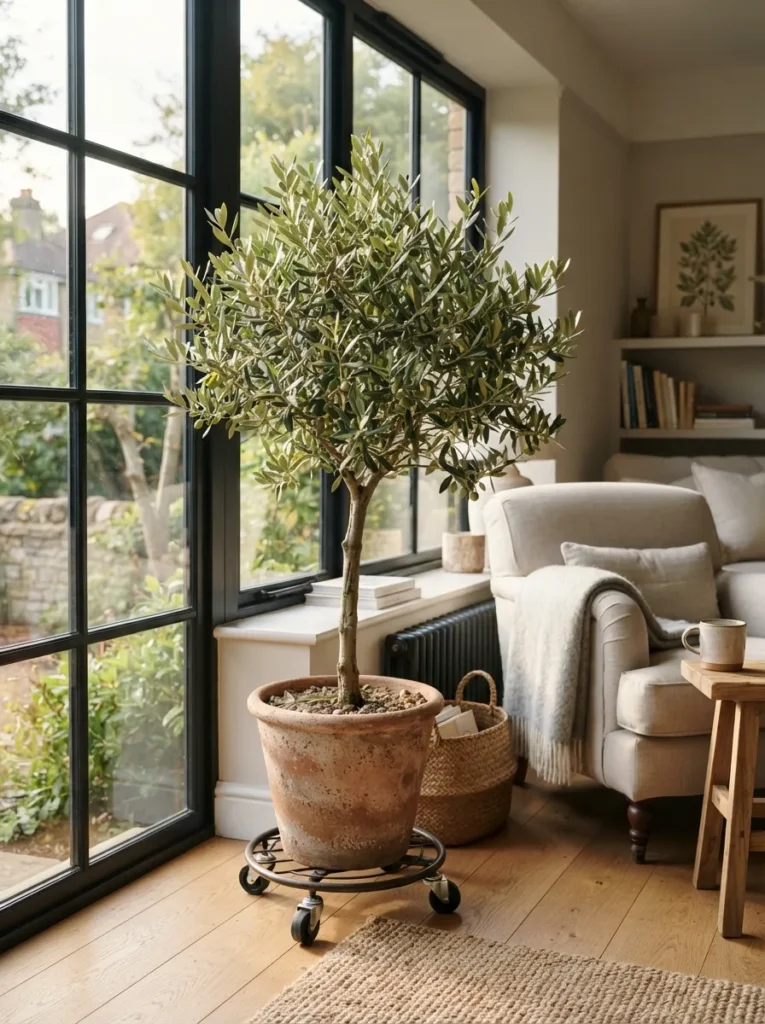
Olive trees need serious, consistent brightness, and the ideal spot for that light can shift meaningfully between summer and winter as the sun’s angle changes.
A rolling plant stand hidden beneath the pot makes seasonal repositioning painless, letting the tree chase brighter light through the colder months without anyone straining to drag a heavy planter across the floor.
makes repositioning a heavy olive tree toward seasonal light effortless without floor damage.
🛒 Check Price on AmazonBonus benefit: this also protects flooring from the moisture rings heavy terracotta or cement planters tend to leave behind after repeated watering.
9. Keep Surrounding Decor Neutral to Let the Tree’s Tone Lead
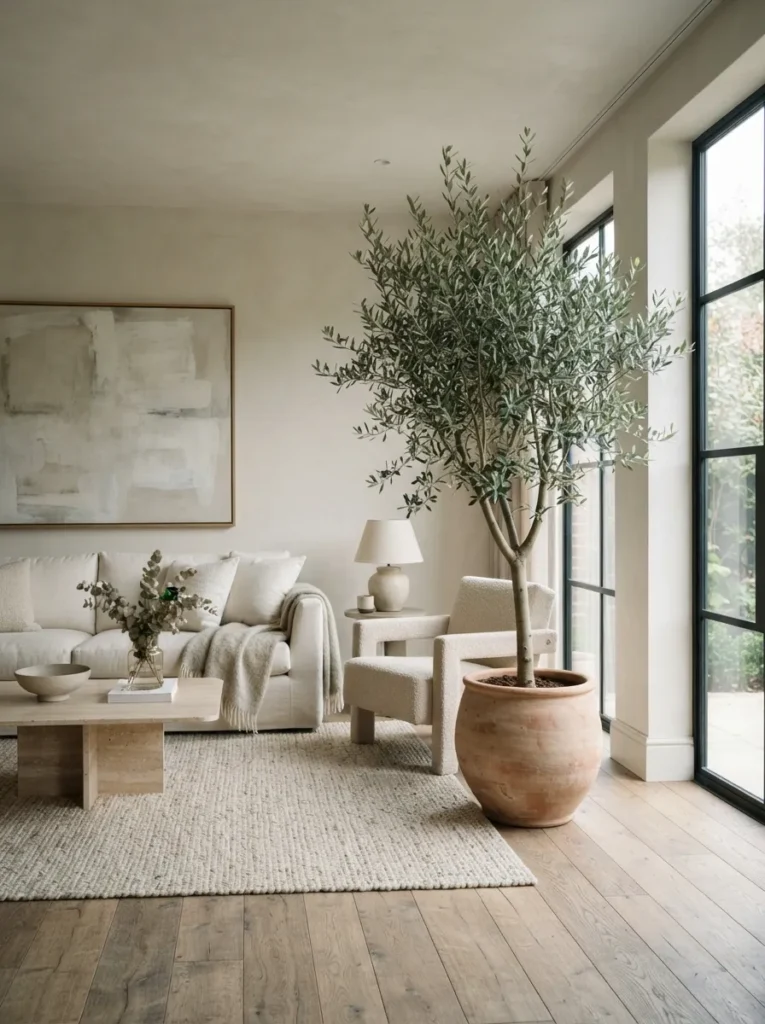
The olive tree’s entire appeal lies in its quiet, silvery-green restraint — surrounding it with bold color or busy pattern undercuts that calm effect almost immediately.
Keeping nearby textiles, walls, and accents in warm neutrals lets the tree’s muted tone set the mood for the whole room, rather than getting visually drowned out by competing color choices nearby.
The real insight behind living room olive tree ideas: this is a plant that thrives on restraint everywhere else in the room, which is precisely what makes it feel so effortlessly sophisticated compared to bolder tropical alternatives.
An olive tree does not need to try hard to look expensive — that is basically its whole personality. Pick one of these living room olive tree ideas, give it real light, and let that quiet Mediterranean charm do the rest.