12 Statement Large Plant Ideas for Living Rooms to Elevate Your Decor
This post contains affiliate links. If you buy something through them, I may earn a small commission at no extra cost to you.
A cluster of small succulents on a windowsill is nice. It is also not doing a single thing to fix that six-foot dead zone by the window. Empty corners do not need more clutter — they need one confident, oversized plant that acts like architecture instead of an accessory.
That is the whole premise behind a great large plant: it solves a spatial problem a dozen small ones never could. Here are 12 living room large plant ideas built to anchor corners, frame seating, and finally give those awkward gaps a job to do.
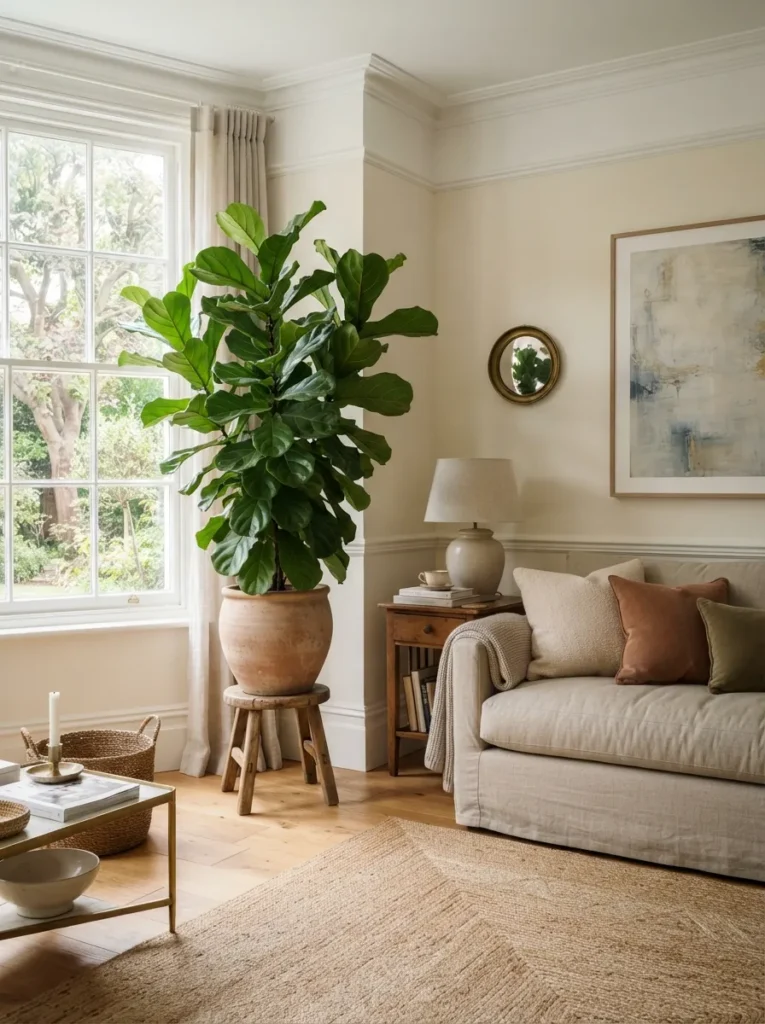
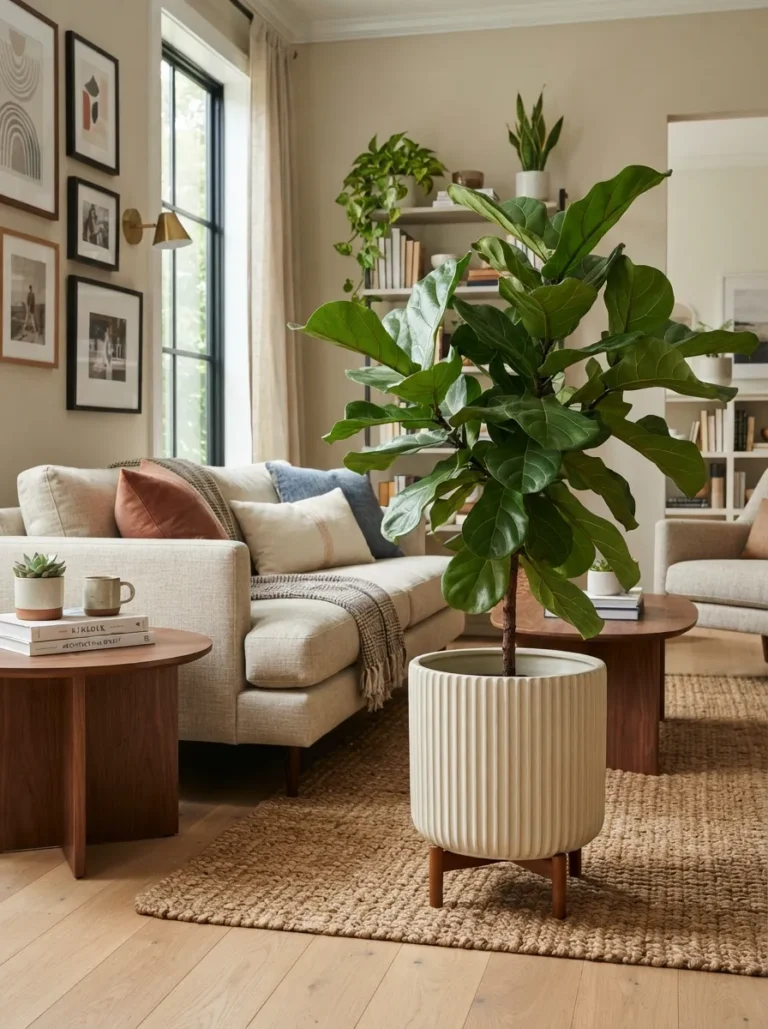
1. Let a Fiddle Leaf Fig Own the Empty Corner
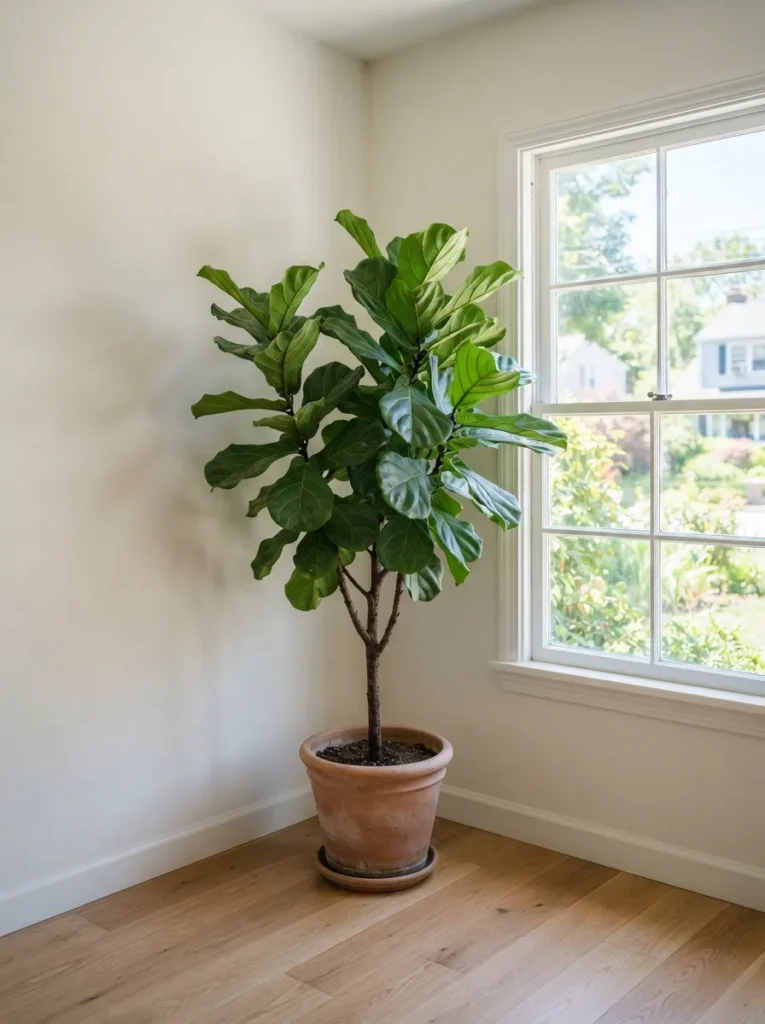
The fiddle leaf fig became a design cliché for a reason — its broad, glossy leaves genuinely fill vertical space better than almost any other houseplant.
Placed in an underused corner, it functions less like a plant and more like a piece of sculpture the eye keeps returning to. That single-focal-point effect is exactly what separates a styled room from a merely furnished one.
Spatial rule: float the pot a few inches from the wall instead of pushing it flush. That gap lets light rake across the leaves instead of flattening them into a solid silhouette.
Where it fails: low, indirect light. A fiddle leaf fig starved of brightness will drop leaves and lean hard toward the nearest window, undoing the whole symmetry the corner placement was built around.
2. Frame a Sofa With Bird of Paradise on Either Side
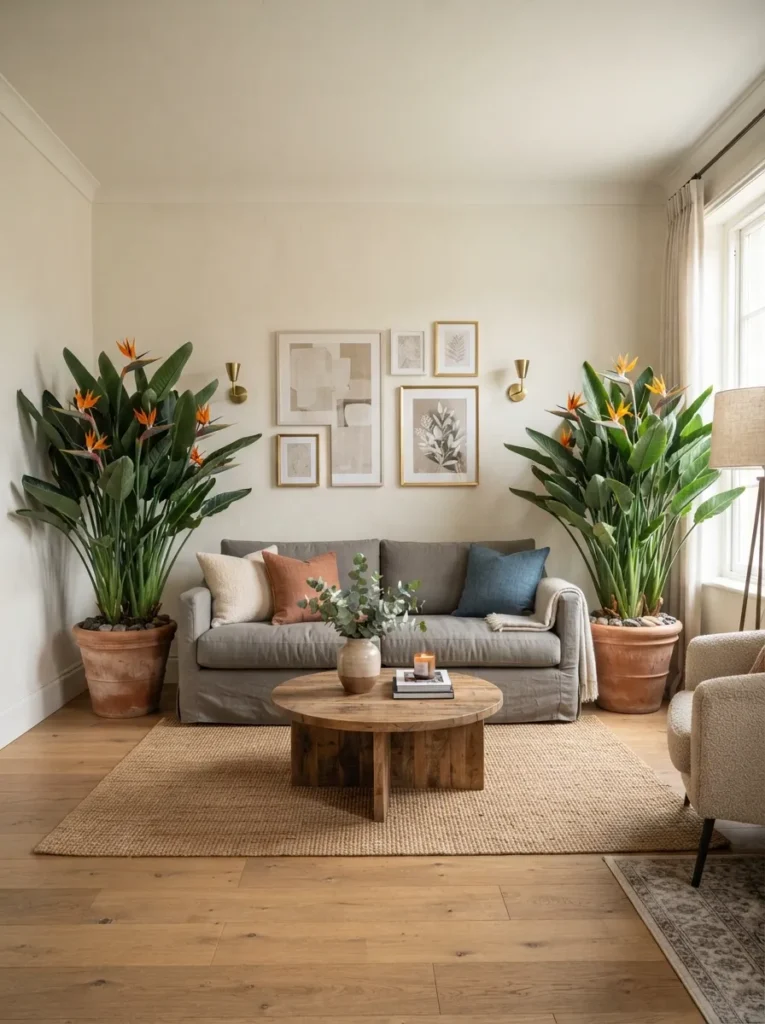
A sofa floating alone in the middle of a room can feel underdressed, especially in a larger living room with square footage to spare.
Two bird of paradise plants, one on each end, create a natural frame that visually completes the seating area without adding another piece of furniture. The broad, banana-leaf foliage also reads as tropical and architectural at once, which suits both traditional and modern spaces.
Design nuance: matching plants on either side only works if the room can actually support symmetry — a single asymmetrical layout, like a sofa against one wall with a window on the other, will make paired plants look forced rather than intentional.
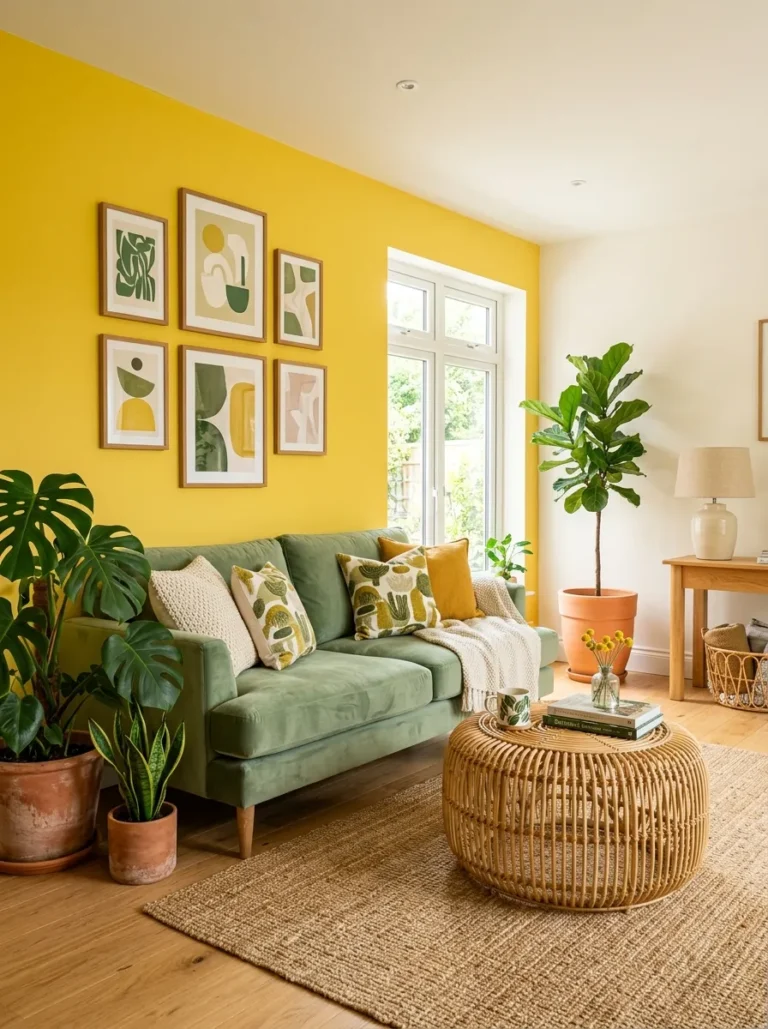
3. Use a Monstera Deliciosa to Add Sculptural Drama
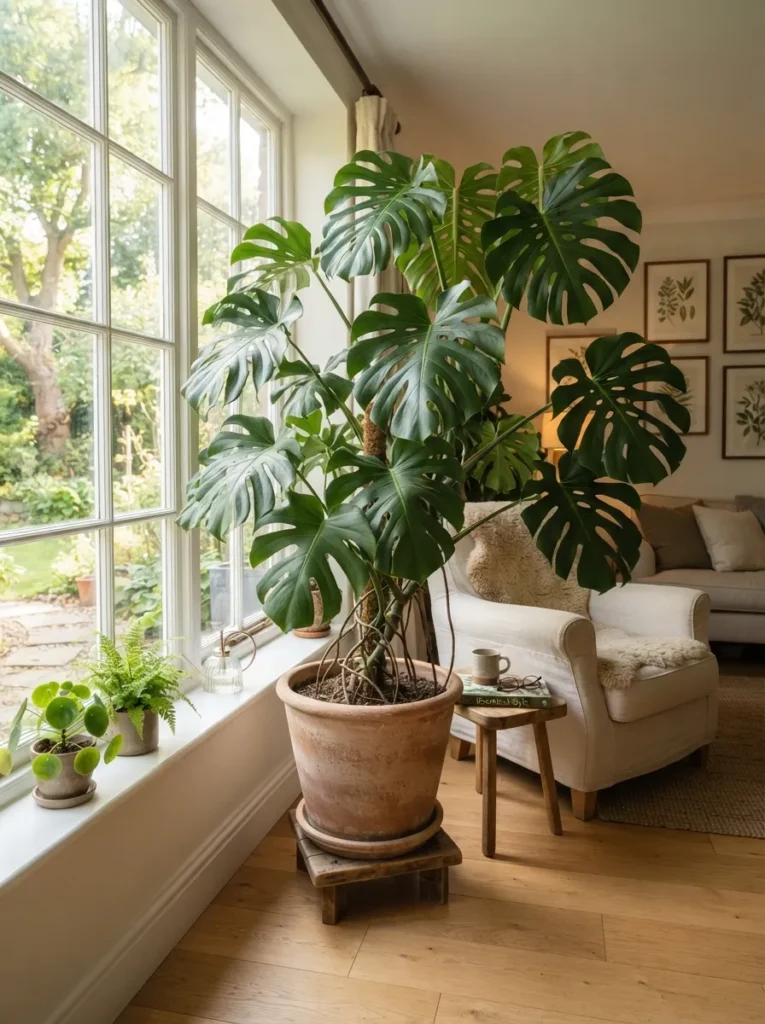
Few plants deliver drama the way a mature Monstera deliciosa does — those deeply split, almost architectural leaves practically function as wall art on a stem.
Positioned near a window with a bit of open floor around it, a Monstera reads as a genuine art piece rather than “just a plant,” especially once it develops the signature fenestrations mature leaves are known for.
Growth consideration: this is not a plant that stays neatly compact. Give it real lateral room to spread, or the leaves will end up crowding nearby furniture within a single growing season.
Styling tip: a simple, unfussy pot lets the leaf shape stay the visual star — save patterned or textured planters for smaller, simpler plants elsewhere in the room.
4. Bring in an Olive Tree for Quiet, Mediterranean Elegance
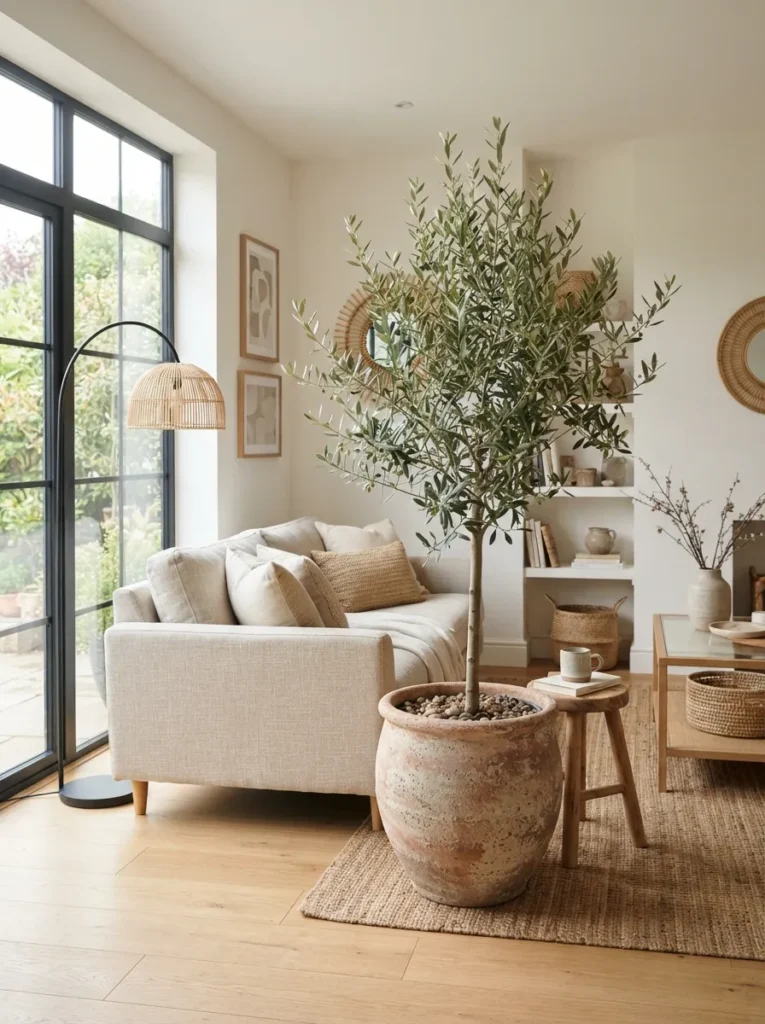
Not every large plant needs to shout. An indoor olive tree brings height and presence with a much quieter, more refined silhouette than broad-leafed tropical varieties.
Its narrow, silvery-green leaves and slightly gnarled trunk suit living rooms leaning toward a neutral, Mediterranean, or coastal palette — somewhere a Monstera or fiddle leaf fig might feel visually too loud.
Light requirement: olive trees need serious, consistent brightness — ideally a south-facing window — since they come from full-sun climates originally. Anything less, and growth slows dramatically and the silhouette thins out.
Why this works for smaller rooms: the narrow canopy takes up less lateral space than tropical broadleaf plants, delivering height without the same footprint demand.
5. Choose a Rubber Plant for Bold, Glossy Texture
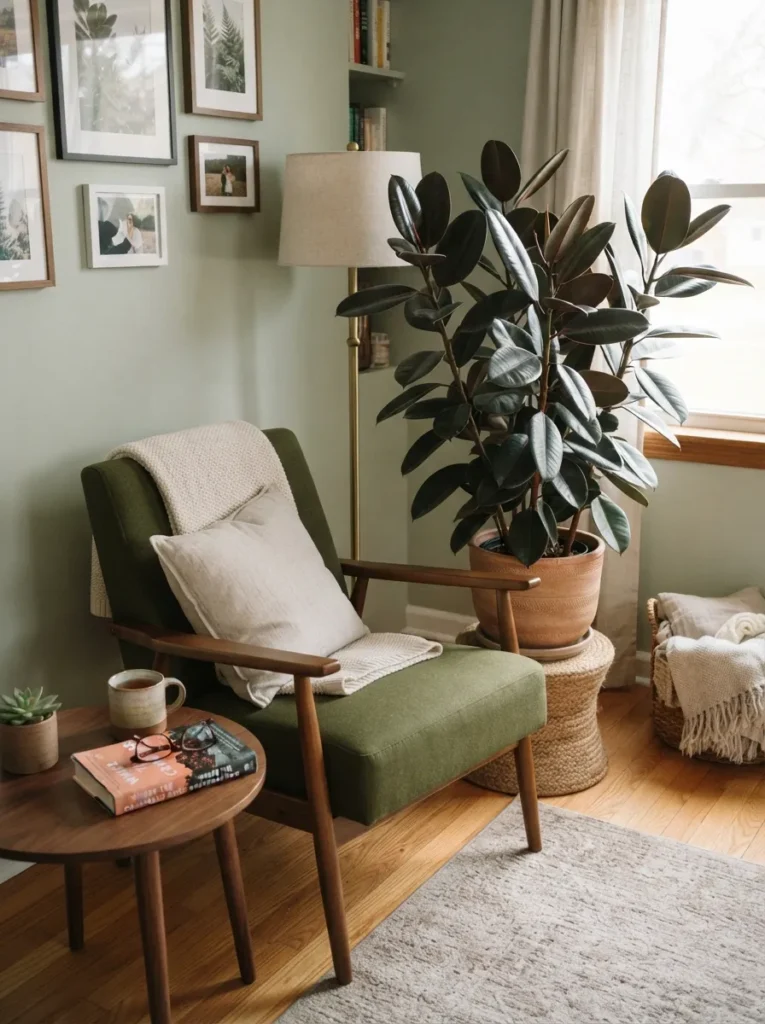
A rubber plant’s thick, glossy, almost lacquered leaves add a different texture entirely from the matte, papery look of most other large houseplants.
That reflective quality catches light in a way flatter foliage cannot, making it a smart choice for darker corners that need a little visual brightness bounced back into the room.
Durability bonus: rubber plants tolerate a wider range of light and watering inconsistency than fiddle leaf figs, making this the more forgiving choice for anyone newer to living room large plant ideas involving statement greenery.
Placement note: the deep burgundy varieties pair beautifully against warm wood tones, while the classic green reads cleaner against white or gray walls.
6. Anchor a Reading Nook With a Tall Palm
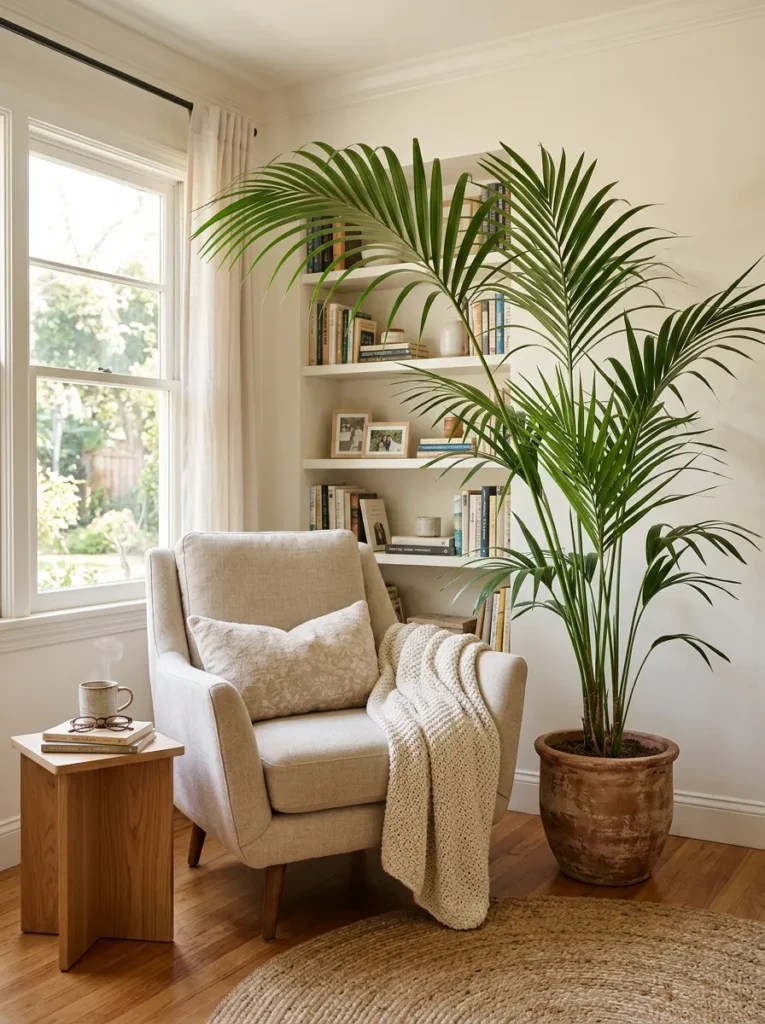
A reading nook without any greenery can feel a little clinical, no matter how comfortable the chair is.
An areca or kentia palm, positioned just behind or beside the seat, adds a soft, textured backdrop that makes the whole corner feel like a considered retreat instead of a chair randomly placed near a window.
Texture contrast: palms bring a feathery, fine-textured foliage that contrasts nicely against broader-leafed plants elsewhere in the room, so this pairing works well in living rooms already featuring a Monstera or fiddle leaf fig.
Watering habit: palms generally prefer consistent moisture over the dry-out-completely cycle many other large plants tolerate — a detail worth knowing before committing to this pairing.
7. Use a Snake Plant for Height Without the Fuss
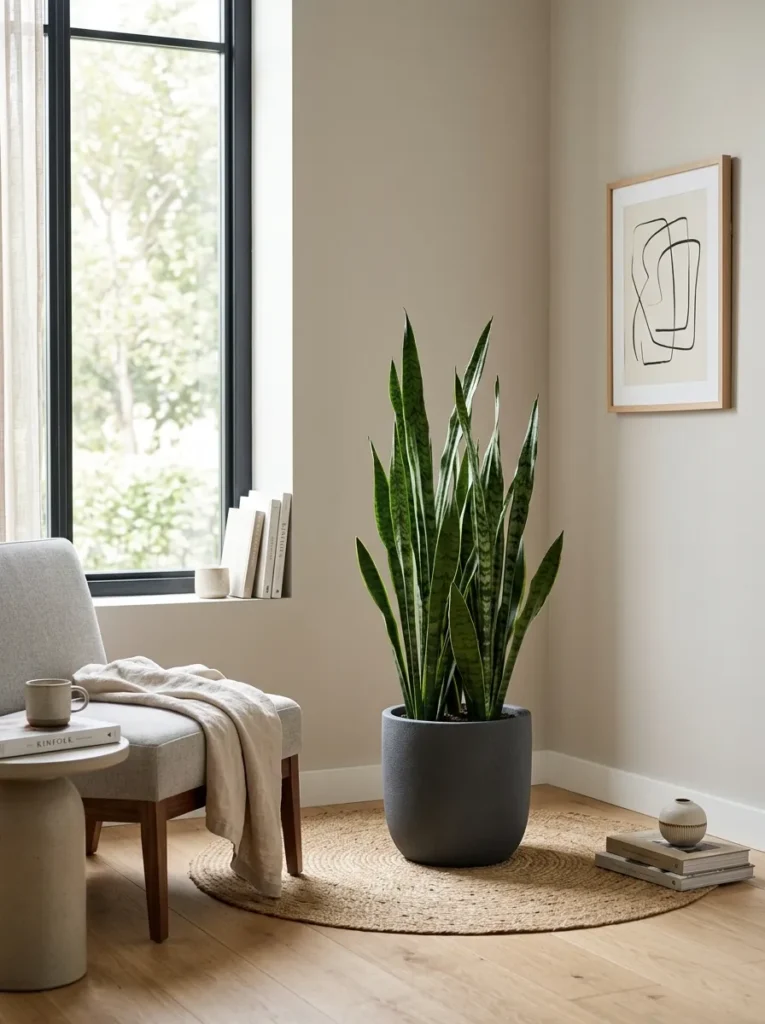
Not every empty corner deserves a high-maintenance specimen. Sometimes the smartest large plant idea is the one that basically takes care of itself.
A tall snake plant delivers genuine vertical height and a clean, architectural silhouette while tolerating low light, inconsistent watering, and long stretches of neglect better than almost any other option on this list.
Why this works for renters and busy households: snake plants are famously difficult to kill, making them the realistic choice for anyone who wants the visual impact of a statement plant without the maintenance commitment that comes with it.
Styling detail: the strong vertical lines suit modern and minimalist rooms particularly well, where a busier tropical plant might feel visually at odds with the space.
8. Pair a Large Plant With a Sculptural Ceramic Planter
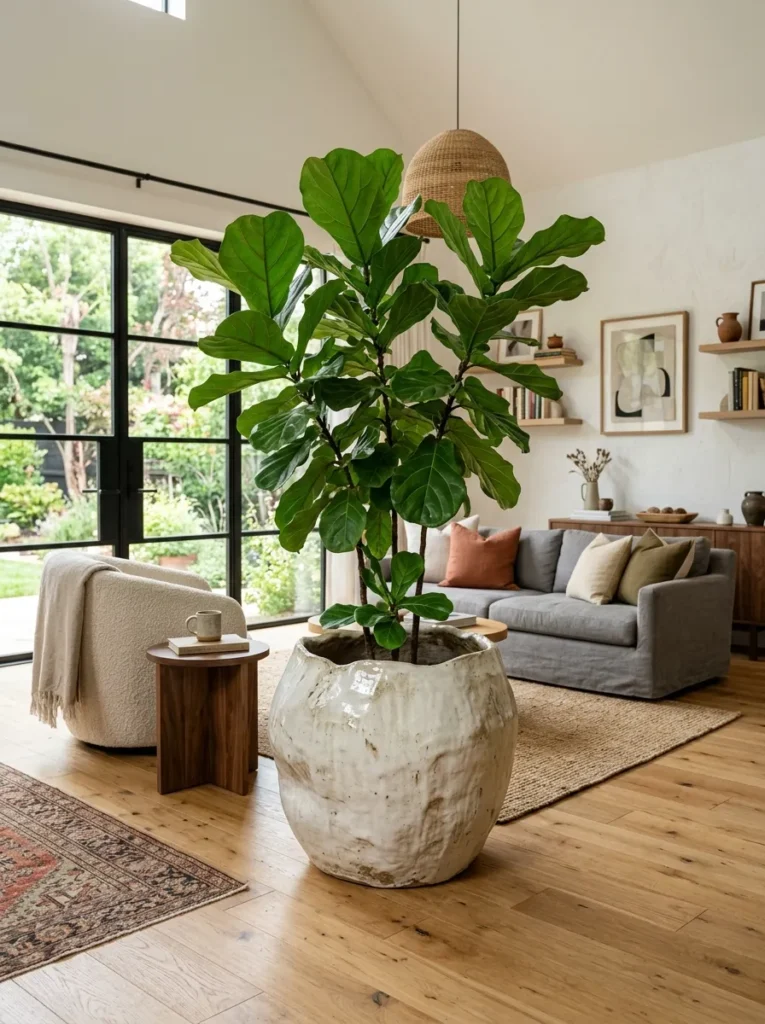
The plant rarely sinks a room’s design on its own. The plastic nursery pot sitting underneath it usually does.
A sculptural ceramic planter — ribbed, matte, or with a distinct silhouette — elevates any large plant from “recently purchased” to “genuinely styled,” instantly changing how the whole corner reads.
gives an oversized floor plant a finished, gallery-worthy base instead of a plain nursery pot.
🛒 Check Price on AmazonMaterial to avoid: thin, glossy plastic. Even a thriving, healthy plant photographs cheap sitting in a shiny pot, since sheen reads as synthetic no matter how good the foliage looks.
9. Add a Plant Caddy for Easy Repositioning
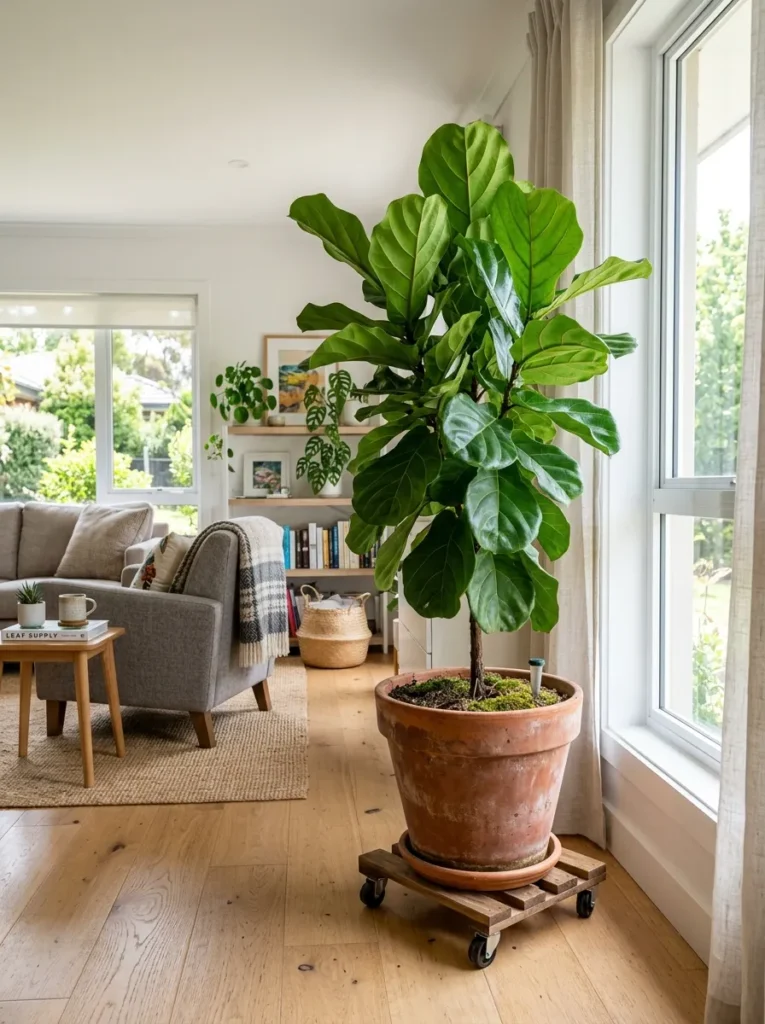
Large plants are heavy, and dragging one across hardwood to chase seasonal light changes is a genuine hassle nobody enjoys.
A rolling plant caddy hidden beneath the pot solves that problem entirely, letting a statement plant get repositioned toward a brighter window in winter without any strain — or any scratched flooring.
makes repositioning a heavy statement plant effortless without damaging floors.
🛒 Check Price on AmazonPractical upside: this small investment also protects flooring from moisture rings that heavy ceramic planters tend to leave behind over time.
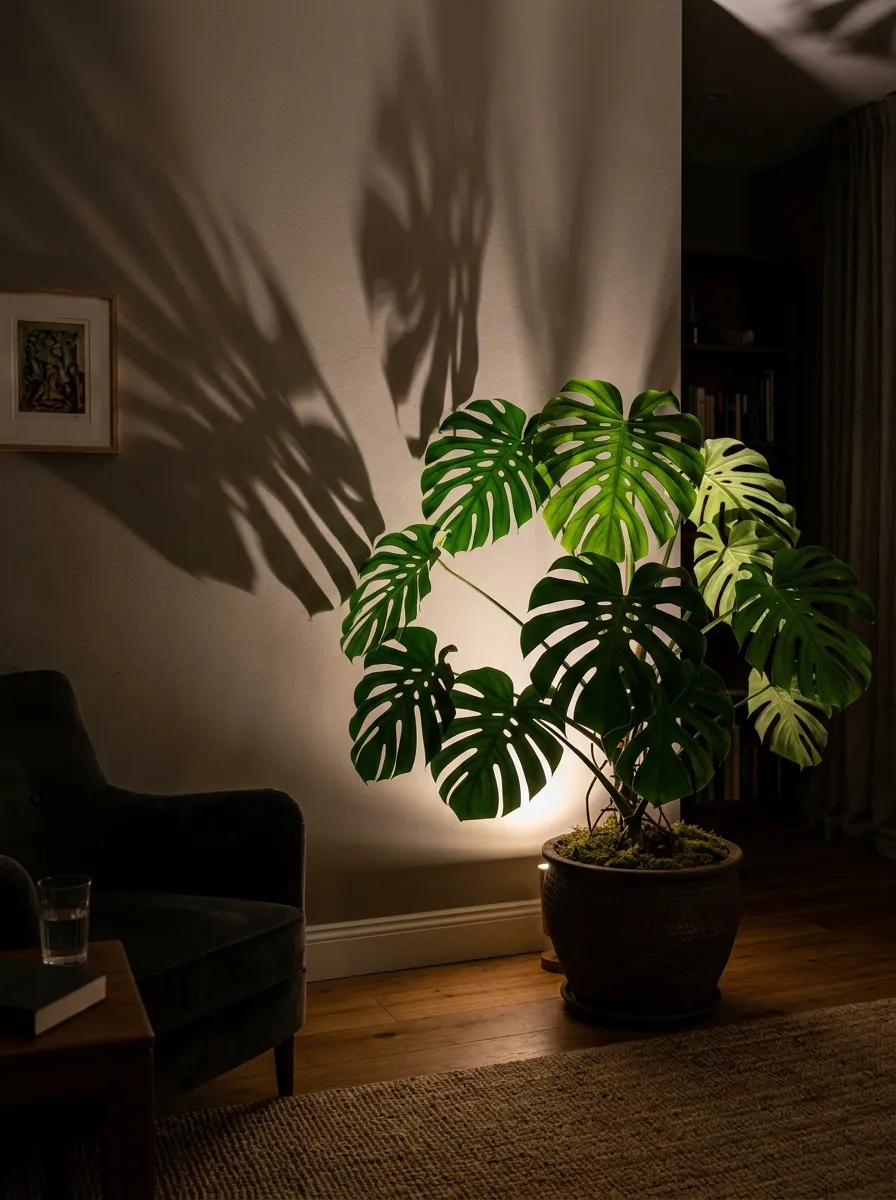
10. Use Uplighting to Cast Dramatic Leaf Shadows
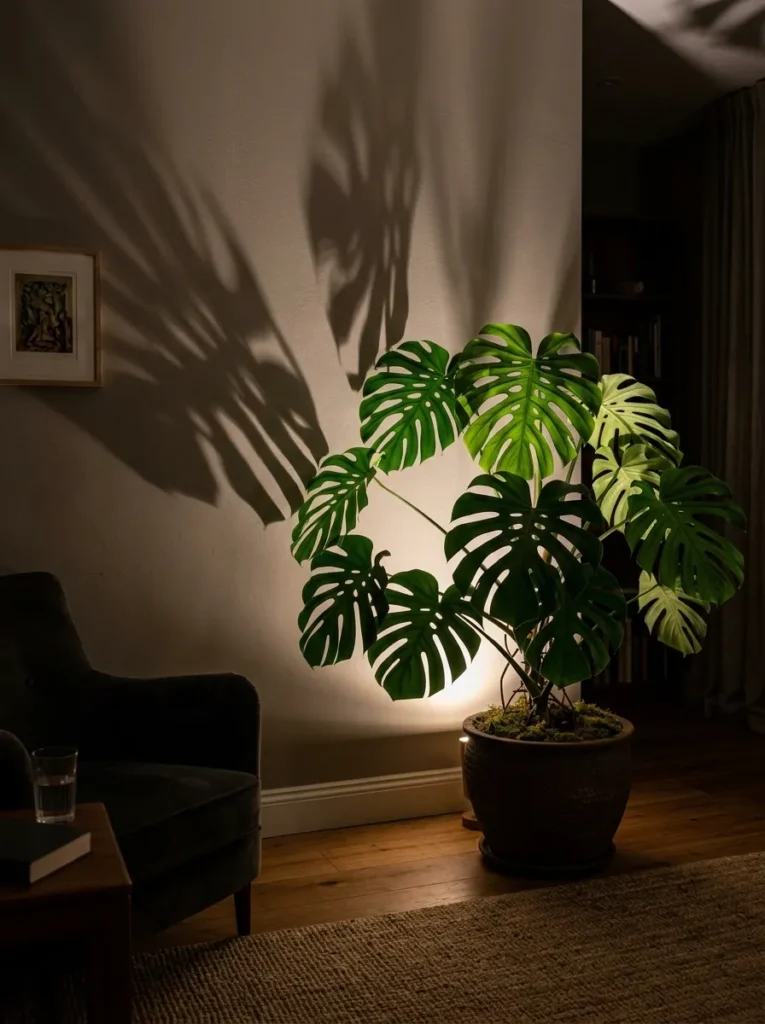
Daytime is not the only time a statement plant should earn its keep. Come evening, most large floor plants go visually flat under standard room lighting.
A small uplight placed behind or beneath the plant casts dramatic, oversized leaf shadows across the nearby wall, turning the same plant into a completely different visual moment after dark.
Technique detail: this works best with broad, distinctly shaped leaves — Monstera and fiddle leaf fig both throw striking shadow patterns, while finer-textured palms tend to blur into a softer, less defined glow.
Placement tip: angle the light slightly upward and to one side rather than dead-center beneath the plant, which creates a more natural, asymmetrical shadow rather than a flat silhouette.
11. Stagger Two Different Large Plants for Layered Height
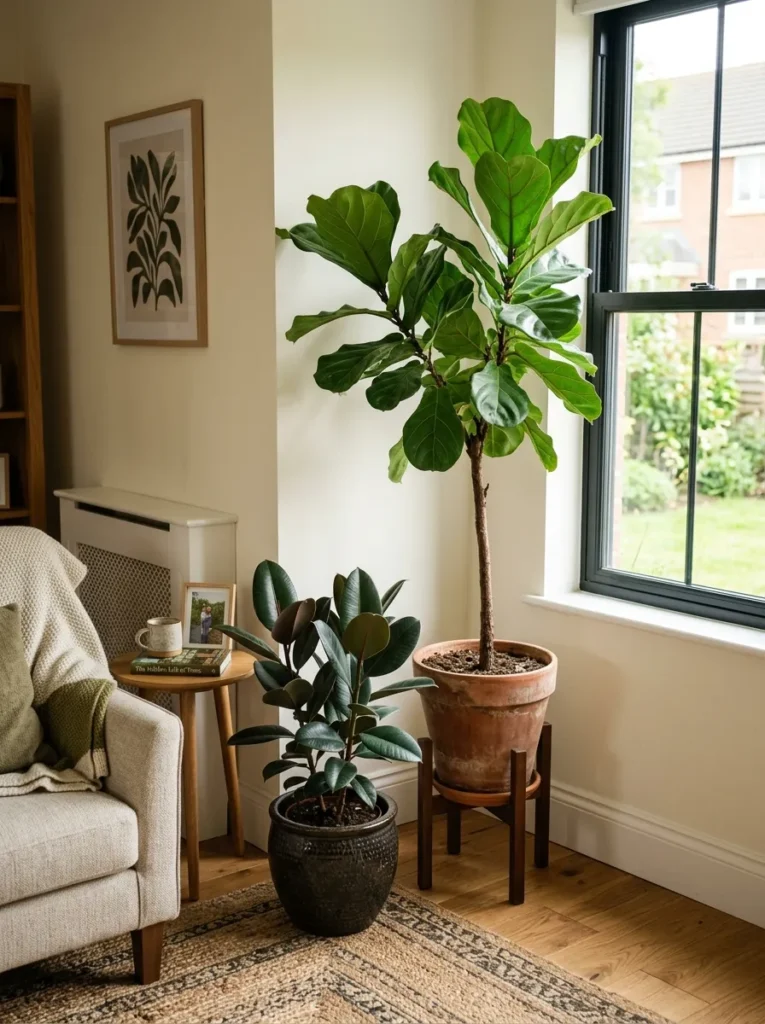
A single large plant makes a strong statement. Two, staggered at different heights in the same general area, make an even richer one.
Pairing a taller specimen like a fiddle leaf fig with a slightly shorter, denser plant like a rubber plant creates layered visual interest, mimicking how greenery actually grows together in nature rather than standing in isolated single specimens.
pairs beautifully as a lower-height companion to a taller statement plant nearby.
🛒 Check Price on AmazonBalance rule: keep the two plants close enough to visually group but not so close their leaves compete for the same light — roughly a foot or two of breathing room prevents both from stretching awkwardly toward the same window.
12. Let One Oversized Plant Replace an Entire Side Table Vignette
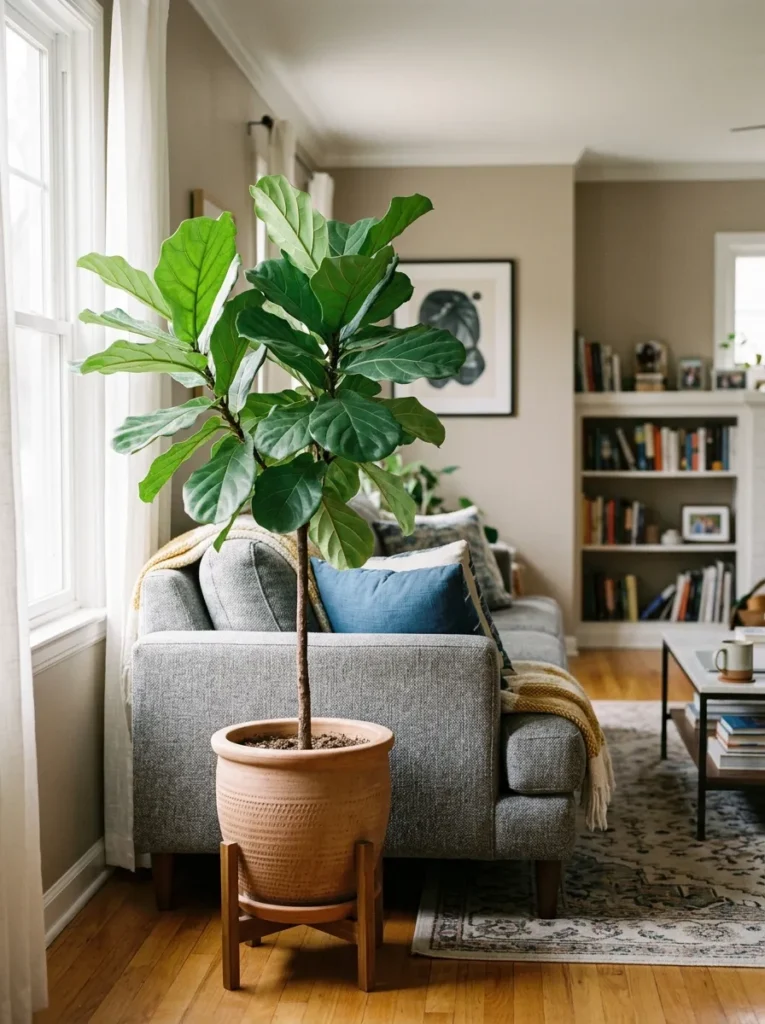
Not every gap beside a sofa needs a table, a lamp, and a small stack of books. Sometimes one striking plant does more visual work alone.
Swapping a cluttered side-table vignette for a single oversized plant simplifies the whole corner while still giving it presence — proof that living room large plant ideas can subtract just as easily as they can add.
Why this works: a single large-scale element reads as more intentional than several small ones competing for attention, and it eliminates the visual clutter a side table setup can quietly accumulate over time.
Practical trade-off: this only works if a nearby surface still exists for drinks or remotes — otherwise, function loses out entirely to form.
A living room is not finished until something in it is actually alive. Pick one of these living room large plant ideas, give it real room to breathe, and watch an empty corner finally earn its keep.