7 Modern Japandi Living Room Clean & Organic
You finally have the living room space. Maybe it’s even a decent size. And yet — somehow — it still doesn’t feel like anything. It’s not ugly. It’s not a disaster. It’s just… a collection of furniture that happened to end up in the same room together, staring at each other awkwardly like coworkers at an after-hours party nobody wanted to attend. Sound painfully familiar?
Here’s the truth that every great interior designer knows: a beautiful living room isn’t about spending more — it’s about choosing intentionally. And right now, no design philosophy does intentional better than the modern japandi living room. This is the aesthetic that took Japanese minimalism’s quiet discipline and Scandinavian design’s irresistible warmth, blended them at the right ratio, and produced something so clean and organic it practically breathes. No clutter. No cold edges. No “what even is this room trying to say?” energy.
The modern Japandi living room is built for homeowners who want timeless over trendy, calm over chaotic, and natural over synthetic — without sacrificing a single ounce of comfort or contemporary style. It’s the design equivalent of a deep exhale. And the best part? It’s more achievable than it looks.
Let’s jump into the seven modern japandi living room ideas that will transform your space from “fine” to genuinely, effortlessly beautiful…
1. Organic Shapes Meet Clean Lines
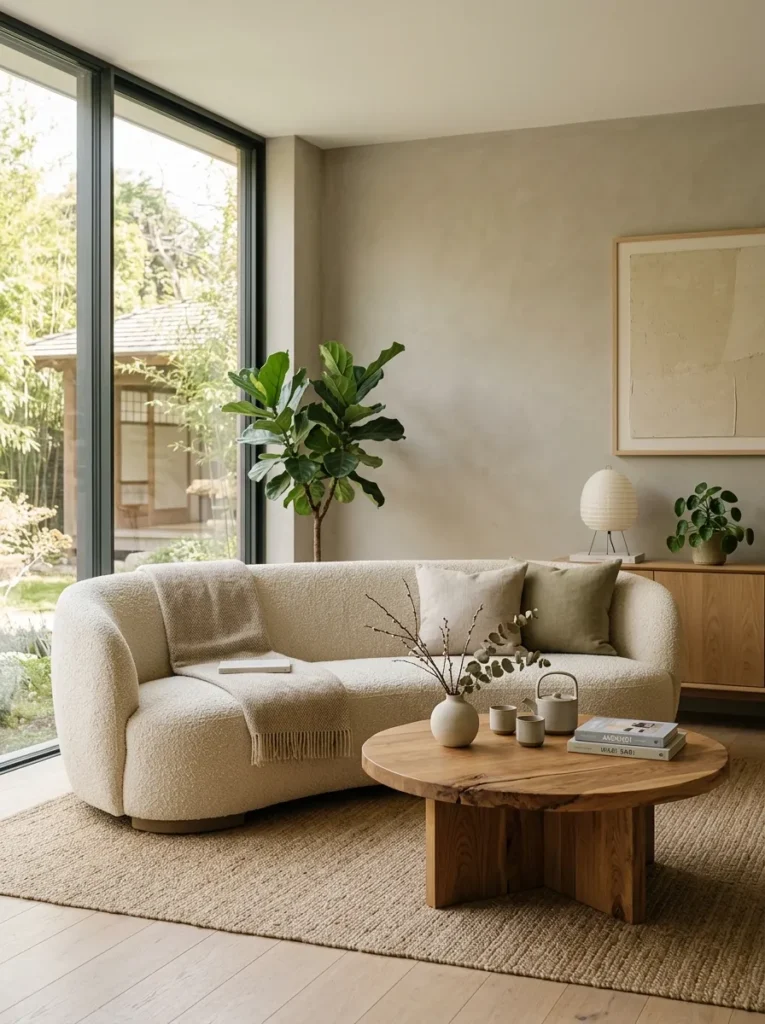
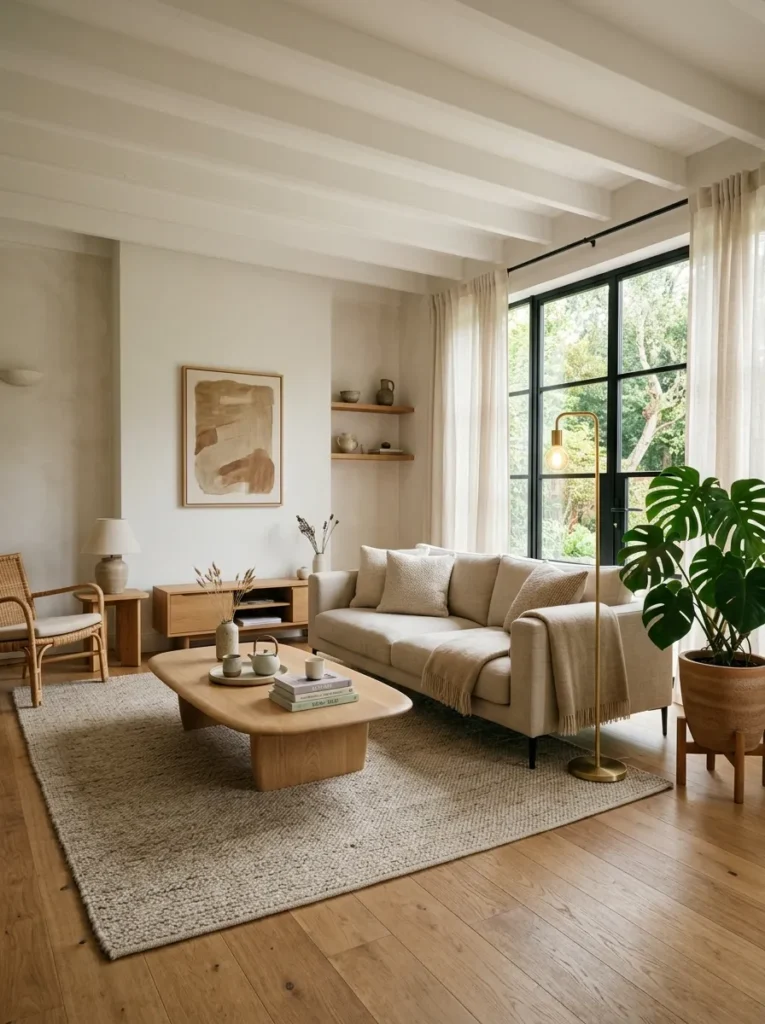
The modern japandi living room doesn’t live in sharp corners and rigid geometry — but it also doesn’t wander into boho chaos. The magic is in the marriage: clean, deliberate lines in the furniture structure paired with softly organic shapes in accent pieces. Think a squared-off sofa silhouette with a round coffee table. A straight-edged shelving unit with curved ceramic vessels on top.
- Sofas: clean rectangular frames in boucle, linen, or cotton
- Coffee tables: oval, round, or live-edge wood — nothing too geometric
- Side tables: asymmetric organic forms in stone or solid wood
- Rugs: soft-edged shapes or irregular natural weaves
This push-pull between structure and softness is what gives a modern Japandi room its visual tension — the good kind, the kind that makes a space feel alive and considered rather than catalog-perfect and lifeless.
2. The Warm Neutral Color System
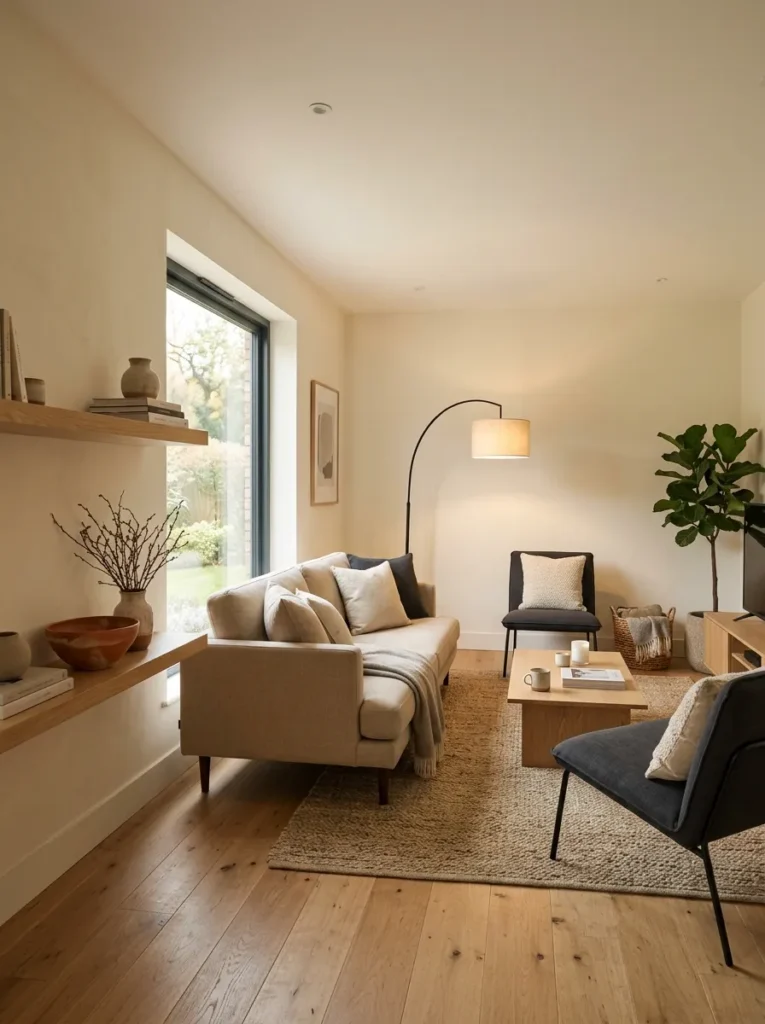
Cold minimalism is a lie that grey-on-grey living rooms have been selling for years. A modern japandi living room runs on warmth — not cozy-grandma warmth, but the kind of warmth that makes a neutral room feel like a sanctuary rather than an airport lounge. The palette formula here is specific and it works every single time.
Build your color system in three layers:
- Layer 1 — Base: Warm ivory, soft greige, or aged white on walls and large upholstery pieces
- Layer 2 — Mid-tone: Sandy beige, warm oat, or natural linen on secondary furniture and textiles
- Layer 3 — Depth accent: ONE dark tone — charcoal, deep olive, or smoked black — used in small doses on lamps, frames, or a single chair
The ratio is roughly 70% base, 20% mid-tone, 10% depth. Follow this and the room will look effortlessly pulled together even if you picked everything from different stores on different days. That’s the power of a system.
While clean lines and neutral textures dominate this style, integrating media equipment smoothly requires the clever tricks found in our comprehensive japandi living room tv guide.
3. Natural Materials as the Real Stars
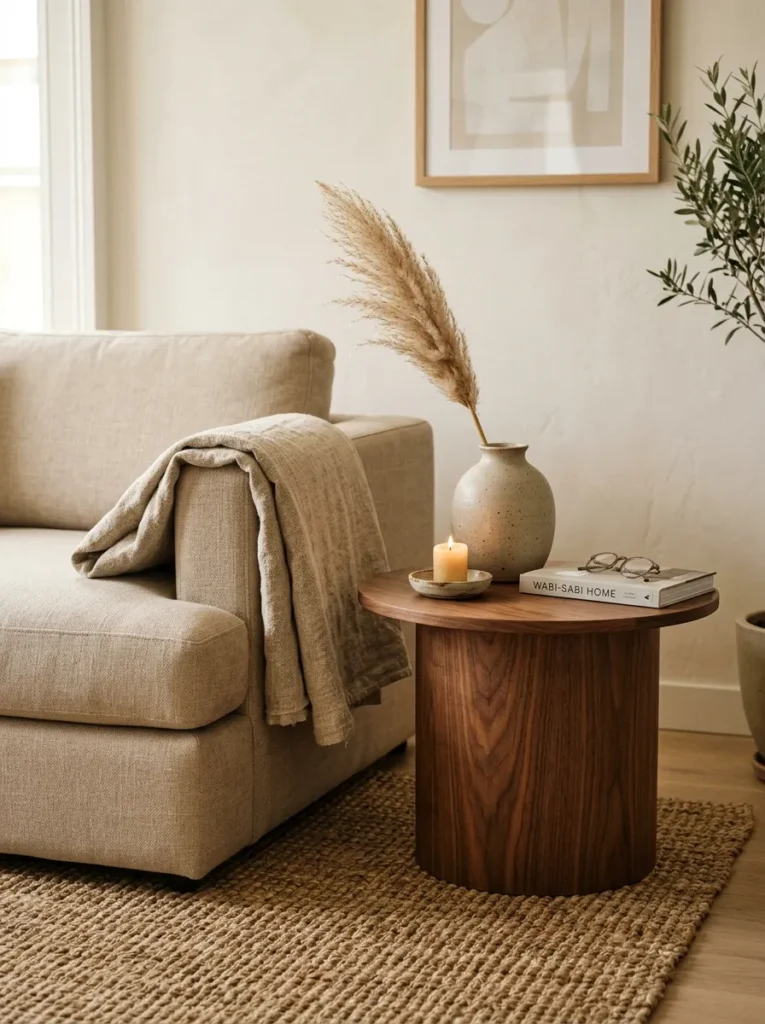
In a modern japandi living room, the materials aren’t supporting the design — they are the design. This is where Japandi pulls its greatest trick: by using raw, honest, natural materials, a room with almost no decoration somehow manages to feel deeply layered, rich, and interesting. Every surface speaks. Every texture tells a story.
The essential Japandi material list:
- Wood: Walnut, ash, or oak — always matte or lightly oiled, never high-gloss lacquer
- Stone: Travertine, slate, or rough concrete for coffee tables or side surfaces
- Linen and cotton: For upholstery, throws, and curtains — always in natural, undyed tones
- Rattan and woven jute: For rugs, baskets, or light pendant shades
- Handmade ceramics: Stoneware, matte glaze, organic imperfection built in
Synthetic materials are not banned — but they’re treated with suspicion. If it doesn’t feel natural to the touch, it needs to justify its presence. That’s not snobbery. That’s Japandi standards.
4. Minimalist Furniture Arrangement — Less Furniture, More Room
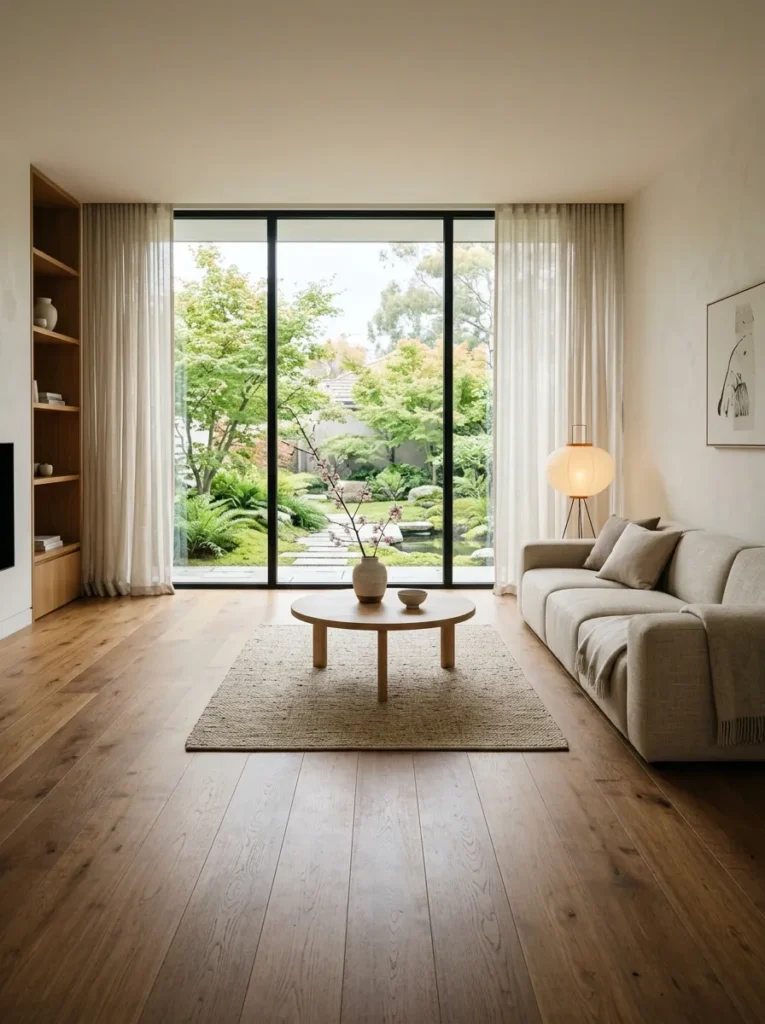
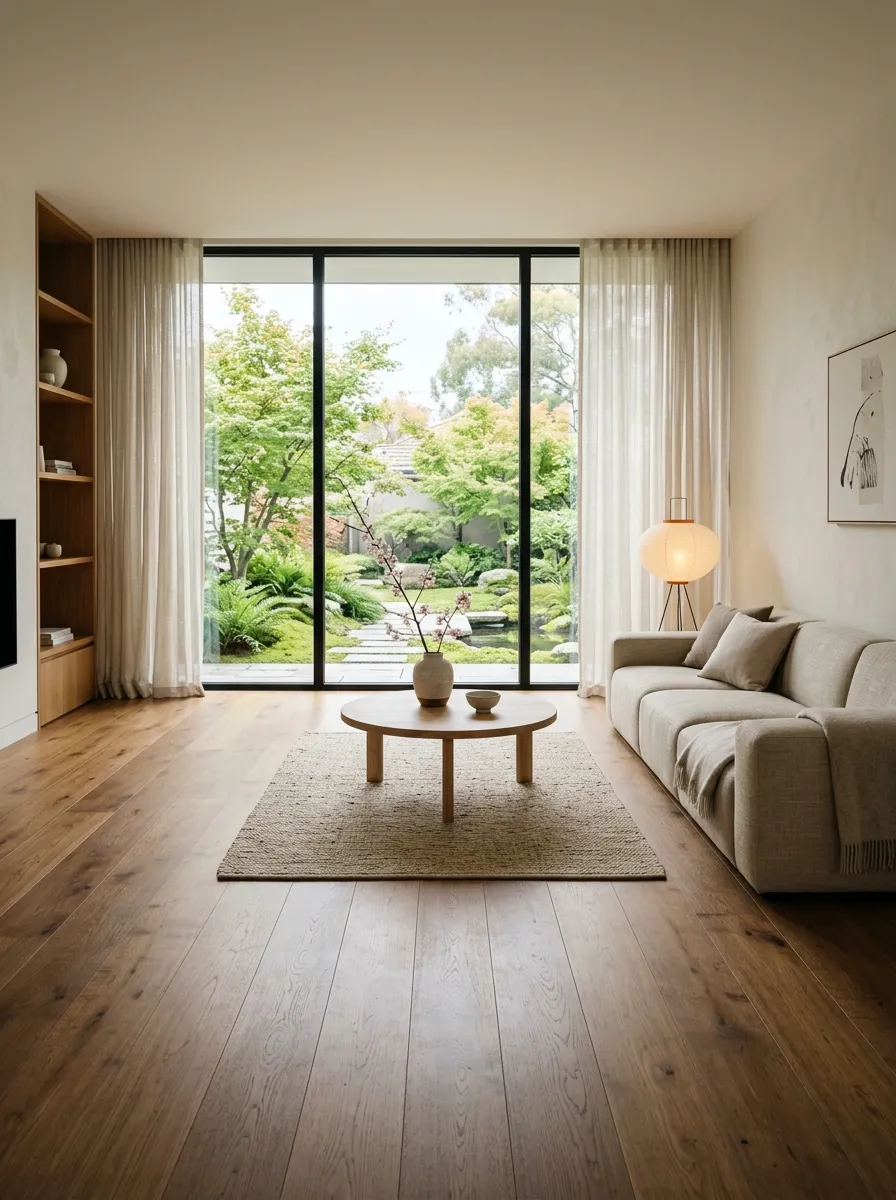
Here’s the counter-intuitive truth about a modern japandi living room: removing a piece of furniture will make the room feel bigger and better designed simultaneously. The Scandinavian side of Japandi believes in furniture that earns its place through function. The Japanese side believes in ma — purposeful empty space. Together, they create rooms that breathe.
The Japandi furniture arrangement principles:
- Start with one sofa, one coffee table, one additional seat — and stop there longer than feels comfortable
- Float furniture away from walls; pulled-in arrangements feel more intentional
- Leave at least 18 inches of walkway around every piece
- Resist the side table reflex — does the room actually need it, or is it just filling silence?
Every piece of furniture should have a clear reason to be there. The moment a room stops having “filler furniture,” it starts looking like it was designed by someone who actually knew what they were doing. Which, thanks to this list, is now you.
5. Statement Lighting Without the Drama
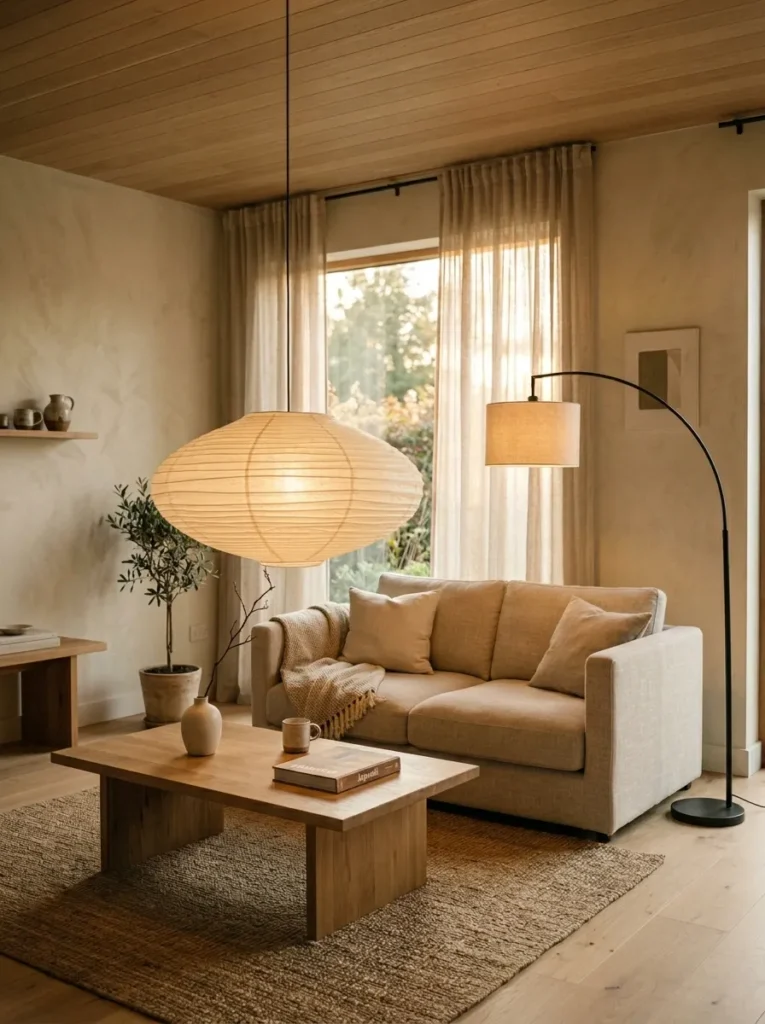
Lighting is the one area where a modern japandi living room is allowed to make a statement — quietly, of course. Japandi doesn’t do chandeliers dripping in crystals. It doesn’t do recessed LED strips in aggressive colours. What it does with lighting is nothing short of architectural: it uses light to define mood, create warmth, and make every other design choice look better.
The modern Japandi lighting toolkit:
- Pendants: Oversized washi paper, rattan, or organic-formed ceramic shades hung low
- Arc floor lamps: Slim profile, matte black or aged brass finish, arching gracefully over the sofa
- Table lamps: Stoneware or solid wood bases with simple linen shades
- Candles: Unscented or subtly earthy scents — because ambiance should also smell correct
- Bulb temperature: 2700K warm white, always. Non-negotiable.
Layer at least three light sources in the room. One overhead pendant isn’t lighting design — it’s just having electricity. Aim for pools of warm light at different heights and watch the room transform from day mode to evening sanctuary in a single switch.
This post contains affiliate links. If you buy something through them, I may earn a small commission at no extra cost to you.
6. Curated Greenery — The One-Plant Rule
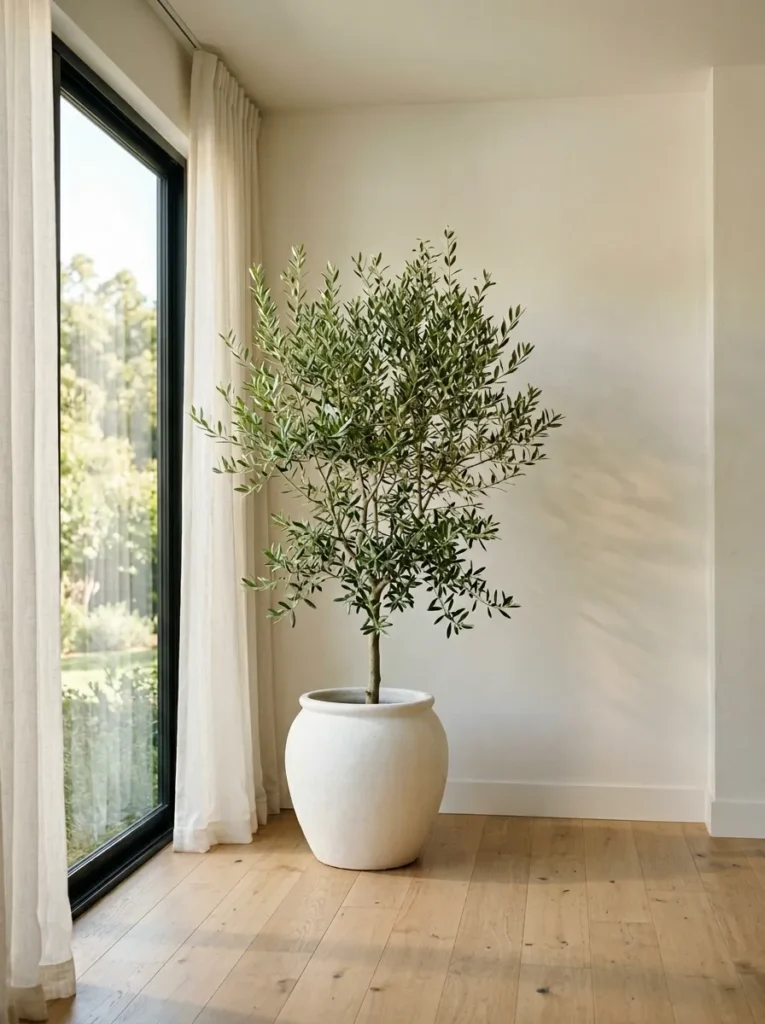
The modern japandi living room treats plants the way a great stylist treats accessories: one perfect choice beats ten mediocre ones every time. Forget the jungle aesthetic. Forget the shelf of seventeen tiny succulents. Japandi asks for one — maybe two — plants that have actual presence and authority in the room.
The plant strategy that works:
- One large floor plant: Fiddle-leaf fig, olive tree, monstera, or tall snake plant in a matte ceramic or concrete pot
- One small accent: A single bonsai on a surface, a kokedama moss ball near a window, or a single branch in a tall cylinder vase
- Pots matter enormously: Matte black, warm white, terracotta, or natural stone only — no plastic, no terracotta-painted-gold disasters
The pot is part of the design. A beautiful plant in a wrong pot is a decision you’ll regret every morning. Choose deliberately.
7. The Edit — Decor That Earns Its Place
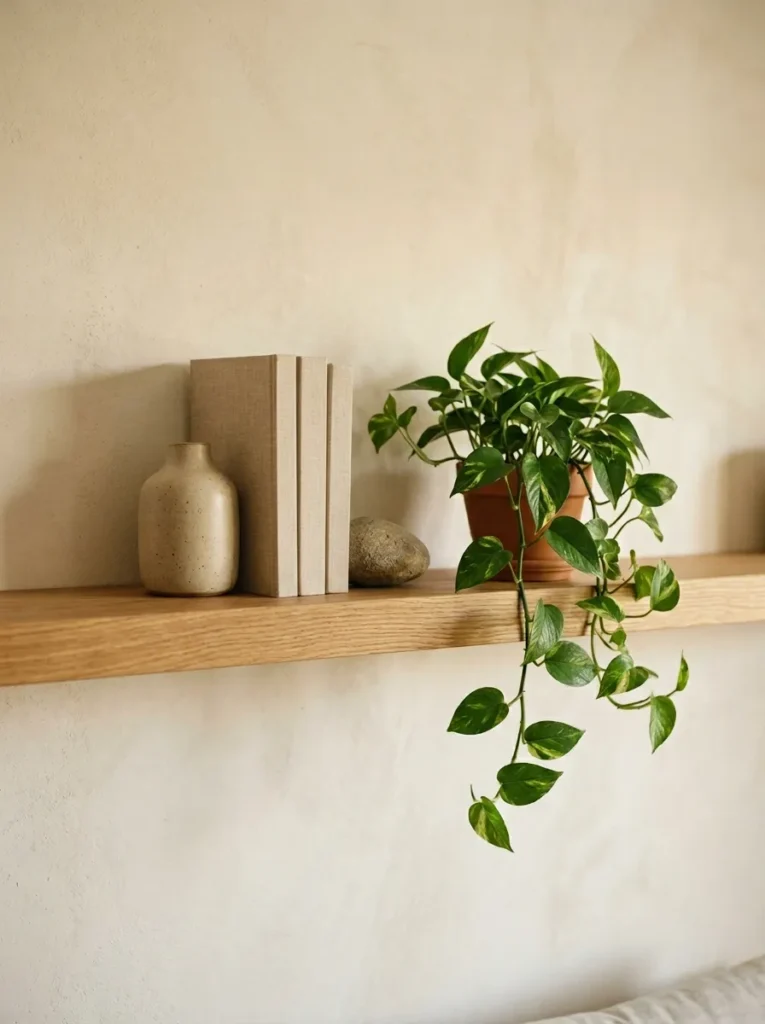
Every beautiful modern japandi living room has one thing in common: someone edited it ruthlessly before calling it done. Japandi decor is not about adding — it’s about subtracting until only the genuinely meaningful, genuinely beautiful objects remain. What stays gets maximum visual attention. What goes stops creating noise.
The Japandi decor edit checklist:
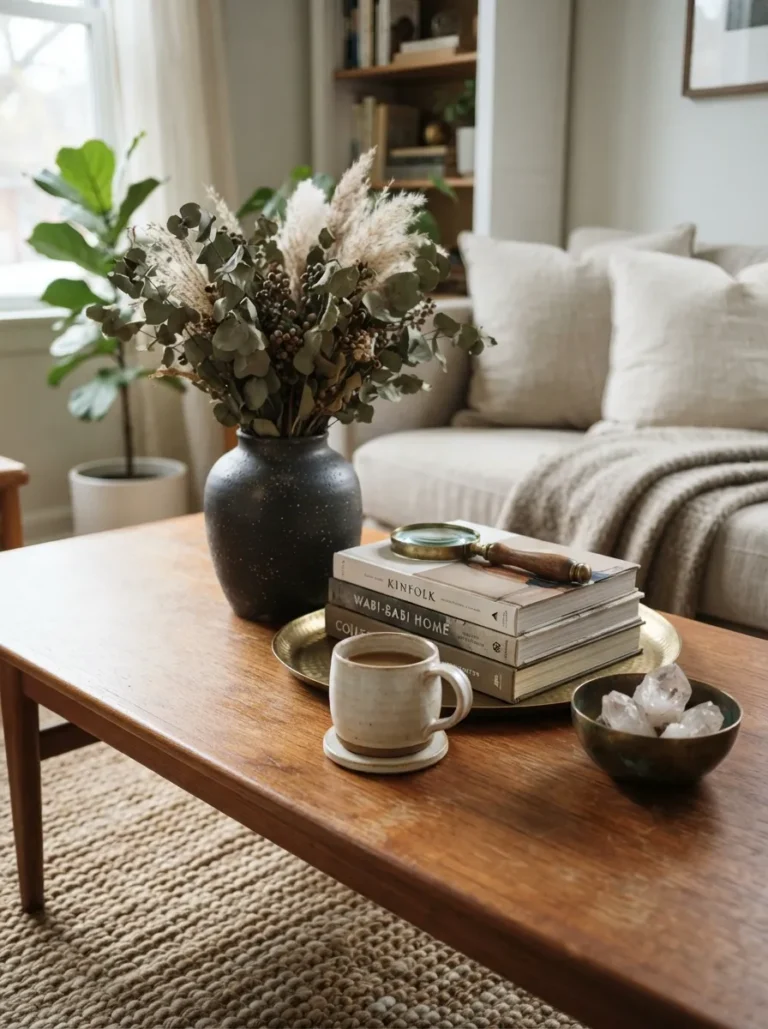
- Surfaces: Maximum 3 objects per surface, and negative space counts as one of those objects
- Books: Stack 2–3 beautifully bound ones; the lurid paperback thriller earns a drawer
- Textiles: One throw, one set of cushions — complementary textures, not competing patterns
- Personal items: Meaningful objects earn display rights; random clutter does not
- The final test: Step back and look — if the eye doesn’t know where to rest, something still needs to go
The modern japandi living room doesn’t look curated because everything in it is expensive. It looks curated because everything in it was chosen deliberately — and everything that didn’t make the cut was shown the door with grace and zero apology.
A modern japandi living room isn’t a style you achieve once and forget — it’s a standard you hold the space to, where every addition is questioned and every subtraction is celebrated. Pick one idea from this list, start today, and let the room show you how much better “less” can actually feel.