Printable Potty Training Success Sheets: Free Design Ideas for Parents
Embarking on the toilet training journey is one of the most significant developmental leaps in early childhood. For toddlers, transitioning from diapers to independence represents a massive shift in routine, body awareness, and self-control. For parents, it often feels like a high-stakes balancing act filled with unexpected messes, stubborn resistance, and endless reminders.
Fortunately, you do not need expensive commercial kits or complicated reward electronics to guide your child successfully. One of the most powerful, time-tested tools in modern parenting is a reliable, beautifully designed potty chart printable. By leveraging creative design ideas, free digital downloads, and structured visual tracking, you can transform a potentially stressful household challenge into an empowering, gamified adventure. In this comprehensive guide, we will explore the core design principles of early childhood visual aids, compare linear versus grid formats, share DIY crafting hacks, and show you how to curate a professional digital template library.
Part 1: Design Principles for Early Childhood Visual Aids
1.1 Visual Hierarchy and Cognitive Load
When designing or selecting a potty training success sheet, understanding how a toddler’s brain processes visual information is paramount. Young children do not read complex instructions; they interpret layout, color, and structure at a glance.
- Managing Cognitive Load: Overly cluttered layouts featuring chaotic backgrounds, tiny text, and competing graphics can overwhelm a toddler’s short attention span. The best design ideas rely on clean white space and clear focal points.
- Visual Hierarchy: A well-structured layout guides the child’s eyes naturally from left to right or along a designated path, making cause-and-effect relationships immediately obvious. When a child sees their progress mapped out cleanly, tracking achievements becomes intuitive and deeply satisfying.
1.2 The Power of Character-Driven Storytelling
Toddlers live in a world governed by imagination. A standard black-and-white grid of squares rarely captures a three-year-old’s enthusiasm. Incorporating thematic storytelling elements into your potty chart printable completely shifts the psychological dynamic of training.
- Whether your child is guiding a space rocket to the moon, helping a cute dinosaur navigate a jungle maze, or collecting royal crowns for a castle kingdom, narrative-driven design turns a routine bodily function into an epic quest.
- Letting children choose a design theme that matches their personal interests fosters instant buy-in and drastically reduces daily resistance.
Part 2: Comprehensive Breakdown of Sheet Formats
2.1 Linear Trackers and Path-Based Mazes
Different children respond to different structural formats depending on their developmental age and cognitive processing style.
- Linear Path Trackers: These layouts feature a connected trail of steps or milestones leading from a starting point (diapers) to a celebratory finish line (big-kid underwear). Linear trackers are fantastic for teaching sequencing and helping younger toddlers visualize incremental progress.
- Mazes and Adventure Trails: Path-based designs allow children to move a physical token—such as a magnetic character or a custom sticker—along a winding track, reinforcing spatial awareness and fine motor skills with every successful bathroom trip.
2.2 Habit-Stacking Grids and Comprehensive Matrices
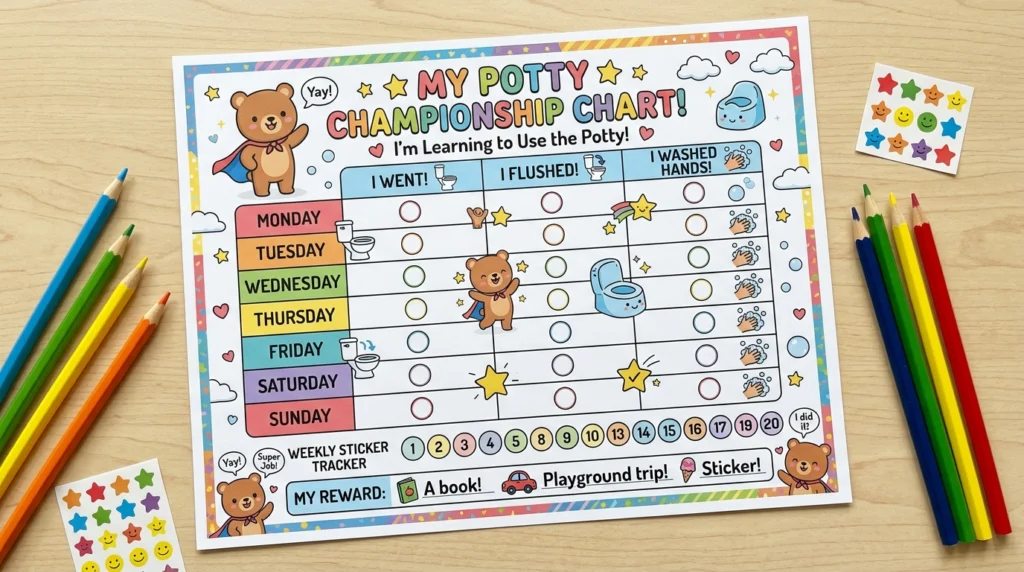
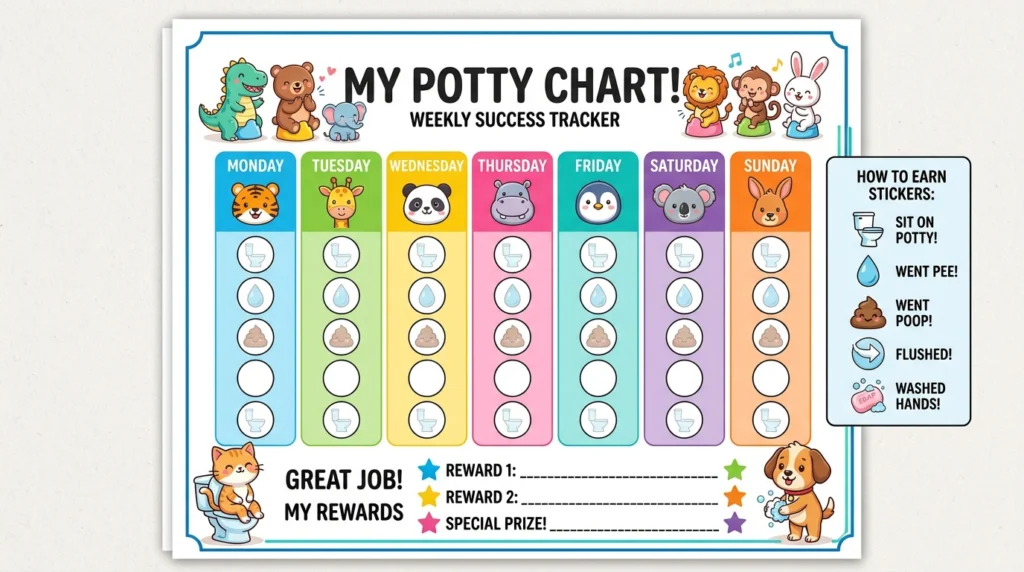
As children gain confidence, basic toilet use is only part of the equation. Comprehensive success sheets often incorporate habit-stacking elements that track the entire hygiene routine from start to finish.
- Multi-Step Matrices: These trackers include dedicated icons or columns for communicating the urge, sitting calmly, wiping, flushing, and washing hands thoroughly.
- Holistic Independence: By breaking down the bathroom routine into discrete micro-habits, children learn the complete sequence of personal hygiene, building foundational self-reliance that lasts a lifetime.
2.3 Weekly vs. Daily Granularity
Deciding between daily and weekly grid formats depends entirely on your child’s age and attention span.
- Daily Grids: Ideal for the intense initial days of training, daily sheets provide immediate, high-frequency gratification, celebrating every single success without demanding long-term patience.
- Weekly Roadmaps: Better suited for older toddlers and preschoolers, weekly sheets allow children to visualize cumulative consistency across seven days, paving the way for more advanced goal-setting.
Part 3: DIY Customization and Creative Crafting Hacks
3.1 Personalization Techniques and Digital Editing
Generic, store-bought kits often lock parents into rigid rules, uninspiring graphics, and unchangeable text. Digital templates offer superior flexibility, allowing you to tailor sheets specifically to your child.
- Name Integration: Seeing their own name printed proudly at the top of a sheet transforms a generic worksheet into their special milestone achievement board.
- Tailoring Rewards: Digital editing tools allow parents to customize milestone markers and reward descriptions to align with family values and unique toddler preferences.
3.2 Material Durability: Lamination, Cardstock, and Magnetic Boards
Standard printer paper is rarely a match for sticky toddler fingers, bathroom humidity, and enthusiastic sticker placement. Implementing professional crafting hacks ensures your printouts survive the training trenches.
- Cardstock Investment: Print your templates on heavy, matte-textured cardstock rather than standard copy paper for an instant upgrade in tactile quality.
- Lamination and Protection: Slip sheets into clear plastic sleeves or laminate them using self-adhesive sheets. This allows your child to use dry-erase markers or reusable stickers repeatedly without destroying the underlying paper.
- Magnetic Display Boards: Mount your laminated sheet to a lightweight baking sheet or magnetic board, allowing you to stick the tracker directly to refrigerators or metal surfaces for easy household visibility.
Part 4: Curating and Sourcing Professional Design Assets
4.1 Navigating Digital Stores for High-Resolution Files
Sourcing polished, professional designs doesn’t require endless hours of amateur editing or risky internet image searches.
- Parents can instantly access high-resolution, vector-crisp templates through dedicated creator platforms and digital storefronts like the potty chart printable catalog.
- Purchasing or downloading professionally formatted PDF files guarantees clean typography, perfect scaling, and zero pixelation during printing.
4.2 Building a Reusable Household Template Library
Smart parents never rely on just a single sheet of paper. Create a dedicated folder on your computer or cloud drive filled with various layout designs, theme options, and blank tracking sheets. Having a robust digital library ensures that when a sheet gets damaged, when training hits a plateau, or when younger siblings reach training age, you have instant backups ready in seconds.
Conclusion & Gallery Guide
Thoughtful design is the secret weapon of stress-free toilet training. By combining engaging storytelling themes, durable crafting materials, and structured visual formats, you give your child the clarity and motivation they need to master independence with a smile.
Explore curated design ideas, free-flowing templates, and instant download options by visiting the potty chart printable store page today.