Printable Chore Charts for Teens: Simple Systems for Independent Kids
Modern family life is often weighed down by unnecessary complexity. In an effort to keep households running smoothly, well-meaning parents frequently adopt elaborate reward point systems, complex app notifications, or overly rigid schedules that require constant administration. When children enter the teenage years, these complicated frameworks usually collapse under the weight of adolescent busy schedules and eye-rolls.
The beauty of effective household management often lies in simplicity. Raising self-directed, independent teenagers does not require micro-management or high-tech gadgetry; it requires clean, streamlined structures that respect their growing maturity. By embracing minimalist organization frameworks, families can eliminate domestic friction and empower young adults to manage their responsibilities with confidence and ease.
Part 1: The Philosophy of Minimalist Parenting
1.1 Stepping Back to Let Kids Step Up
A common trap for parents of teenagers is the urge to over-function. When adults constantly remind, inspect, correct, and rescue their teens from forgotten tasks, they inadvertently teach helplessness.
- The Danger of Over-Involvement: If a teenager knows a parent will eventually step in or nag them until a chore is done, they have zero incentive to build internal accountability.
- The Minimalist Shift: Stepping back means defining clear expectations upfront, providing a reliable tracking tool, and then stepping out of the way. Letting natural outcomes—such as missing out on a weekend privilege because tasks weren’t finished—teach accountability is far more effective than a parent’s lecture.
1.2 Designing Clean, Uncluttered Expectations
Teens are easily overwhelmed by long, unstructured lists of chores. Minimalist parenting focuses on high-impact contributions rather than exhausting busywork. By narrowing down expectations to a select few essential weekly responsibilities, you create an environment of clarity where success feels entirely achievable.
Part 2: Creating Simple, Effective Tracking Systems
2.1 Formats That Appeal to Modern Teens
Adolescents reject anything that feels childish, overly bright, or patronizing. To secure their buy-in, visual organization tools must match their evolving aesthetic sensibilities.
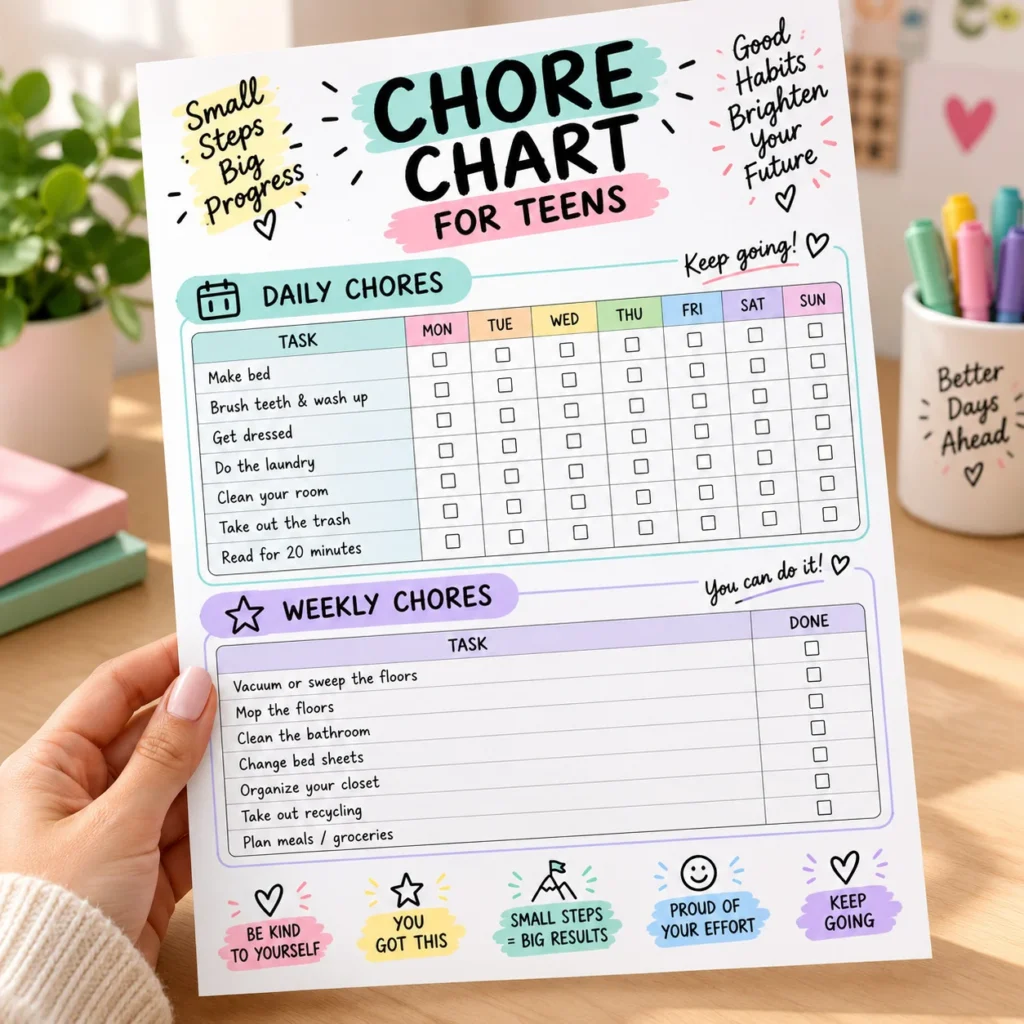
- Sophisticated Design: Clean typography, minimalist grids, and modern color palettes create a mature visual environment that teens can respect.
- Frictionless Interaction: A simple check-off box or a clean line to cross off completed tasks provides a satisfying tactile sense of accomplishment without adding unnecessary administrative work.
2.2 Establishing Clear Boundaries and Consequences
Simplicity also applies to household rules. When everyone understands the boundaries, enforcement becomes automatic. A simple weekly agreement—such as completing all assigned tasks before weekend social activities—removes ambiguity and neutralizes arguments before they start.
Part 3: Practical Rollout and Daily Management
3.1 Setting Up the Command Center
Where you place your household tracker matters just as much as its design. Avoid hiding schedules in private bedrooms where they are easily forgotten.
- Neutral Zones: Mount your tracker in a high-traffic, shared household zone—such as the kitchen pantry door or a designated family command center. This keeps expectations transparent and effortless to check during daily routines.
- Streamlined Setup: Adopting clean, minimalist organization frameworks ensures you can set up your family command center in minutes without wrestling with complicated software or messy formatting.
3.2 Reviewing Progress With Dignity
Keep check-ins brief, respectful, and empowering. Instead of auditing your teenager’s work with a fine-tooth comb, approach weekly reviews as a quick collaboration between equals. Acknowledge their consistency, address any schedule adjustments needed for upcoming school exams, and maintain a calm, supportive atmosphere.
Conclusion & Summary
Raising independent, self-directed teenagers is rooted in the art of simplicity. By replacing exhausting micromanagement with clean, minimalist visual frameworks, you foster true accountability while preserving household peace.
Ready to bring effortless order to your family routine? Explore clean, professionally formatted minimalist organization frameworks to get started today.