The Ultimate Guide to Using a Potty Training Chart with Stickers for Fast, Stress-Free Success
Embarking on the toilet training journey is one of the most significant developmental milestones in early childhood. For toddlers, transitioning from disposable diapers to big-kid underwear represents a profound shift in routine, body awareness, and self-control. For parents, however, this milestone often feels like a high-stakes balancing act filled with unexpected messes, stubborn resistance, and endless verbal reminders. When expectations are unclear or communicated only through persistent nagging, toddlers frequently respond with confusion and defiance, turning what should be an exciting milestone celebration into a daily household power struggle.
The proven antidote to toilet training chaos is a methodical, positive reinforcement framework paired with an engaging visual tracking tool. Utilizing a reliable potty training chart with stickers acts as your master blueprint, breaking down a complex psychological and physiological transition into manageable, bite-sized achievements. In this comprehensive, deep-dive guide, we will explore the neuroscience of toddler motivation, the anatomy of an effective reward system, step-by-step execution strategies for the first week, and expert solutions for overcoming common regressions.
Part 1: The Psychology and Neuroscience of Sticker-Based Motivation
1.1 Why Rewards Work: The Dopamine Feedback Loop
Behavioral psychology and neuroscience teach us a foundational truth about human learning: positive reinforcement is vastly superior to punishment or pressure when shaping new habits. When young children are encouraged, celebrated, and immediately rewarded for desired actions, their brains release small bursts of dopamine.
- The Neurobiological Connection: This chemical release reinforces the neural pathways associated with the successful behavior, making the child much more likely to repeat it in the future.
- Immediate Gratification: Toddlers live entirely in the present moment. Telling a two-year-old that they will get a prize at the end of the week is too abstract for their developing brains to comprehend. Placing a sparkly sticker on a chart the exact second they finish using the bathroom bridges the gap between action and reward instantly.
1.2 Shifting From External Rewards to Internal Pride
While material stickers and celebratory cheers serve as fantastic training wheels during the early weeks, the ultimate long-term goal of any reward system is to help the child transition from chasing external prizes to taking genuine pride in their own growing independence. As habits solidify over several weeks, parents can gradually phase out material rewards in favor of verbal praise, high-fives, and acknowledgment of how much “big kid” autonomy they have achieved.
Part 2: Anatomy of an Effective Potty Training Chart with Stickers
2.1 Visual Hierarchy and Toddler Engagement
Not all charts are created equal. When selecting or printing a tracking sheet, design matters immensely. Toddlers have short attention spans and process visual information rapidly.
- Clutter-Free Layouts: Avoid overly chaotic designs that cause cognitive overload. A clean, well-spaced grid or path-based tracker helps the child focus precisely on their daily milestones.
- Character-Driven Themes: Integrating fun themes—such as space explorers, jungle animals, or royal kingdoms—turns a mundane hygiene task into an imaginative adventure.
2.2 Structuring Micro-Milestones for Success
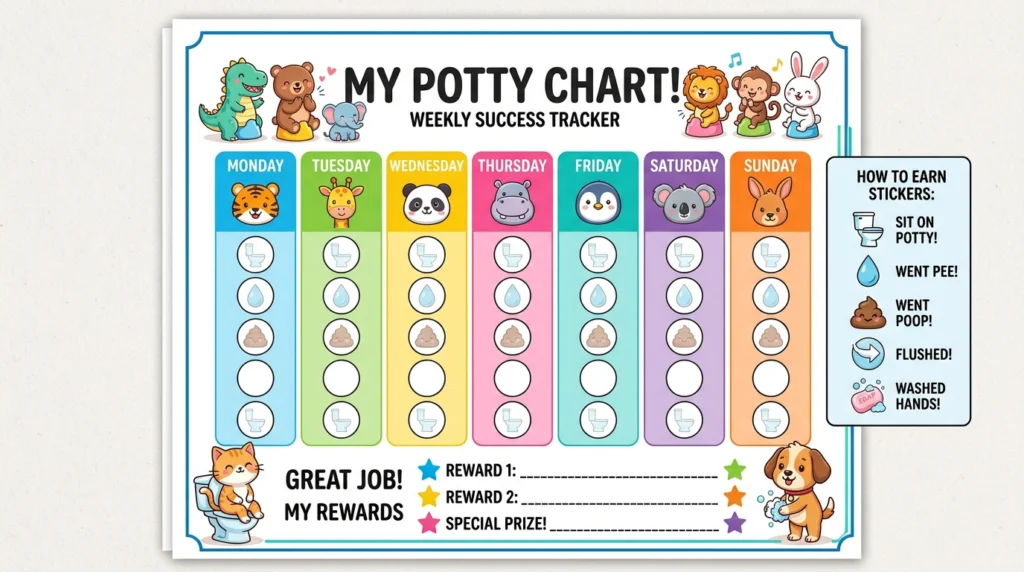
An effective potty training chart with stickers should never feel impossible to complete. Break the training process down into incremental steps so your child experiences early wins right from day one:
- The Attempt: Earning a sticker just for sitting calmly on the potty chair when prompted.
- The Production: Earning a special sticker or double-star when urine or a bowel movement is successfully produced in the toilet.
- The Hygiene Finish: Placing a final sticker for washing hands and completing the full routine independently.
Part 3: Step-by-Step Implementation Blueprint
3.1 Pre-Training Preparation and Environment Setup
Success in toilet training is built long before your child ever sits bare-bottomed on the potty chair. Preparation removes anxiety and builds anticipation.
- Hanging the Chart: Mount your chosen potty training chart with stickers at your toddler’s exact eye level inside the bathroom or right on the outside door.
- The Sticker Caddy: Keep a dedicated bowl of vibrant, shiny foil or puffy stickers right next to the chart so they are always accessible during urgent bathroom trips.
- Familiarization: Introduce the chart a few days before training begins. Let your child inspect the stickers and place one on the sheet just for fun, establishing a positive, pressure-free association.
3.2 Executing Active Training Days
During the intense early days of training, consistency is your greatest ally.
- Prompting Without Nagging: Instead of demanding compliance, make visiting the bathroom a game. Point to the chart and ask, “Should we check our tracker and see where the puppy goes next?”
- Immediate Celebration: The moment a successful attempt occurs, make a joyful ceremony out of letting your child select their favorite sticker and press it firmly onto the chart themselves. This physical act of placement cements the habit.
Part 4: Troubleshooting Resistance and Maintaining Momentum
4.1 Navigating the Day-Two Slump and Potty Strikes
It is completely normal for day two or three of training to bring a wave of stubborn resistance or a temporary “potty strike.” Toddlers test boundaries when new routines become demanding.
- Stay Calm and Neutral: Never yell, shame, or force a child onto the toilet. Forcing compliance triggers defensive defiance.
- Pivot and Pause: If your child digs their heels in, take a 48-hour break, return temporarily to diapers without judgment, and reintroduce the chart later with a fresh, playful attitude. Sourcing professionally designed, engaging templates can make reintroduction seamless; you can explore complete printable kits via the potty training chart with stickers resource page.
4.2 Graduating Beyond the Chart
Reward charts are training wheels—they are not meant to last forever. Once your child has gone two to three consecutive weeks without daytime accidents, celebrate the final retirement of the chart with a special “big-kid certificate” and archive it in their memory book as a keepsake.
Conclusion
Mastering toilet training does not have to be an exhausting, unpredictable ordeal. By combining physiological readiness, positive reinforcement, and an interactive visual milestone tracker, you empower your child to master independence with confidence and joy.
Ready to accelerate your family’s training success? Discover professionally designed, engaging layouts and instant download options by visiting the potty training chart with stickers store page today.