10 Bright Small Kitchen Lighting Ideas to Warm Up and Expand Your Space
This post contains affiliate links. If you buy something through them, I may earn a small commission at no extra cost to you.
One flat overhead light is not a lighting plan — it’s a single bulb doing the job of an entire electrical layout, and your dark countertop corners know it.
Real small kitchen lighting ideas work in layers, not one lonely fixture. Let’s build out the setup that finally kills every shadow in the room.
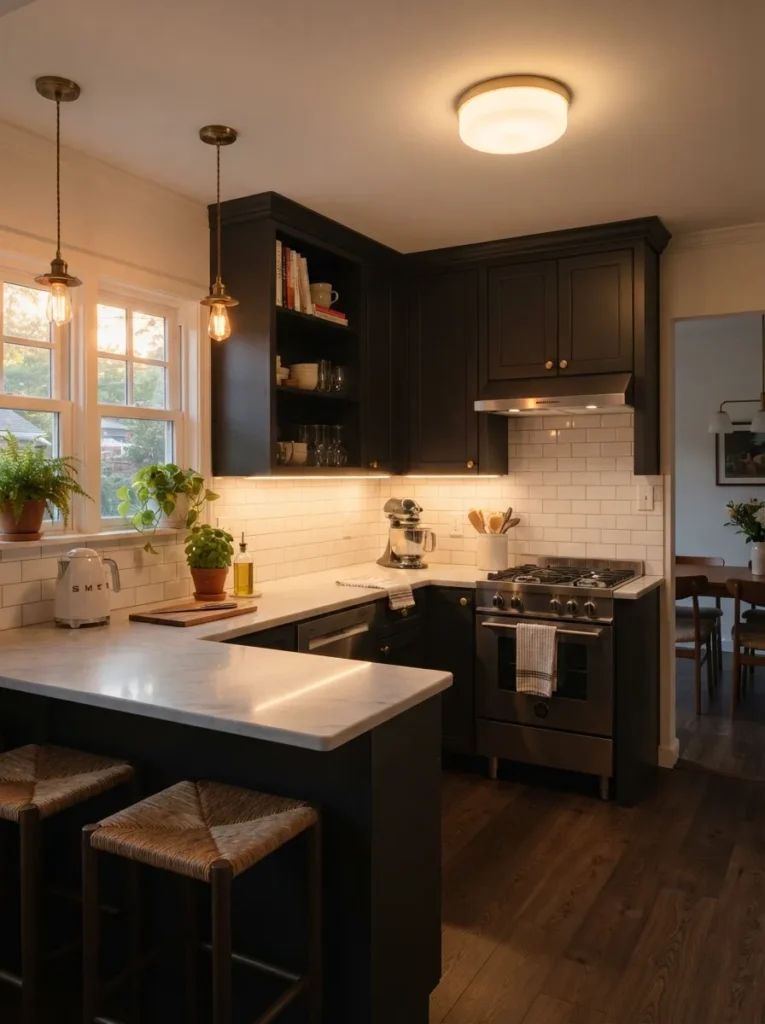
1. Start With Under-Cabinet LED Strip Lighting
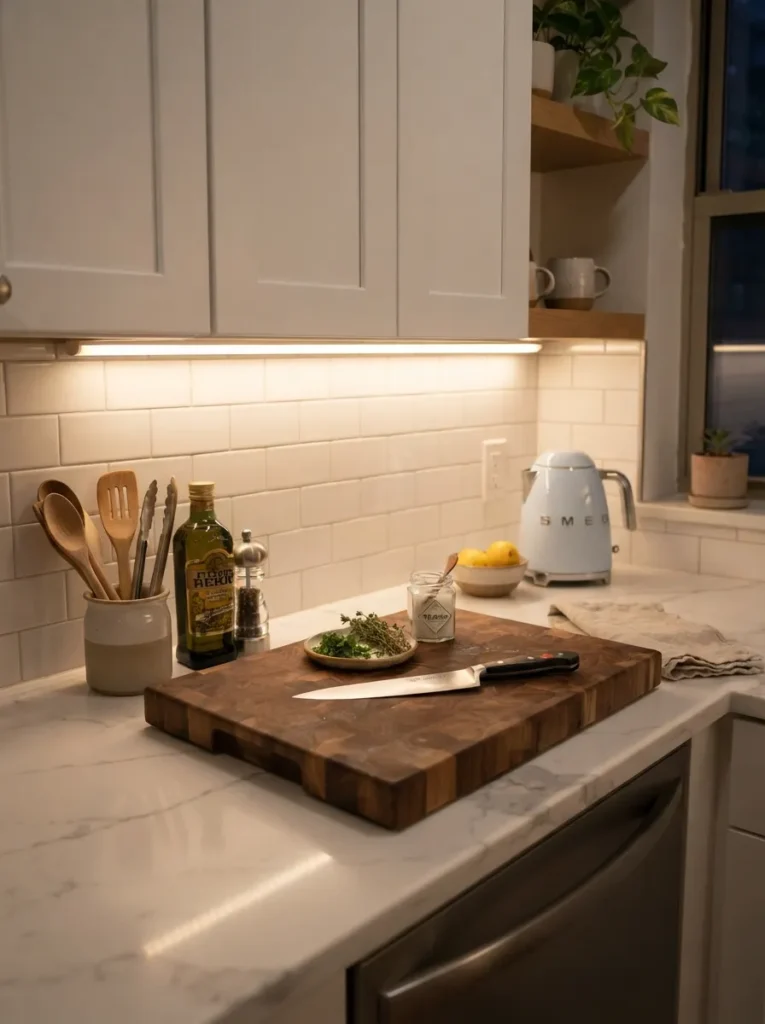
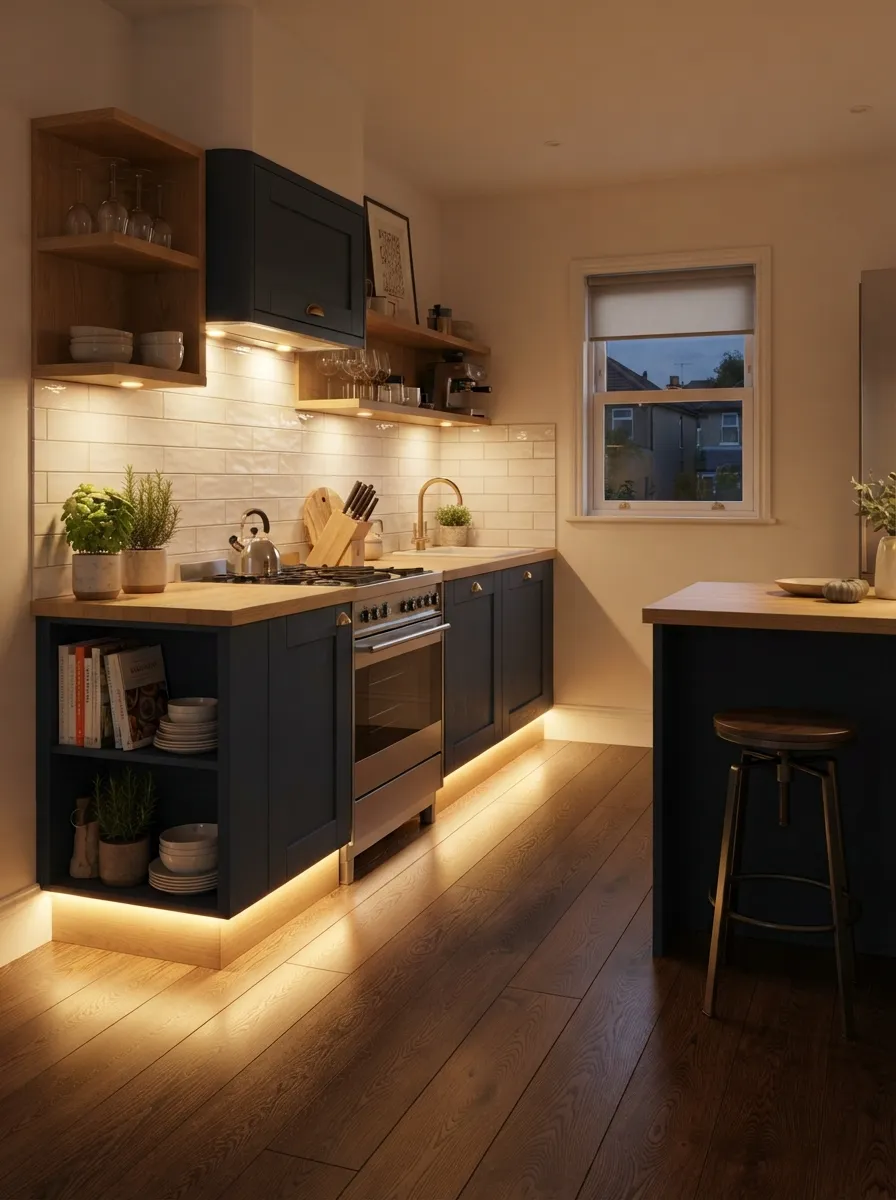
Under-cabinet lighting is the foundation layer of any small kitchen lighting plan, and it’s the single highest-impact fix for dark prep zones.
Why this works: It illuminates your countertop directly, right where shadows from your own body and upper cabinets usually fall.
Design tip: Choose warm white LEDs (2700K–3000K) — cool white light can make a small kitchen feel clinical instead of cozy.
Material to avoid: Cheap adhesive strips that yellow or peel within a year. Look for a rated, dimmable LED system built for kitchen use.
2. Install a Low-Profile Flush Mount Ceiling Fixture
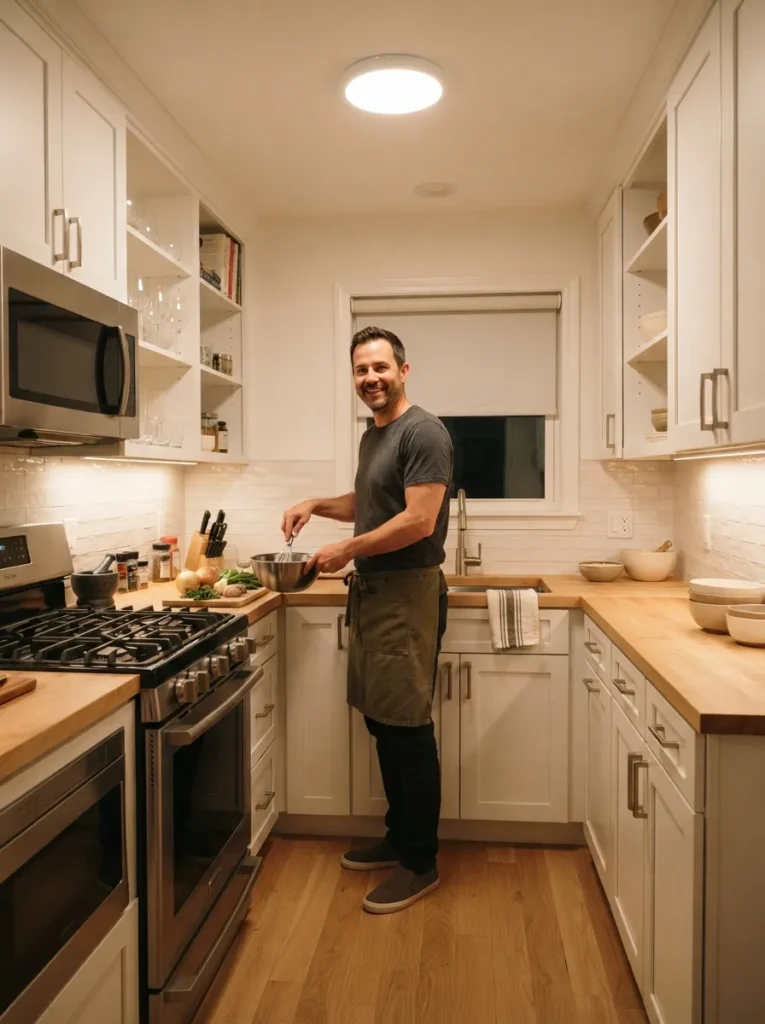
Bulky pendant clusters can visually lower a ceiling that’s already working with limited height. A flush mount fixture solves the ambient lighting problem without eating into vertical space.
Design insight: Choose a flush mount with a wide, even light spread rather than a narrow beam — you want soft general illumination, not a spotlight effect.
Spatial advice: This is the right call for kitchens under 8-foot ceilings, where even a mini pendant can feel like it’s hanging too low.
Pro: Flush mounts are also the easiest fixture to keep clean, with no dangling parts collecting grease.
3. Hang Mini Pendant Lights Over a Prep Zone
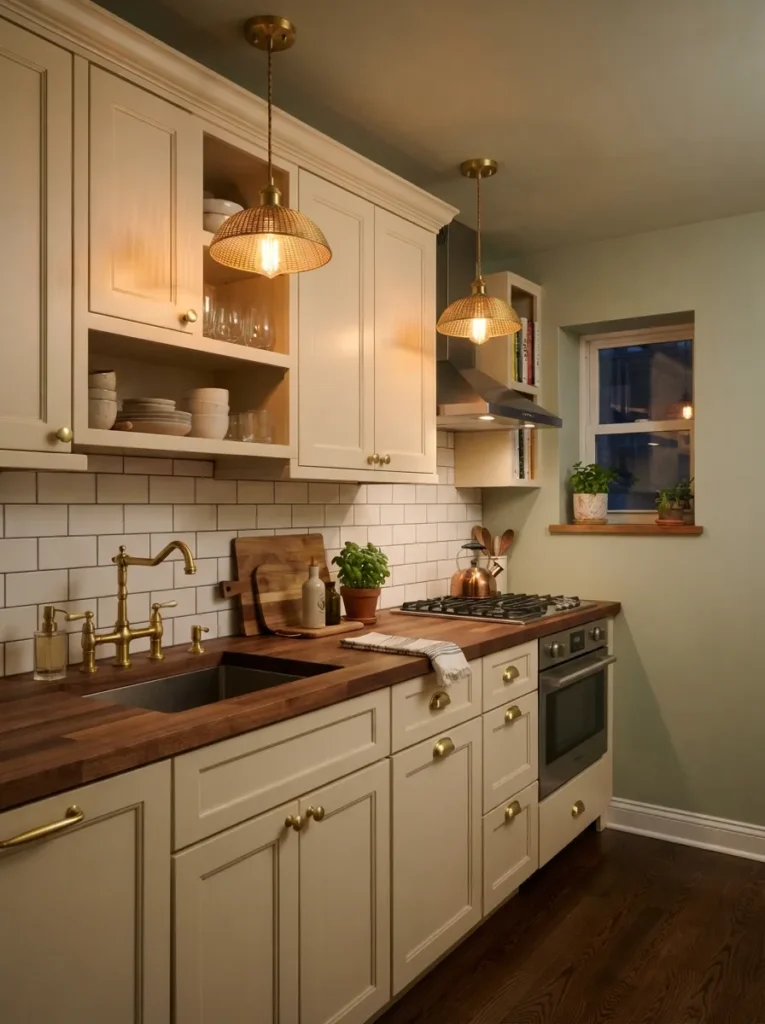
If your ceiling height allows it, mini pendants add focused task lighting exactly where you’re chopping, mixing, and plating.
Why this works for small kitchen lighting ideas: Their smaller scale keeps proportions balanced in a compact room — full-size pendants can visually overwhelm a tight layout.
Design insight: Space two mini pendants 24 to 30 inches apart over a counter or peninsula for even, shadow-free coverage.
Con to consider: Skip pendants entirely in kitchens under 8-foot ceilings — they’ll hang too close to head height and create more problems than they solve.
4. Add Adjustable Track Lighting for Flexible Spot Coverage
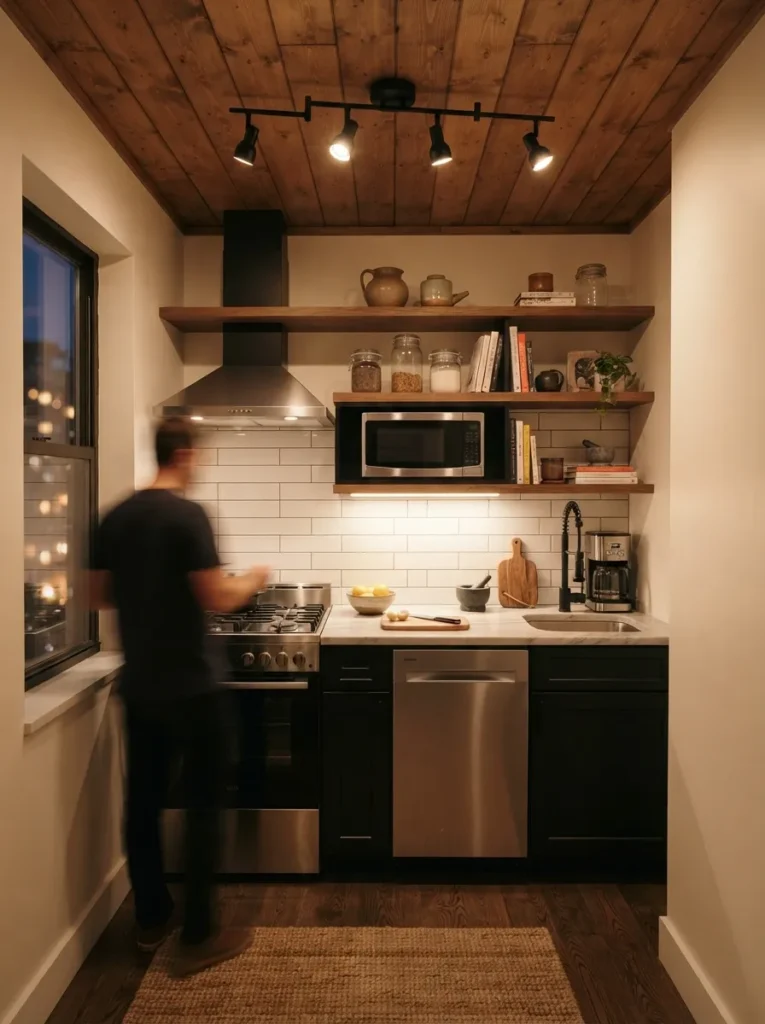
Track lighting gives you the ability to aim light exactly where your layout needs it most, which matters when your kitchen doesn’t follow a standard floor plan.
Design insight: Angle individual heads toward your sink, stove, and any dark corners a single ceiling fixture can’t reach.
Pro: Unlike fixed recessed lighting, track heads can be repositioned later if you rearrange your layout or add new cabinetry.
Spatial advice: This is a smart retrofit option for renters — many systems mount to existing junction boxes without major electrical work.
5. Use In-Cabinet Puck Lights for Glass-Front Displays
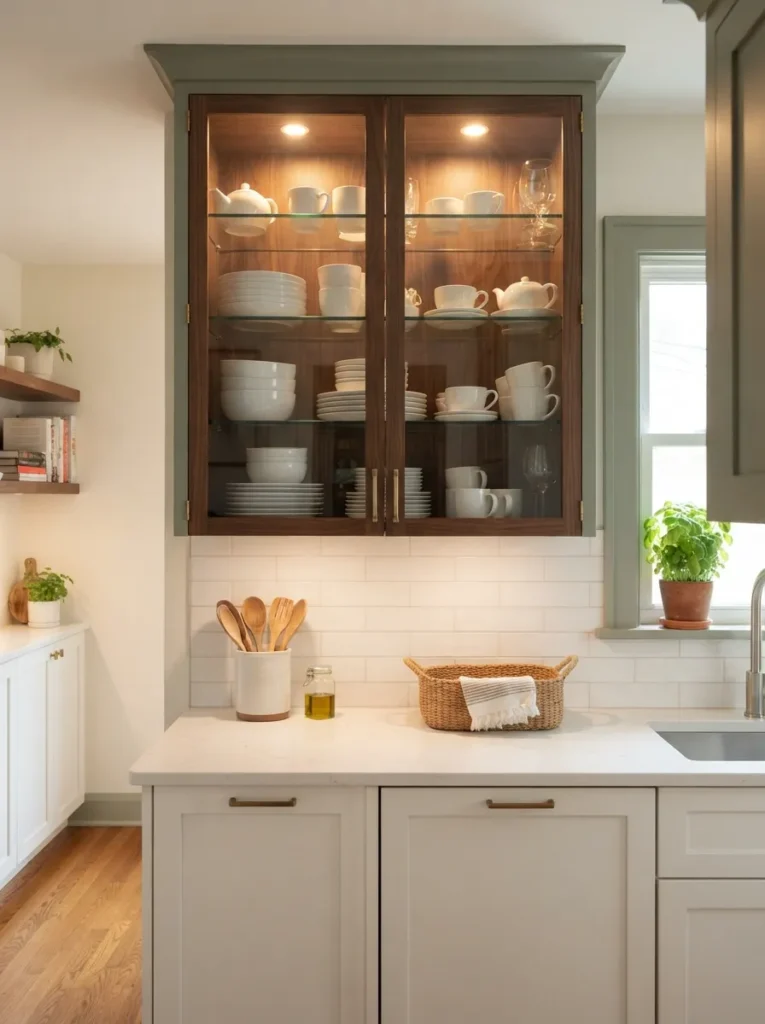
If you’ve swapped any upper cabinets for glass-front doors, they deserve their own light source — otherwise, they just look like a dark box with dishes in it.
Why this works: Small battery or plug-in puck lights installed inside the cabinet create a boutique, gallery-lit effect after dark.
Design insight: Warm white pucks flatter white ceramics and glassware far better than cool white, which can look sterile through glass.
Con to consider: Battery-powered pucks need occasional battery swaps — hardwired options cost more upfront but never require maintenance.
6. Layer In a Statement Pendant Over the Sink
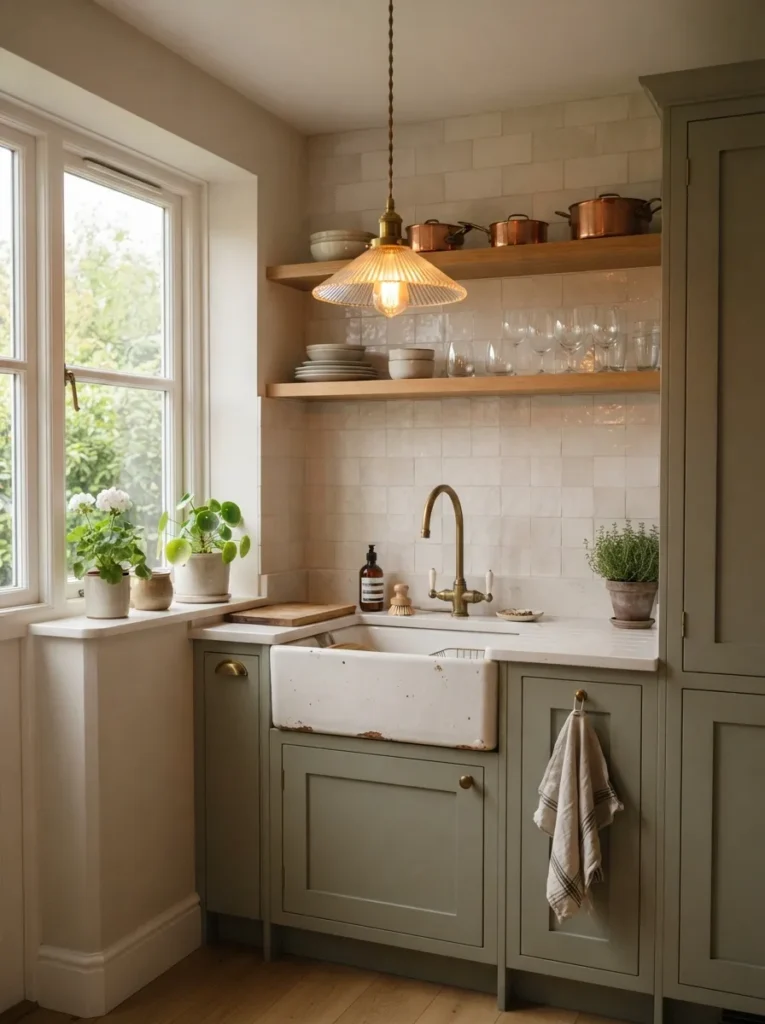
The sink is one of the most-used zones in any kitchen, and it’s often stuck under flat, unflattering light from a single overhead fixture.
Adds a warm focal point directly over the sink without overwhelming a small kitchen’s scale.
🛒 Check Price on AmazonDesign insight: A single statement pendant over the sink also breaks up a plain, symmetrical lighting layout with a bit of visual personality.
Lighting tip: Choose a dimmable option so the sink area doesn’t feel harshly lit during late-night cleanup.
7. Add Dimmer Switches to Every Fixture
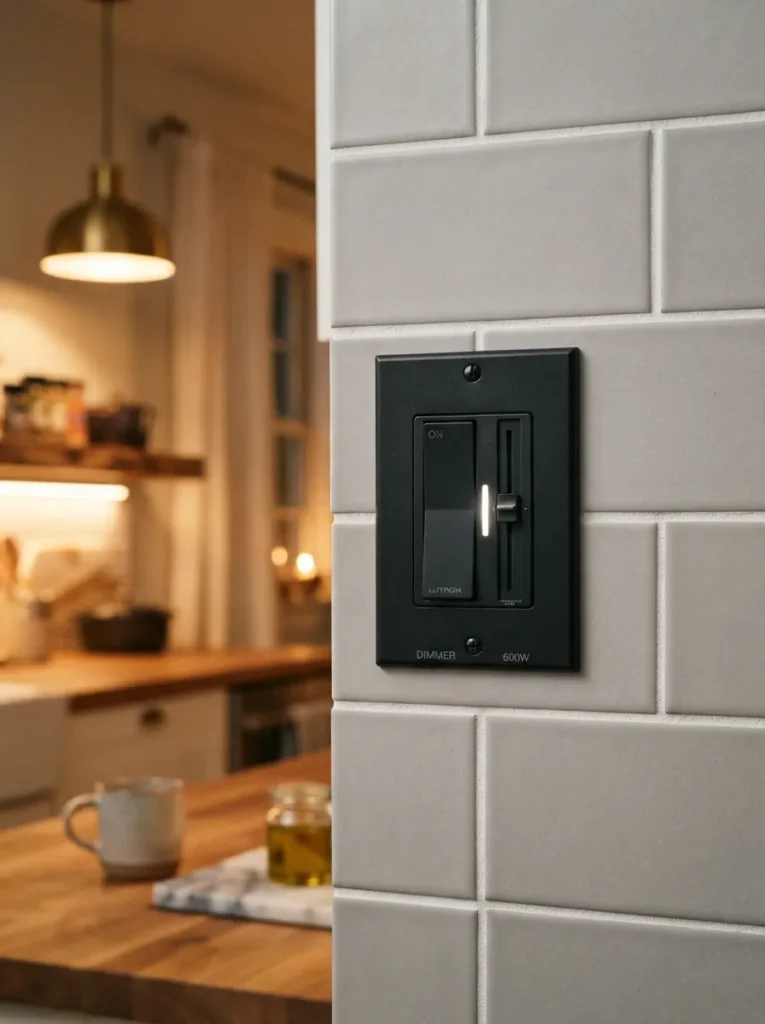
A kitchen needs bright task lighting for cooking and softer ambient lighting for everything else — and a dimmer switch is the cheapest way to get both from the same fixture.
Lets you shift from bright task lighting to soft evening ambiance with one simple swap.
🛒 Check Price on AmazonPro tip: Confirm your bulbs are dimmable-rated before installing — not all LEDs play nicely with standard dimmer switches, and mismatches can cause flickering.
This is one of the most affordable upgrades on this entire list, and it instantly makes your lighting feel intentional rather than one-note.
8. Choose Warm Color Temperature Bulbs Throughout
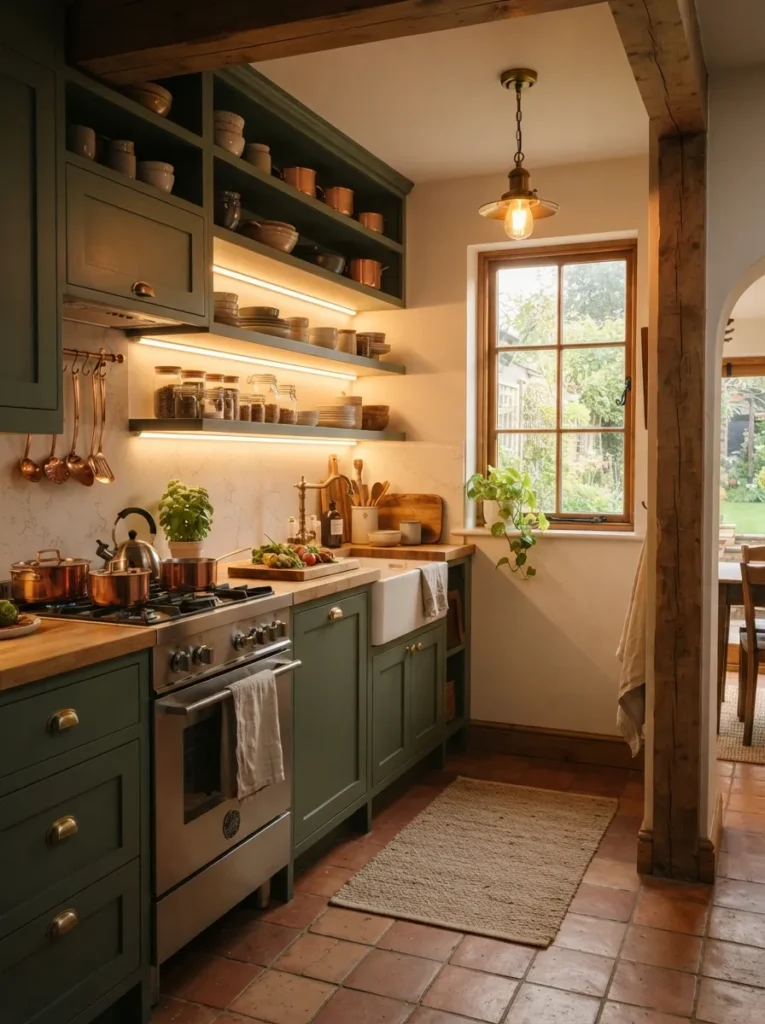
Mismatched bulb temperatures — a cool white overhead paired with warm under-cabinet strips — create a visually jarring, unfinished feeling.
Keeps color temperature consistent across every fixture for a cohesive, cozy glow.
🛒 Check Price on AmazonDesign insight: Stick to 2700K to 3000K across every fixture in the room — ceiling, pendant, under-cabinet, and in-cabinet alike.
Why this works for small kitchen lighting ideas: Consistent warmth reads as intentional design, while mismatched temperatures read as an afterthought.
9. Maximize Natural Light With Sheer Window Treatments
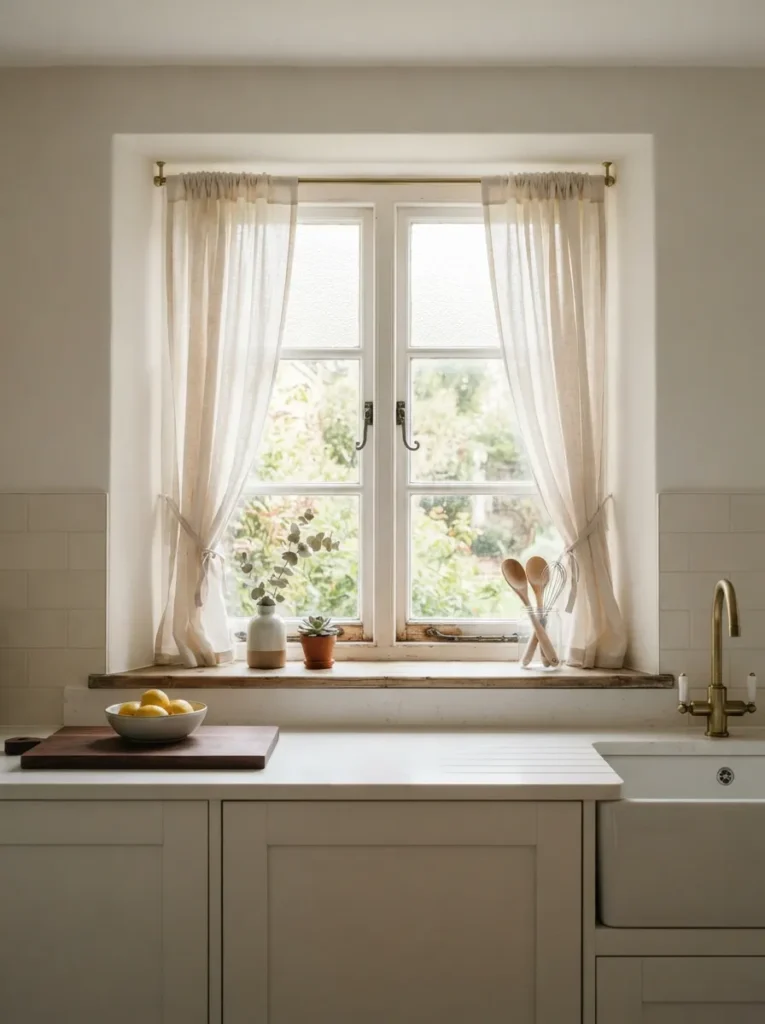
Artificial lighting can only do so much if your one kitchen window is blocked by heavy drapes or a dark blind.
Spatial advice: Swap heavy curtains for sheer linen panels or a light-filtering shade that still lets daylight flood the room during working hours.
Why this works: Natural light is free, flattering, and reduces how much artificial lighting your small kitchen needs during the day.
Material to avoid: Dark, opaque blackout fabric on a kitchen window — save that for the bedroom, where blocking light is actually the goal.
10. Add a Toe-Kick or Floor-Level Accent Light
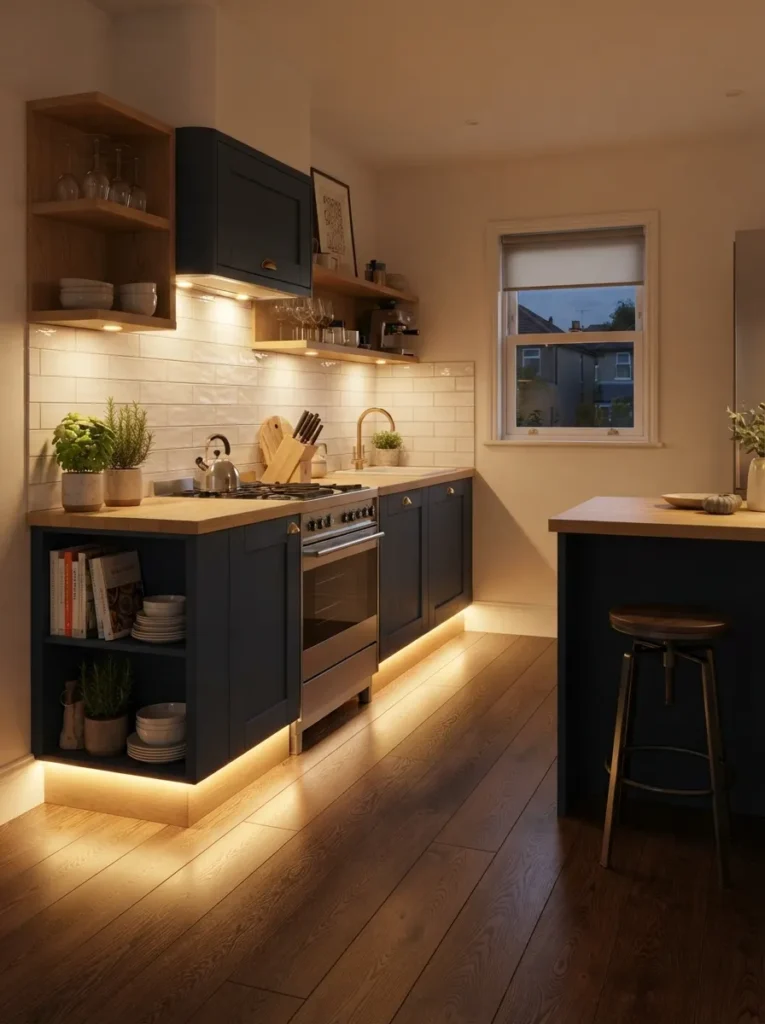
This is the finishing touch most small kitchens skip entirely — a soft accent light along the cabinet base, right at floor level.
Design insight: Toe-kick lighting adds a subtle glow that makes cabinetry look “grounded” and intentional, almost like a runway effect along the floor.
Pro: It also doubles as a functional night-light, so you’re not flipping on a harsh overhead fixture for a 2 a.m. glass of water.
Lighting tip: Keep it dim and warm — this is an accent, not a primary light source, so subtlety is the whole point.
A great small kitchen lighting plan isn’t one bulb doing everything — it’s several doing exactly enough. Layer these ten ideas in, and watch your dimmest corners finally earn their keep.