12 Modern Dining Room Rug Ideas for a Sleek and Stylish Space
This post contains affiliate links. If you buy something through them, I may earn a small commission at no extra cost to you.
A cluttered dining room rug can undo an entire modern layout in seconds — busy pattern, wrong texture, and suddenly that sleek table looks like it’s floating on chaos. Clean architectural lines deserve a rug that actually earns its spot.
Modern style is about restraint, not blandness. Let’s jump into the dining room rug ideas modern spaces actually need to feel finished, not fussy.
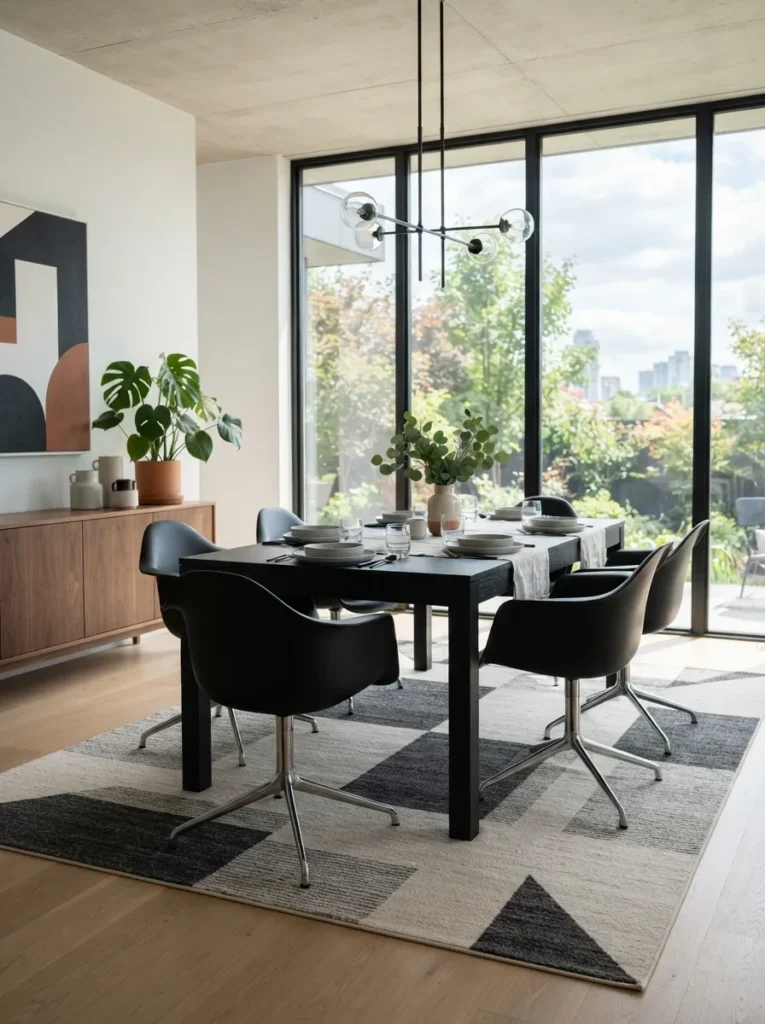
1. Geometric Patterns for Architectural Punch
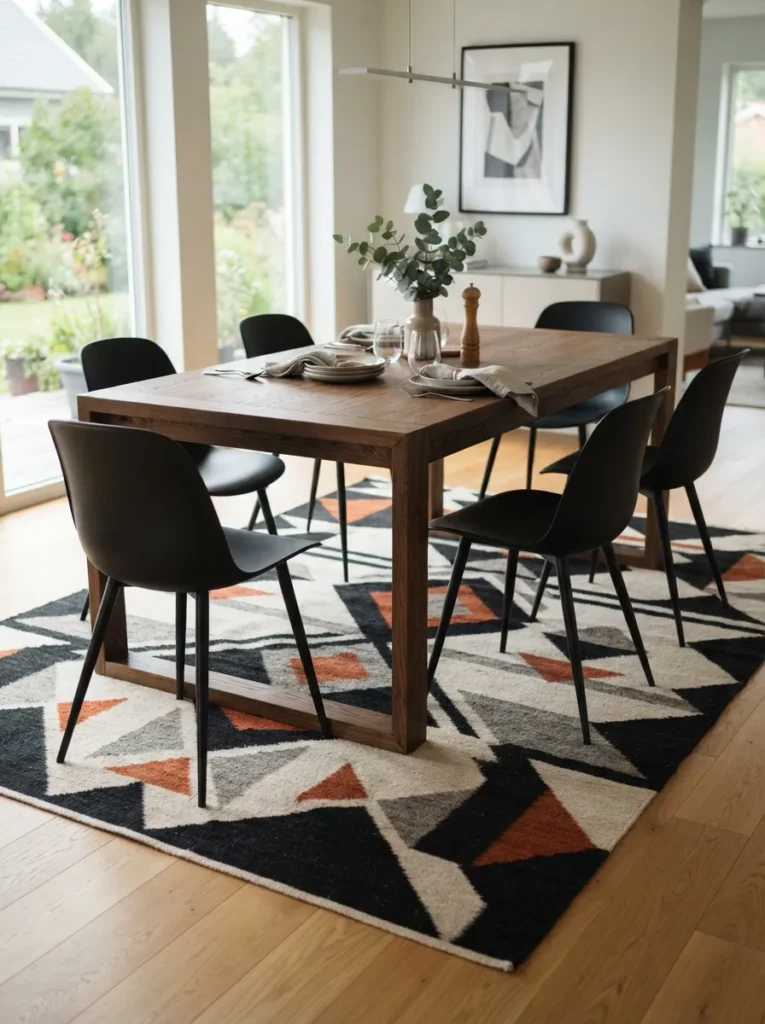
Geometric rugs do the heavy lifting in a room that’s otherwise all straight lines and negative space. Sharp angles and repeating shapes echo modern architecture instead of fighting it.
- Look for two-tone geometrics rather than multicolor — it keeps the palette controlled.
- Larger-scale patterns read more sophisticated than tiny busy repeats.
Design insight: geometric rugs work best when the rest of the room stays quiet. Save the bold art and statement lighting for a different moment.
2. Abstract Watercolor for Softness Without Clutter
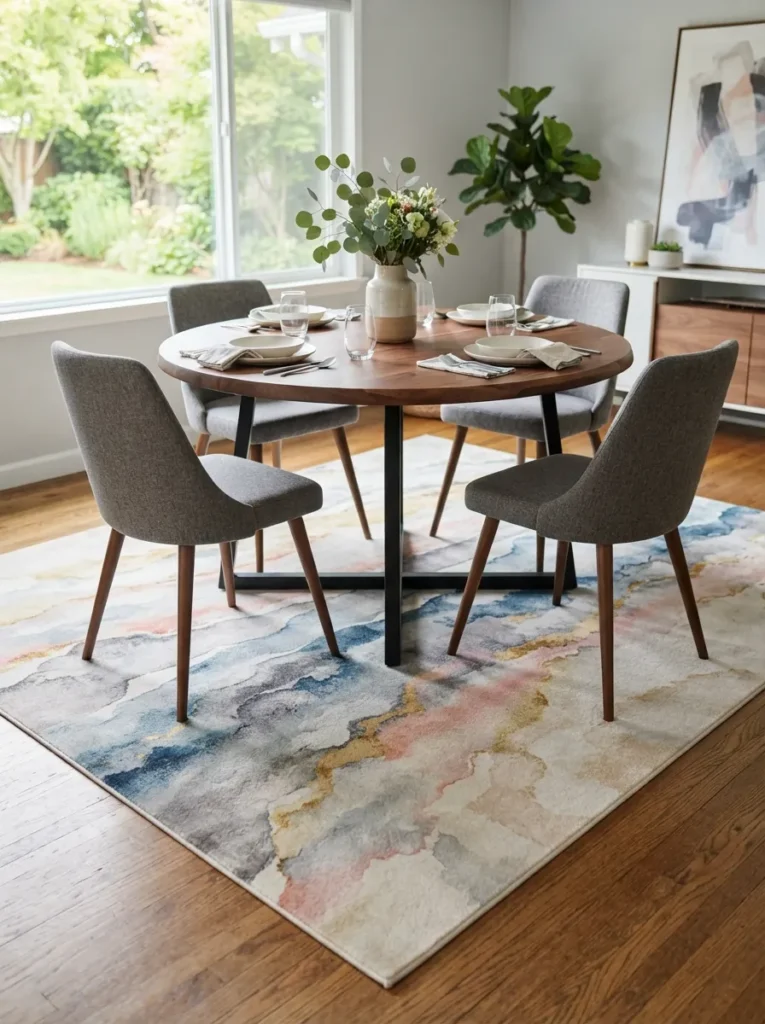
Modern doesn’t have to mean cold. Abstract watercolor rugs bring in movement and softness while still feeling contemporary, since the blurred edges avoid looking fussy or traditional.
- Muted blues, grays, and blush tones keep the look sophisticated rather than painterly-chaotic.
- These rugs hide stains impressively well thanks to the blended color transitions.
Why it works: the soft gradient breaks up an all-hard-surface dining room — glass table, metal chairs — without introducing a rigid pattern to clash with.
3. Ribbed Texture for Quiet Sophistication
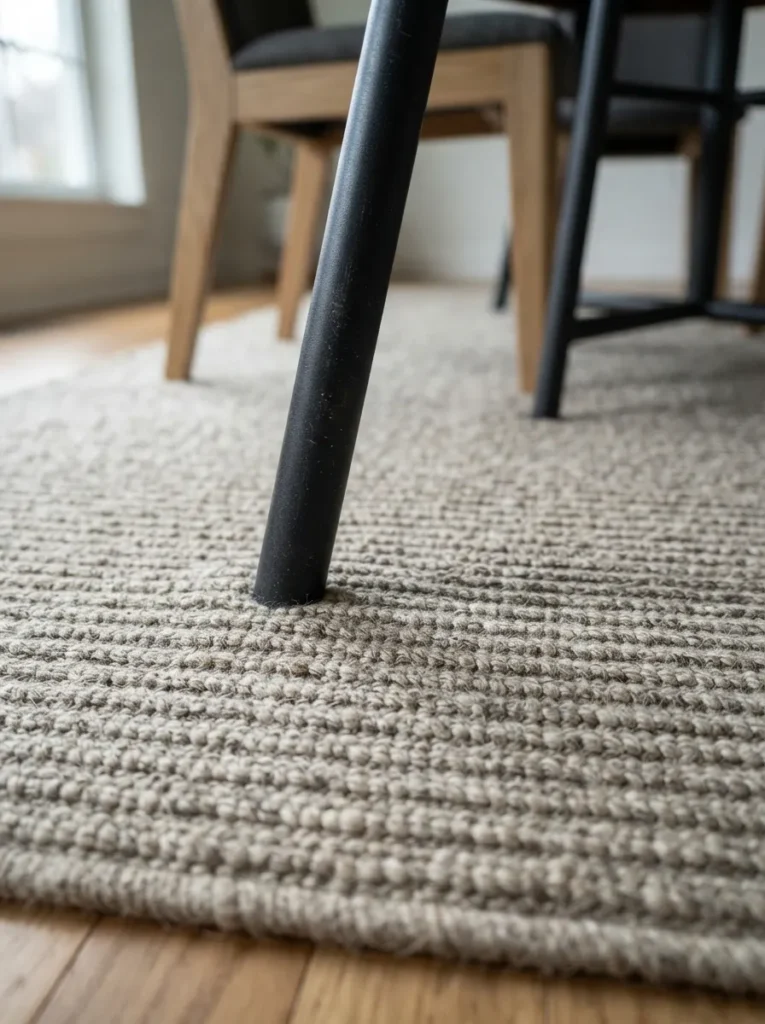
Not every modern rug needs color or pattern. A subtle ribbed texture adds depth through shadow and weave alone — the design equivalent of a well-tailored neutral outfit.
- Ribbed weaves catch light differently depending on the angle, adding subtle dimension.
- The low profile means chairs glide instead of catching on pile.
Material to avoid: anything with a raised loop pile here — it undercuts the flat, tailored look ribbed texture is going for.
4. High-Contrast Monochrome for Bold Simplicity
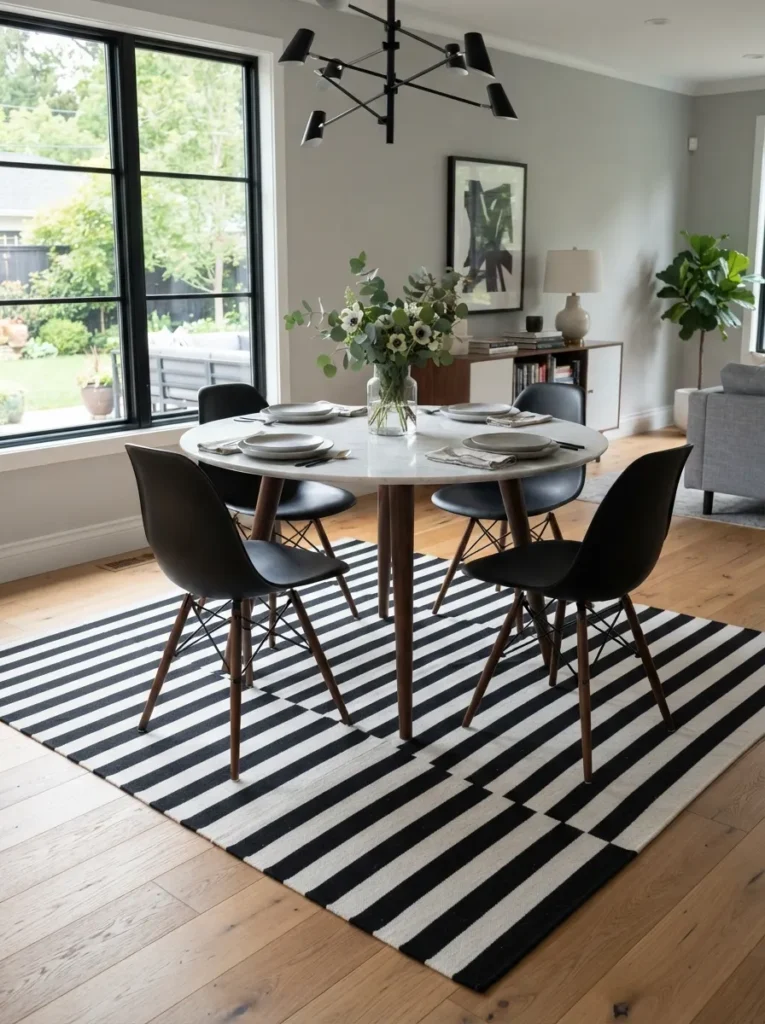
Black and white isn’t boring — it’s confident. A high-contrast monochrome rug anchors a dining space with graphic clarity that fits modern interiors perfectly.
- Stripes elongate a narrow room; large-scale blocks work better in square spaces.
- Monochrome rugs pair with literally any accent color already in the room.
Spatial tip: in smaller dining areas, keep the contrast pattern simple — a busy black-and-white print can visually shrink the room instead of opening it up.
5. Low-Profile Performance Weaves for Daily Life
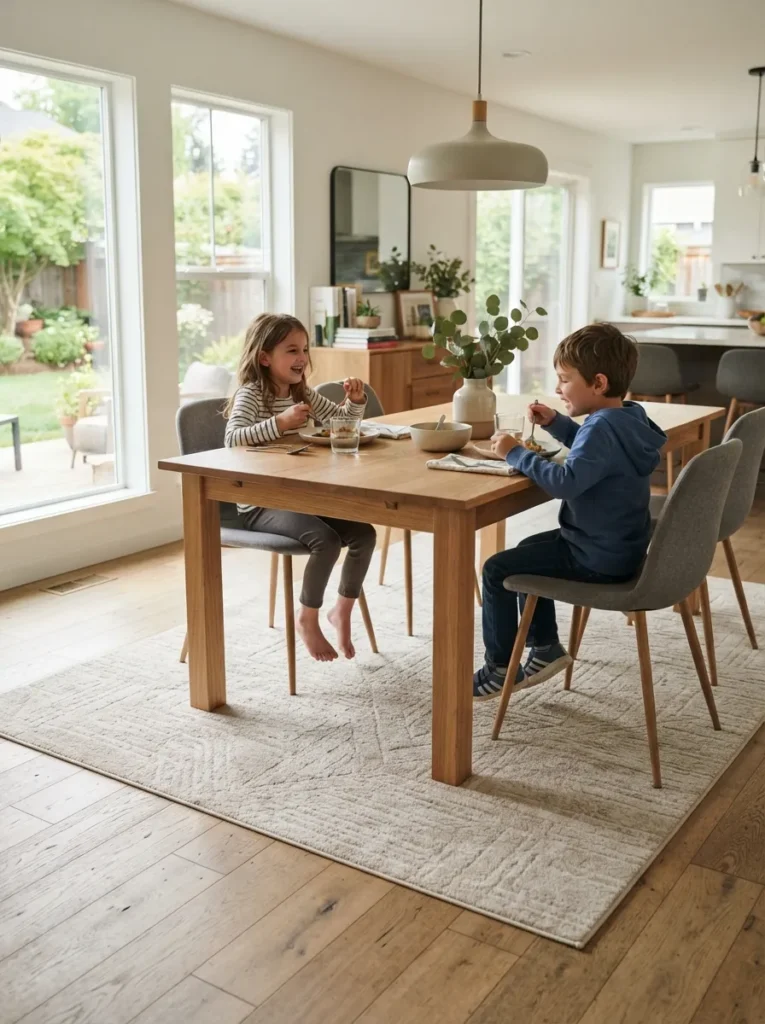
Modern dining rooms still have to survive actual dinners. Performance weaves — engineered synthetic fibers built to resist stains — solve the gap between sleek looks and real-life spills.
- These rugs typically wipe clean with just water, no deep cleaning required.
- Low pile means zero interference with chair movement.
Trade-off to know: performance fibers can feel slightly less plush underfoot than natural wool, but for a high-traffic dining zone, that trade is well worth it.
6. Oversized Rugs for a Grounded Modern Look
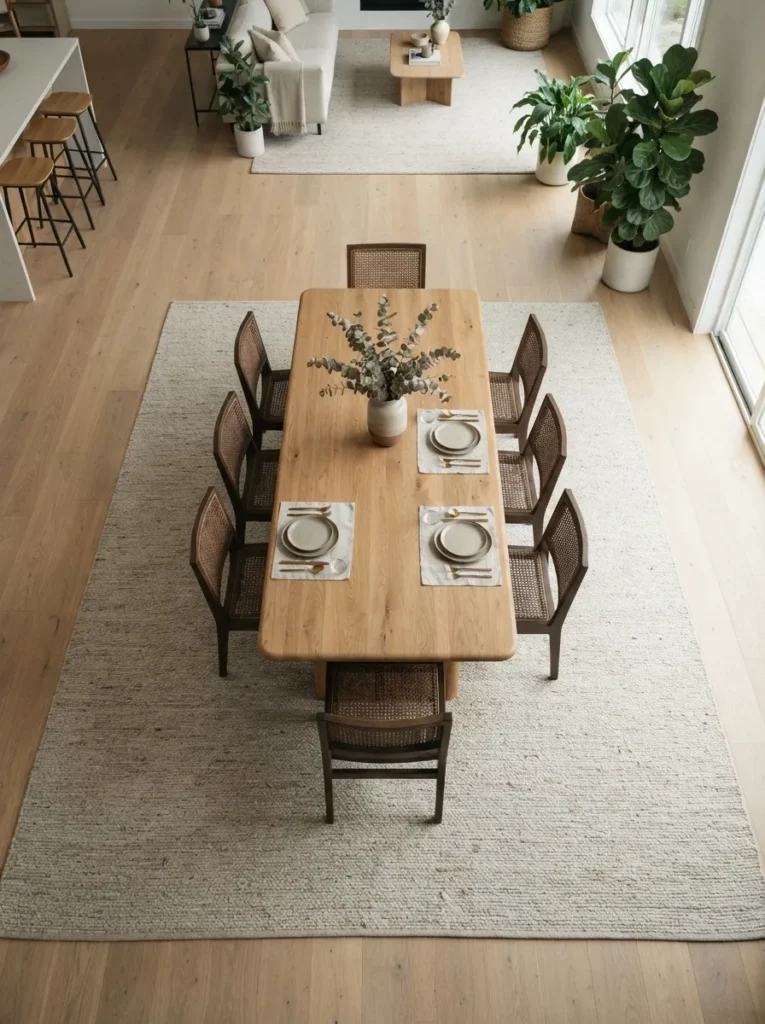
Undersized rugs are the fastest way to make a modern dining room feel unfinished instead of intentional.
- All four chair legs should stay on the rug, even fully pulled out.
- Oversizing the rug also visually expands the whole dining zone.
Rule of thumb: add at least 24–30 inches of rug beyond the table edge on every side — more in open-concept layouts where the dining area blends into other rooms.
7. Round Rugs Under Round or Pedestal Tables
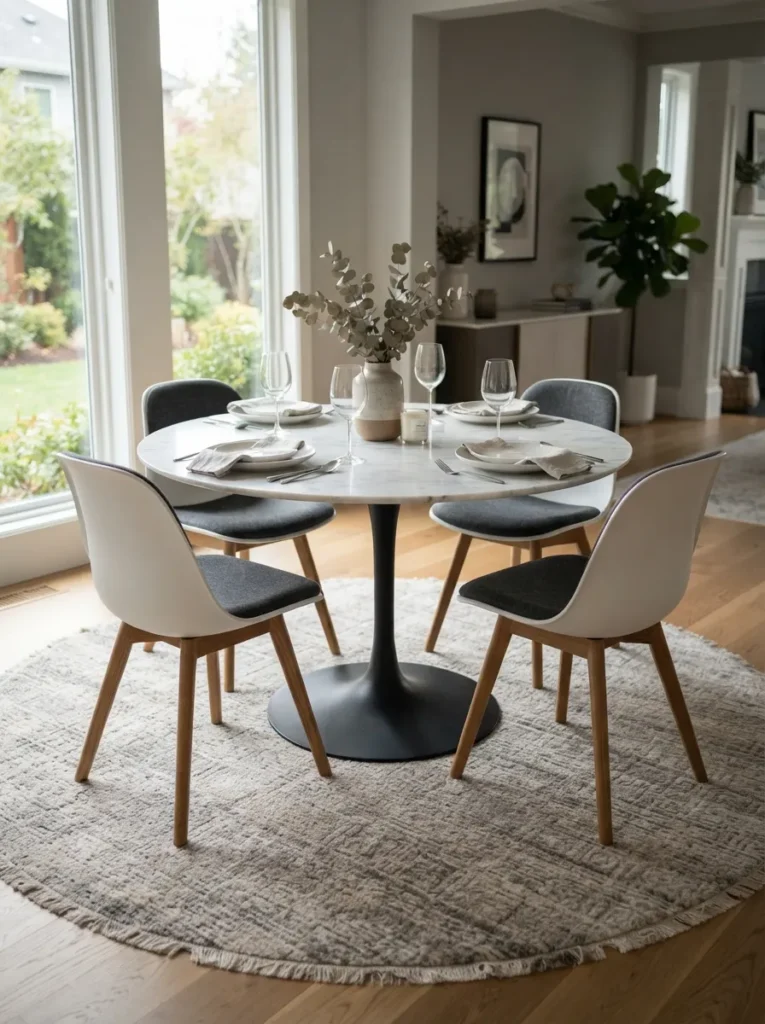
Modern pedestal tables are everywhere right now, and pairing one with a rectangular rug creates awkward, mismatched corners.
- A round rug echoes the table shape and creates a clean, deliberate silhouette.
- This pairing also softens a room otherwise full of hard angles — cabinetry, windows, lighting fixtures.
Design insight: measure the table diameter and add at least 24 inches to the rug diameter, so the proportions read intentional rather than accidental.
8. Two-Tone Neutrals for Understated Depth
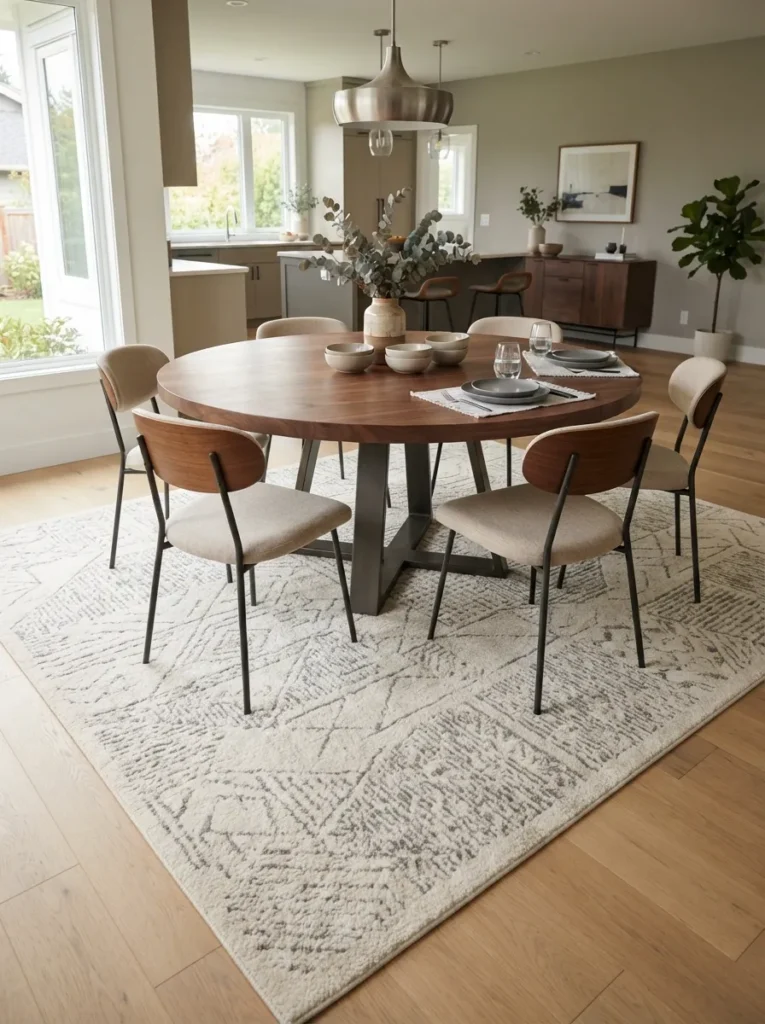
Not everything modern has to be bold. A two-tone neutral rug — think cream and warm gray — adds subtle depth without competing with statement lighting or art.
grounds a modern dining space without overpowering existing decor.
🛒 Check Price on AmazonThis approach works especially well in open-concept homes, where the dining rug needs to transition smoothly into an adjacent living space rather than announce itself loudly.
Why it works: subtle two-tone designs age better than trend-driven patterns, so the investment lasts through several style refreshes.
9. Flat-Weave for a Clean Contemporary Base
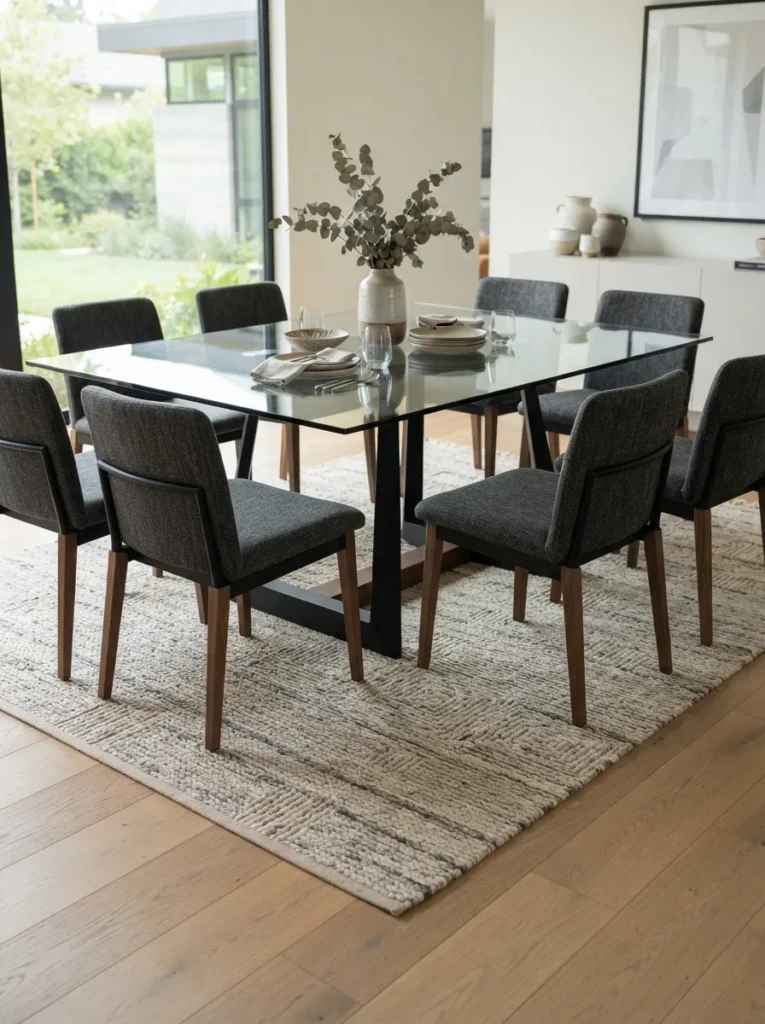
Flat-weave rugs are the workhorse of modern dining spaces — zero pile, maximum durability, and a silhouette clean enough to disappear under a glass or marble table.
delivers a crisp, tailored base that suits minimalist dining setups.
🛒 Check Price on AmazonDoors swing freely over flat-weaves, and chairs never catch on the edge. That matters enormously in daily-use dining rooms where furniture gets moved constantly.
Lighting tip: flat-weaves reflect light more evenly than plush pile, which helps a room with pendant lighting feel brighter and crisper overall.
10. Layered Rugs for Modern Depth
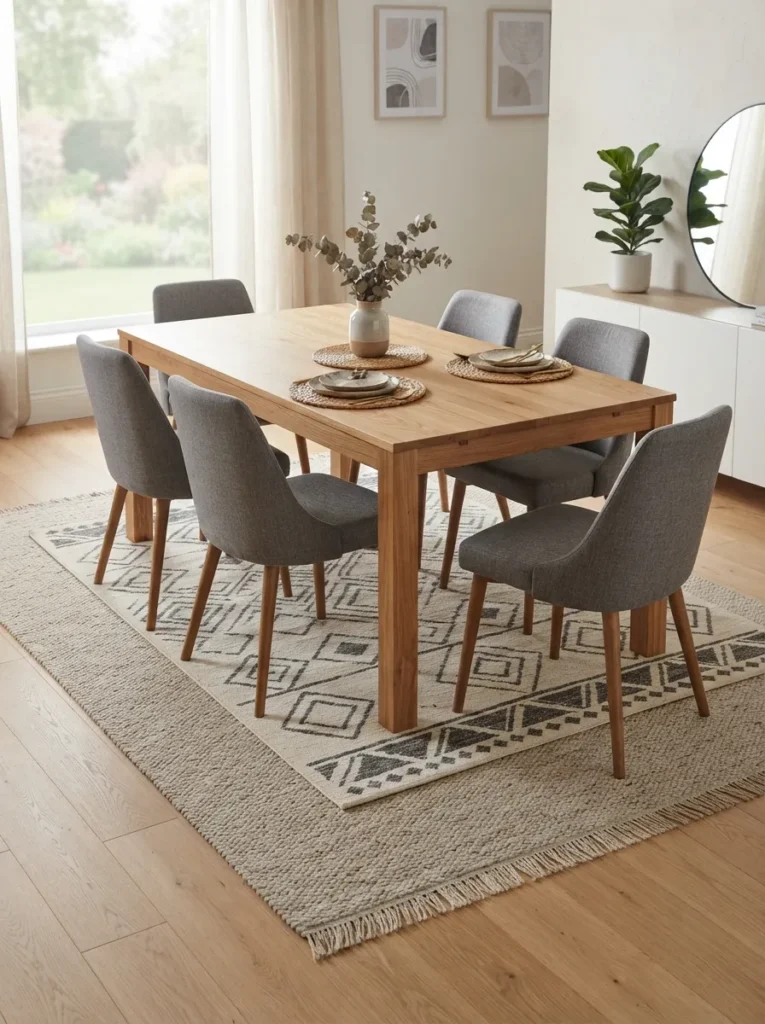
Layering isn’t just a bohemian trick — it works in modern spaces too, as long as both rugs stay simple and low-profile.
- Pair a large neutral base with a smaller geometric or striped accent rug.
- Keep both rugs thin so chairs don’t catch on the layered edge.
Con to watch: layering in a small dining area can read cluttered fast. Reserve this move for larger rooms with breathing room to spare.
11. Dark Charcoal Rugs for Moody Modern Contrast
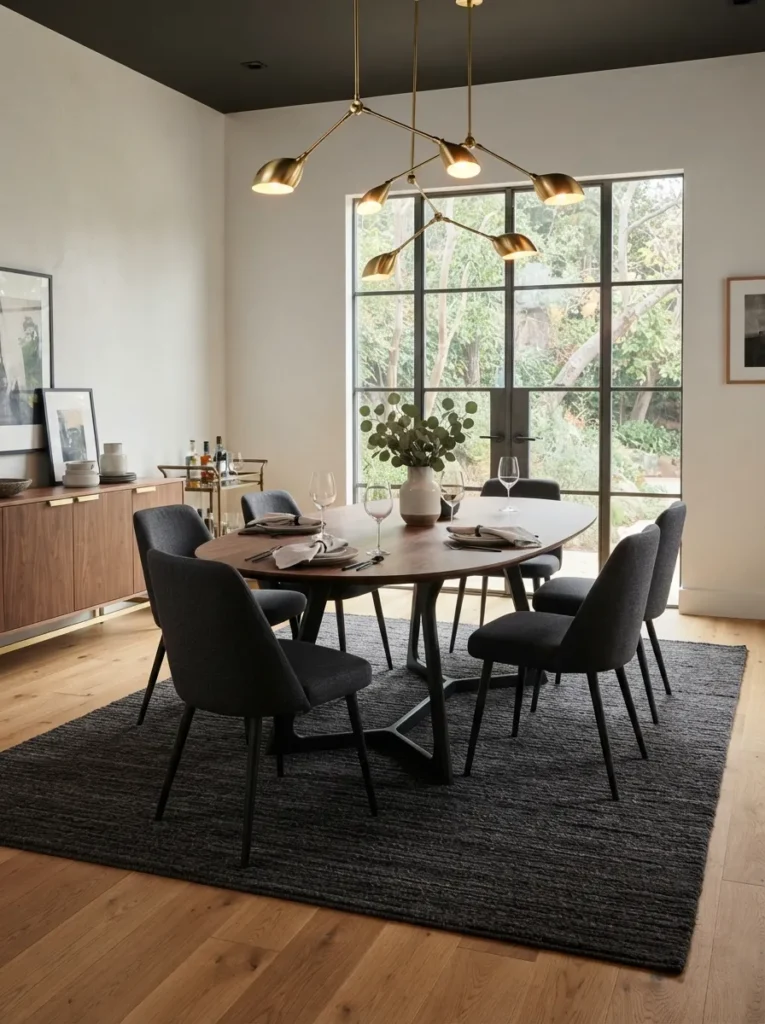
Modern doesn’t always mean bright and airy. A dark charcoal rug creates moody, grounded contrast against pale walls or light wood flooring.
adds moody contrast that pairs beautifully with brass or matte black fixtures.
🛒 Check Price on AmazonThis works particularly well paired with warm metal accents — brass, aged bronze — which keep the dark palette from feeling flat or cold.
Pros: dark rugs also hide daily wear exceptionally well. Cons to watch: they show dust and pet hair faster than lighter tones.
12. Statement Color Rugs for a Bold Focal Point
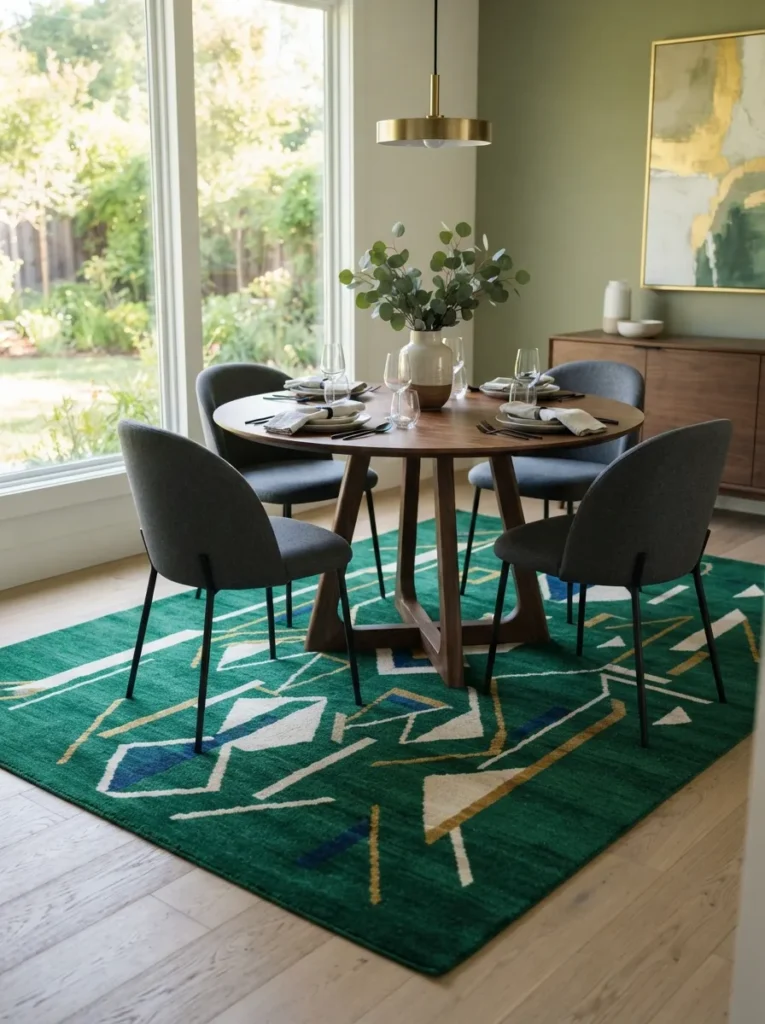
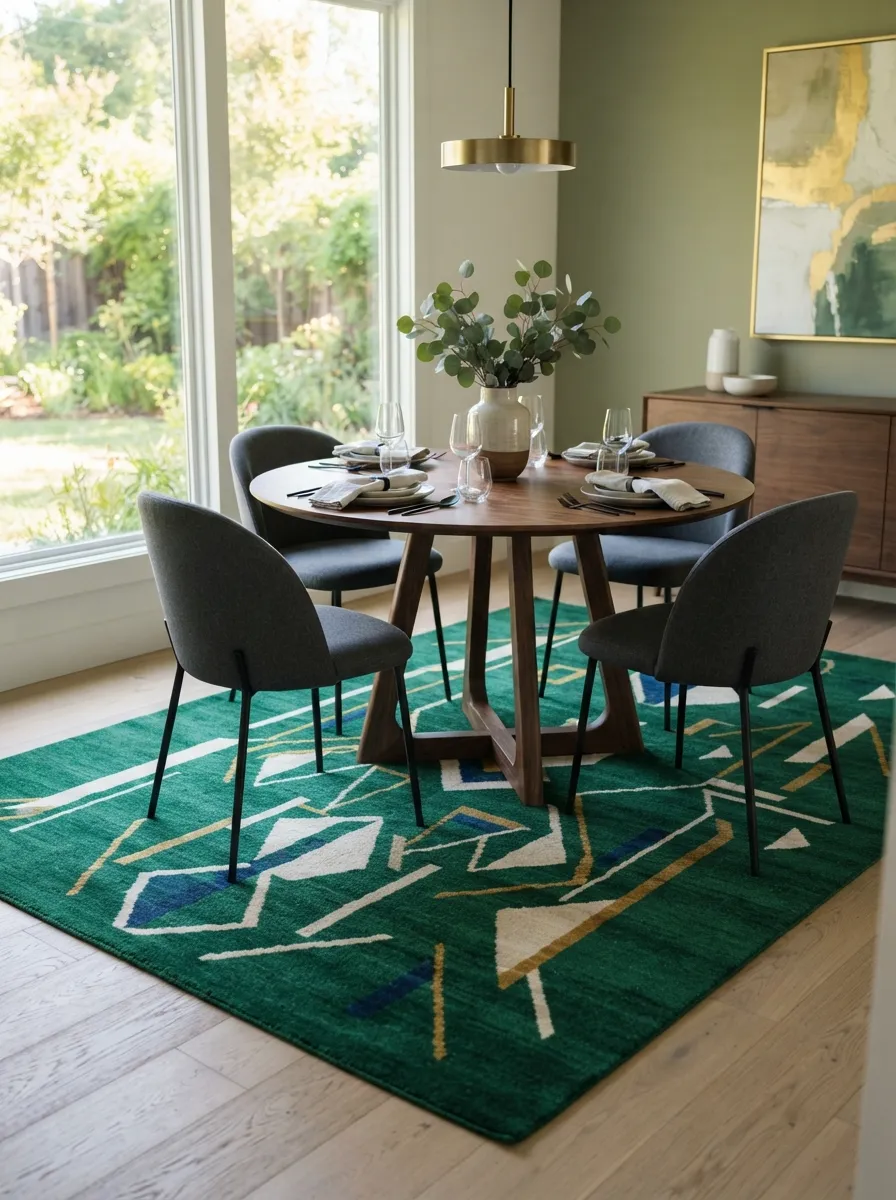
Sometimes modern means restraint, and sometimes it means one confident splash of color doing all the work. A statement-hued rug — rust, emerald, deep terracotta — turns the dining area into a genuine focal point.
- Keep every other element in the room neutral so the rug has room to shine.
- One bold rug reads as curated; two competing bold elements read as accidental.
Design insight: statement color works best in dining rooms with plenty of natural light — dim rooms mute rich colors and lose the impact entirely.
Modern dining rooms live or die by restraint, and the rug is the one piece doing the most quiet work in the room. Pick one with the right texture, the right scale, and that sleek table finally looks finished instead of floating.